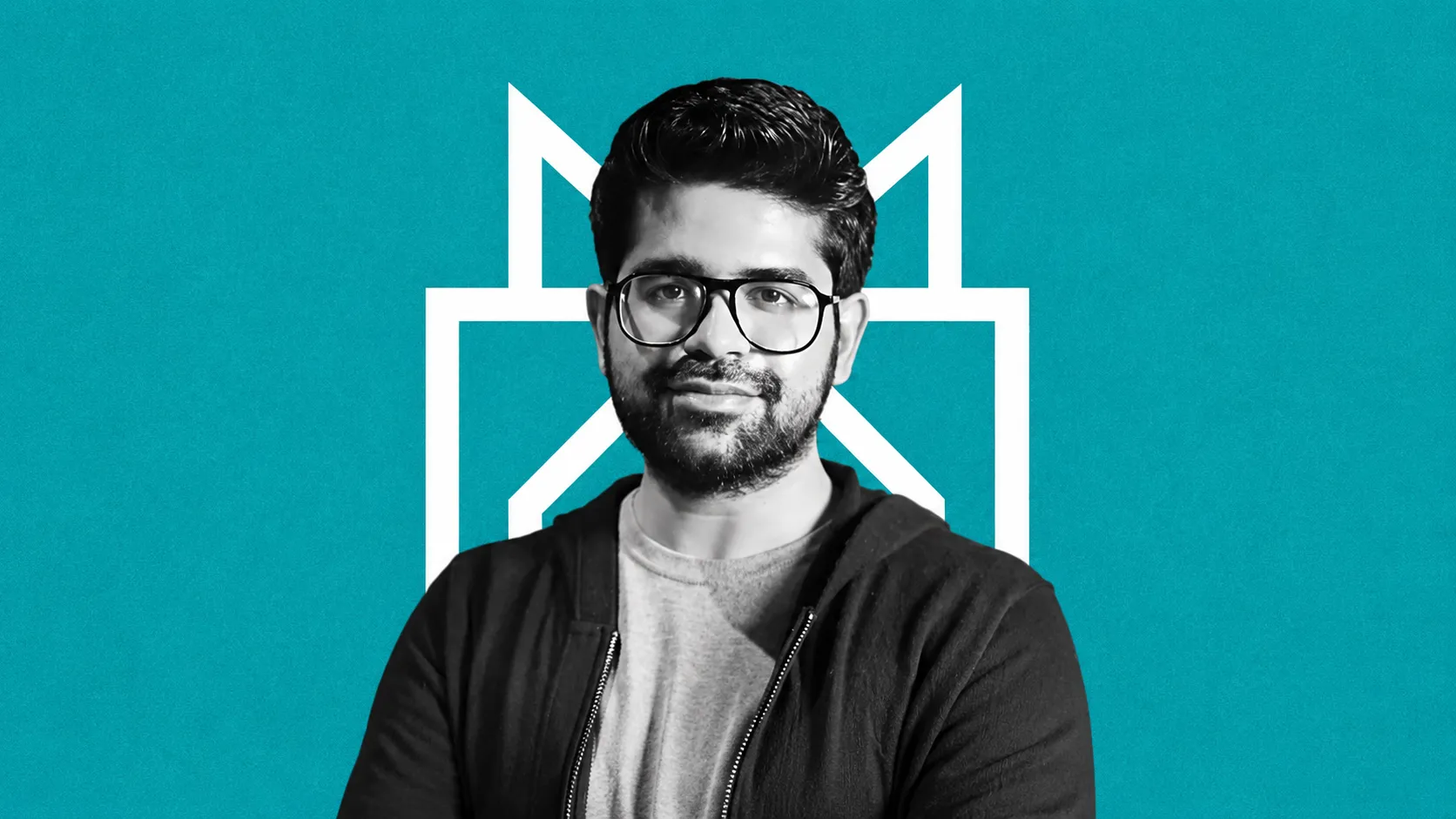
A Middle-Class Boy From Chennai Who Refused to Take No for an Answer
In the crowded, competitive corridors of the Indian Institute of Technology Madras, thousands of eighteen-year-olds arrive every year carrying the same dream: to study computer science, the golden ticket of Indian engineering education. Aravind Srinivas was one of them. He had cleared one of the hardest entrance examinations on the planet and secured a coveted seat at IIT Madras. But when the time came to switch from electrical engineering into the computer science branch he actually wanted, Srinivas fell short of the GPA cutoff — by a margin so small it has since become part of his own founder mythology. Multiple profiles of his life describe the gap as a mere 0.01 grade points, a rounding error that, on paper, closed the door to the field he loved most.
For most people, that kind of narrow, almost cruel miss would have been the end of the story — a case of 'what could have been.' For Srinivas, it became the opening chapter of one of the most remarkable technology origin stories to come out of the Indian diaspora in the last decade. Rather than accept the branch he had been assigned, he began teaching himself. He picked up Python on his own, worked through online courses, and started competing on Kaggle, the global data science platform where engineers test their machine learning skills against each other. It was scrappy, self-directed, unglamorous work — done not because a university told him to, but because he refused to let an administrative cutoff define his future.

Berkeley, and a Front-Row Seat to the AI Revolution
That self-taught grit paid off. Srinivas completed his dual degree at IIT Madras and was admitted to the University of California, Berkeley, for a PhD in computer science, focusing on how artificial intelligence systems perceive the world and learn to act within it — research he has since described in simpler terms as teaching machines to understand raw, unlabeled data and then make decisions from that understanding. It was cutting-edge, unglamorous academic work at a moment when few outside a small circle of researchers believed large language models would soon reorganize the internet.
During and after his PhD, Srinivas found his way into three of the most important artificial intelligence laboratories on Earth: DeepMind, Google Brain, and OpenAI. At OpenAI, he worked on projects that fed directly into the generative AI boom the world would witness a few years later, including contributions connected to DALL-E 2, OpenAI's landmark image-generation system. This was, in effect, a masterclass most engineers never receive — a front-row seat to how the biggest AI breakthroughs of the decade were actually built, from the inside, at the two organizations most responsible for them.
The Frustration That Became a Company
Every founder story needs an irritant — a daily frustration so persistent it eventually demands to be solved. For Srinivas, that irritant was search itself. Despite working inside some of the most sophisticated AI labs in the world, he found himself, like billions of others, still wading through pages of blue links whenever he needed an answer to a real question. Traditional search engines were built to point you somewhere else; they were not built to actually answer you. Srinivas began to believe that large language models, combined with live web retrieval, could replace the decades-old link-list paradigm with something closer to a conversation — an engine that reads the internet on your behalf and hands you a synthesized, cited answer.
In 2022, Srinivas co-founded Perplexity AI alongside Denis Yarats, Andy Konwinski and Johnny Ho — a small team that combined deep research backgrounds in machine learning with systems engineering chops. The company's founding thesis was almost defiantly simple in a world of TikTok-length attention spans: don't give people ten blue links, give them the answer, with the sources cited inline so users could verify it for themselves. It sounds obvious in hindsight. It was, at the time the company was founded, a serious bet against the most entrenched incumbent in the history of the internet — Google.
Betting Against Google, and Winning Believers Early
What makes Srinivas's rise particularly striking is how quickly serious money and serious names backed an unproven idea from a first-time founder taking on the most dominant company in consumer technology. Early backers of Perplexity included Amazon founder Jeff Bezos and prominent Silicon Valley investor Nat Friedman — validation that gave the young company crucial credibility in a market where trust is often harder to win than capital. Perplexity built what it called an 'answer engine': a conversational interface, powered by multiple large language models plus real-time web search, that delivers direct, source-linked responses instead of a results page.
The company's growth, even by the hyperbolic standards of Silicon Valley, has been unusually fast. According to reporting on investor discussions, Perplexity crossed into multi-billion-dollar valuation territory within roughly two years of its public launch, as capital poured into generative AI at a pace unseen since the dot-com years. By late 2025 and into 2026, the company's valuation had been reported at or above the $18–20 billion range, cementing Perplexity's status as one of the most closely watched AI companies in the world — and Srinivas, still in his early thirties, as one of its most closely watched founders.
The Elon Musk Tweet That Made Global Headlines
Srinivas has never been a founder who shies away from the spotlight, and one moment in particular thrust him into a very different kind of headline. On February 10, 2025, in the middle of a swirl of controversy around USAID and government funding, Srinivas posted a cheeky, provocative tweet challenging Elon Musk directly, joking about 'raising $500 billion from USAID' with the line 'funding secured — stop me if you can.' The post detonated across social media, turning a niche AI-search founder into a mainstream talking point overnight. It was a glimpse into Srinivas's personality: unafraid of confrontation, comfortable courting attention, and willing to use his platform provocatively even when the underlying business he runs faces very serious, very real scrutiny.
The Uncomfortable Side of Disruption
Perplexity's ascent has not been without genuine controversy, and any honest account of Srinivas's journey has to reckon with it. As an 'answer engine' that scrapes, summarizes, and synthesizes content from across the web, the company has faced mounting criticism from publishers and media organizations over how it attributes — or fails to fully attribute — the original journalism and writing it draws from. Questions about scraping practices and the legal boundaries of AI-generated information products have followed Perplexity closely, with critics arguing that answer engines risk starving the very publishers whose content trains and feeds them. Srinivas has defended AI-powered search as an inevitable evolutionary shift in how humanity consumes information online, arguing that resisting the shift is not a realistic option — only how it's managed is.
That tension — between disruptive utility for users and existential anxiety for the publishing industry — now sits at the very center of Perplexity's public identity. The company is simultaneously celebrated as one of the most promising consumer AI startups of this generation and cited as a case study in the unresolved conflicts reshaping the modern information economy. It is a genuinely uncomfortable position for any thirty-something founder to occupy, and Srinivas has had to learn, often in real time and in public, how to defend a business model that large parts of the media industry view with deep suspicion.
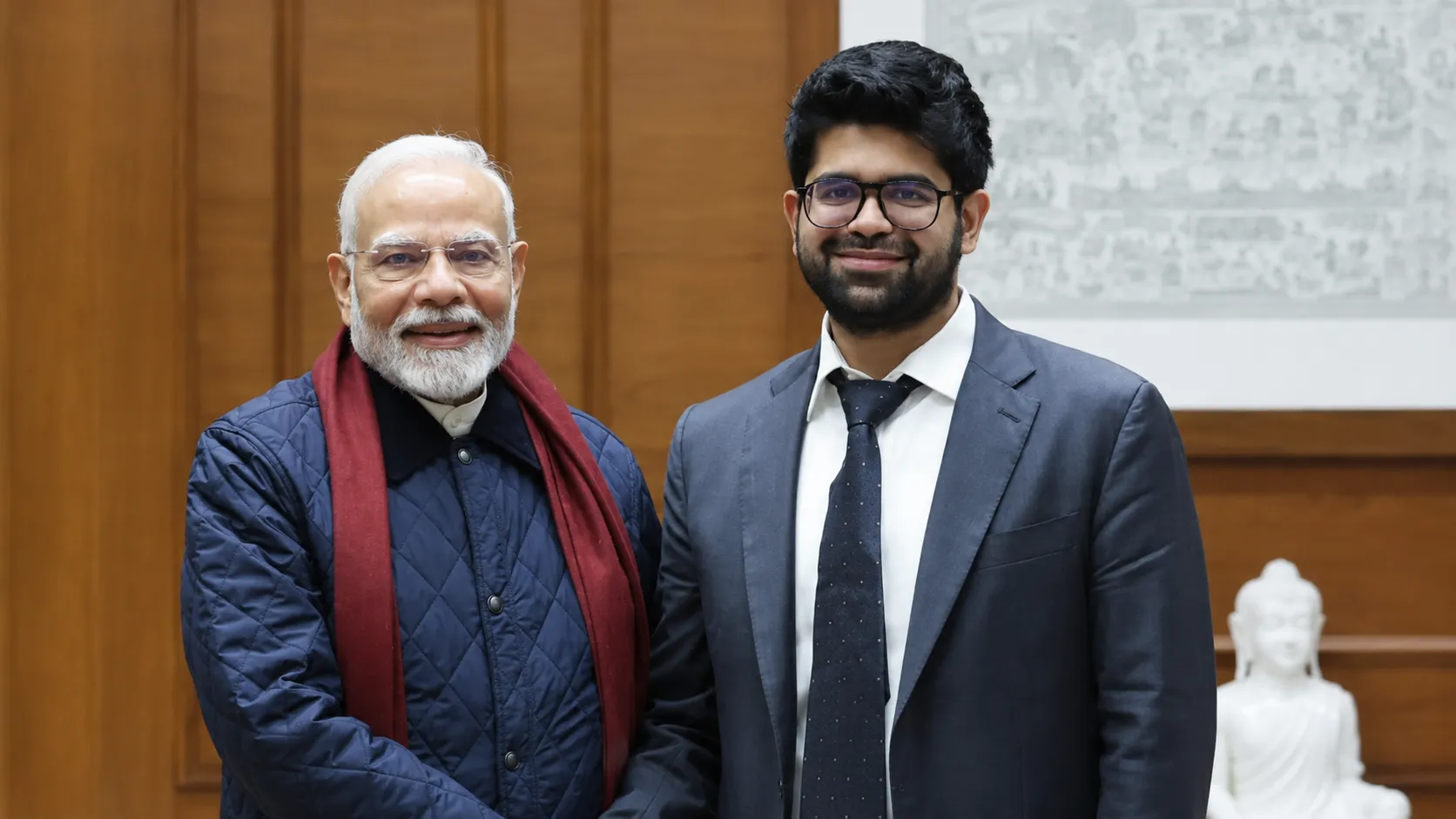
Building Comet, and Chasing the Browser War
Rather than stand still, Srinivas has continued pushing Perplexity's product surface outward. In 2025, the company launched Comet, an AI-powered web browser designed to handle complex, multi-step search tasks natively, positioning Perplexity not just as a search alternative but as a challenger to the browser itself — the single most valuable piece of real estate on the internet, historically dominated by Google Chrome. It is an audacious move: taking on Google not on one front, but two, simultaneously, with a fraction of Google's resources and headcount.
India's Youngest Billionaire
The financial scale of Srinivas's achievement became formally official in India in October 2025, when he debuted on the M3M Hurun India Rich List with an estimated net worth of roughly ₹21,000 crore — approximately $2.5 billion. At just 31 years old, that placed him among the youngest self-made billionaires the country has ever produced, a milestone that resonated deeply across Indian media and the wider diaspora, not because of the number itself, but because of what it represented: a middle-class engineering student from Chennai, denied his first-choice academic branch by a single grade point, building one of the most valuable AI companies on the planet from Silicon Valley.
The Numbers Behind the Hype
It is worth pausing on just how unusual Perplexity's fundraising trajectory has been, because the numbers themselves tell a story about investor conviction that words alone cannot. In the space of roughly three years, the company moved from a scrappy seed-stage answer-engine experiment to a valuation north of $18 billion, according to reporting on its most recent funding rounds — a pace of value creation that places it among a small handful of AI-native companies, alongside names like OpenAI and Anthropic, that have compressed a decade's worth of typical enterprise value growth into a few short years. For context, most enterprise software companies take the better part of ten to fifteen years to reach a fraction of that valuation, if they ever do at all. Perplexity's backers were not simply betting on Srinivas's technical pedigree; they were betting that the search paradigm itself — the ten blue links that have defined how humanity finds information online since the late 1990s — was genuinely, structurally due for disruption, and that a research-trained founder with direct experience at OpenAI, DeepMind, and Google Brain was uniquely positioned to lead that disruption from outside the incumbents themselves.
A Founder Who Talks Like a Researcher, Not a Salesman
One of the more distinctive elements of Srinivas's public persona, noted repeatedly by those who have interviewed him, is how much he still sounds like the academic researcher he trained to be, rather than the polished, message-tested CEO that venture capital typically pushes founders to become. In a fireside chat at Harvard Business School, Srinivas walked an audience of MBA students through the technical distinctions between different approaches to grounding language models in real-time information — a level of granular, first-principles technical explanation that many later-stage startup CEOs have long since delegated to their engineering teams. That instinct to explain rather than simply assert has become part of his brand: Srinivas frequently appears at university fireside chats and technical conferences, walking through Perplexity's architecture and reasoning in language closer to a PhD defense than a product pitch, a habit that traces directly back to his years inside DeepMind, Google Brain, and OpenAI's research culture.
The Weight of Representing a Generation of Indian Engineers
Srinivas occupies a particular, somewhat uncomfortable position within the broader Indian and NRI technology community: as one of the most visible, most quoted, and most controversial Indian-origin founders of the current AI boom, his every public statement, funding milestone, and public spat is scrutinized not just as personal news, but as a proxy data point for how the world's most powerful economies view Indian technical talent more broadly. His IIT Madras origin story has been repeated so many times across Indian media — the missed branch change, the self-taught Kaggle competitions, the eventual Berkeley PhD — that it has become something close to a modern parable, cited by career counselors and engineering students across India as proof that a single academic setback, however painful in the moment, does not have to define an entire career trajectory. That symbolic weight is not something Srinivas asked for, but it is one he has increasingly leaned into, using his growing platform to encourage young engineers, particularly those who feel boxed out by rigid academic tracking systems, to pursue unconventional, self-directed paths into deep technical fields like artificial intelligence.
What the Srinivas Story Tells Global Indians
For the community this publication speaks to and for, Srinivas's journey carries a resonance that goes beyond valuation numbers and funding rounds. It is a story about the particular psychology forged by India's brutally competitive academic gauntlet — the entrance exams, the cutoffs, the branch changes decided by fractions of a percentage point — and how that same unforgiving system, for those who refuse to be broken by it, can produce founders with an almost unnatural tolerance for rejection and ambiguity. Srinivas has spoken about wanting to inspire young innovators, especially those from non-traditional backgrounds, to pursue careers in artificial intelligence rather than assume the field is reserved for those who followed a perfectly linear academic path.
His journey — a Chennai household, IIT Madras, a doctoral fellowship at Berkeley, research stints inside OpenAI and DeepMind, and finally a company built to challenge Google itself — is not a story of a smooth, inevitable rise. It is a story shaped, by Srinivas's own account and by those who have interviewed him, as much by ambition and self-doubt as by technical brilliance and product instinct. That imperfection is precisely what makes it worth telling. As the generative AI industry matures and the initial gold-rush euphoria gives way to harder questions about business models, copyright, and sustainability, Aravind Srinivas remains one of its most closely watched — and most Indian — protagonists.


