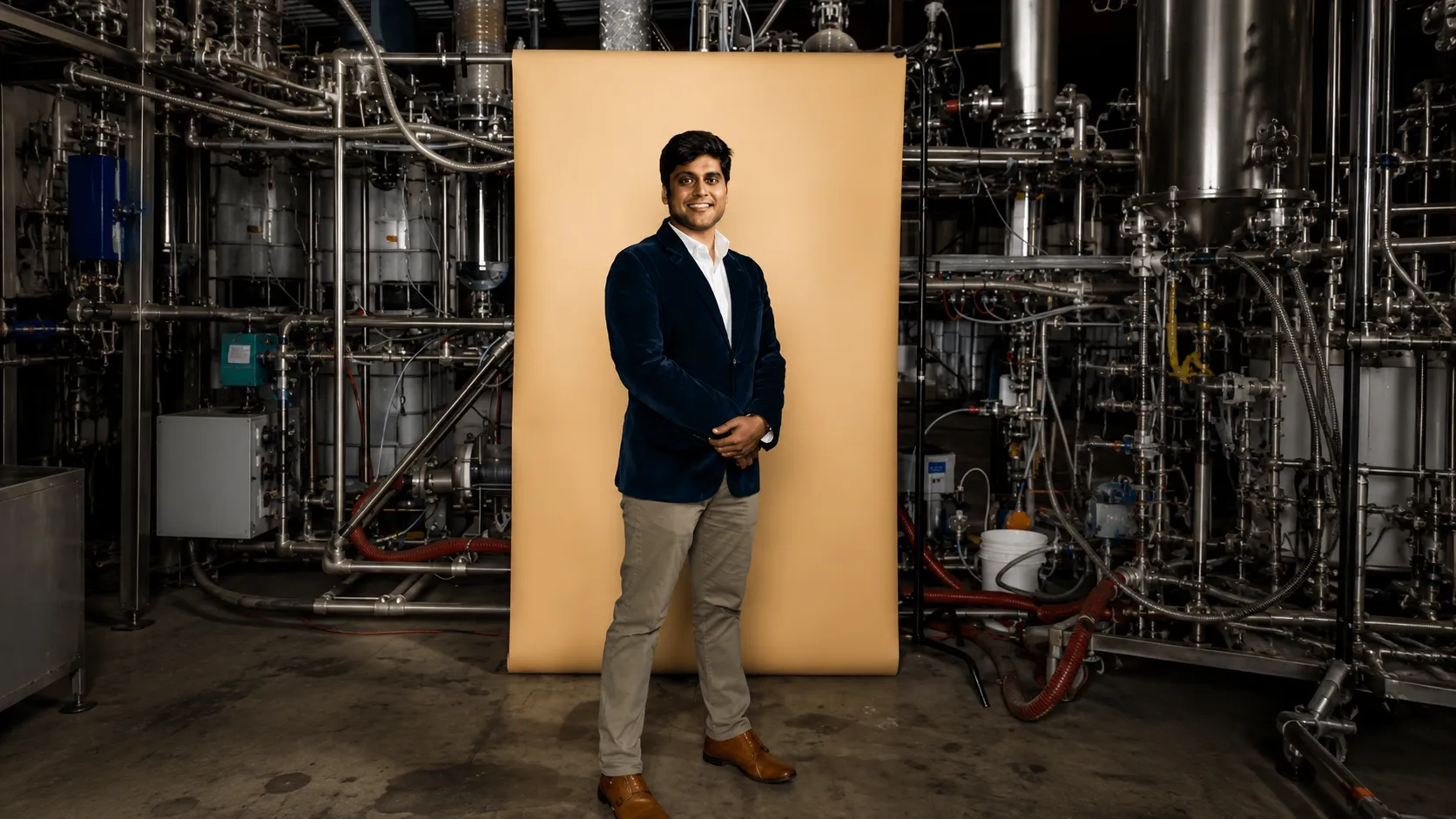
A Doctor Who Never Set Out to Build a Chemical Company
Most billion-dollar industrial companies begin with an engineer standing on a factory floor. Solugen began, improbably, in a cancer laboratory. Gaurab Chakrabarti, an Indian-American physician-scientist, was pursuing a combined MD-PhD at UT Southwestern Medical Center in Dallas, deep into research on pancreatic cancer, when he stumbled onto an observation that had nothing to do with treating tumors and everything to do with reshaping one of the world's dirtiest industries. Chakrabarti's doctoral research focused on why pancreatic cancer cells produce excessive amounts of reactive oxygen species — unstable molecules, including hydrogen peroxide, that cause the kind of DNA damage that drives tumor growth. While working to develop a drug that could block this process, Chakrabarti identified the specific enzyme responsible for the cancer cells' hydrogen peroxide production.
It was a discovery any oncology researcher would recognize as scientifically interesting. What made Chakrabarti unusual is what he did next: he realized the same enzymatic mechanism that made pancreatic cancer cells so destructive to the human body could, if replicated outside of it, convert ordinary sugar into hydrogen peroxide — one of the most widely used industrial chemicals on Earth, traditionally manufactured through an energy-intensive process largely unchanged for more than 75 years.
Roots and a Long, Winding Academic Path
Chakrabarti's academic journey reads like a case study in patient, methodical excellence. He earned a Bachelor of Science in Neuroscience and Computational Biology from Brown University before moving to UT Southwestern Medical Center, where he pursued his MD in Cancer Metabolism and Novel Therapeutics from 2010 to 2017, alongside a PhD in Oncology and Cancer Biology completed between 2012 and 2016. That is nearly a decade of rigorous medical and scientific training — the kind of resume that typically leads directly into a career as a practicing physician or academic researcher, not the founder's chair of an industrial chemicals company.
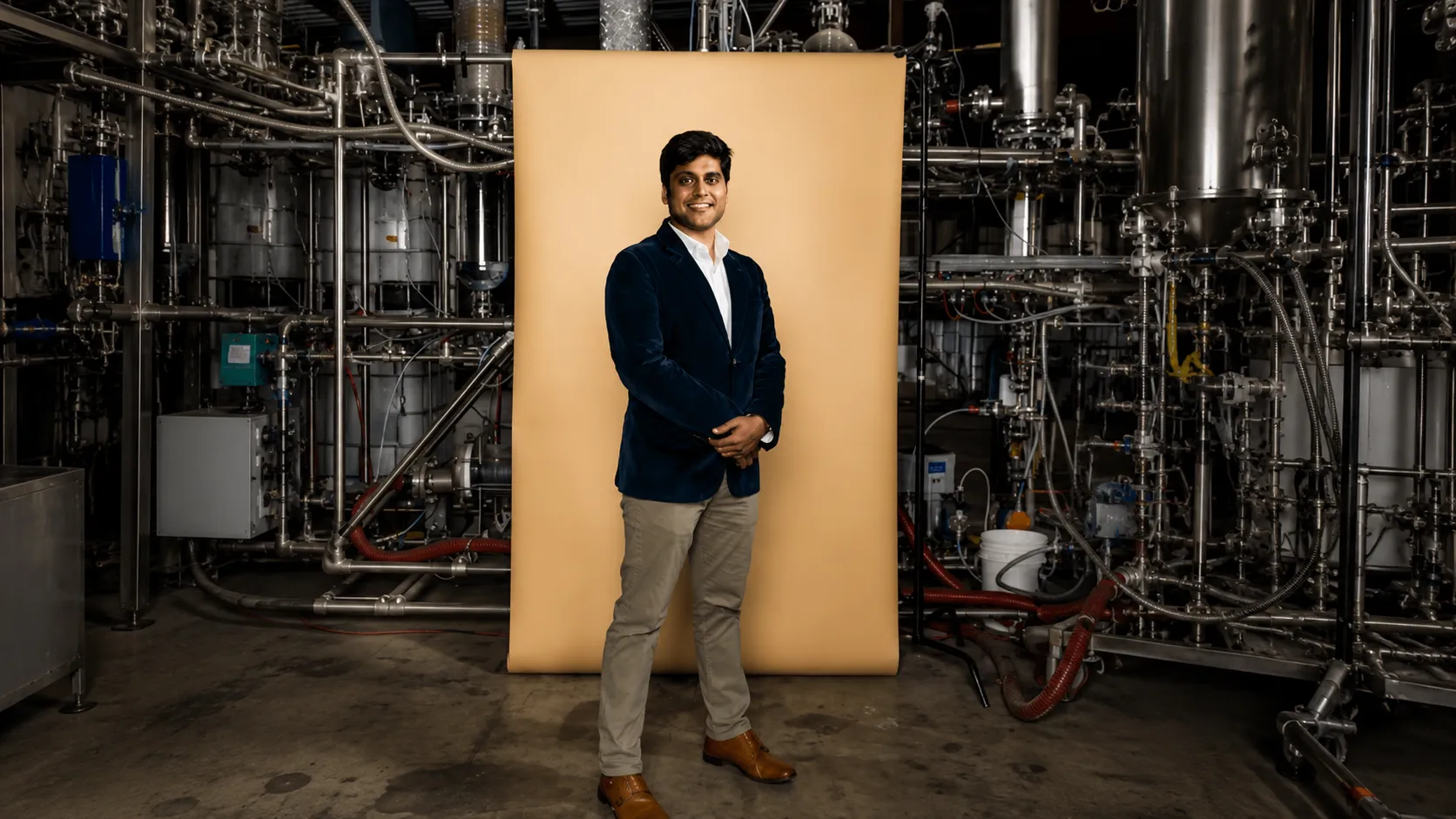
A Poker Table, a Pitch Competition, and a Chance Meeting
The Solugen origin story has a detail that has become part of its own internal folklore: Chakrabarti met his eventual co-founder, Sean Hunt, playing poker at UT Southwestern. Hunt, an MIT-trained biomedical and chemical engineer, was independently working on new methods to improve traditional chemical manufacturing processes when the two crossed paths. Chakrabarti brought the enzyme discovery from his cancer research; Hunt brought deep chemical engineering expertise and an MIT pedigree in nanoparticle metal catalysts. Together, in 2016, the pair submitted their idea to an MIT pitch competition, formally launching what would become Solugen.
The company's insight, sometimes described as 'chemoenzymatic processing,' blends biology and traditional chemistry: rather than manufacturing chemicals from petroleum through energy-intensive industrial routes, Solugen's process uses engineered enzymes to convert plant-based sugar feedstocks into commercially valuable chemicals — starting with hydrogen peroxide and gluconic acid, a useful co-product, and eventually expanding into a broader portfolio of specialty and commodity chemicals.
The Struggle: Convincing an Industry That Doesn't Change
If there is a single defining challenge in Chakrabarti's founder journey, it is this: the chemical industry is one of the most capital-intensive, risk-averse, and slow-moving sectors in the global economy, built around enormous, decades-old petrochemical plants that took years and billions of dollars to construct. Convincing that industry — and the customers who depend on it — to trust a completely novel, biology-based manufacturing process from two young scientists with no prior industrial chemistry company experience was never going to be easy. Chakrabarti and Hunt started small and scrappy, famously building their first working reactor for roughly $7,000 using PVC piping — a stark, almost absurd contrast to the billion-dollar steel-and-concrete chemical plants they were ultimately trying to compete with and eventually replace.
In 2017, that scrappy persistence earned real validation: Chakrabarti and Hunt were named to Forbes' 30 Under 30 list and were accepted into Y Combinator, the elite Silicon Valley accelerator — a rare achievement for a hard, physical-infrastructure biotech company in a program historically dominated by software startups. Being one of the few non-software companies to get into YC forced Solugen to prove, early and often, that its underlying science actually worked at scale, not just in a pitch deck.
Scaling From a Garage Reactor to a Real Chemical Plant
What followed was years of unglamorous, capital-intensive engineering work: building pilot plants, proving conversion yields, and slowly earning the trust of industrial customers who needed to see, not just hear, that Solugen's chemistry could reliably scale. By 2022, Chakrabarti was telling interviewers that Solugen's products were achieving gross margins approaching 60 percent — a remarkable figure for an industrial chemicals company, made possible by software-guided enzyme design, modular plant infrastructure, and conversion yields above 90 percent. The company built a real, physical manufacturing plant in Houston, Texas, positioning itself at the heart of America's traditional oil-and-gas chemical corridor — a symbolic and strategic choice, competing with the incumbents on their own home turf rather than retreating to a coastal tech hub.
Decarbonizing an Industry the World Forgot to Question
Solugen's broader mission has increasingly been framed, especially in recent years, around decarbonization — an urgent, global problem that traditional chemical manufacturing, an enormous and largely invisible contributor to industrial carbon emissions, rarely gets scrutinized for by the public. Chakrabarti has spoken about the importance of local, circular supply chains as a cornerstone of lowering the industry's emissions footprint, emphasizing that proximity to both feedstock and customers meaningfully reduces the logistics-driven emissions that plague traditional petrochemical supply chains. 'There's a transformative power in being close to your resources and clientele,' he has said, a philosophy that has shaped where and how Solugen has built its physical infrastructure.
By the mid-2020s, Solugen had grown from that $7,000 PVC prototype into a company valued at approximately $2 billion, with a real, revenue-generating industrial footprint — a genuinely rare feat in a venture capital landscape that overwhelmingly rewards software companies with near-zero marginal costs over capital-intensive hard-tech ventures like industrial chemical manufacturing.
Betting Everything on a Category Venture Capital Historically Avoided
It is difficult to overstate how contrarian Chakrabarti and Hunt's decision to build a physical, capital-intensive chemical manufacturing company actually was within the broader venture capital landscape of the mid-2010s. Silicon Valley investors, as a rule, have long preferred software businesses with near-zero marginal costs, rapid scalability, and none of the multi-year construction timelines, regulatory permitting, and physical safety risks that come with operating an actual industrial chemical plant. Solugen's own path to Y Combinator acceptance as one of the very few hard-tech, non-software companies in its cohort reflects just how unusual its pitch must have appeared at the time: two young scientists with no prior industrial chemistry company experience, proposing to compete with petrochemical giants that had spent nearly a century optimizing their manufacturing processes. That the company not only survived but reached a $2 billion valuation, with a real revenue-generating plant in Houston, stands as one of the more improbable hard-tech success stories to emerge from the YC ecosystem in the past decade.
The Poker Table Detail That Explains Everything
There is something genuinely instructive about the fact that Chakrabarti and Hunt's partnership began not in a classroom or a lab, but around a poker table at UT Southwestern Medical Center. Poker, unlike most academic or professional settings, rewards a very particular kind of thinking: reading incomplete information, calculating risk under genuine uncertainty, and making high-stakes decisions without the luxury of complete data — skills that map almost perfectly onto the challenge of building an entirely new category of industrial company from a chance scientific observation. Chakrabarti has referenced this origin detail in multiple interviews, not as a cute anecdote, but as a genuine explanation for how two people from completely different technical backgrounds — cancer biology and chemical engineering — were even in the same room long enough to recognize that their separate expertise, combined, pointed toward something neither could have built alone.
Building a Real Factory in the Heart of Oil Country
Perhaps the boldest strategic decision in Solugen's history was the choice to build its flagship manufacturing plant in Houston, Texas — the undisputed capital of the American petrochemical industry, and the last place one might expect a biology-based, sugar-fed chemical manufacturing startup to plant its flag. Rather than retreating to a coastal biotech hub insulated from the incumbents it hoped to eventually challenge, Chakrabarti and Hunt deliberately chose to build within walking distance of the very refineries and petrochemical giants whose century-old manufacturing processes they were trying to replace. That decision forced Solugen to recruit engineering and operations talent directly from the traditional oil and gas workforce, blending decades of institutional petrochemical manufacturing expertise with Solugen's novel enzymatic science — a combination that gave the company genuine operational credibility with potential industrial customers who might otherwise have dismissed a Silicon Valley-style biotech startup as too unproven to trust with mission-critical chemical supply.
The Physician Who Chose Factories Over Hospital Wards
It is worth returning, in closing, to just how unusual Chakrabarti's ultimate career choice actually was, measured against the enormous investment of time, money, and personal sacrifice that an MD-PhD program demands. Physician-scientists who complete that grueling dual-degree training overwhelmingly go on to practice medicine, lead academic research labs, or take senior roles at pharmaceutical companies — well-trodden, prestigious paths that directly apply years of clinical and research training. Chakrabarti instead chose to walk away from a guaranteed, respected career in medicine to build industrial chemical manufacturing infrastructure, an entirely different discipline he had to learn largely on the job, alongside a co-founder he met at a poker table. That willingness to abandon a nearly completed, extraordinarily hard-won professional credential in pursuit of a scientific observation with much more uncertain commercial potential is, in its own way, as bold a founder decision as any better-known Silicon Valley pivot story.
Recognition From Peers in Chemistry and Sustainability
Solugen's technical achievements have been validated repeatedly by institutions with no commercial stake in the company's success. The American Chemical Society's own publication, C&EN Global Enterprise, has profiled Solugen's hydrogen peroxide process as a genuine break from a manufacturing method that had gone essentially unchanged for more than 75 years, describing the company's approach as commercializing 'a new, simpler method that turns oxygen and glucose into hydrogen peroxide and gluconic acid, a valuable coproduct.' That kind of scientific-community validation matters enormously for a company whose core value proposition rests on convincing skeptical industrial buyers that an unconventional, biology-based manufacturing process can reliably replace decades-old petrochemical infrastructure at genuine commercial scale, without compromising on cost, purity, or supply reliability.
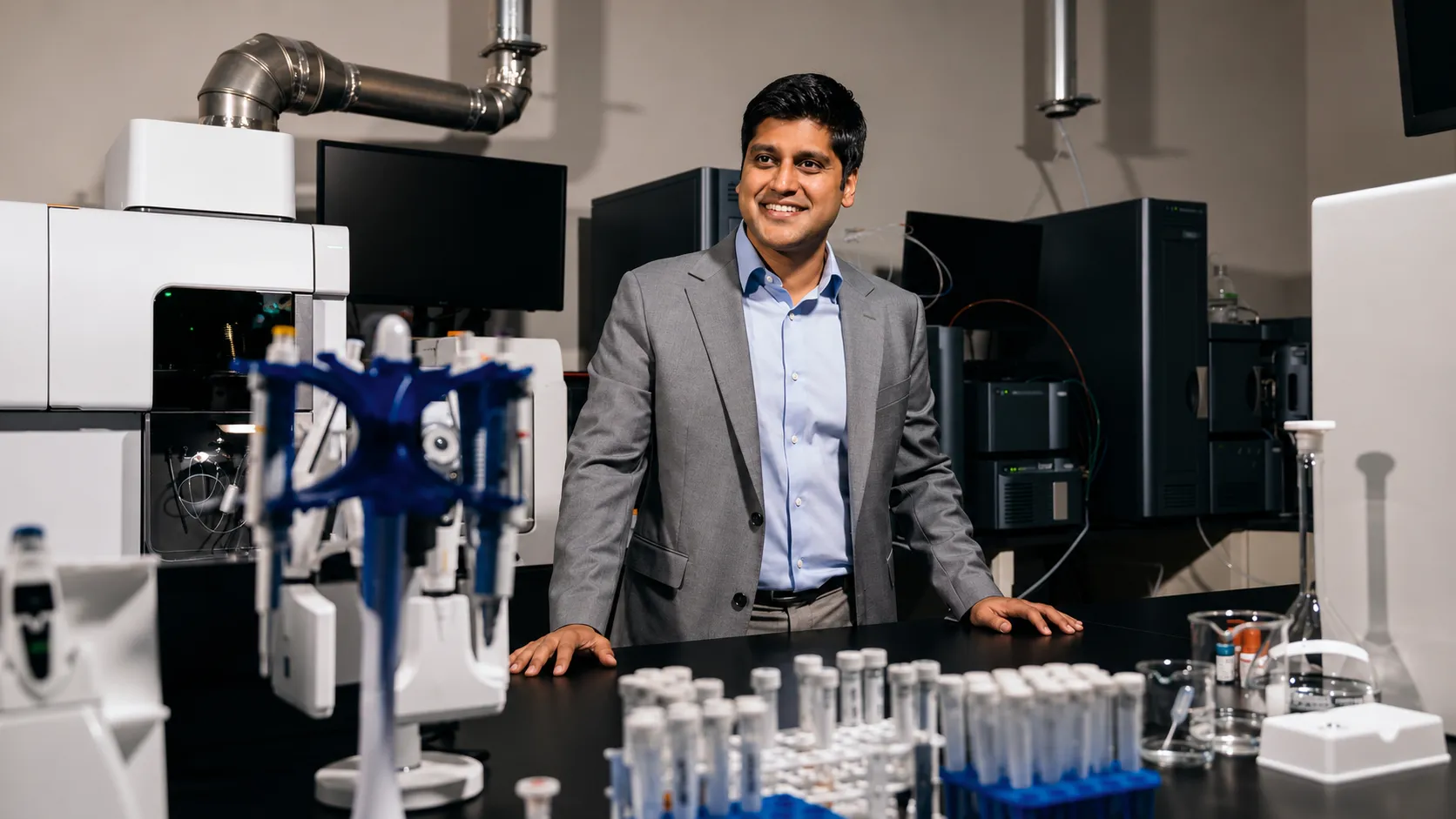
Why Chakrabarti's Story Matters to the Global Indian Community
Chakrabarti's path stands apart from many of his fellow Indian-American founders precisely because it did not run through the traditional Silicon Valley pipeline of computer science degrees and Big Tech internships. It ran through American medical school, through a decade of rigorous, slow-moving scientific training most people assume leads only to a hospital or a university lab. His story is a powerful reminder to the diaspora that the deepest, most transformative entrepreneurial insights often come not from chasing the next hot trend, but from paying close attention to what your existing, unrelated expertise is quietly trying to tell you. A pancreatic cancer researcher noticing an enzyme's industrial potential is precisely the kind of cross-disciplinary observation that traditional industry insiders, trained only in chemical engineering, would likely never have made.
Today, as Solugen continues expanding its manufacturing footprint and product portfolio, Gaurab Chakrabarti stands as one of the clearest examples of a distinctly Indian-American entrepreneurial archetype: the immigrant-educated physician-scientist who refused to stay inside the professional lane society expected of him, and instead built an industrial company that is quietly trying to change how the entire world manufactures the chemicals it depends on every single day. His story continues to circulate through Indian-American medical and scientific communities not as a cautionary tale about abandoning a medical career, but as an example of what becomes possible when rigorous scientific training is paired with the willingness to ask an entirely unconventional question about where that training might actually lead. As global industry faces mounting pressure to decarbonize, Solugen's continued growth suggests that Chakrabarti's original, almost accidental insight from a cancer laboratory may yet prove to be one of the more consequential scientific pivots of his generation. Few founder journeys illustrate so plainly how a single laboratory observation, pursued with enough conviction, can eventually reshape an entire industrial category.
As climate regulation tightens across major economies and industrial buyers face growing pressure to document the carbon footprint of their raw material supply chains, Solugen's founding wager — that biology could out-compete petrochemistry on cost, purity, and environmental impact simultaneously — looks less like a contrarian bet with every passing year and more like an early, correct read of where global industrial manufacturing was always going to have to go.


