
FINTECH 2.0
The rise of embedded everything – why every company is becoming a bank (and why that scares the incumbents)
NEW YORK, New York – For the past decade, fintech meant disruption.
Neobanks like Chime and Nubank promised to replace traditional banking. Robinhood made trading free. Stripe made payments invisible. The narrative was simple: fintech startups would eat the legacy financial system one vertical at a time.
But that war is over. And neither side won.
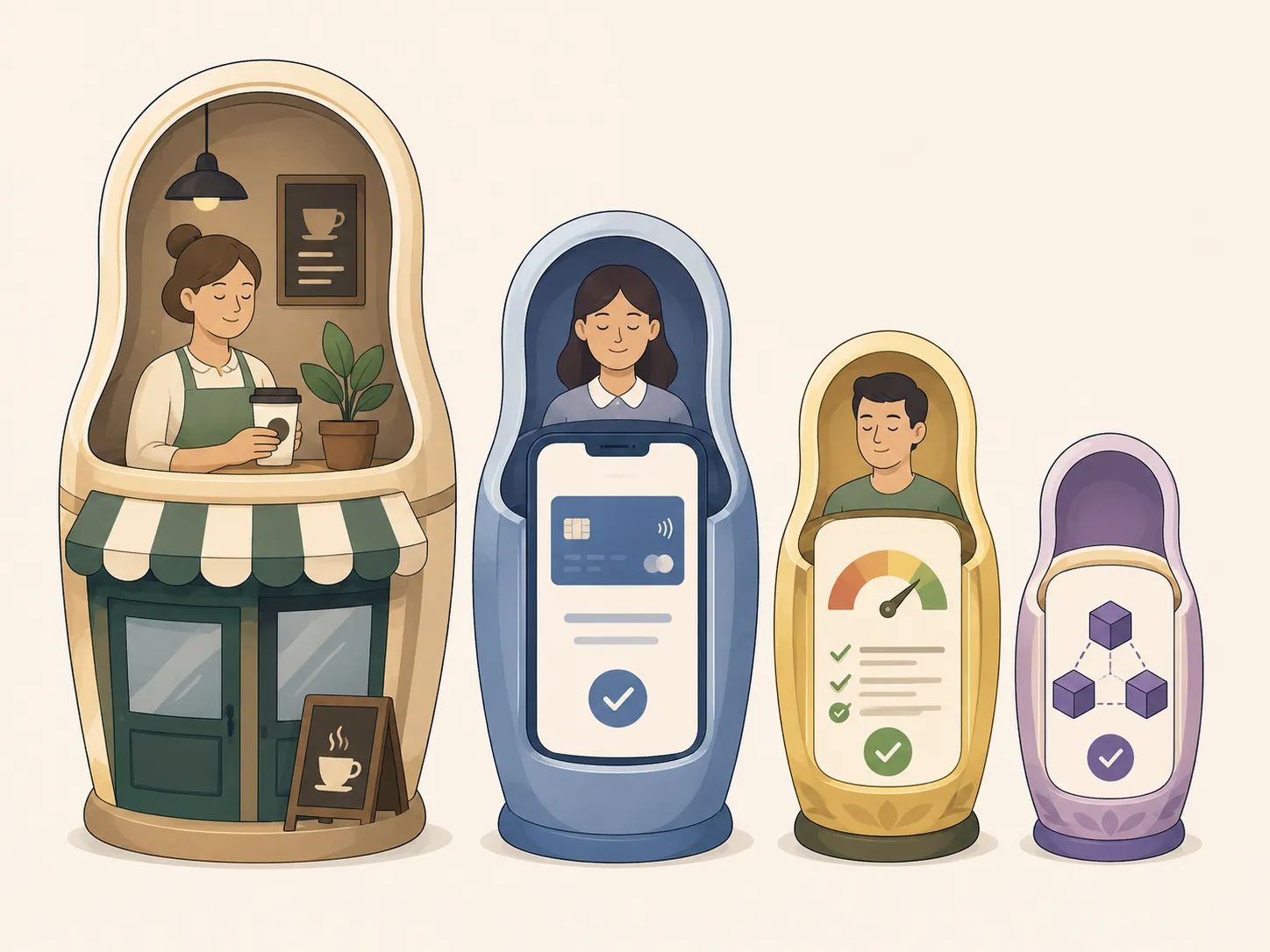
Instead, something unexpected happened. Fintech stopped being a category and became a feature. Every company – from coffee shops to car dealerships to pet stores – is now a fintech company. And the startups that enable that shift are the true winners of Fintech 2.0.
The numbers tell the story. According to a new report from McKinsey & Company, the embedded finance market – banking, lending, insurance, and payments integrated directly into non‑financial platforms – will reach $7 trillion in transaction value by 2029. That is up from $2.5 trillion today.
"The era of standalone fintech apps is ending," says Angela Strange, a general partner at Andreessen Horowitz who coined the phrase "every company will be a fintech company." "The next wave is invisible finance. You will not go to a banking app. You will just bank wherever you already are."
The Winner: Embedded Infrastructure
While consumer‑facing fintech apps struggle with high customer acquisition costs and brutal competition, the real money is being made by the infrastructure providers – the companies that allow any business to add banking, lending, or insurance to their existing offering with a few lines of code.
Forbes released its 11th annual Fintech 50 list this week, and the composition tells the story. Only 15 of the 50 are pure‑play neobanks or consumer apps. The other 35 are B2B infrastructure platforms: Unit, Treasury Prime, Galileo, Synctera, and Solid – all of which offer "banking‑as‑a‑service" APIs.
"Consumers do not want another banking app," says Itai Damti, CEO of Unit, a New York‑based embedded finance platform that powers banking for over 200 brands – from accounting software to HR platforms to e‑commerce stores. "They want to pay for their coffee, insure their pet, and get a loan for their new laptop – all without leaving the app they already use. That is what we enable."
Unit just raised a $150 million Series D at a $1.5 billion valuation, led by Accel. The company is now profitable and processing over $10 billion in annualized transaction volume.
The New Challengers: Five, Rise, and Treasury Prime
Three startups, in particular, illustrate the new fintech playbook.
1. Five (London / New York) – The Palm That Pays
Five, a biometric payments startup that just opened its U.S. headquarters in New York, raised $6 million for its palm‑reading payment technology. The system uses infrared sensors to map the unique vein pattern in a user's palm, linking it to any payment card or bank account.
No phone. No wallet. No battery. Just a hand wave.
"We are not building a payments app," says Henry James, Five's CEO. "We are building a payments layer that any retailer can embed into their checkout. You walk into a coffee shop, wave your hand, and leave. No friction. No thought."
Five has already signed pilot deals with a national grocery chain and a stadium concessionaire. The company plans to be in 5,000 locations by the end of 2027.
2. Rise (Atlanta) – Earned Wage Access for the Real World
Rise, an Atlanta‑based startup, embeds earned wage access directly into HR and payroll software. Employees can access a portion of their earned but unpaid wages at any time – no payday loans, no interest, no fees.
"We are not a lender," says Maria Gonzales, Rise's founder and CEO. "We are a feature inside the software that every company already uses. When an employee needs $200 for a car repair, they click a button. The money appears in their account instantly. The employer pays us a small flat fee."
Rise just raised a $75 million Series B led by QED Investors. The company is integrated with Gusto, Rippling, and BambooHR, reaching over 2 million employees.
3. Treasury Prime (San Francisco) – The API for Bank Partnerships
Treasury Prime takes a different approach: it connects fintech startups directly to a network of community and regional banks, handling all the compliance, KYC, and regulatory heavy lifting.
"Regulation is the biggest barrier to fintech innovation," says Chris Dean, Treasury Prime's co‑founder and CEO. "We make it easy for any startup to launch a banking product without building a compliance department. You focus on the user experience. We focus on the paperwork."
Treasury Prime just announced a $60 million Series C led by BAM Elevate. The company now powers over 500 fintech products, from neobanks to lending platforms to crypto exchanges.
The Forbes Fintech 50: What It Tells Us
This year's Forbes Fintech 50 list, released on Tuesday, offers a roadmap to the future.
Top trends highlighted by the list:
Embedded finance dominates: 22 of the 50 companies are B2B infrastructure providers, up from 12 just three years ago.
Biometrics are rising: Five is on the list. So is ID.me (digital identity) and Veriff (video‑based KYC).
Lending is back, but differently: Not consumer lending, but embedded lending – point‑of‑sale financing, invoice factoring, and revenue‑based financing. Klarna, Affirm, and Plaid (which now powers lending data) all made the cut.
The neobank shakeout is real: Several prominent consumer neobanks from previous years – including Varo and Current – fell off the list due to profitability concerns.
"The fintech market has matured," says Jeff Kauflin, Forbes' fintech editor. "Investors are no longer impressed by user growth alone. They want revenue, profitability, and clear differentiation. The companies that survive are the ones that solve real problems for businesses, not just consumers."
The Regulatory Landscape: Washington Wakes Up to Embedded Finance
The explosion of embedded finance has not gone unnoticed by regulators. The Office of the Comptroller of the Currency (OCC) and the Consumer Financial Protection Bureau (CFPB) are both scrutinizing bank‑fintech partnerships.
The concern: when a non‑bank company offers banking services through a partner bank, who is responsible when something goes wrong? If a customer loses money because of a glitch in the coffee shop's payments app, does the coffee shop have FDIC insurance? Does the partner bank have liability?
"The regulatory framework was built for a world where banks were banks and retailers were retailers," says Todd Baker, a fintech lawyer at BakerHostetler. "That world is gone. We are now in a world where every company touches financial services. The regulators are scrambling to catch up."
The CFPB has proposed a new rule that would require any company offering "financial products or services" – broadly defined – to register with the agency. The rule is opposed by the tech industry but supported by consumer advocates.
The Bottom Line: Invisible Finance Wins
Fintech 2.0 is not about building the next great banking app. It is about making banking disappear.
When you buy a car, the loan should be approved in the dealership's iPad, not a separate app. When you check out of a hotel, the deposit should be refunded instantly, not five days later. When your pet needs surgery, the insurance should be verified at the vet's reception desk, not after a 20‑minute phone call.
That is the promise of embedded finance. And it is already happening.
"In five years, you will not say 'I use a fintech app,'" says Unit's Damti. "You will just expect every business to offer the financial services you need, exactly when you need them. The best fintech is the fintech you never notice."
Fintech 2.0 is not about disruption. It is about integration. And the startups that enable that integration are the ones building the next trillion‑dollar industry.


