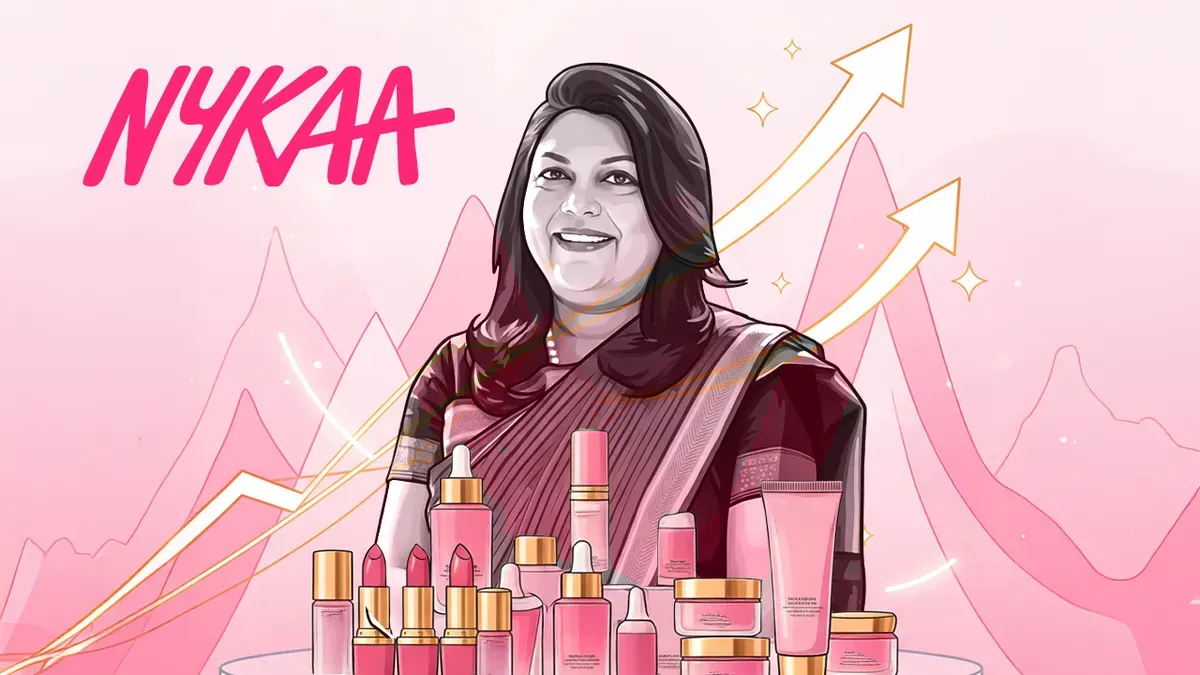
Falguni Nayar — The Investment Banker Who Retired at 50, Bet Everything on Lipstick, and Built a $6 Billion Empire
MUMBAI — May 22, 2026 — In 2012, Falguni Nayar did something that made no sense to anyone who knew her. She was 50 years old, the managing director of Kotak Mahindra Capital, one of India's most respected investment banks. She had spent nearly two decades advising companies on mergers, acquisitions, and public offerings. She had a corner office, a steady salary, and the kind of professional reputation that takes a career to build. She was, by any conventional measure, at the peak.
She quit. Not to retire to a life of leisure, not to join another financial institution, but to start a beauty company. She had no experience in retail, no background in cosmetics, and no reason to believe that a 50-year-old former banker could compete with the global beauty conglomerates that dominated the Indian market. She called the company Nykaa—derived from the Sanskrit word nyaka, meaning "heroine"—and she poured her own savings into it, betting that Indian women were ready for a beauty retailer that understood them.
Ten years later, Nykaa went public at a valuation of nearly $7 billion. Nayar became India's wealthiest self-made female billionaire, with a net worth that exceeded $2.5 billion at the peak. The company had transformed from a single online storefront into a multi-channel beauty and fashion empire with over 100 physical stores, a portfolio of private-label brands, and a customer base that numbered in the tens of millions. The former investment banker who knew nothing about lipstick had built the largest beauty retailer in India.
The 50-Year-Old Startup Founder
The startup ecosystem fetishizes youth. The founders who attract the most attention—the biggest funding rounds, the most breathless media profiles, the most admiring investor conversations—are overwhelmingly in their twenties and thirties. The mythology of Silicon Valley is built around the idea that entrepreneurship is a young person's game, that the energy, risk tolerance, and naive optimism required to start a company are properties of the young.
Falguni Nayar demolished that mythology. She was 50 years old when she founded Nykaa, an age at which most of her peers were planning their retirements. She had teenage children. She had a comfortable life. She had nothing to prove and everything to lose. And yet, she walked away from a career that had defined her adult life and bet her savings on an industry she had never worked in.
The decision was not impulsive. During her years at Kotak, she had watched the consumer internet revolution transform retail, travel, and media. She had advised companies that were reshaping Indian commerce. She understood markets, she understood capital, and she understood consumer behavior at a level that few beauty industry veterans ever would. What she lacked was domain expertise—the granular knowledge of how cosmetics were sourced, manufactured, and sold. She acquired it the way she had acquired financial expertise: through relentless study, careful hiring, and the willingness to learn from her mistakes.
The early years were difficult. The beauty industry was dominated by multinational giants—L'Oréal, Estée Lauder, Unilever—with deep pockets, established brands, and relationships with every major retailer in the country. E-commerce in India was still in its infancy, and convincing luxury beauty brands to sell through an online startup run by a former banker was not easy. Nayar spent months on the road, meeting with brand executives, building relationships, and making the case that Indian consumers were ready for a premium beauty experience that did not require a trip to a department store.
The Insight That Built an Empire
The core insight behind Nykaa was not about beauty products. It was about the Indian consumer—specifically, the Indian woman—and the gap between what she wanted and what the market was offering her.
Before Nykaa, the Indian beauty retail experience was fragmented and often intimidating. High-end products were sold in department stores where the lighting was harsh and the sales staff were trained to push expensive creams on customers who did not know what they needed. The selection was limited, the pricing was opaque, and the experience was transactional rather than aspirational. Indian women were spending more on beauty every year, but the retail infrastructure had not kept pace with their sophistication.
Nykaa's online platform solved this by offering something that had never existed in India: a comprehensive, well-organized, beautifully designed beauty retailer that carried both international luxury brands and affordable Indian alternatives, with detailed product descriptions, user reviews, and educational content that helped customers make informed choices. The company invested heavily in content—tutorials, reviews, trend reports—that made the platform a destination, not just a store.
The physical stores, when they came, were designed to extend that experience into the offline world. They were bright, modern, and welcoming, with testers on open counters, knowledgeable staff who did not work on commission, and the same curated selection that defined the online platform. The integration between online and offline—customers could order online and return in-store, or try a product in-store and order a different shade online—was seamless in ways that larger, older retailers could not replicate.

The Public Market Test
In November 2021, Nykaa went public on the National Stock Exchange of India. The IPO was oversubscribed by more than 80 times. On its first day of trading, the stock surged nearly 100%, valuing the company at close to $7 billion. Falguni Nayar, who had invested her own savings to start the company less than a decade earlier, became India's wealthiest self-made female billionaire.
The public listing was a watershed moment for Indian entrepreneurship. It demonstrated that a company built by a woman, in an industry that venture capitalists had long dismissed as "niche," could command a valuation that rivaled the country's largest technology platforms. It demonstrated that a founder who started at 50 could achieve in a decade what most entrepreneurs never achieve in a lifetime. And it demonstrated that the Indian consumer market—particularly the female consumer market—was far larger, far more sophisticated, and far more underserved than the business establishment had recognized.
The years since the IPO have not been without challenges. Nykaa's stock has experienced the same volatility that has affected technology and consumer companies globally. The company has faced increasing competition from well-funded rivals like Reliance's Tira and Tata's Palette. The beauty market has become more crowded, and the margins have compressed as competitors have raced to match Nykaa's selection and service. But the company's brand remains among the most recognized and trusted in Indian retail, and its founder's story remains one of the most inspiring in Indian business.
What This Story Actually Says
The Falguni Nayar story is not a story about beauty. It is a story about the courage to start over—to walk away from a successful career at the peak, to bet on an industry you have never worked in, and to build something from scratch at an age when most people are planning their retirement.
The startup ecosystem's obsession with youth is not merely inaccurate; it is counterproductive. The qualities that make a great founder—judgment, resilience, the ability to see patterns that others miss, the patience to build for the long term—are qualities that typically strengthen with age and experience. Nayar had spent two decades advising companies on strategy, capital allocation, and market positioning. When she started Nykaa, she applied those skills to a new domain and proved that they transferred.
She also proved something about the Indian consumer market that has implications far beyond beauty. The female economy—the purchasing power of Indian women, their sophistication as consumers, and their willingness to spend on products that improve their lives—is among the largest and most underserved markets in the world. The companies that recognize this and build for it will capture value that the male-dominated business establishment has systematically overlooked.
Falguni Nayar is not the founder she was supposed to be. She was too old, too female, too unfamiliar with the industry she was entering. She ignored all of those objections and built a $6 billion company anyway. The investment banker who retired at 50 did not retire. She simply started the most successful chapter of her career—and proved, in the process, that the best time to start is whenever you are ready.


