SEO Title: ePlane Company Signs 5 Strategic Partnerships At Farnborough Airshow For e200X Electric Aircraft
Meta Description: Chennai's The ePlane Company has signed five partnerships at Farnborough International Airshow 2026 covering wiring, fasteners, avionics, composites and interiors for its e200X eVTOL.
---
At most airshows, the headline moment is a shiny new jet rolling out for its first public flypast. At Farnborough International Airshow 2026, one of the more consequential Indian aerospace stories unfolded quietly in meeting rooms and signing ceremonies rather than on the tarmac: a Chennai-based startup methodically stitching together the industrial supply chain it will need to actually build, certify and fly India's first domestically developed electric aircraft.
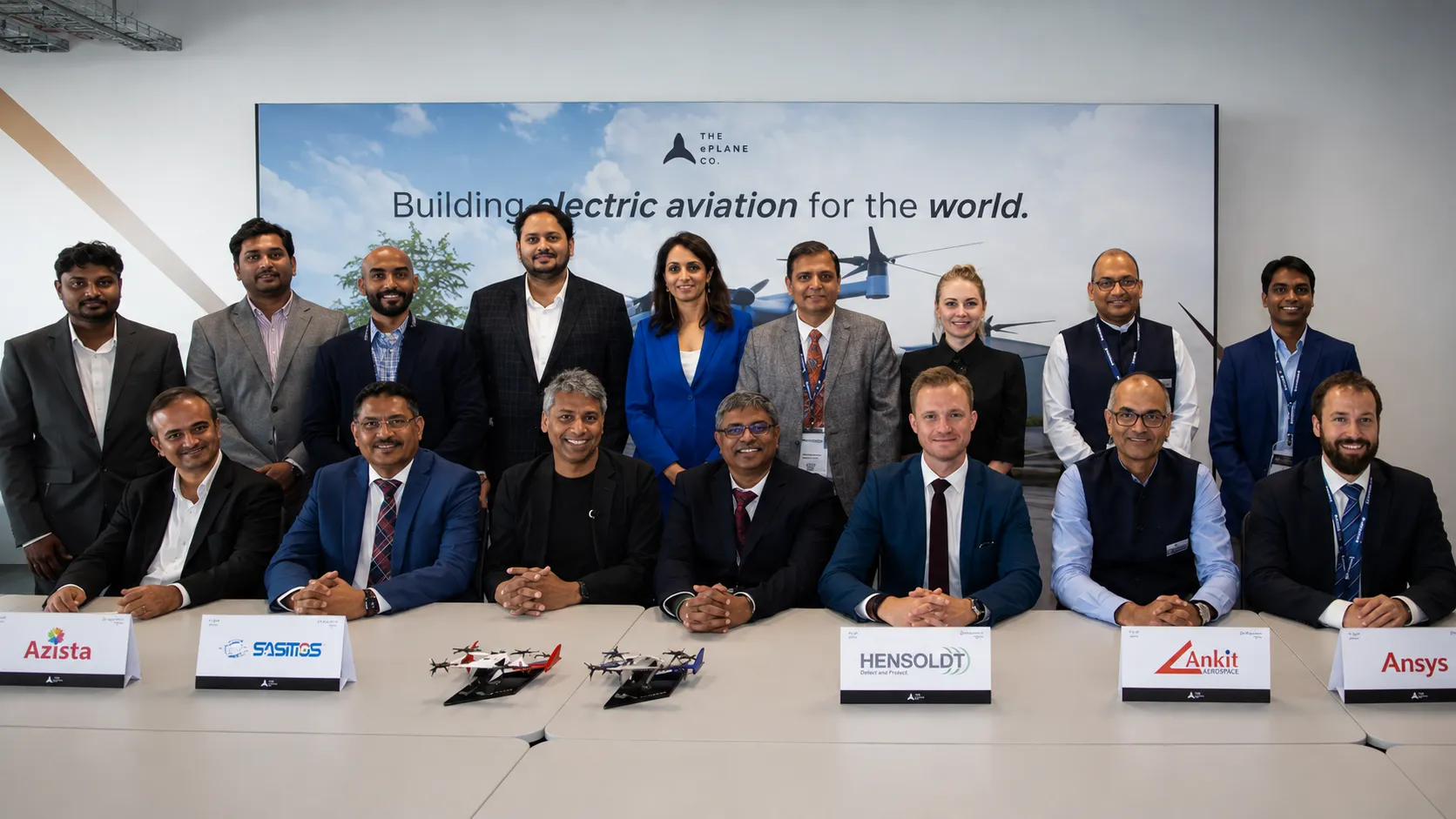
The ePlane Company has announced five strategic partnerships at Farnborough covering critical systems for its e200X electric vertical take-off and landing (eVTOL) aircraft — spanning electrical wiring interconnection systems, aerospace-grade fasteners, avionics, composite materials, and modular cabin interiors. Taken individually, none of these agreements would generate much attention outside specialist aerospace trade press. Taken together, they represent the unglamorous but essential groundwork required to move an aircraft from prototype to certified, commercially deployable product — arguably the harder and more capital-intensive half of building any aerospace company.
Following Two Major Milestones
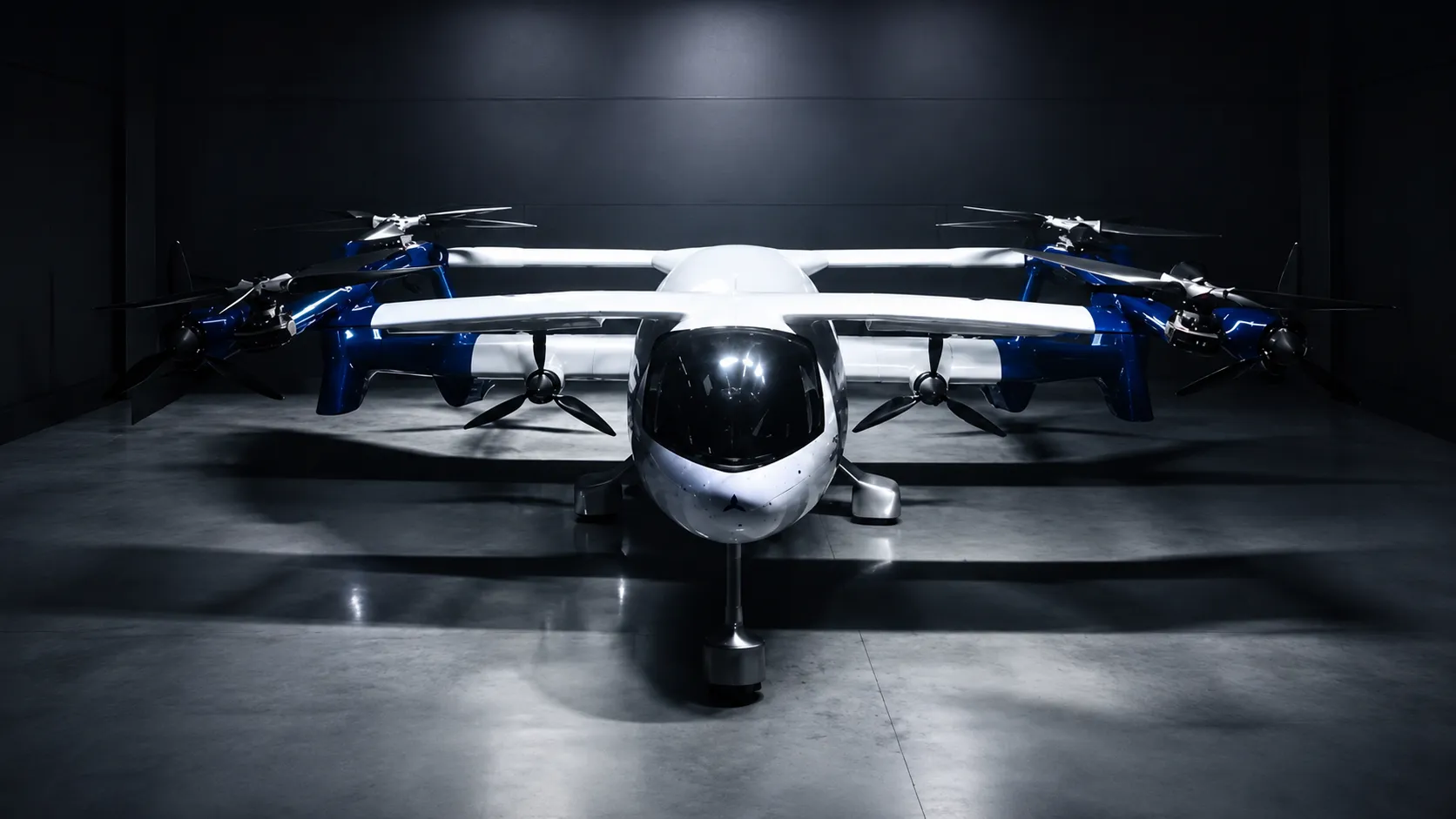
The partnership announcements arrive on the heels of two significant developments for the company. At Farnborough itself, ePlane unveiled PT-01, the first full-scale prototype of its e200X eVTOL — an aircraft designed to serve passenger transport, cargo delivery and emergency medical transport applications from a single airframe. That unveiling followed the earlier milestone of ePlane becoming, according to the company, the first private aerospace company in India to receive Design Organisation Approval from the Directorate General of Civil Aviation (DGCA) for electric aircraft, with the e200X becoming the first eVTOL accepted into the DGCA's official type certification pipeline.
That certification pathway matters enormously for how seriously the rest of this story should be read. Aerospace, unlike most consumer technology sectors, does not reward moving fast and breaking things — every component, every supplier relationship, and every design decision must eventually satisfy a regulator whose primary mandate is ensuring aircraft do not fall out of the sky. A startup that has already secured DGCA design organisation approval and entered the formal type certification pipeline has cleared a bar that the vast majority of eVTOL ambitions globally, hyped as many of them are, have not yet reached.
The Five Partnerships, Explained
The company's collaboration with SASMOS HET Technologies, formalised through a memorandum of understanding, will focus on Electrical Wiring Interconnection Systems (EWIS) engineering, design and industrialisation for the e200X — covering harness architecture, design for manufacturability, prototype evaluation and certification readiness. In an electric aircraft, wiring is not a peripheral concern; it is the circulatory system carrying power from batteries to motors and flight control systems, and getting that architecture wrong has historically been a source of catastrophic failure across aviation history, making this partnership considerably more consequential than its unglamorous name suggests.
Ankit Aerospace will supply aerospace-grade fasteners — the precision-engineered components that hold the aircraft together and keep every critical joint safe under flight loads. Ankit Aerospace brings a track record supplying mission-critical fastening components to India's most demanding aerospace and defence customers, including ISRO, HAL, NAL and DRDO, a customer list that speaks to the quality bar such components must clear before an aircraft manufacturer will trust them.
On avionics, ePlane showcased its ongoing partnership with HENSOLDT Avionics, first announced in February 2026, which continues to supply the avionics suite and flight radar supporting the e200X's navigation, situational awareness and connectivity requirements. Azista Composites will supply composite materials, including carbon fibre prepregs, for the aircraft's structural components — the lightweight, high-strength materials that make electric flight's demanding weight budget achievable in the first place. And Dallas-headquartered AMS Heli Design will work with ePlane on modular interior and seating solutions capable of supporting multiple mission configurations — air ambulance, air taxi, cargo and VIP use — reflecting ePlane's stated ambition of building a single airframe adaptable across all of these roles rather than developing separate variants from scratch.
Why One Airframe, Many Missions
That "single airframe, multiple missions" strategy deserves particular attention, because it is a meaningfully different approach from how much of the global eVTOL industry has structured its product roadmaps. Many international eVTOL developers have focused narrowly on the urban air mobility use case — ferrying passengers between designated vertiports in congested cities — a market that remains dependent on infrastructure build-out, regulatory frameworks and public acceptance that could take years to mature in most markets.
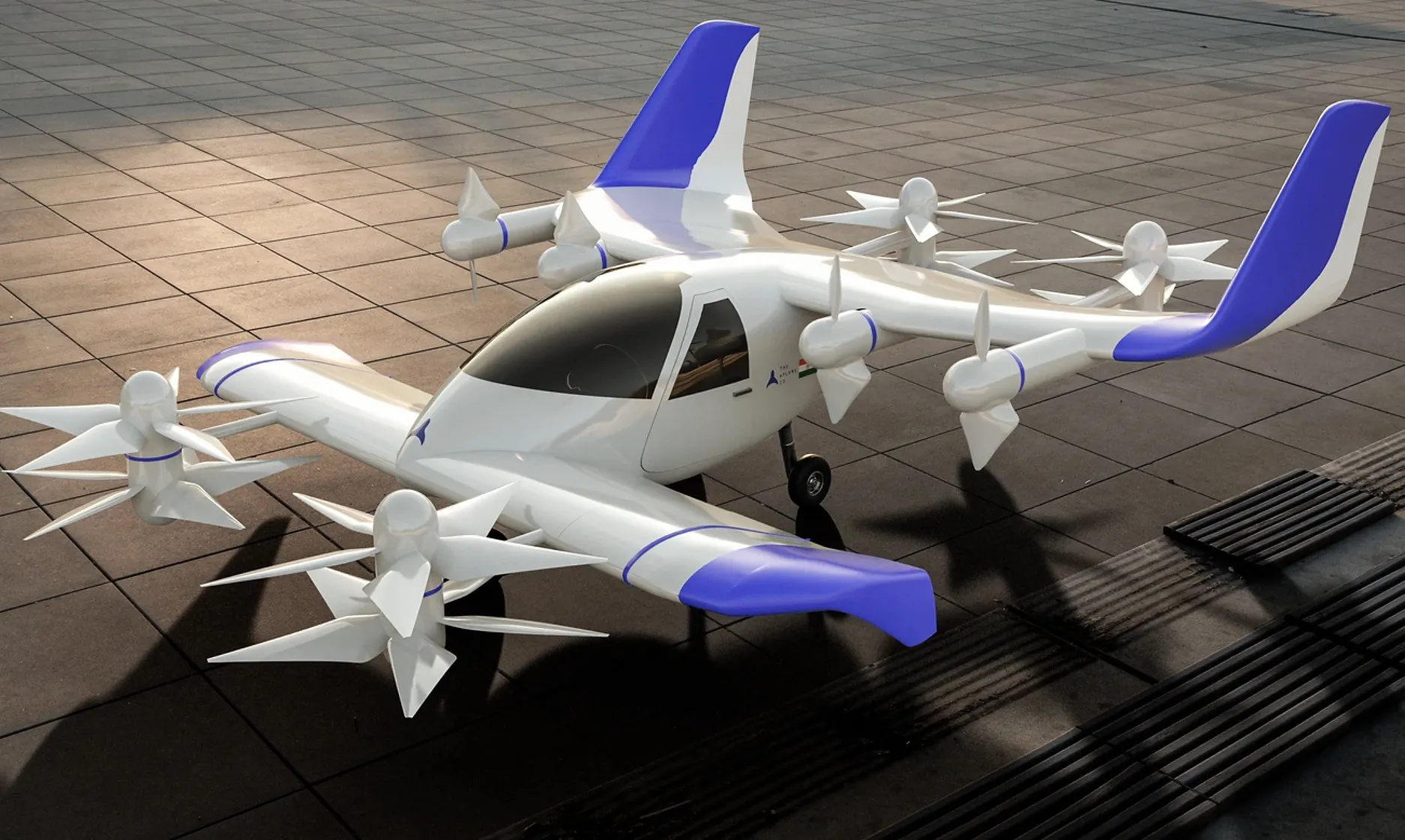
By designing the e200X to flex across air ambulance, air taxi, cargo and VIP configurations through modular interiors rather than entirely separate aircraft variants, ePlane appears to be hedging against the possibility that any single use case proves slower to commercialise than hoped, while positioning itself to capture revenue from whichever segment matures fastest. Emergency medical transport, in particular, may prove a more immediately monetisable market in India than urban air taxi services, given the country's well-documented gaps in rapid emergency healthcare access across both urban traffic congestion and underserved rural geography — a market where an eVTOL's ability to land without runway infrastructure could offer genuine, measurable life-saving value rather than simply convenience.
Satya Chakravarthy's Framing Of The Ecosystem Play
"These partnerships reflect the strength and depth of the ecosystem we're building around the e200X. From wiring and fasteners to avionics, composites, and interiors, each of these relationships strengthens our path toward a certifiable, Made-in-India electric aircraft," said Satya Chakravarthy, Founder and CTO of The ePlane Company. That phrase — "Made-in-India electric aircraft" — is doing significant political and strategic work in addition to its literal meaning. India's aerospace and defence manufacturing sector has long been characterised by heavy reliance on imported components and foreign original equipment manufacturers, even for platforms assembled domestically. A genuinely indigenous eVTOL supply chain, built from a Chennai startup outward through a network of Indian and carefully selected international specialist suppliers, would represent a meaningfully different model — one aligned with India's broader "Make in India" industrial policy push, but built through commercial partnership logic rather than policy mandate alone.
The Company's Origins And Infrastructure
Founded in 2019 and incubated at IIT Madras, The ePlane Company is headquartered at the IIT Madras Discovery Campus in Chennai, where it operates what it describes as India's first dedicated facility for eVTOL prototyping, manufacturing and testing, spread across more than 60,000 square feet. That academic incubation lineage is worth noting: IIT Madras has increasingly positioned itself as a hub for India's deep-tech and hardware startup ecosystem, and ePlane's trajectory — from academic origin through prototype unveiling to DGCA certification pipeline entry and now a genuine international supplier network — offers a useful data point for how effectively that institutional infrastructure can support genuinely capital- and expertise-intensive hardware ventures, a category of startup that has historically struggled to find the patient capital and technical mentorship available to software-first companies.