When political scientists talk about why decentralization so often fails to deliver on its promises, the conversation usually centers on citizens: do voters have enough information to hold local officials accountable? A new award-winning study out of Duke University flips that question on its head — and in doing so, has just won one of the discipline's most prestigious honors.
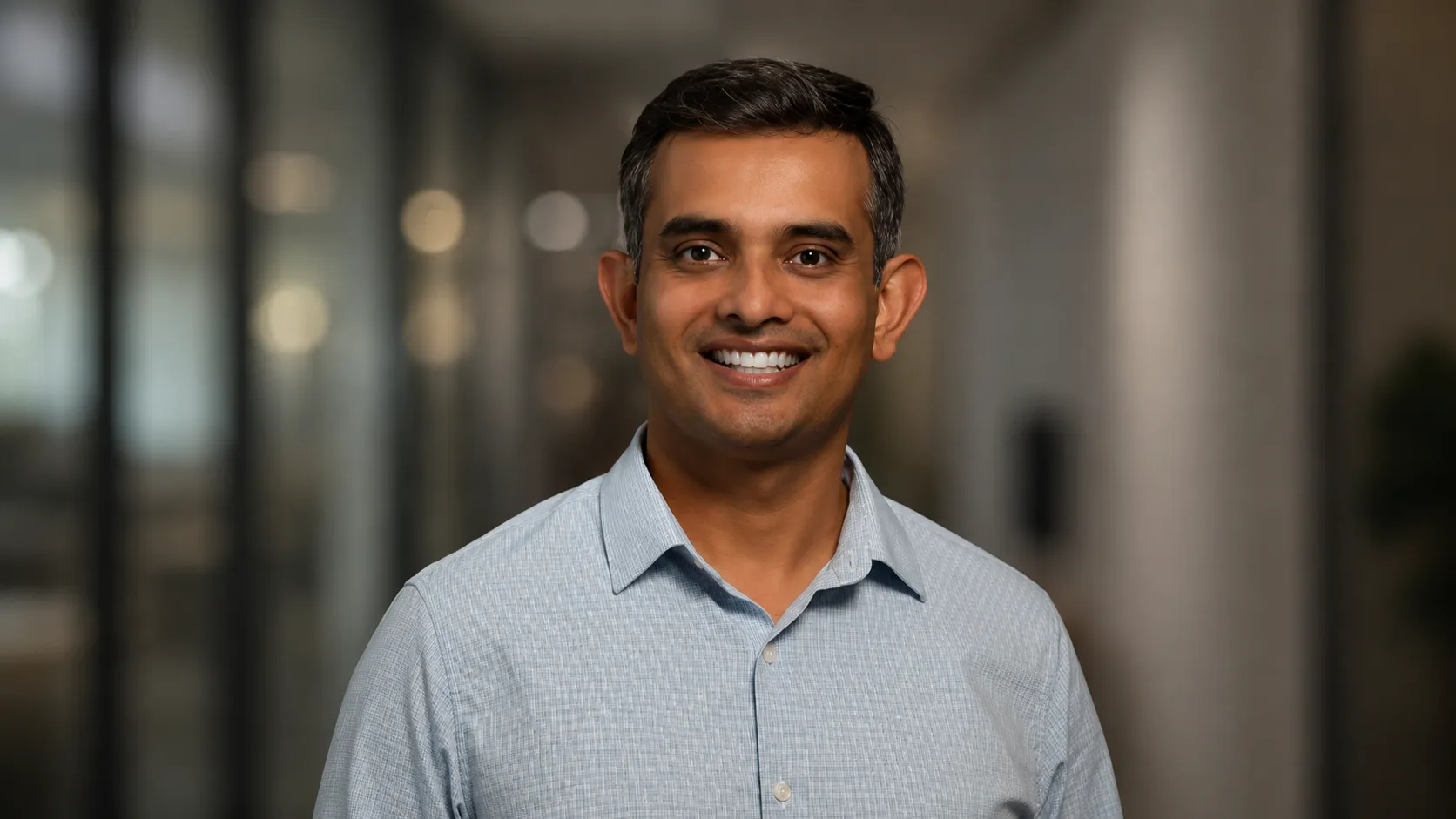
Shikhar Singh, an Assistant Professor of Political Science at Duke, along with co-authors Adam Auerbach of Yale University and Tariq Thachil of the University of Pennsylvania, has been named a recipient of the 2026 Heinz I. Eulau Award, presented annually by the American Political Science Association for the best article published in the discipline's flagship journal, the American Political Science Review. Their winning paper, “Who Knows How to Govern? Procedural Knowledge in India's Small-Town Councils,” appeared in the journal's May 2025 issue and has quickly become one of the most cited recent contributions to the study of local democracy in the Global South.

The study's central finding is deceptively simple, and precisely for that reason, unsettling. Governments across the developing world, India very much included, have spent decades decentralizing power to municipal and local authorities on the theory that governance closer to the people produces better, more responsive outcomes. Singh and his co-authors set out to test an assumption embedded in most of that literature: that officials elected to run these newly empowered local bodies actually know how to run them. Drawing on extensive fieldwork and what the authors describe as a novel survey of small-town politicians across India, they found that local officials themselves often possess distressingly low levels of what the paper terms “procedural knowledge” — the basic operational know-how of how a municipal council actually functions, how budgets move, how services get delivered, and how the machinery of local government is meant to work.
Perhaps more striking still, the research found that winning elected office does not, on its own, provide any kind of institutionalized pathway for officials to acquire that knowledge once in the job. In other words, small-town India is not simply electing councilors who arrive uninformed; it is running a system with no reliable mechanism for those councilors to become informed even after they take their seats. The paper argues that these asymmetries in knowledge among officials themselves — not just gaps in citizen awareness — blunt the representative potential of local government bodies and help explain why decentralization so often underdelivers on public goods provision and administrative responsiveness.
The Eulau Award citation, issued by an APSA committee, singled out the paper for being “well-written and informative,” while also stressing that its findings extend well beyond India's borders. Because the puzzle the authors identify — governments devolving authority downward without building the human capital to exercise it — is a structural pattern replicated across many decentralizing democracies worldwide, the committee noted the paper's relevance “in India and in other communities around the world.” The award places Singh and his co-authors in rarefied company; the Eulau Prize is one of the American Political Science Review's most competitive annual honors, recognizing a single article out of the hundreds submitted to the journal each year.
For Singh, the recognition caps a research trajectory that has been building steadily since his graduate training. He completed his Ph.D. in political science at Yale University after earning a B.A. in History and Politics from Balliol College, Oxford, where he studied as an Inlaks scholar, and a B.A. in History from St. Stephen's College at the University of Delhi. Before joining Duke's faculty, he spent the 2023-24 academic year as a postdoctoral research fellow at the University of Pennsylvania's Center for the Advanced Study of India, working alongside Thachil and Auerbach — the same collaborators with whom he would go on to co-author the Eulau-winning paper. That fellowship year, colleagues familiar with the group's work say, was foundational to the survey infrastructure and fieldwork relationships that ultimately made the India-wide study possible.
Singh's broader research agenda circles a consistent theme: how changes in the economic and technological landscape reshape democratic accountability in the developing world. His forthcoming book project, tentatively titled “Innovation Without Transformation,” examines how India's rapid rollout of digital public infrastructure — from biometric identification systems to digitized welfare disbursement — is reshaping voting behavior and citizen expectations of the state. In parallel work, he has published research in the American Political Science Review examining how voters selectively attribute blame during crises like the COVID-19 pandemic, and has written on why Indian citizens often fail to hold elected officials accountable for environmental crises such as air pollution, despite the visible and shared nature of the harm.
That air pollution research, co-authored with Thachil, points to a throughline in Singh's work: a persistent interest in the puzzle of non-accountability — the many structural and psychological reasons why democratic mechanisms that should, in theory, punish poor governance frequently fail to do so in practice. The small-town councils paper extends that puzzle downward, from national and state politics to the municipal level where, arguably, the day-to-day business of governing — water, sanitation, road repair, local dispute resolution — actually happens.

The paper's methodology also reflects a broader shift in how India's local governance is being studied. Rather than relying solely on citizen surveys or aggregate outcome data, Singh, Auerbach, and Thachil built a large-scale instrument specifically measuring the procedural knowledge of the officials themselves — essentially testing what elected councilors actually know about the rules and processes governing their own offices. That approach required years of fieldwork across India's small towns, the kind of on-the-ground data collection that has become a hallmark of the India-focused research emerging from the Yale-Penn-Duke network of scholars Singh belongs to.
The work has already found an audience well beyond academic political science. According to citations tracked by the authors, the paper has been featured by the World Resources Institute's TheCityFix platform and by APSA's own Political Science Now, and was presented directly to the World Bank's Social Sustainability and Inclusion group in Washington, D.C. — a sign that the findings are being read not just by scholars but by the practitioners and multilateral institutions actually designing decentralization policy on the ground.
For the Indian American academic community, Singh's Eulau Award adds to a growing body of high-impact scholarship being produced by India-focused researchers at American universities — work that is increasingly shaping not just how India is understood in Western political science departments, but how development institutions and policymakers approach the unglamorous, granular work of making local government actually function for the people it is meant to serve.


