TechFintech9 MIN READ

Delhivery Just Got the RBI's Green Light to Become a Lender — Here's Why That's a Bigger Deal Than It Sounds

The RBI approved a Type II NBFC licence for Delhivery Financial Services, letting India's largest logistics firm lend to the truckers and vendors in its own network.

By Nisha Omkumar · Author15 July 2026
Delhivery Just Got the RBI's Green Light to Become a Lender — Here's Why That's a Bigger Deal Than It Sounds

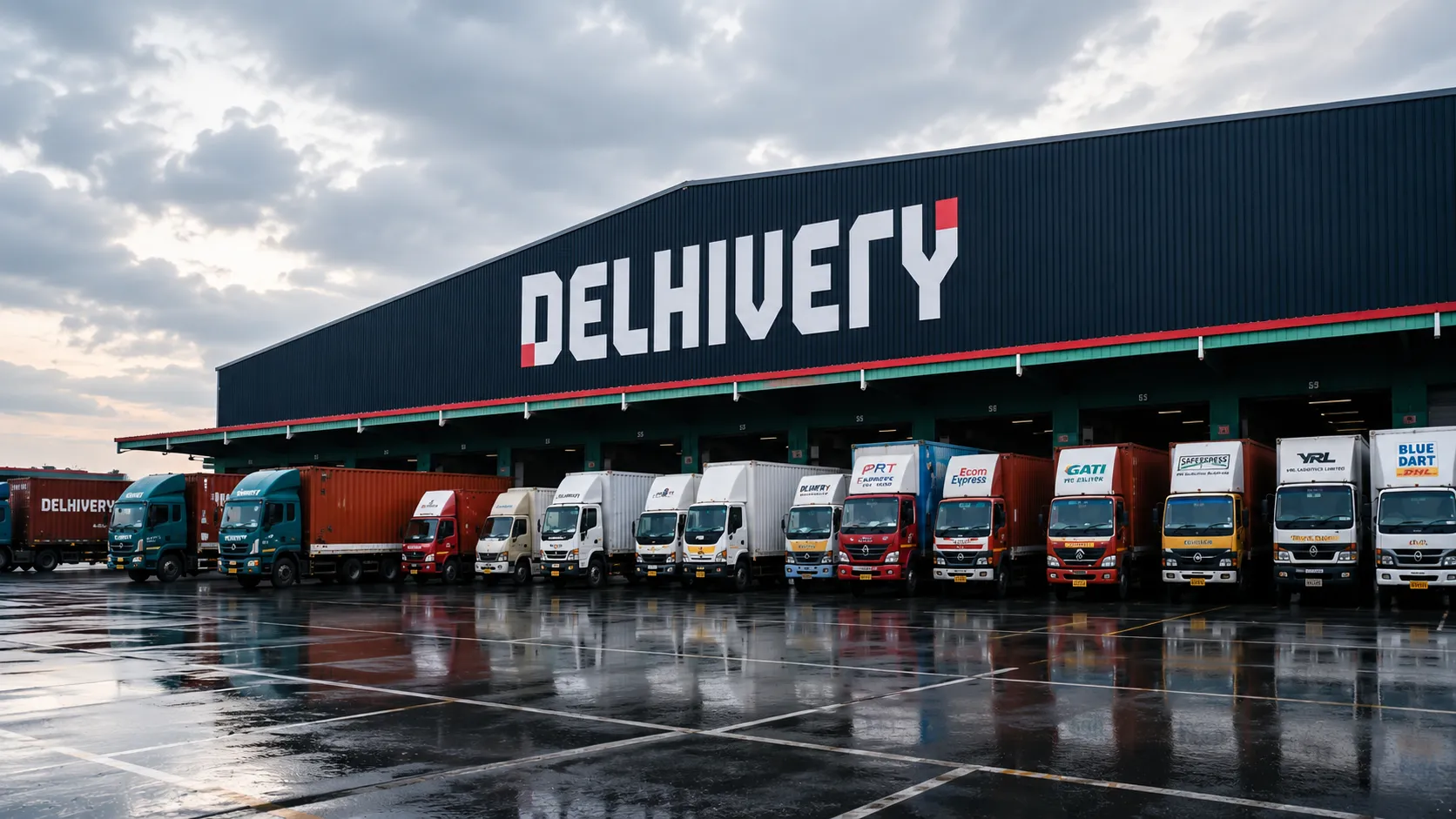
Delhivery, India's largest integrated logistics and supply chain company, has cleared a significant regulatory milestone in its push to build a genuine financial services business alongside its core parcel delivery and freight operations. The Reserve Bank of India has approved the application for a Certificate of Registration as a Type II Non-Deposit-Taking Non-Banking Financial Company for Delhivery Financial Services Private Limited, the company's wholly owned subsidiary, according to a regulatory filing dated July 14. The approval itself was granted by the RBI on July 13, with the company disclosing the development to stock exchanges the following day.

The approval is not yet a finished process. Delhivery's filing noted that "the issuance of CoR is subject to the submission of certain documents to the satisfaction of the RBI as mentioned in the approval letter," meaning the company must still complete a round of paperwork before the formal licence is actually issued and Delhivery Financial Services can begin operating as a registered NBFC. Still, clearing the RBI's approval stage is widely regarded as the most substantive hurdle in India's NBFC registration process, making this week's development a meaningful de-risking event for a business line the company has been building toward for the better part of a year.

WHAT A TYPE II NBFC LICENCE ACTUALLY ALLOWS

For readers unfamiliar with the granular distinctions in India's NBFC regulatory framework, the Reserve Bank classifies non-deposit-taking NBFCs into two categories based on their customer interface and funding structure. Type II NBFC-NDs are organisations that either currently have, or intend in the future to have, a direct customer interface, and that either currently accept, or intend to accept, public funds — a broader operational mandate than Type I NBFC-NDs, which are entities without customer-facing operations and without any intention to raise public funds. Delhivery's classification as a Type II entity, rather than the more restrictive Type I, signals that the company intends to build a business with genuine customer-facing lending and financial product operations, rather than a narrower, purely back-office financing vehicle.

Critically, the "Non-Deposit-Taking" designation means Delhivery Financial Services will not be permitted to accept public deposits in the way a bank does — its lending activities will need to be funded through other channels, such as its own capital, borrowed funds from banks and other financial institutions, or by acting as an intermediary that connects its ecosystem of borrowers with third-party lending partners.
ChatGPT Image Jul 15, 2026, 03_55_33 PM.png

THE BUSINESS CASE: LENDING TO THE ECOSYSTEM THAT POWERS DELHIVERY

Delhivery's ambitions for its financial services arm have been outlined by the company's leadership over the past several quarters, and they centre on a specific and, in many ways, logical target market: the truckers, vendors, delivery partners and small businesses that make up Delhivery's own operational ecosystem. CEO Sahil Barua has previously explained that the financial services arm is intended to serve truckers working within Delhivery's Express, Part Truck Load, Full Truck Load and broader supply chain networks, offering them working capital and vehicle financing products they might otherwise struggle to access through traditional banking channels, given how much of India's trucking and logistics workforce operates outside the formal credit system.

Notably, Barua has indicated that Delhivery's financial arm intends to function primarily as an aggregator connecting its ecosystem of borrowers with external lending partners, rather than taking on credit exposure directly on Delhivery's own balance sheet — a meaningfully more conservative approach than the model used by BlackBuck, a competing logistics technology company that offers lending and vehicle financing to truckers through its own NBFC arm, BlackBuck Finserve. This aggregator-first model would allow Delhivery to earn fee-based revenue from facilitating credit transactions and capture valuable data on borrower behaviour across its network, while limiting its own direct exposure to loan defaults — a risk management choice that reflects lessons the broader Indian fintech and lending sector has learned from earlier cycles of aggressive balance-sheet lending by new entrants.

NOT DELHIVERY'S FIRST MOVE INTO FINANCIAL SERVICES

This week's NBFC approval builds on groundwork Delhivery has been laying for months. Back in May 2026, the company's board approved the incorporation of a separate wholly owned subsidiary, Delhivery Fintech Distribution Private Limited, established with an initial investment of just ₹1 crore, structured as a financial distribution platform rather than a lending entity. That distribution arm is focused on offering insurance services, FASTags, fuel cards and telematics devices specifically targeted at commercial vehicle operators within Delhivery's network — complementary financial products that sit alongside, rather than compete with, the lending capabilities the newly approved NBFC licence will enable.

Together, these two entities point toward a coherent strategy: Delhivery appears to be building a genuinely comprehensive embedded finance ecosystem around its logistics operations, combining insurance and payment product distribution through Delhivery Fintech Distribution with actual lending capability through the newly licensed Delhivery Financial Services NBFC. This layered approach mirrors a broader trend across India's logistics and gig-economy technology sector, where companies with large networks of drivers, vendors and small merchants are increasingly recognising that their existing operational relationships represent an underexploited distribution channel for financial products — a model sometimes referred to as embedded finance, in which financial services are bundled directly into an existing non-financial business relationship rather than sold as a standalone product requiring a separate customer acquisition effort.

THE FINANCIAL BACKDROP: A COMPANY ON STRONGER FOOTING

Delhivery's move into regulated lending comes at a moment when the company's core logistics business has been showing meaningfully improved financial performance. Fourth-quarter revenue for FY26 jumped 30 percent year-on-year to ₹2,850 crore, with EBITDA soaring 80 percent over the same period — a sharp acceleration that suggests the company's integration of its Ecom Express acquisition, completed over the preceding several quarters, is beginning to deliver the operating leverage management had projected. For the full 2025-26 fiscal year, Delhivery's revenue crossed ₹10,486 crore, with express parcel shipment volumes surpassing one billion units for the first time — a scale milestone that underscores just how large and potentially valuable the underlying customer and vendor network is that the company's new financial services arm will be able to tap into.

A logistics company that can also lend money to the truckers who move its packages isn't just diversifying revenue — it's turning its entire delivery network into a captive financial customer base.
Impactful Global Indian Newsdesk

As of July 14, Delhivery carried a total market capitalisation of approximately ₹38,269.88 crore on the National Stock Exchange. The stock has had a mixed near-term trading pattern, falling more than 1 percent over the week prior to the NBFC announcement even as it gained roughly 16 percent over the preceding month, reflecting the kind of volatility common to growth-stage technology and logistics stocks as investors weigh near-term execution against longer-term strategic optionality — optionality that this week's regulatory approval meaningfully expands.

WHY THIS MATTERS FOR INDIA'S BROADER FINTECH AND LOGISTICS LANDSCAPE

Delhivery's NBFC approval fits into a much larger pattern reshaping India's financial services landscape: companies built around large operational networks — whether in logistics, e-commerce, ride-hailing or quick commerce — are increasingly seeking to monetise those networks not just through their core service, but through embedded financial products layered on top. For India's roughly 20 to 30 million-strong trucking and logistics workforce, much of which remains underserved by traditional bank lending due to inconsistent income documentation, lack of collateral, or simple geographic inaccessibility of bank branches in smaller towns, platforms like Delhivery offer a potentially powerful new distribution channel for formal credit — one built on the platform's existing operational data about a borrower's delivery volumes, route reliability and payment history, which can serve as an alternative to the traditional credit history and collateral requirements that have historically locked many small logistics operators out of formal lending.

For investors and industry watchers, Delhivery's move also serves as a useful bellwether for how India's regulatory environment is treating the growing wave of non-financial companies seeking to build lending capabilities adjacent to their core businesses. The RBI's willingness to grant Delhivery a Type II NBFC licence, following a structured application and incorporation process that began with board approval back in November 2025, suggests the regulator remains open to this kind of embedded finance expansion, provided applicants meet its standard "fit and proper" criteria and demonstrate a credible operational and risk management framework — a reassuring signal for other large Indian platform companies eyeing similar financial services expansion in the months ahead.

HOW THIS COMPARES TO PEERS PURSUING SIMILAR STRATEGIES

Delhivery is far from alone among India's large platform companies in recognising the value of layering financial services onto an existing operational network. BlackBuck's earlier move to establish its own NBFC arm for trucker lending offers the most directly comparable precedent within the logistics sector specifically, while a broader wave of ride-hailing, quick commerce and e-commerce platforms across India have pursued their own versions of embedded finance in recent years, ranging from merchant lending products to insurance distribution and even payment instrument issuance. What differentiates Delhivery's approach, based on management's public commentary, is the explicit choice to position its financial arm as a lending aggregator rather than a direct balance-sheet lender in its initial phase — a structure that trades away some potential margin upside in exchange for meaningfully reduced credit risk exposure, at least until the business has accumulated enough operating history and borrower data to make direct lending decisions with greater confidence.

WHAT COMES NEXT

With RBI approval secured in principle, the practical next steps for Delhivery involve completing the outstanding documentation requirements the central bank has specified, after which the company can formally launch lending and financial product operations under the Delhivery Financial Services brand. Given management's prior public commentary about targeting truckers and vendors within its own network first, the initial rollout is likely to focus on working capital and vehicle financing products for logistics partners already embedded in Delhivery's operations, before any potential expansion into a broader small business lending market beyond the company's existing ecosystem. For an investor base that has increasingly come to value platform companies with multiple, diversified revenue streams rather than single-line-of-business models, Delhivery's methodical build-out of a regulated financial services arm alongside its core logistics business offers a concrete example of exactly that diversification strategy taking shape in real time.

ChatGPT Image Jul 15, 2026, 04_01_17 PM.png

THE SCALE OF THE UNDERSERVED MARKET DELHIVERY IS TARGETING

To appreciate the size of the opportunity Delhivery is pursuing, it helps to consider the scale of India's trucking and logistics workforce operating largely outside the formal credit system today. Industry estimates place India's trucking population in the range of several million operators, the substantial majority of whom are small, often single-vehicle owner-operators who lack the consistent income documentation, credit history or collateral that traditional bank lending typically requires. This population has historically relied on informal, often high-interest lending channels for working capital and vehicle financing needs, a gap that fintech-enabled NBFCs with access to alternative data sources — precisely the kind of operational data Delhivery's own network generates continuously through its delivery and freight operations — are increasingly well positioned to address. Should Delhivery's financial services arm scale successfully, it could meaningfully expand formal credit access for a segment of India's workforce that has long been underserved by conventional banking channels, while simultaneously creating a durable, high-margin revenue stream for Delhivery itself that is only loosely correlated with the cyclical pressures affecting its core parcel delivery business. As the company works through the RBI's remaining documentation requirements in the weeks ahead, investors and industry observers alike will be watching for Delhivery's first public disclosures of actual lending volumes and product uptake, which will offer the clearest early signal of whether this embedded finance strategy is translating into meaningful financial results rather than remaining a promising but still largely theoretical growth avenue. For now, the RBI's approval marks the end of a regulatory chapter that began with a board resolution back in November 2025 — and the start of what will likely be a closely watched test of whether India's largest logistics company can successfully become a meaningful financial services player as well.

---

TagsDelhiveryNBFCRBIFintechLogisticsEmbeddedFinanceIndianStartupsSupplyChainFinanceDelhiveryFinancialServicesStockMarketIndia

Reader reviews

Sign in to rate and review this article.
Loading reviews…

