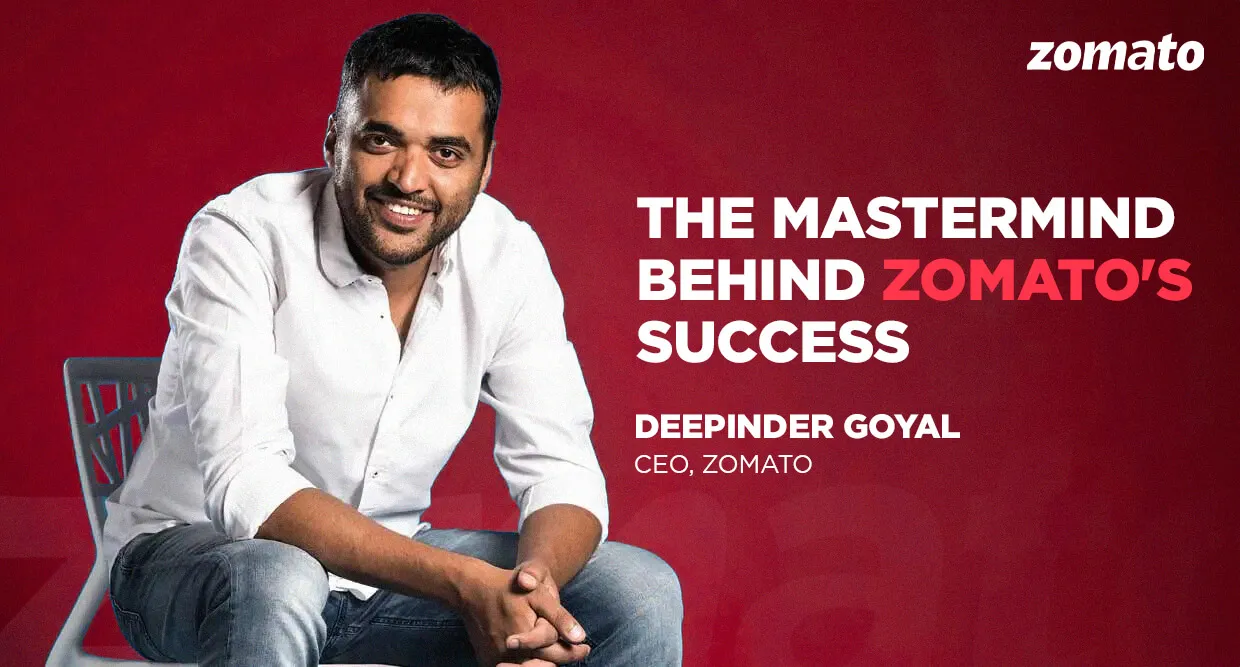
New Delhi: Eighteen years after he first began building what would become one of India's most recognisable consumer technology companies, Deepinder Goyal is preparing to step into an entirely new arena — not food delivery, not quick commerce, but the far more intimate and unproven territory of human physiology. The entrepreneur, who recently stepped down as Chief Executive Officer of Eternal Ltd., the parent company of Zomato and Blinkit, has confirmed that his next major venture, a bean-shaped wearable device called Temple, is expected to launch within six to twelve months.
Temple takes its name quite literally from where it is worn: the side of the forehead, at the temple. Unlike the smartwatches and smart rings that have come to dominate the wearable technology landscape over the past decade — devices built around indirect proxies such as heart rate, step count and sleep duration — Goyal's device is designed around a far more ambitious premise. It aims to measure the body's metabolic state directly and in real time, rather than inferring it from secondary signals.
The idea, according to Goyal, did not begin as a commercial venture at all. It originated as a personal research project focused on understanding cerebral blood flow, an area of intense personal curiosity for the entrepreneur even while he was still steering Eternal through its most consequential years of growth. That origin story matters, because it frames Temple not as a boardroom-conceived product extension but as something closer to an obsession that eventually outgrew its creator's spare time.
Speaking about the philosophy behind the device, Goyal has been unusually candid for a founder preparing to launch a premium consumer product. Business, he has said, is a side effect of what we are doing for ourselves — a striking articulation of a founder-first approach in an era when most consumer hardware companies obsess over total addressable market sizing before a single prototype is built. He has been equally direct about who Temple is, and is not, for: it is not intended as a mass-market device, but rather as a tool for what he calls elite users — athletes, entrepreneurs and corporate executives operating at the edge of physical and cognitive performance.
That positioning is reflected clearly in the pricing. Temple is expected to retail for approximately $1,000, placing it firmly in the premium wellness segment, well above the price points commanded by most consumer smartwatches and fitness rings currently on the market, including category leaders such as Whoop, Oura and Garmin, all of which have spent years refining their own approaches to tracking recovery, sleep and athletic performance.
The core scientific claim underpinning Temple is what Goyal's team has termed 'entropy' — a proposed new biomarker that the company says correlates with metabolic rate and offers insight into stress, meditation, recovery, sleep and exercise by directly measuring changes in the body's metabolic state. Goyal has framed this as a fundamental upgrade over the industry's current approach. Heart rate, he has argued, was always intended as a proxy for metabolic rate, and his team believes it has now found a more direct measure of the underlying signal itself.
It is a bold scientific claim, and Goyal has been transparent that it remains just that — a claim awaiting validation. The science behind the entropy biomarker has not yet been confirmed by independent researchers outside the company, and much of Temple's credibility as a health and wellness product will hinge on whether peer-reviewed studies, which Goyal has said will accompany the eventual launch, hold up to external scientific scrutiny. He has stated that Temple will initially debut as a wellness device with peer-reviewed studies and everything, rather than seeking medical device classification immediately.
That distinction between a wellness product and a medical device is not merely semantic; it carries real regulatory weight. Goyal has acknowledged that his team is already developing additional features that would eventually require Temple to be classified as a medical device, at which point the company intends to pursue the appropriate regulatory approvals before rolling out those capabilities. It is a phased approach that allows Temple to reach the market faster as a consumer wellness product while leaving the door open for deeper, clinically validated functionality down the line.
The timeline itself has been a subject of candid self-deprecation from Goyal. While he has pointed to a six-to-twelve-month launch window, he has also acknowledged that the project has already run behind earlier internal targets, admitting that he has been saying 'maybe six to 12 months' for roughly eighteen months now. It is the kind of honesty rarely offered by founders mid-launch cycle, but one that fits Goyal's broader public persona as an entrepreneur unafraid to acknowledge uncertainty, even around his own ventures.
Interest in the device, however, appears to be running well ahead of its eventual release. Applications for early access opened in May, and by some accounts more than 100,000 people have applied for a chance at one of the first 100 units available — a striking demand signal for a product whose core scientific claims remain unproven and whose price point places it well beyond impulse-purchase territory. Notably, Temple has already made a few public appearances: badminton star PV Sindhu was seen wearing the device during the 2026 Uber Cup held in April, offering the first real-world glimpses of the wearable in a competitive sporting context.
Temple is far from Goyal's only bet outside the walls of Eternal. The entrepreneur has also committed $20 million of personal capital to LAT Aerospace, a startup developing affordable short takeoff and landing aircraft intended to connect India's smaller towns and regional airstrips — a project he has described with characteristic candour as extraordinarily difficult, assigning it what he called a 0.1 per cent expectation of ultimately succeeding, while still remaining personally committed to the long-term vision of decentralising regional air connectivity across the country.
Goyal's pivot into deep-tech wearables and aviation infrastructure also reflects a broader pattern in his post-Eternal investment activity. Even before Temple, he had backed Ultrahuman, an India-based wearable maker competing directly with Oura's smart ring in the health-tracking space, signalling a sustained personal interest in performance and health technology that predates the Temple project by some time. Building out Temple has also meant an expansive hiring push across disciplines that would have sounded unusual for a food-delivery entrepreneur just a few years ago — embedded systems engineering, computational neuroscience and brain-computer interface engineering all now feature among the specialised roles the company is recruiting for.
The broader wearable technology market Temple is entering is anything but empty. Whoop, Oura and Garmin have each spent years refining devices that track sleep, recovery and athletic performance, building loyal user bases and iterating through multiple hardware generations. Whether Temple's proposed direct metabolic measurement can meaningfully differentiate itself from this entrenched competition — and whether the underlying entropy biomarker holds up under independent scientific review — remains an open question that only time, and eventually published research, will answer.
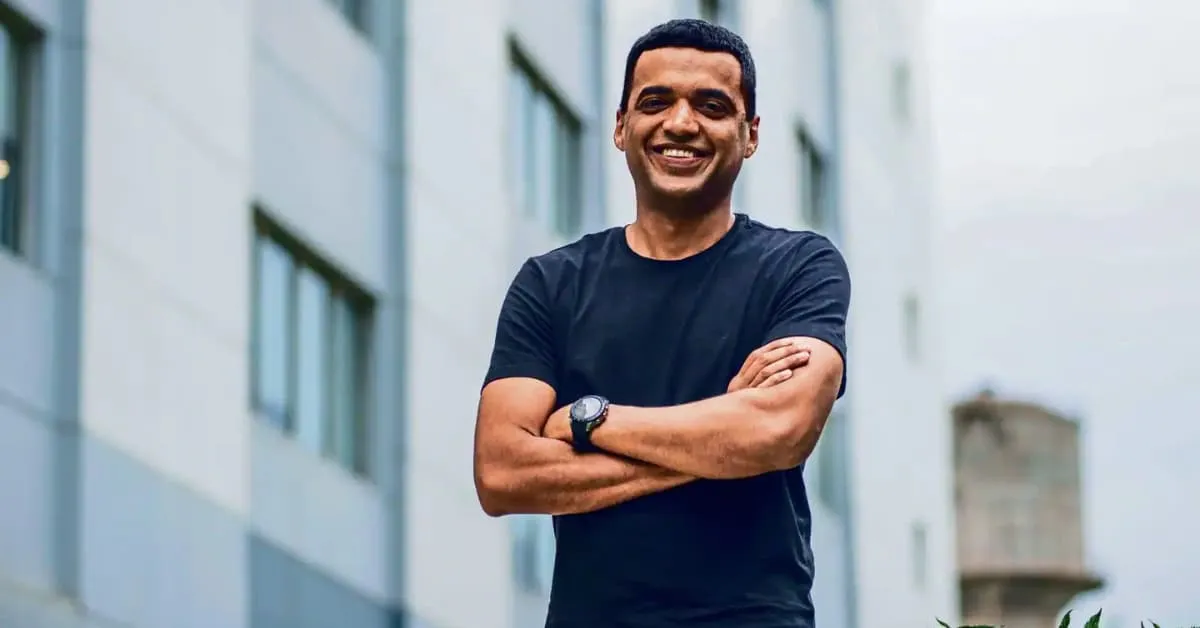
For an entrepreneur whose name became synonymous with the convenience economy in India — food delivered in minutes, groceries arriving in ten — the shift toward deep, unproven science focused on human physiology represents one of the more unexpected second acts in Indian entrepreneurship. Whether Temple ultimately succeeds commercially or scientifically, Goyal's willingness to step away from a proven, wildly successful business model to chase a far riskier and more technically demanding frontier says something notable about where some of India's most successful founders are choosing to direct their energy and capital once their first great venture has matured.
With a launch window now publicly set and early-access demand already running into six figures, the coming months will offer the first real test of whether Temple can translate founder conviction and personal obsession into a commercially and scientifically credible product — one that could, if the science holds, mark a genuine shift in how the wearable technology industry thinks about measuring the human body.
Goyal's decision to step back from day-to-day operations at Eternal in order to pursue Temple and his other ventures also reflects a broader pattern seen among a generation of Indian founders who built category-defining consumer internet companies in the 2010s and are now, roughly a decade and a half later, redirecting their energy, capital and credibility toward harder, deeper-technology problems. Where Eternal's early growth was fundamentally a logistics and operations challenge — solving for speed, density and unit economics in food and grocery delivery — Temple represents a wager on frontier biology and materials science, domains where success is measured in years of research rather than quarters of user growth.
Industry observers note that the wearable technology sector Temple is entering has matured considerably since the early days of basic step-counters and heart-rate monitors. Modern devices increasingly compete not just on sensor accuracy but on the sophistication of the underlying algorithms that translate raw physiological data into actionable insight, and increasingly, on the credibility of the science backing those insights. This is precisely the terrain on which Temple's viability will ultimately be judged: not simply whether the device can capture a novel physiological signal, but whether that signal can be shown, through rigorous and reproducible research, to meaningfully predict or reflect health outcomes that matter to users.
The premium price point Goyal has set for Temple also places it in an interesting strategic position relative to India's own rapidly growing wearable technology market, which has, until now, been dominated largely by affordable, mass-market smartwatches aimed at price-sensitive consumers. By deliberately positioning Temple as a high-end, performance-focused device aimed at a narrow segment of elite users rather than the broader consumer base, Goyal appears to be betting that a small, well-resourced and highly engaged user community — willing to pay a significant premium for genuinely differentiated technology — can sustain a viable business even without mass-market volumes, at least in its initial phase.
That approach mirrors strategies employed by other premium wearable makers globally, including Whoop, which built its initial business around a subscription model targeted at serious athletes and fitness enthusiasts before gradually broadening its appeal. Whether Temple follows a similar trajectory, expanding its addressable market over time as manufacturing costs decline and the underlying science becomes more established, remains to be seen, though Goyal's own public comments suggest he is, for now, far more focused on getting the fundamental technology right than on near-term scale.
The hiring push accompanying Temple's development also offers a window into how seriously the venture is being pursued. Recruiting simultaneously for embedded systems engineering, computational neuroscience, and brain-computer interface roles signals an ambition that extends well beyond a single consumer wearable product, hinting at a longer-term roadmap that could eventually encompass a broader family of devices and applications built around the company's core metabolic-sensing technology platform.
For India's broader deep-tech and health-technology startup ecosystem, Goyal's high-profile entry into the space carries a signalling value that may prove significant in its own right, independent of Temple's ultimate commercial outcome. A founder of Goyal's stature and track record choosing to commit meaningful time and capital to an unproven, science-heavy wearable venture could help catalyse further investor and talent interest in India's nascent health-tech and biosensor startup landscape, an ecosystem that has historically struggled to attract the same volume of capital and top-tier engineering talent as the country's more established fintech, e-commerce and SaaS sectors.
Sceptics within the scientific and medical device community, meanwhile, continue to urge caution until the entropy biomarker's underlying methodology and predictive validity are published and subjected to independent peer review, a standard process for any product making health-related physiological claims. Until that research is publicly available and replicated by researchers outside the company, both the scientific community and prospective customers are, in effect, being asked to extend a degree of trust based primarily on the reputation and conviction of the device's creator — a dynamic not unusual in early-stage deep-tech ventures, but one that nonetheless carries real reputational and commercial risk should the science ultimately fail to hold up under scrutiny.


