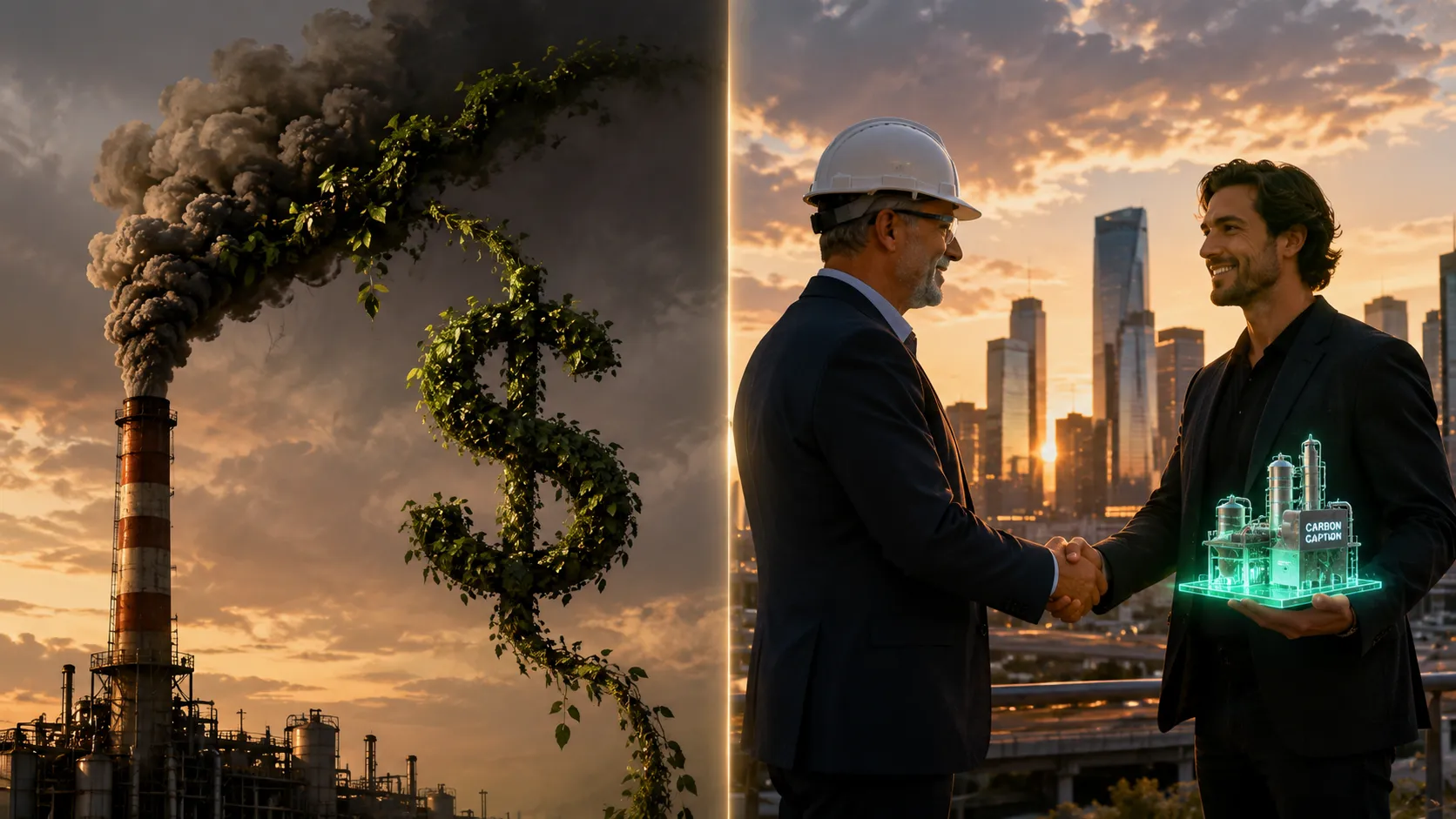
CLIMATE CASH IS FLOWING AGAIN
But only to startups that sell, not save – why VCs are done with promises
HOUSTON, Texas – For a brief, feverish moment between 2021 and 2023, climate tech was the wild west of venture capital.
Founders with PowerPoint decks about “revolutionary carbon removal” raised nine‑figure rounds. Investors threw money at anything with a leaf in its logo. The mantra was simple: save the planet first, ask about revenue later.
Then the hangover hit.
Dozens of well‑funded climate startups imploded. They had beautiful missions, brilliant scientists, and zero customers. The term “green bubble” entered the VC lexicon. By late 2024, climate tech funding had cratered 60% from its peak.
But now, something unexpected is happening.
Climate cash is flowing again – but only to a very specific kind of startup. Not the ones that promise to save the world. The ones that actually sell something to it.
New data from CTVC, the climate tech data platform, shows that global climate startup funding reached $18.5 billion in Q1 2026 – up 62% year‑over‑year. But here is the kicker: 94% of that capital went to startups with at least $1 million in annual recurring revenue from paying industrial customers.
“The era of ‘impact first, economics later’ is dead,” says David Crane, former CEO of NRG Energy and now a limited partner at Climate Capital. “We are now in the era of ‘sell a service, not a promise.’ If you cannot show a signed contract with a factory, a utility, or an oil major, you are not getting a meeting.”
The Winners: Metha8 and YAMA
Two recent victories illustrate the new playbook perfectly.
At The Liveability Challenge (TLC) 2026 grand finale in Singapore – one of the world’s most competitive climate tech competitions – two startups walked away with S$1 million each in catalytic grant funding.
Metha8, a US‑based startup (with roots in Texas), turns methane emissions into biodegradable plastic. Not carbon credits. Not vague offsets. Actual plastic that you can sell. The company already has offtake agreements with three landfills and two dairy farms, generating $4.2 million in annual revenue.
YAMA, a biotech startup from Indonesia, converts seaweed into biogas for cooking and electricity. They have deployed 500 units in off‑grid villages and just signed a distribution deal with a national energy company.
Both won because they had customers – not just PowerPoints.
“Five years ago, we would have funded the startup with the most beautiful carbon removal chart,” said one TLC judge who asked not to be named. “This year, we funded the startups with the most purchase orders.”
The Old Guard: What Went Wrong
To understand the shift, you have to look at the graveyard of broken climate unicorns.
Climeworks, the Swiss direct‑air capture darling, has raised over $800 million – but still generates less than $10 million in annual revenue. Its cost per ton of CO2 removed remains above $1,000, far from commercial viability.
Redwood Materials has raised $5 billion – but only recently began generating meaningful revenue from battery recycling. Its valuation has been marked down by several late‑stage investors.
“A lot of climate tech was funded like a charity,” says Sarah Smith, a partner at Lowercarbon Capital (Chris Sacca’s firm). “We are not a charity. We are a venture fund. If you cannot sell your solution to a cement plant or a shipping company at a price they will pay, you do not have a business.”
The result is a brutal sorting. According to PitchBook, 43 climate tech startups that raised over $100 million between 2021 and 2023 have either shut down, been acquired for scrap value, or undergone massive down rounds. The common thread: none had product‑market fit with paying industrial customers.
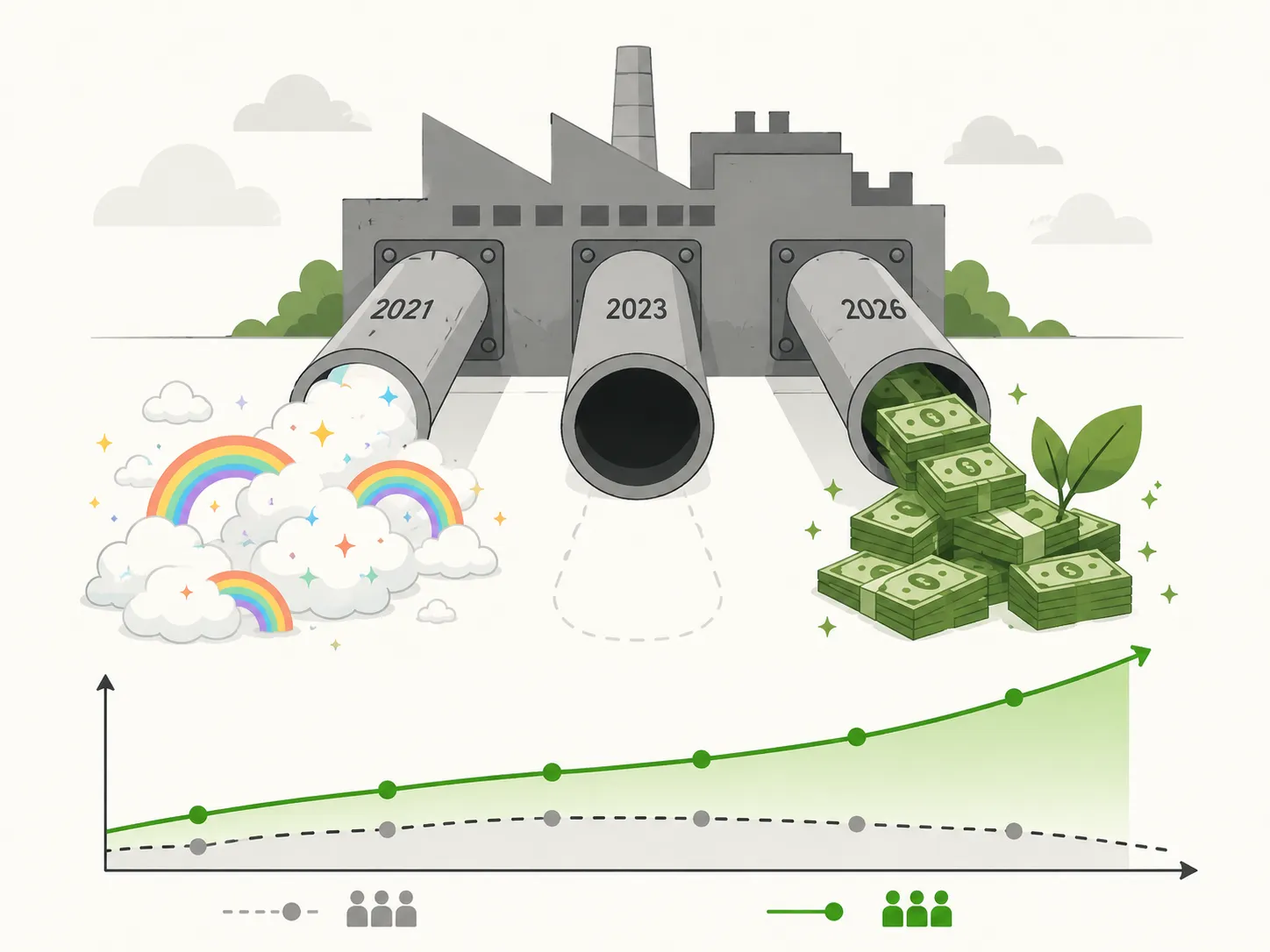
The New Playbook: Sell to Industry, Not to Hope
So what does a successful climate startup look like in 2026? Based on interviews with a dozen investors and founders, the new playbook has four rules.
1. Target the incumbents, don’t fight them
The most successful climate startups are not trying to destroy oil and gas companies. They are selling to them.
Metha8 works with landfills and dairy farms – the very sources of methane – to turn waste into revenue. LanzaJet, which makes sustainable aviation fuel, just signed a $200 million deal with British Airways. CarbonCure, which injects CO2 into concrete, is now used by 400 concrete plants worldwide.
“You cannot decarbonize the economy without the economy,” says John O’Donnell, co‑founder of Rondo Energy, which makes heat batteries for industrial factories. “We sell to the same cement plants and steel mills that people want to shut down. That is how change happens.”
2. Prove revenue before scaling
Investors now demand at least $1 million in ARR before a Series A. For Series B, the bar is $10 million.
“Show me a signed term sheet with a customer who has real money,” says Carmichael Roberts of Breakthrough Energy Ventures (Bill Gates’ fund). “Not a letter of intent. Not a pilot. A contract with penalties for non‑delivery. That is what separates real startups from science projects.”
3. Unit economics must work at pilot scale, not just theoretical
In the old days, climate startups could pitch “if we scale to a million tons, our cost drops to $50.” That line no longer works.
“We want to see your cost today, at your pilot plant,” says Rajesh Mehta, a partner at Energy Impact Partners. “If you are losing $500 per ton at 1,000 tons, scaling to a million tons just loses more money. Fix your unit economics before you ask for growth capital.”
4. Regulatory tailwinds help, but they are not a business model
The Inflation Reduction Act (IRA) and similar policies have created billions in tax credits and subsidies. But investors have learned that subsidies can disappear with a new administration.
“The IRA is a tailwind, not a crutch,” says Andrew Beebe, managing director at Obvious Ventures. “If your business collapses without the 45Q tax credit, you do not have a business. You have a lobbying project.”
Geography Follows the Carbon
The new discipline is also reshaping where climate tech startups are born.
Houston, once seen as the enemy, has become a surprising hub. The city’s deep expertise in industrial processes, combined with a willingness to talk to climate founders, has spawned dozens of startups. Solugen, which makes chemicals from plant sugars, raised $350 million and is building a massive plant outside Houston. Syzygy Plasmonics uses light to drive chemical reactions and just signed a deal with a Japanese refinery.
“Houston understands industrial scale,” says Gaurab Chakrabarti, co‑founder of Solugen. “They do not care about your mission. They care about your price per kilogram. That is exactly the discipline we need.”
Meanwhile, San Francisco – which dominated the first wave of climate tech – has seen its share of funding drop from 45% to 22% in three years. “Too many missionaries, not enough mercenaries,” one investor told me.
Pittsburgh, with its steel and manufacturing legacy, is also emerging. Astro makes thermal batteries using scrap metal. Nth Cycle recycles lithium‑ion batteries. Both have paying customers.
The Bottom Line: No More Free Lunch
The climate crisis is not solved by good intentions. It is solved by steel, concrete, plastic, and jet fuel – produced with lower emissions and sold at a competitive price.
After a brutal two‑year correction, the climate tech sector is finally learning that lesson. The startups that survive and thrive will be the ones that treat decarbonization as an engineering and economics problem, not a moral crusade.
“I get it,” says Metha8’s CEO (who asked to be identified only by her first name, Maria). “People want to save the planet. But the planet will not be saved by VC‑funded science experiments. It will be saved by profitable companies that make better products at lower cost. That is what we are building.”
In the new era of climate tech, the only green that matters is the one on the balance sheet.


