
Ciridae’s Quiet Revolution: Bringing AI to America’s Mid-Market Backbone
By Revathy
SAN FRANCISCO — May 2026 – Somewhere in the American Midwest, a roofing contractor closes his laptop at 5:03 p.m. and walks out into the evening sun. For twenty-three years, he had never left the office before 8 p.m. on a Monday. The culprit was always the same: invoices, job costing, crew dispatch logs, supplier reconciliations—a mountain of administrative friction that ate his life in one-hour bites. Last month, his company adopted a new AI operating system. This Monday, the machine did the work in forty-seven seconds.
That contractor is not a Fortune 500 executive. He runs a $12 million business with forty-three employees and no IT department. And he is exactly the customer that Ciridae, a two-year-old San Francisco startup, was built to serve. In early May 2026, Ciridae announced a $20 million funding round co-led by Accel, General Catalyst, and Andreessen Horowitz—a signal that some of the sharpest investors in Silicon Valley are betting the next great AI market is not enterprise, but the vast, neglected middle.
The Invisible Economy
The numbers are so large they are almost invisible. There are approximately 7.5 million mid-market businesses in the United States—companies with annual revenues between $5 million and $500 million. Collectively, they generate over $13 trillion in annual revenue. They employ more than 50 million people. They build the houses, fix the plumbing, distribute the equipment, and operate the supply chains that keep the physical economy breathing. And, until very recently, they had been almost entirely ignored by the AI revolution.
This is not an accident of market forces. It is a structural gap. AI tools are built by engineers in San Francisco and Bengaluru who have never spent a day on a construction site or in a dispatch office. They are sold to enterprises with dedicated IT departments, data science teams, and procurement budgets that can absorb six-figure software contracts. The mid-market has none of these things. What it has are owners working sixty-hour weeks, bookkeepers who double as HR managers, and a deep, pragmatic hunger for anything that can take the administrative weight off their shoulders.
Ciridae’s founders—Jack Soslow, a former partner at Andreessen Horowitz, and Jack Weissenberger, formerly of Apple and the AI startup Tenyx—spent months before the company’s launch not writing code, but observing. They rode along with HVAC technicians in Texas. They sat in on dispatcher shift changes in Phoenix. They watched equipment distributors in Ohio wrestle with inventory spreadsheets that had not been updated since the second Bush administration. What they found was not resistance to technology. It was exhaustion.
Not Another Enterprise AI Play
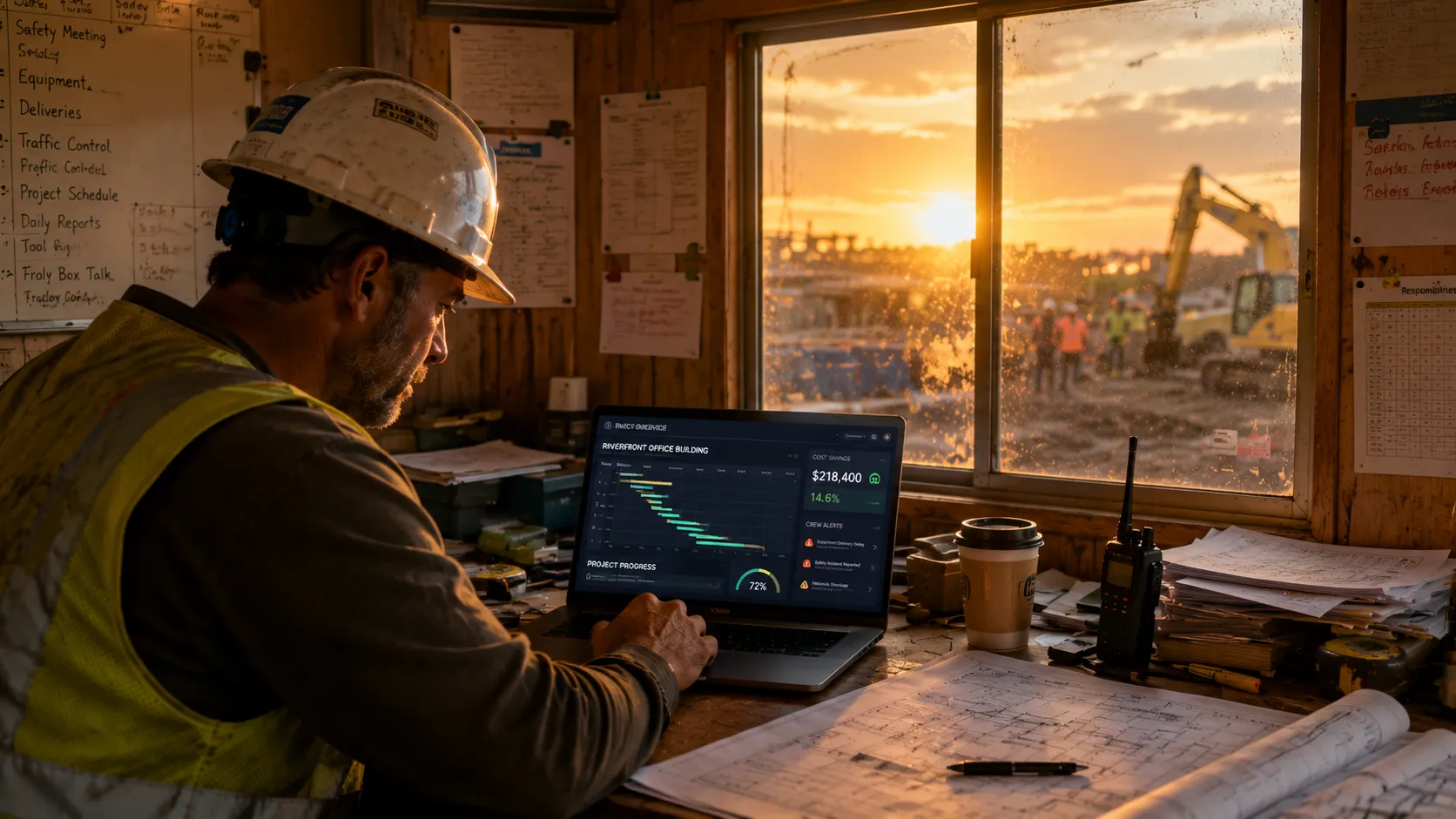
Ciridae’s product is deliberately unglamorous. It is an AI operating system designed for vertical-specific workflows in construction, home services, and industrial distribution. It does not ask a business owner to become a prompt engineer. It plugs into existing tools—QuickBooks, ServiceTitan, legacy ERP systems—and begins automating the tasks that consume the most human hours. Job costing. Invoice reconciliation. Crew dispatch optimization. Inventory reordering. The kind of work that, multiplied across thousands of businesses, represents billions of dollars in lost productivity every year.
What distinguishes Ciridae from the wave of generic AI copilots flooding the market is its vertical precision. A roofing contractor in Dallas has fundamentally different operational rhythms than a plumbing dispatcher in Phoenix. Ciridae’s models are trained on domain-specific data—the seasonal patterns of roof repair, the equipment failure rates of different HVAC brands, the supply chain cadences of industrial distributors. This is not a thin wrapper around a large language model. It is a deep integration into the actual operating logic of real-world businesses.
The results are measurable in ways that matter to owners. One construction client reduced its monthly accounting close from two weeks to a single click. A restoration company with 200 employees used Ciridae’s platform to predict job timelines and optimize crew dispatch, cutting customer wait times by nearly a third. The startup pulled high seven figures in revenue in 2025 and has signed more than 20 partners. The $20 million infusion will fund expansion into new verticals and deeper integrations with legacy systems.

The Contrarian Bet
Ciridae’s $20 million round is notable not just for its size, but for what it says about the venture capital mindset in 2026. The industry is in the grip of a collective obsession with artificial general intelligence. Foundation model companies are raising billions on the premise that a single, godlike intelligence will eventually subsume all software. Application-layer startups, by contrast, are often dismissed as “GPT wrappers” destined to be crushed when the foundational models improve.
Ciridae’s investors are making a different bet. They are betting that the value of AI will not be captured primarily by the builders of the models, but by the companies that figure out how to deliver AI’s benefits to the customers who need it most and understand it least. They are betting that vertical specificity—the deep, unglamorous work of understanding how a roofing contractor’s business actually operates—is a moat that general-purpose AI cannot easily cross. And they are betting that the mid-market, ignored for decades by enterprise software vendors, is not a niche. It is the largest addressable market in the American economy.
This is a contrarian bet, but it is not an unprecedented one. Salesforce did not win by building a better database. It won by making customer relationship management accessible to sales teams that had no technical training. Shopify did not win by inventing new e-commerce technology. It won by making online retail simple enough for a single entrepreneur with a kitchen table and a product idea. Ciridae is attempting the same move for the operational backbone of mid-market America. If it succeeds, the reward will not just be a large company. It will be a permanent improvement in the productivity curve of the entire real economy.
What Every Entrepreneur Can Learn
The Ciridae story offers a clean, transferable playbook for any founder building in an unsexy market.
First, go where the pain is, not where the hype is. The AI industry is crowded with startups chasing the same Fortune 500 logos, the same CIO relationships, the same conference stages. Ciridae walked in the opposite direction—toward the businesses that have never been invited to the party. The result is a market with far less competition and far more genuine need.
Second, sell outcomes, not technology. No mid-market business owner cares about transformer architectures or retrieval-augmented generation. They care about going home at 5 p.m. instead of 9 p.m. They care about not missing their daughter’s soccer game because month-end close took fourteen hours. Ciridae’s pitch is not “we have advanced AI.” It is “we will give you your life back.” That emotional resonance, as any great marketer knows, is more powerful than any technical specification.
Third, vertical is the new horizontal. The era of building one-size-fits-all software is ending. The winners of the next decade will be the companies that understand a specific customer, in a specific industry, with painful specificity—and build tools so finely tuned to that customer’s reality that switching becomes unthinkable.

The Road Ahead
Ciridae is not without challenges. Mid-market sales are inherently fragmented. There is no single procurement department to sell to, no single conference where all the buyers gather. Customer acquisition will require a blend of digital marketing, channel partnerships, and the kind of old-fashioned relationship-building that does not scale easily. The company will also face competition from enterprise software vendors attempting to move down-market and from horizontal AI platforms adding vertical features.
But the tailwinds are powerful. Labor shortages in construction and skilled trades are chronic and worsening. The average age of a master plumber or electrician in America is over fifty. As the workforce shrinks, the businesses that survive will be those that can do more with less—and AI is uniquely suited to fill that gap. Ciridae’s timing, whether by design or instinct, aligns with a demographic imperative that will grow more acute with every passing year.
The quiet revolution is not coming. It is already here, unfolding in construction trailers and dispatch offices and equipment yards across the country. Ciridae is not building the most glamorous AI company of 2026. It may be building the most useful one. And in the long run, usefulness tends to win.


