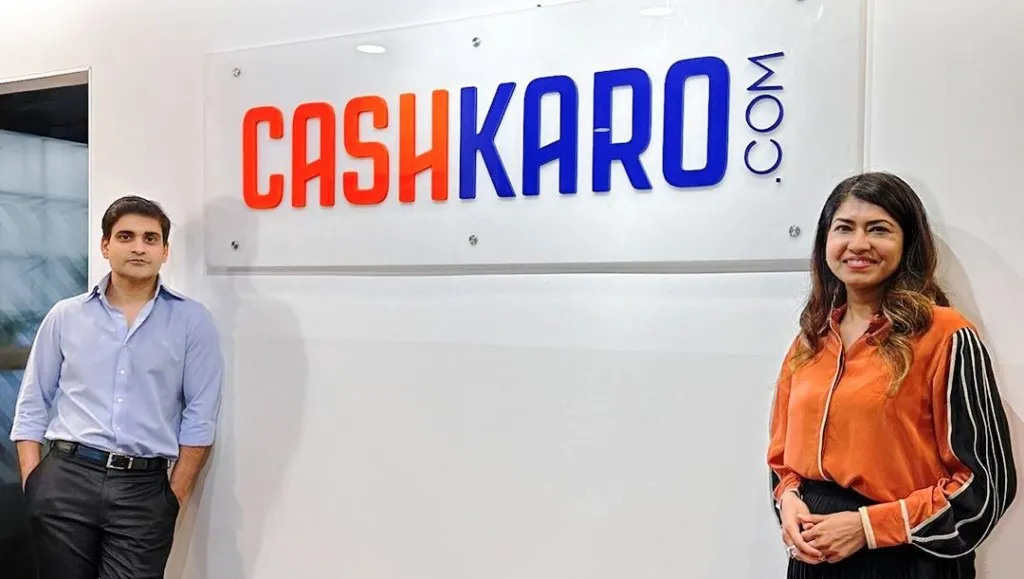
She Grew Up in Ambala. She Topped the State in Class 10. She Turned Down Goldman Sachs to Come Back to India. She Built a ₹600 Crore Business While Recovering from a Kidney Transplant.
Some founders have interesting origin stories. Swati Bhargava's origin story is in a category of its own.
She was born in Ambala, Haryana, and grew up in a large joint family where her father ran a small business dealing with agricultural implements. Nobody in the family had ever thought of going abroad for studies or work. And then Swati scored 100 in Mathematics in her Class 10 board examinations, topped the state, and the world opened in a direction that her family had never mapped.
A scholarship took her to Singapore to study. Two years in Singapore helped her figure out her next move. In 2002, she joined the London School of Economics to read Economics and Mathematics — a double major at one of the world's most academically competitive universities. At LSE, she became head of a 3,000-member business society. She interned at Goldman Sachs in the summer of 2004. After graduating in 2005, she joined Goldman Sachs full-time as an Investment Banking Analyst in the Credit Structuring and Sales team.
She stayed at Goldman for five years, eventually working in the executive office alongside the Co-CEOs of Goldman Sachs International. The hours were 8 a.m. to 1 a.m. The pay was excellent. The work was some of the most intellectually demanding in global finance.
And she got restless.
That restlessness was not dissatisfaction with success. It was the signal — as she has described it publicly — that she had more to do. That comfort and achievement were not the same thing. That she needed to build something herself.
In 2011, she and her husband Rohan Bhargava — her senior at LSE, whom she had met during their studies — co-founded Pouring Pounds Ltd in the United Kingdom: a cashback and rewards platform built for British consumers, inspired by the established UK cashback model of platforms like Quidco. It was their proof of concept: they could build a cashback business, they could make it work, and the model — earning commission from e-commerce partners and sharing a majority of it with consumers as cashback — was economically sound.
In 2013, they brought that model to India. CashKaro was born.
The Founding of CashKaro — and Why India Was Ready For It
The Indian e-commerce market of 2013 was in the early phase of its explosive growth. Flipkart had established that Indians would buy things online. Amazon had entered the market. Myntra, Snapdeal, and dozens of other platforms were competing aggressively for consumer attention. The battle was primarily on price — discounts, flash sales, promotional offers.
CashKaro saw an opportunity in the structure of that battle. E-commerce companies were spending enormous sums on marketing to attract buyers — often spending money on people who were browsing without buying. CashKaro offered them a performance marketing alternative: pay a commission only when a transaction actually completes. In return, CashKaro would share that commission with the consumer as cashback, giving the buyer a reason to come through CashKaro's platform rather than going directly to the retailer.
The economics were designed to work for everyone simultaneously. The e-commerce partner paid only for actual transactions, not for impressions or clicks. The consumer received cashback on top of whatever discounts were already available. And CashKaro kept the margin between the commission it received and the cashback it paid out.
Swati explained the model: they receive a commission of 5 to 10 per cent on every transaction from partner retail websites. The major part of that commission is passed to the consumer as cashback, redeemable as coupons or directly to their bank account. The business grows on volumes — and at scale, volumes are extraordinary. In FY25, CashKaro processed over 36 million transactions and facilitated ₹6,000 crore in GMV across its 1,500-plus brand partners. To date, it has facilitated ₹10,000 crore in sales to brand partners and paid out more than ₹2,000 crore in cashback to users.
₹7.5 Crore in 48 Hours — and Ratan Tata's Backing
The early funding story is one of the most striking in Indian startup history for the speed at which it moved.
When Swati and Rohan needed their initial seed capital for CashKaro in India, they turned to the relationships they had built over years — friends, family, their professional networks from LSE and Goldman Sachs. They raised ₹7.5 crore in 48 hours. Not because the term sheet was exceptional or the pitch deck was flawless, but because the people who knew them trusted them without reservation.
The Ratan Tata backing arrived soon after — a personal investment from one of India's most respected industrialists and philanthropists. Tata's involvement did two things simultaneously: it provided capital, and it provided the kind of credibility signal that changes every subsequent investor conversation. When Ratan Tata invests personally, it is not a transaction. It is an endorsement of the founders' character and the business's integrity, and it travels through the investor community accordingly.
Institutional capital followed. Kalaari Capital invested. Then Affle Global, the listed adtech and audience platform, led a Series C in December 2022 that valued CashKaro at approximately £131 million — approximately $160 million — and brought Korea Investment Partners into the cap table. Total funding to date has exceeded ₹250 crore across five rounds.
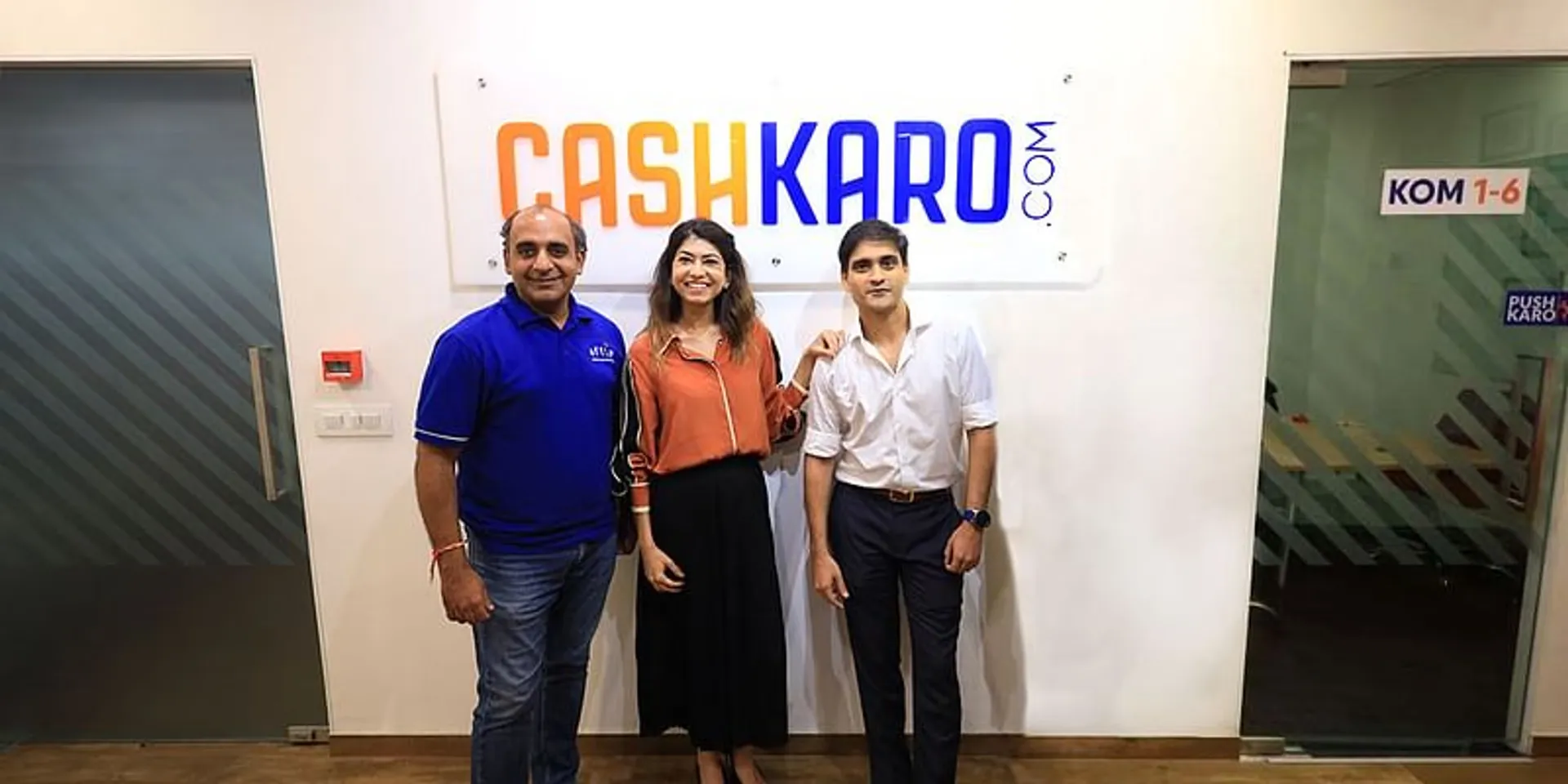
The 2022 Fundraise From a Hospital Bed
The most remarkable chapter of Swati Bhargava's career as a founder is also the one that requires the most care in the telling, because it is not a story about toughness. It is a story about asking for help.
In 2022, during the Series C fundraise of approximately ₹130 crore, Swati's kidney function dropped to 3 to 4 per cent. She needed a kidney transplant. The fundraise was in progress. The investor meetings were scheduled. The diligence was ongoing.
She did not stop. She attended hospital visits during the day and investor calls in the evenings. She balanced both tracks simultaneously — managing her health, managing the business, managing the fundraise. She closed the round. Then she checked into the hospital for the transplant.
At SheSparks 2025, YourStory's flagship event for women in entrepreneurship, Bhargava spoke about what that period taught her. She said vulnerability is a beautiful thing. She said that being honest with everyone about what she was going through enabled them to truly help. She said that she learned during that period that asking for support is not weakness but the precondition for receiving it.
The story is not about how she closed a funding round from a hospital bed. It is about what she understood about herself and about leadership during the hardest period she has faced. The funding round is the fact. The understanding is the lesson.
The FY26 Numbers — and Why They Matter
CashKaro's financial performance for FY26, announced in May 2026, reflects the compounding of twelve years of building, in a way that quarterly snapshots do not capture.
Operating revenue: ₹600 crore, a 72 per cent increase from ₹348 crore in FY25. EBITDA loss narrowed by 40 per cent to ₹17.7 crore from ₹29.2 crore. Marketing expenditure increased by only 7.6 per cent YoY despite the 72 per cent revenue growth — the operating leverage signal that unit economics positive businesses produce when the model is working. Employee and infrastructure costs remained stable due to investments in AI and automation that enhanced productivity.
Rohan Bhargava captured the ratio that matters: 72 per cent revenue growth, marketing spend up only 7.6 per cent. That ratio is the entire story.
EarnKaro, the sister platform launched to enable social commerce and influencer-driven cashback — where everyday users can share referral links and earn commissions — has added a network-effects dimension to the business that the pure cashback model did not have. The combination of CashKaro's direct consumer platform and EarnKaro's distributed affiliate network is the product architecture that Swati has argued positions India to surpass the cashback markets of the US, China, and Europe.
The valuation that the FY26 numbers imply — above the £131 million Series C valuation from 2022, given the revenue trajectory — places CashKaro in the company of Indian internet businesses that have earned institutional interest for both their scale and their unit economics.
What This Couple Actually Built Together
Swati and Rohan Bhargava have been building businesses together since 2011. They have built three — Pouring Pounds in the UK, CashKaro in India, EarnKaro as a product extension — across three markets and fifteen years.
Swati leads marketing and hiring. Rohan handles overall operations. They have described the division explicitly: no ego issues, clear responsibilities, complementary skills. The woman who scored 100 in mathematics and managed the Co-CEOs of Goldman Sachs International at their largest office level brings a financial rigour and analytical precision to the marketing function that most marketing leaders do not have. Rohan brings the operational breadth.
The bias Swati has encountered as a woman founder in investor rooms — investors who directed financial questions at Rohan assuming he handled the numbers — has been addressed in her characteristic way: she answered the questions herself, precisely, the first time. She noted that training them once or twice solves the issue forever.
She calls herself an entrepreneur, not a female entrepreneur. Because, she said, it is a level playing field. And she acts accordingly — not by ignoring that the playing field is sometimes tilted, but by playing the game at a level where the tilt stops mattering.
From Ambala to LSE to Goldman Sachs to a startup in London to the largest cashback platform in India — the line connecting those points is not a straight one. It is the line of a person who has consistently made the harder choice, trusted the restlessness that good circumstances produced in her, and built something at each stage that the previous stage made possible.
₹600 crore in FY26. ₹2,000 crore paid out to users. ₹10,000 crore in partner sales facilitated. Ratan Tata's backing. A kidney transplant closed mid-fundraise.
The numbers are impressive. The story behind them is more so.


