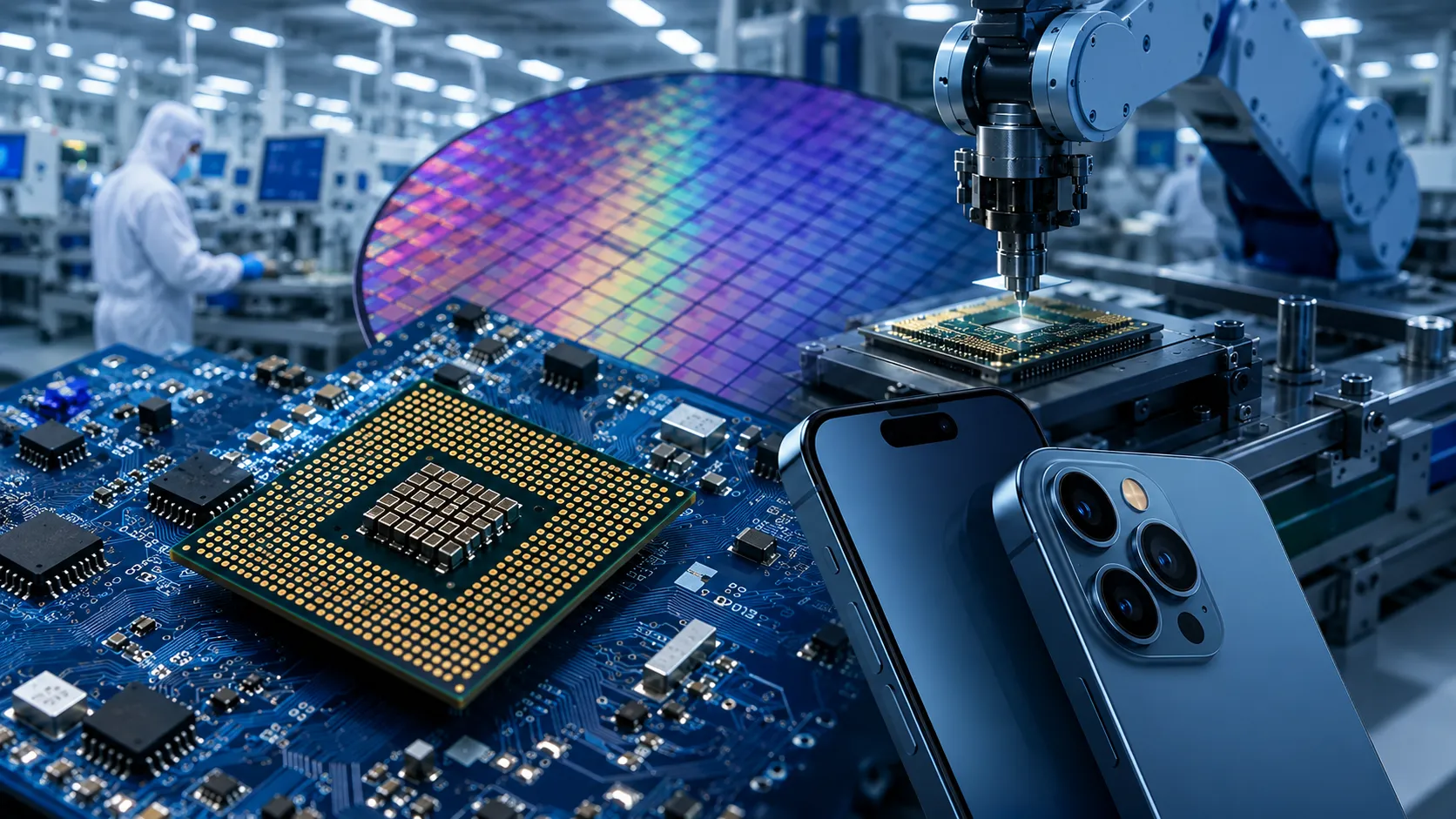
In one of the most consequential industrial policy decisions of the year, the Union Cabinet has approved a combined outlay of nearly ₹1.9 trillion aimed at scaling up India's semiconductor and mobile phone manufacturing capabilities, in what officials are describing as a foundational bet on the country's future as a global electronics manufacturing hub. Of this total, ₹1.27 trillion has been earmarked for the India Semiconductor Mission 2.0, the next phase of the government's flagship chip-manufacturing initiative, while ₹62,500 crore has been allocated to a newly rolled-out Mobile Phone Manufacturing Scheme designed to deepen domestic value addition in smartphone production.
The scale of this commitment marks a clear escalation from the first phase of India's semiconductor push, which focused primarily on attracting anchor investments and establishing the country's first fabrication and assembly-testing facilities. Semiconductor Mission 2.0 is understood to broaden that ambition considerably, targeting not just chip fabrication but the wider ecosystem of design, packaging, testing and specialty materials that together constitute a resilient, globally competitive semiconductor supply chain. Government officials have framed the mission as central to India's long-term technological sovereignty, given how critical semiconductors have become to everything from smartphones and automobiles to defence systems and artificial intelligence infrastructure — sectors where global supply chain vulnerabilities have been repeatedly exposed over the past several years by geopolitical tensions and export restrictions among major chip-producing nations.
Running in parallel, the Mobile Phone Manufacturing Scheme aims to build on India's already considerable success in smartphone assembly — a sector transformed over the past several years by earlier production-linked incentive schemes that turned India into one of the world's largest smartphone manufacturing bases by volume. The new scheme's stated ambition is more specific and more demanding: to scale domestic value addition rather than simply expanding assembly volumes, and in doing so, to push the country's cumulative electronics production toward an eye-catching ₹39 lakh crore target. That distinction — between assembly and genuine value addition — is significant. Much of India's earlier smartphone manufacturing success involved importing components and assembling finished devices domestically, which, while valuable for employment and export figures, captured only a modest share of the overall value chain. The new scheme is explicitly designed to pull component manufacturing, printed circuit board assembly, camera modules, batteries and other high-value inputs into India as well, thereby deepening the domestic content of every phone rolled off an Indian assembly line.

Industry analysts and policy observers have been quick to describe the scale of this combined package as unprecedented, even by the standards of India's recent run of ambitious industrial policy. As one technology sector commentator put it, this is not incremental policy support — it is India signalling, in the clearest terms possible, that it intends to be a serious, sovereign player in the global semiconductor and electronics supply chain, not merely an assembly outpost for devices designed and engineered elsewhere. That framing captures a broader strategic shift underway in New Delhi's approach to technology manufacturing: a move away from purely labour-cost-driven assembly toward building the kind of deep, high-value manufacturing ecosystem that countries like Taiwan, South Korea and, more recently, Vietnam have used to anchor durable competitive advantages in global electronics supply chains.
The timing of the Cabinet's approval is notable, coming as global semiconductor supply chains remain under continued strain from a combination of geopolitical rivalry between major powers, export control regimes on advanced chip-making equipment, and surging global demand driven by the artificial intelligence boom. Nations across the world — from the United States to the European Union to several East Asian economies — have in recent years rolled out their own large-scale subsidy programmes aimed at reshoring or diversifying semiconductor manufacturing capacity, creating an intensely competitive global race for anchor investments from the handful of companies capable of building and operating advanced fabrication facilities. India's ₹1.27 trillion commitment to Semiconductor Mission 2.0 positions the country to compete more aggressively in that global race, offering the kind of large-scale, sustained financial backing that multinational chip manufacturers typically require before committing to greenfield investments in a new geography.
For the mobile manufacturing sector specifically, the ₹62,500 crore scheme arrives at a moment when India's electronics exports have been growing steadily but still lag the country's ambitions relative to its manufacturing scale and workforce. Officials involved in designing the scheme have indicated that incentives will be structured to reward companies that demonstrably increase the proportion of components sourced and manufactured domestically, rather than simply rewarding overall production volumes — a design choice intended to avoid repeating the shallow value-addition pattern of earlier manufacturing pushes. Component manufacturers, both domestic firms looking to scale up and global suppliers considering setting up Indian operations to serve device-makers already present in the country, are expected to be among the primary beneficiaries of this recalibrated incentive structure.
The broader economic stakes attached to this policy push are considerable. Electronics manufacturing, and semiconductors in particular, sit at the intersection of several of the government's strategic priorities: reducing import dependence on critical technology inputs, creating high-skilled manufacturing employment, strengthening national security given the dual-use nature of advanced chips, and positioning India as an alternative manufacturing base amid ongoing global supply chain diversification away from concentrated production hubs. The cumulative electronics production target of ₹39 lakh crore, if achieved, would represent a transformative shift in the composition of India's manufacturing output, embedding electronics and semiconductors as a pillar of the economy alongside more traditional strengths in textiles, pharmaceuticals, automobiles and steel.
Execution, as always with large industrial policy announcements in India, will be the true test of this ambition. Semiconductor fabrication in particular demands enormous capital investment, highly specialised technical talent, uninterrupted power and ultra-pure water supply, and years of sustained commitment before facilities reach commercial-scale output — conditions that have proven challenging to assemble consistently even in countries with decades of manufacturing experience in the sector. Industry watchers will be closely tracking how quickly the government can translate this ₹1.9 trillion outlay into signed investment agreements, ground-breaking ceremonies, and eventually, functioning fabrication and component manufacturing facilities. But as a statement of policy intent and fiscal commitment, the Cabinet's approval marks arguably the boldest single step India has taken yet toward building a genuinely sovereign, end-to-end electronics manufacturing ecosystem — one capable of competing not just on assembly labour costs, but on the depth and sophistication of what it actually builds.