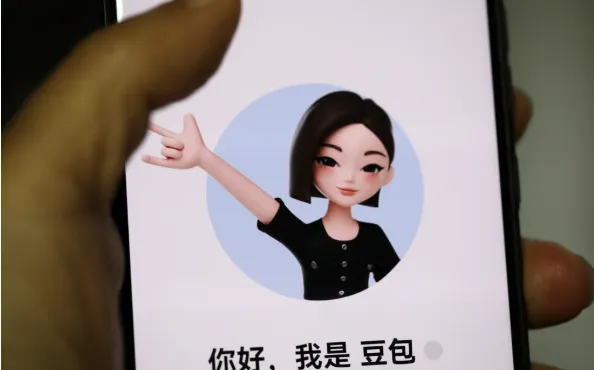
OpenAI’s Sora was the most anticipated AI product never released. Announced with breathtaking demo videos in early 2024, it promised to turn text prompts into minute‑long, high‑fidelity video clips. But months turned into years. Safety concerns, copyright lawsuits, and internal turmoil at OpenAI kept Sora locked in a research lab. In that vacuum, a competitor from Beijing has stolen the lead. ByteDance, the parent company of TikTok, has launched Doubao – an AI video generator that creates 60‑second, 1080p clips from text prompts. It is integrated directly into TikTok’s editing suite, available in 20 countries, and already being used by millions of creators. The AI video war is no longer theoretical. It has a winner – for now.
Doubao (which means “bean bag” in Chinese, a playful nod to its soft, malleable output) was quietly developed over 18 months by ByteDance’s AI Lab, the same team that built the recommendation engine powering TikTok’s addictive “For You” page. The model uses a diffusion transformer architecture similar to Sora, but with key optimizations for speed and character consistency. ByteDance claims Doubao is 50% faster than Sora’s reported inference speed, generating 5 seconds of video in just 6 seconds on an Nvidia H100 GPU. That matters for creators: a 30‑second TikTok clip can now be generated in under a minute.
The quality is surprisingly good. In blind tests conducted by the company, 64% of users preferred Doubao’s output over Sora’s publicly available demos for tasks like “a cat riding a skateboard through Tokyo” or “a chef making pasta in a futuristic kitchen.” The model excels at maintaining visual coherence across cuts – a notorious problem for earlier video generators like Runway Gen‑2 and Pika Labs. Faces remain consistent, objects don’t morph into other objects, and backgrounds don’t melt into abstract patterns. This is achieved through a technique called “latent keyframe anchoring,” which locks certain visual features across frames.
“Doubao is the first video AI that feels like a professional tool, not a party trick,” said Mariana Costa, a TikTok creator with 2 million followers who has been beta‑testing the feature. “I can type ‘slow motion shot of coffee pouring into a glass, golden hour lighting’ and get exactly that. Then I can extend it or change the angle. It’s like having a full video production team in my pocket.”
The integration into TikTok’s editing suite is seamless. Creators can access Doubao from the same menu where they add effects, filters, and music. They type a prompt, select a duration (3 to 60 seconds), and Doubao generates three variations to choose from. The generated clip can then be trimmed, sped up, combined with other clips, or overlaid with text and stickers – all within TikTok. ByteDance is also offering a standalone web app for professional creators who need higher resolution (4K coming soon) and batch generation.
Training data is the elephant in the room. ByteDance says Doubao was trained on 200 million video clips from TikTok and licensed stock footage from Shutterstock and Pond5. The company has implemented content ID filters that block generation of copyrighted characters (Mickey Mouse, Pikachu) or celebrity likenesses without permission. However, copyright lawyers are already circling. A group of independent filmmakers has filed a class‑action lawsuit alleging that Doubao was trained on their YouTube videos without consent. ByteDance says it respects all applicable laws and has a “robust opt‑out process” for rights holders.
OpenAI, for its part, has been uncharacteristically silent. Sora remains in “private preview” with a small group of visual artists and filmmakers. The company has cited concerns about deepfakes, misinformation, and election interference as reasons for the delay. But critics note that OpenAI has never been shy about releasing powerful models (GPT‑4, DALL‑E 3) with similar risks. The more plausible explanation is technical: Sora’s inference costs are too high for mass deployment. Generating a 60‑second video on Sora reportedly costs $5 in compute – not viable for a free or low‑cost consumer product. Doubao, by contrast, costs ByteDance about $0.50 per generation, thanks to custom silicon and inference optimizations. That allows ByteDance to offer the service for free (first 50 generations) and then $10/month for 500 generations.
The business model makes sense. ByteDance doesn’t need to sell Doubao directly; it needs to keep TikTok users engaged and creating. More videos mean more ads, more data, and more time on platform. Doubao is a retention tool, not a profit center. OpenAI, by contrast, would need to charge users directly or integrate Sora into ChatGPT Plus, potentially cannibalizing its existing revenue streams.
The geopolitical dimension is impossible to ignore. Doubao is not available in China itself, where separate rules and a different version (called “Jianying”) apply. But in the US, Europe, and Latin America, Doubao is fully accessible. ByteDance has gone to great lengths to reassure Western regulators: the model is hosted on Oracle cloud infrastructure, with data separation guarantees. The company has also hired a former US Department of Homeland Security official to oversee content safety. So far, the strategy has worked. No Western government has banned Doubao.
Creators are embracing it. Early use cases include generating B‑roll for travel vlogs, creating animated intros, and even producing entire short films. One popular TikTok account, “AIDreams,” has amassed 3 million followers by posting nothing but Doubao‑generated surrealist videos set to lo‑fi music. “I used to spend weeks animating,” the anonymous creator told us via DM. “Now I spend 10 minutes writing prompts. It’s not cheating. It’s evolution.”
The risks are real. Doubao can generate violent or sexually suggestive content, though ByteDance says its filter catches 98% of violations. And deepfakes remain a concern: a prompt like “Joe Biden announcing that he is dropping out of the race” could be used to create disinformation. ByteDance has responded with visible watermarks on all generated videos and cryptographic signatures that can be verified by an online tool. The European Union has asked for more details on content provenance, and ByteDance is complying.
What comes next? Doubao’s roadmap includes 4K generation (expected Q1 2027), longer clips (up to 3 minutes), and eventually full‑length movie generation. The company is also experimenting with “video editing by prompt” – for example, “change the background to a beach” or “make the actor look sad.” If successful, it would transform video editing from a labor‑intensive craft into a conversational interface.
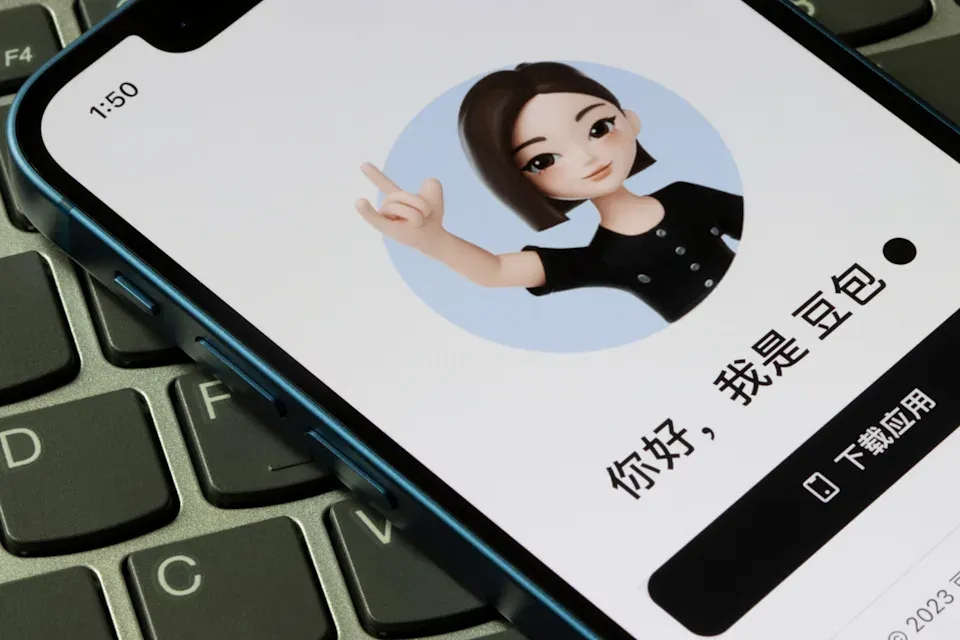
For now, Doubao is the leader in a race that barely existed a year ago. OpenAI’s Sora may eventually launch, and other competitors like Meta’s Make‑A‑Video and Google’s Lumiere are also advancing. But ByteDance has the advantage of distribution: 1.5 billion monthly active TikTok users, many of whom are already creating videos daily. Doubao is not a product they have to seek out; it is a feature that appears when they open the app.
“I made a music video for my song in 20 minutes,” one TikTok user wrote. “It would have cost me $5,000 before.” That quote captures the promise and the peril of AI video generation. For creators, it democratizes a medium that was once reserved for professionals. For society, it unleashes a wave of synthetic content that we are only beginning to learn how to authenticate.
The AI video war is just beginning. But ByteDance has drawn first blood.


