Byju Raveendran — The Teacher Who Stuttered, Built a $22 Billion Edtech Giant, and Then Faced the Fall
The Boy Who Couldn't Speak
Byju Raveendran grew up in Azhikode, a small coastal village in Kerala. His father was a physics teacher, his mother a homemaker. Byju loved math but had a severe stutter. Classmates mocked him when he tried to speak. Teachers ignored his raised hand. He felt invisible.
Instead of giving up, Byju practiced speaking in front of a mirror, slowly, deliberately. He developed a technique of pausing before difficult words. He also realized that teaching others helped him speak more confidently. By the time he reached college (he earned a degree in engineering from Government Engineering College, Kannur), he was tutoring friends and juniors for free.
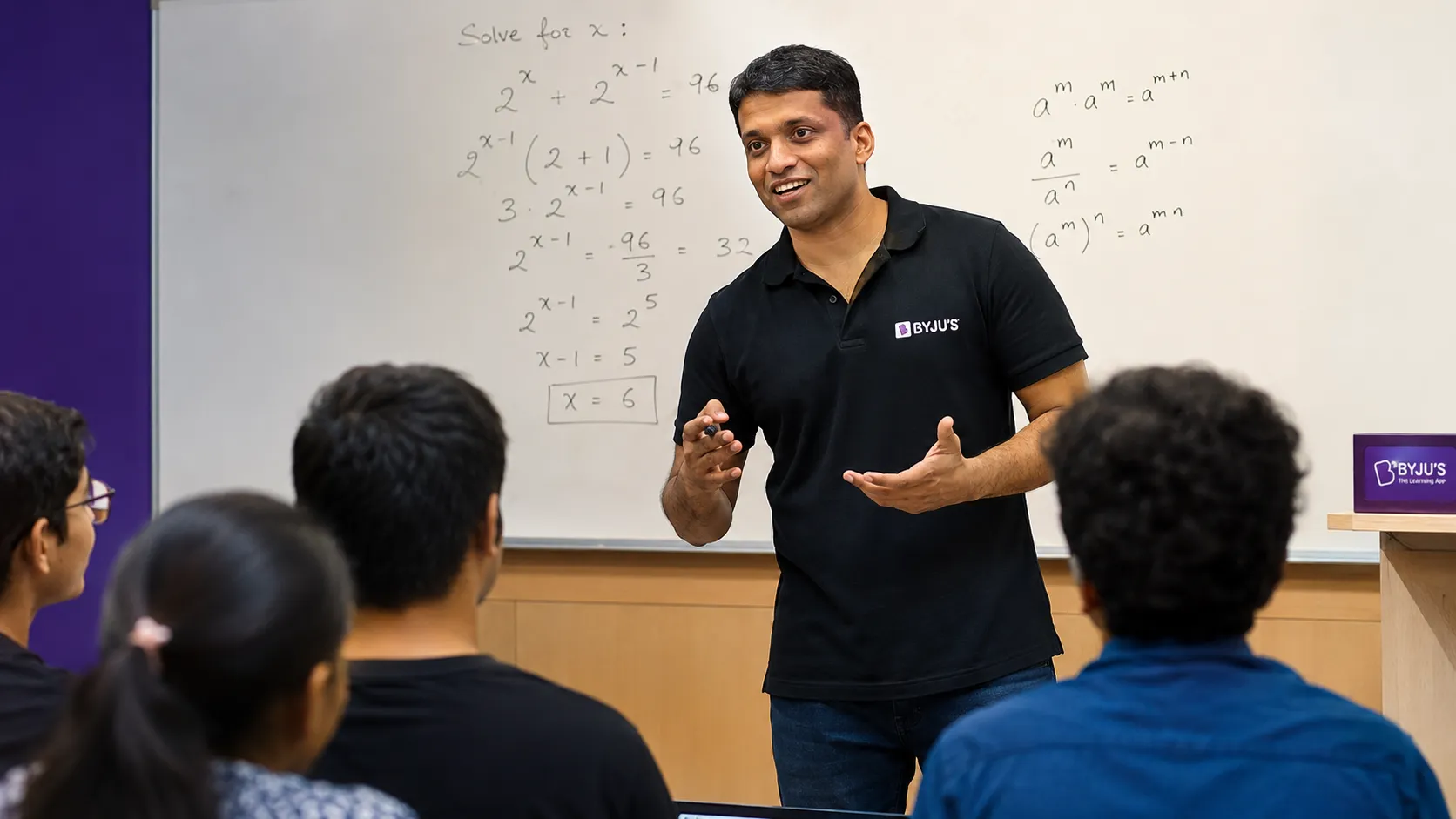
After graduation, he worked as a software engineer for a European shipping firm. But he missed teaching. In 2006, he started taking weekend classes in Chennai for MBA aspirants, focusing on the quantitative section. His unique style – no textbooks, just stories, analogies, and visualizations – made complex math seem simple. Students loved him. Word spread.
By 2009, he was teaching thousands of students offline. He founded Byju's Classes, a small offline coaching centre in Chennai.
The App That Changed Education
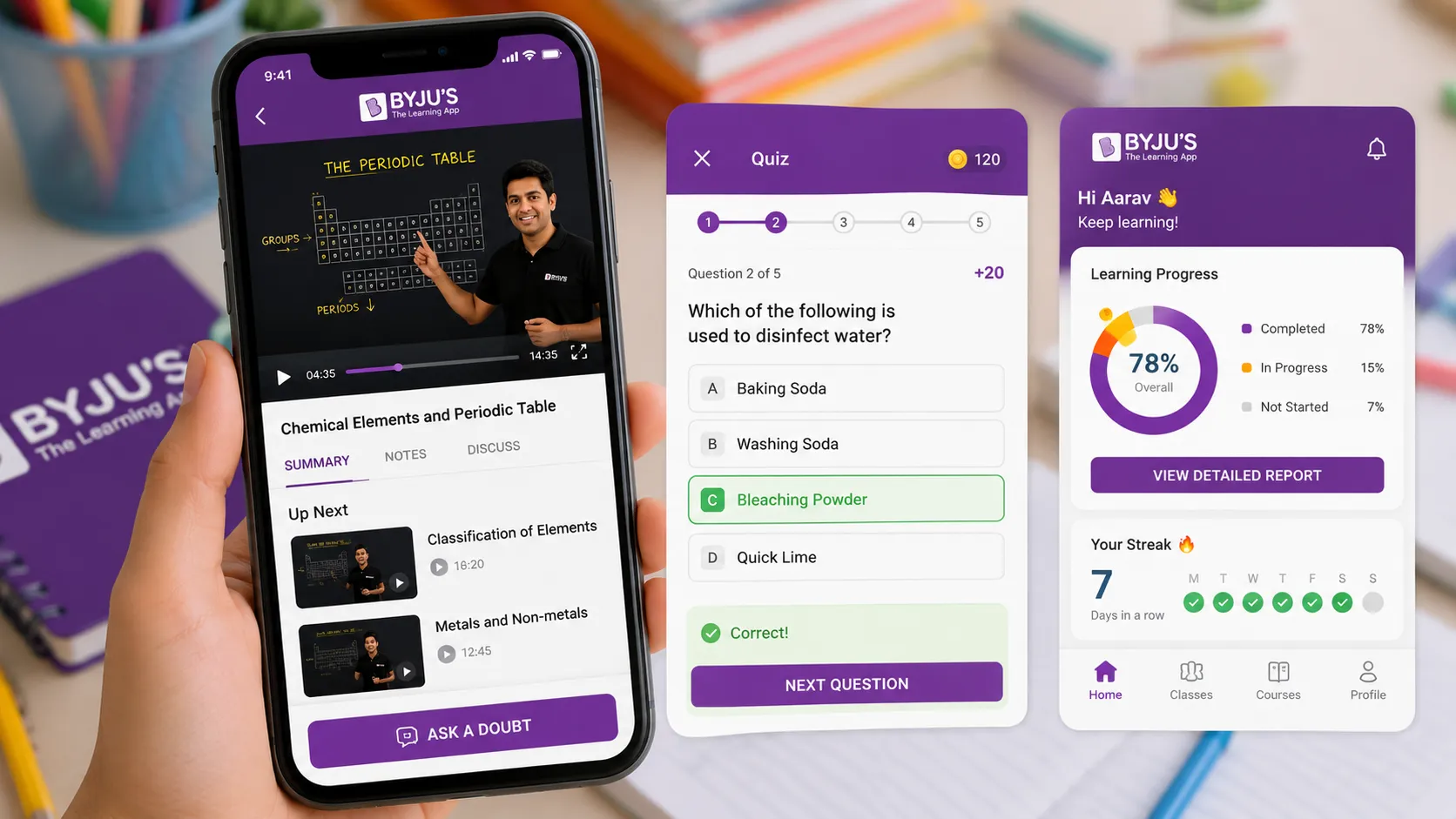
In 2015, Byju made a bold bet: he would move from offline coaching to a mobile app. He invested his savings to build a platform that delivered video lessons, interactive quizzes, and personalized learning paths. The app was launched with a freemium model – free for basic content, paid for full access.
The response was overwhelming. Byju's app made learning engaging – animated videos, relatable examples (using cricket or movie plots to explain math), and a reward system. Students who hated math started loving it. Parents saw results. By 2017, Byju's had 5 million downloads, and revenue was growing 300% annually.
Byju raised funding from top investors – Sequoia, Chan Zuckerberg Initiative, and Naspers. In 2018, the company became a unicorn. By 2020, it was valued at over $10 billion.
The Pandemic Boom and Hyper-Growth
When COVID-19 shut schools, the world rushed online. Byju's became a lifeline for stuck-at-home students. The company offered free access to its platform for months, adding 30 million new users. Revenue tripled in 2020.
Byju went on an acquisition spree. He bought:
WhiteHat Jr (coding for kids) for $300 million
Osmo (educational games) for $120 million
Aakash Educational Services (offline test prep) for $1 billion
Great Learning (professional upskilling) for $600 million
Epic (digital reading platform) for $500 million
At its peak in 2021, Byju's was valued at $22 billion, making Byju Raveendran one of India's richest entrepreneurs. He became a celebrity, appearing on magazine covers and advising government on education policy.
The Fall: Overexpansion and Crisis
By 2022, cracks appeared. WhiteHat Jr, bought for $300 million, was struggling. Its aggressive marketing tactics (allegedly using fear to sell coding classes) drew regulatory scrutiny. Byju's also faced allegations of mis-selling, aggressive debt recovery, and poor corporate governance.
Investors grew nervous. In 2023, Byju's lost three board members – including representatives from Prosus and Chan Zuckerberg Initiative. The company delayed filing financial statements. Its auditor, Deloitte, resigned. Lenders demanded repayment of $1.2 billion in debt.
Byju's laid off over 5,000 employees (25% of its workforce). It shut down WhiteHat Jr and sold Osmo at a loss. The valuation crashed to under $2 billion. Byju Raveendran's personal wealth evaporated.
In 2025, Byju's is still fighting to survive, restructuring debt, selling assets, and refocusing on its core app.
Leadership Philosophy: Passion Over Process
Byju is a natural teacher – charismatic, energetic, and persuasive. But critics say his passion for growth outpaced his attention to operations. He built a $22 billion company without building a strong middle management layer. When the crisis hit, there was no one to steady the ship.
Byju's teaching style – storytelling, analogies, simplification – worked for students but not for managing a multinational conglomerate. He admits in interviews that he should have hired more experienced executives earlier.
Challenges and Critiques
Aggressive sales tactics: Byju's sales team allegedly pressured parents to buy expensive courses, using high-pressure phone calls.
Debt burden: Byju's borrowed $1.2 billion at high interest rates. Servicing that debt when growth slowed became impossible.
Acquisition integration: Buying so many companies in different verticals (coding, games, offline coaching) led to chaos. Few synergies materialized.
Governance concerns: Byju's delayed reporting, lack of independent directors, and founder-centric control unsettled investors.