Bring Your Own Power: The New CEO, The $10 Billion Bet, and the Great AI Electricity Rush
HOUSTON — May 18, 2026 — At the end of April, a former wholesale energy executive named Robert Gaudette took over one of the largest independent power producers in the United States. NRG Energy, number 153 on the Fortune 500, was already in the middle of the most aggressive transformation in its history — a transformation driven not by its traditional business of selling electricity to homes and businesses, but by a single, insatiable new customer that barely existed five years ago: the artificial intelligence industry.
Gaudette assumed the role of president and chief executive officer on April 30, inheriting a company that had just closed a roughly $10 billion acquisition of 18 natural gas-fired power plants, nearly doubling its generation fleet to approximately 25 gigawatts. He inherited a partnership with GE Vernova and engineering giant Kiewit to advance four new combined-cycle power plant projects totaling more than 5 gigawatts, with an initial 1.2‑gigawatt facility expected online by 2029. And he inherited a Wall Street consensus that expects the company to announce at least one major new data center power deal — a 1‑gigawatt-plus combined-cycle gas turbine project — with a hyperscaler partner within weeks.
That consensus is not subtle. Jefferies, the investment bank, raised its price target on NRG stock to $199 from $181 in mid-April, citing an estimated 5.4 gigawatts of data center upside worth $1 billion in incremental EBITDA by 2030 and $2.5 billion by 2033, layered on top of the company's current $2.97 billion earnings base. Goldman Sachs reinstated coverage with a Buy rating, calling the LS Power acquisition "transformative." Wolfe Research upgraded the stock to Outperform. The market has concluded, with unusual unanimity, that the AI electricity rush is real, and that NRG is positioned at its center.
The Collision of Two Worlds
The most important thing to understand about the AI electricity rush is that it represents a collision between two industries that operate on fundamentally different clocks.
The AI ecosystem — hyperscalers, model labs, semiconductor companies — moves at software speed. It iterates in weeks, deploys in days, and treats capital as something to be deployed aggressively for first-mover advantage. The power industry — utilities, grid operators, equipment manufacturers — moves at infrastructure speed. It plans in years, permits in decades, and has seen almost no structural load growth for twenty years. In the two decades before the AI buildout began, U.S. electricity demand was essentially flat.
That collision is now producing strain, and the strain is producing creativity. The dominant intellectual throughline of the data center power industry in 2026 — articulated at conference after conference, deal after deal — is a concept called Bring Your Own Power, or BYOP. The idea is simple and radical: hyperscalers, rather than waiting for local utilities to build new capacity over a decade-long permitting and construction cycle, contract directly with independent power producers like NRG to build dedicated generation facilities alongside their data center campuses. The power is generated on-site or adjacent to the load, bypassing the grid interconnection queue entirely in some cases, and supplementing it in others.
NRG has been one of the most aggressive adopters of the BYOP model. The company's CEO — both the outgoing Larry Coben and the incoming Gaudette — have framed the strategy not as a departure from the company's core business but as its natural extension. NRG owns the power plants. NRG manages the fuel supply. NRG sells the electrons. The only difference is that, under BYOP, the customer is a single hyperscaler with a 1‑gigawatt appetite rather than a million households with a 1‑kilowatt demand.
The scale of that appetite is difficult to overstate. BlackRock estimates that approximately 148 gigawatts of additional power capacity will be needed in the United States by the end of the decade to satisfy data center demand — more than three times the roughly 42 gigawatts consumed by data centers in 2025. By 2030, data centers alone could account for 194 gigawatts of U.S. power demand, or nearly 30 percent of the nation's total electricity consumption. For context, that is roughly equivalent to adding the entire power demand of Japan to the American grid over five years.
The Gas Question
NRG's BYOP strategy rests on a single, controversial assumption: that the power for AI data centers will come primarily from natural gas, not from renewables.
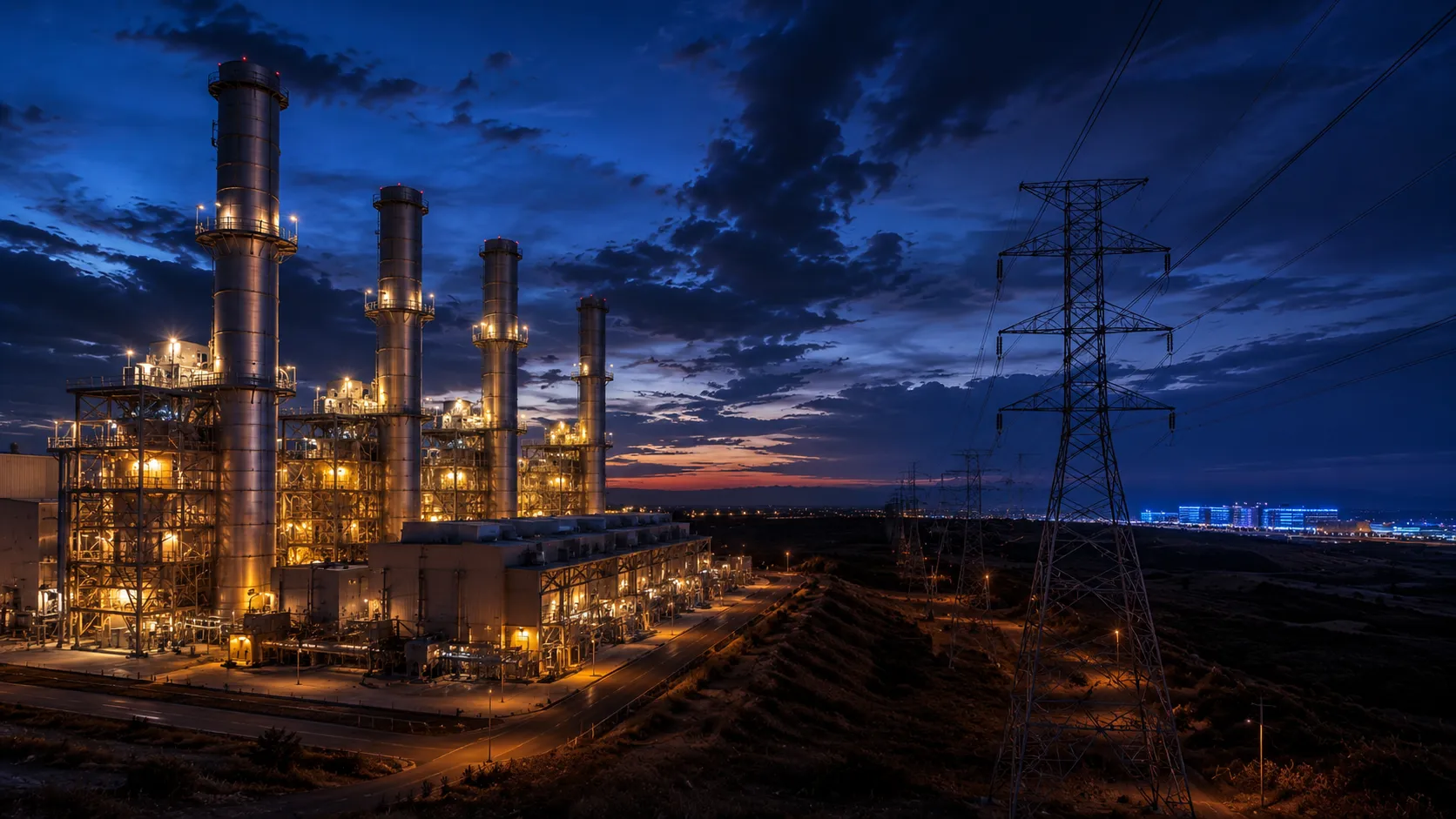
The company's partnership with GE Vernova and Kiewit is explicitly designed around combined-cycle gas turbine technology — specifically, GE's 7HA turbines, which are among the most efficient gas-fired generators in the world. The initial slate of four projects, totaling more than 5 gigawatts, will serve data center campuses in the Electric Reliability Council of Texas and PJM Interconnection markets, with the first 1.2‑gigawatt facility expected to come online in 2029.
The rationale is straightforward. Data centers require power that is available 24 hours a day, 365 days a year, regardless of weather conditions. Solar and wind — even when paired with battery storage — cannot yet meet that requirement at the scale and reliability hyperscalers demand. Nuclear, the other zero-carbon baseload option, is slow to build and politically fraught. Gas is fast, dispatchable, and, in the United States, abundant and relatively cheap. For a hyperscaler that needs to power a 1‑gigawatt campus by 2029, gas is frequently the only credible option.
But the gas bet carries risks. Natural gas prices are volatile and subject to geopolitical shocks. The conflict with Iran, which escalated in early 2026, has already affected fuel markets and risk management in the power sector. Environmental opposition to new gas-fired generation is intensifying in some regions, particularly in the Northeast and California. And the long-term trajectory of carbon regulation — uncertain under the current administration, but likely to tighten over the 30‑year lifespan of a gas turbine — adds a layer of financial complexity to every investment decision.
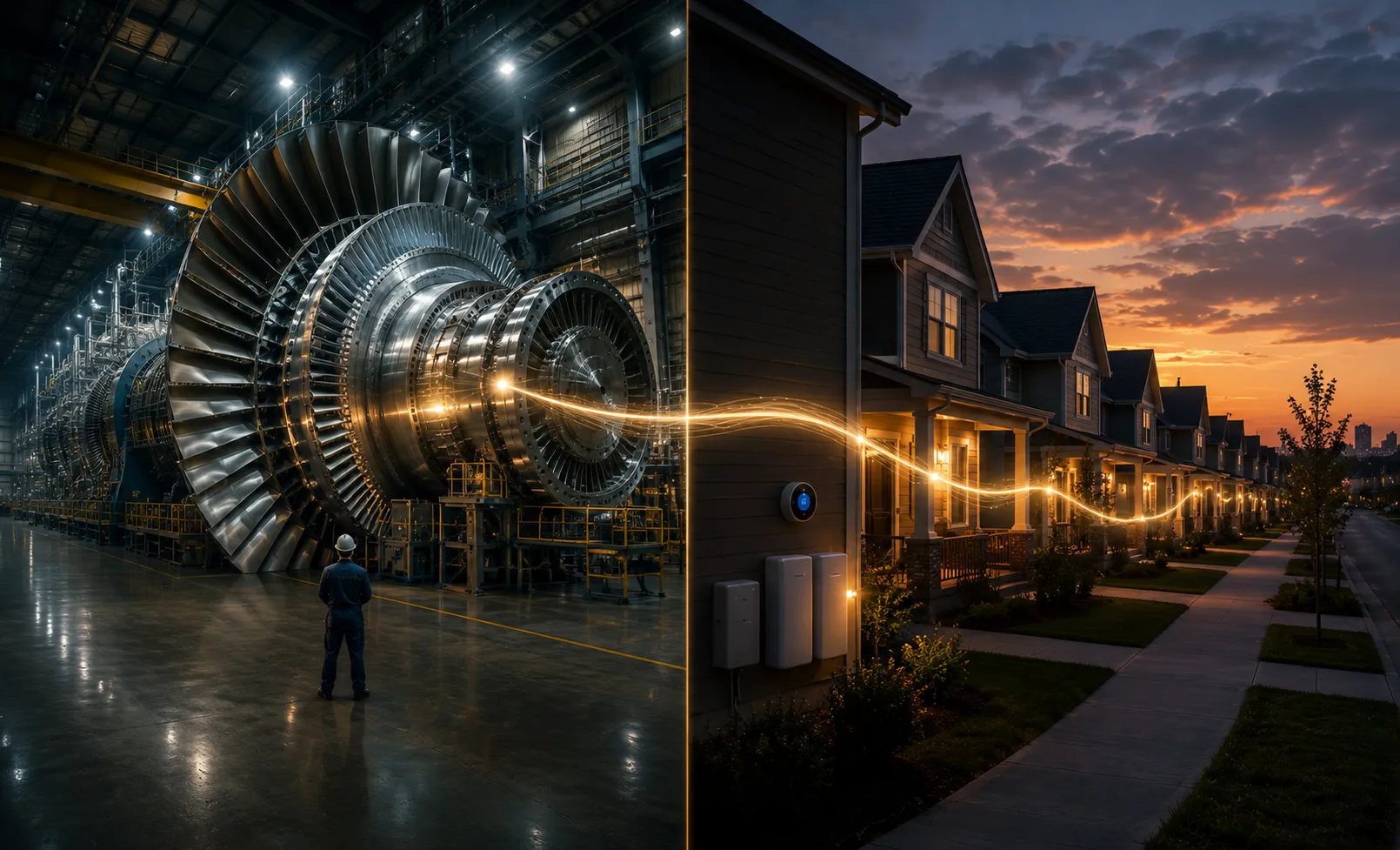
Gaudette, for his part, has been careful to emphasize that NRG's AI strategy is not solely a gas story. In a sit‑down interview with Fortune shortly after taking the CEO role, he described the company's approach as having "two attacks." The first is the BYOP gas buildout for hyperscalers. The second is the expansion of virtual power plants — networks of residential and commercial customers who allow NRG to control their thermostats, batteries, and electric vehicle chargers during peak demand periods, effectively creating a distributed, AI-managed power resource that reduces strain on the grid and lowers costs for all ratepayers.
"We've barely started the first inning from a virtual power plant perspective," Gaudette said. "Where we are today is now we have an affordability issue. Now we have a need. You have the combination of technology, willingness, and the economic desire to find a way to mobilize the power of the consumer to make a difference."
The Affordability Imperative
The virtual power plant strategy is not a side project. It is, in many respects, the political and economic insurance policy for the gas buildout.
The AI electricity rush is generating significant public backlash in communities where data center development has begun to strain local grids and push up residential electricity prices. The concern is straightforward: if hyperscalers are allowed to build massive power-consuming campuses without paying their fair share of grid upgrade costs, those costs will be socialized across ordinary ratepayers who are already struggling with inflation. Former U.S. Energy Secretary Jennifer Granholm has publicly suggested that states require data centers to act as flexible assets, pay fairly for their own infrastructure, and bring their own generation without passing costs onto other customers.
NRG's dual strategy is designed to address both sides of this tension. The BYOP model ensures hyperscalers pay for their own power generation directly, rather than drawing from the common grid. The virtual power plant model — which NRG operates through its recently acquired CPower commercial demand-response business and its Vivint residential smart-home platform — provides a mechanism to lower electricity costs for ordinary consumers by rewarding them for reducing consumption during peak periods. In effect, one side of the business builds power plants for AI. The other side builds a smarter grid for everyone else.
The Quarter That Set the Stage
The financial architecture that underpins Gaudette's strategy was largely laid in the first quarter of 2026, the results of which were reported on May 6. NRG posted a GAAP net income of $125 million, a sharp decline from the $750 million reported in the same period a year earlier — a drop driven primarily by one-time acquisition costs, integration expenses, and mark-to-market adjustments related to the LS Power transaction. Capital expenditures rose to $317 million from $217 million in the year-ago quarter, reflecting the early stages of the generation buildout.
The company reaffirmed its full-year 2026 guidance, projecting adjusted EBITDA between $3.93 billion and $4.18 billion, and emphasizing that its base outlook does not depend on incremental contributions from large-load customers or new development projects — a signal that the core business remains healthy even before the data center upside materializes. NRG also highlighted its capital allocation plan, which includes roughly $407 million in common stock dividends and an ongoing share buyback program supported by an $11 billion authorization through 2030.
The market, for its part, has priced in the data center upside rather than waiting for it. NRG's stock delivered a 76 percent return over the past year, though some analysts have suggested shares are trading above fair value at current levels. The divergence between the company's cautious official guidance and Wall Street's enthusiastic forward estimates is, in many respects, the story of the entire AI infrastructure sector in 2026: the numbers are good, but the expectations are better, and the gap between the two will eventually have to close.
What Comes Next
Gaudette has been deliberately vague about the timing and location of NRG's first major hyperscaler deal. "They can go anywhere in the country," he told Fortune. "We haven't been specific about where we would think the first project would be. We have talked to our investors about the benefits of building down here [in Texas]. It's one market; it's one government; it's one permitting regime. But we can take them wherever our customer wants and where we think it makes the most sense."
The vagueness is strategic. NRG is competing for hyperscaler contracts against a growing field of rival power producers, each racing to secure turbine slots, permitting approvals, and financing before the window of maximum pricing power closes. The company has already secured its GE Vernova turbine slots for the initial 5.4‑gigawatt buildout — a critical advantage at a moment when gas turbine supply chains are stretched to their limits. The question is not whether NRG will sign a deal; it is when, with whom, and at what price.
The broader significance of the NRG story — and of Gaudette's elevation to the CEO role at this particular moment — is that it marks the arrival of the power sector as a first-order technology story. For two decades, electricity was a utility business: stable, boring, optimized for dividends rather than growth. The AI buildout has changed that permanently. The companies that can build new generation capacity fastest, finance it most efficiently, and integrate it most intelligently with a modernized grid will be the infrastructure beneficiaries of the largest capital deployment cycle in the history of the technology industry.
"We're uniquely positioned with two attacks on how we solve the challenges," Gaudette said. He was referring to the dual strategy of centralized gas generation and distributed virtual power plants. But the word he chose — "attacks" — captures something essential about the moment. The AI electricity rush is not a managed transition. It is a competitive scramble, and the companies that move fastest will capture the contracts that define the next decade of American energy infrastructure. NRG, with its $10 billion acquisition, its 5.4‑gigawatt pipeline, its GE turbine slots, and its new CEO, is betting that it can move faster than anyone else.


