Bollywood’s Alcohol Gold Rush — Why SRK, Ajay Devgn and Sanjay Dutt Are Betting Big on Premium Spirits
The Tequila That Shook the Industry
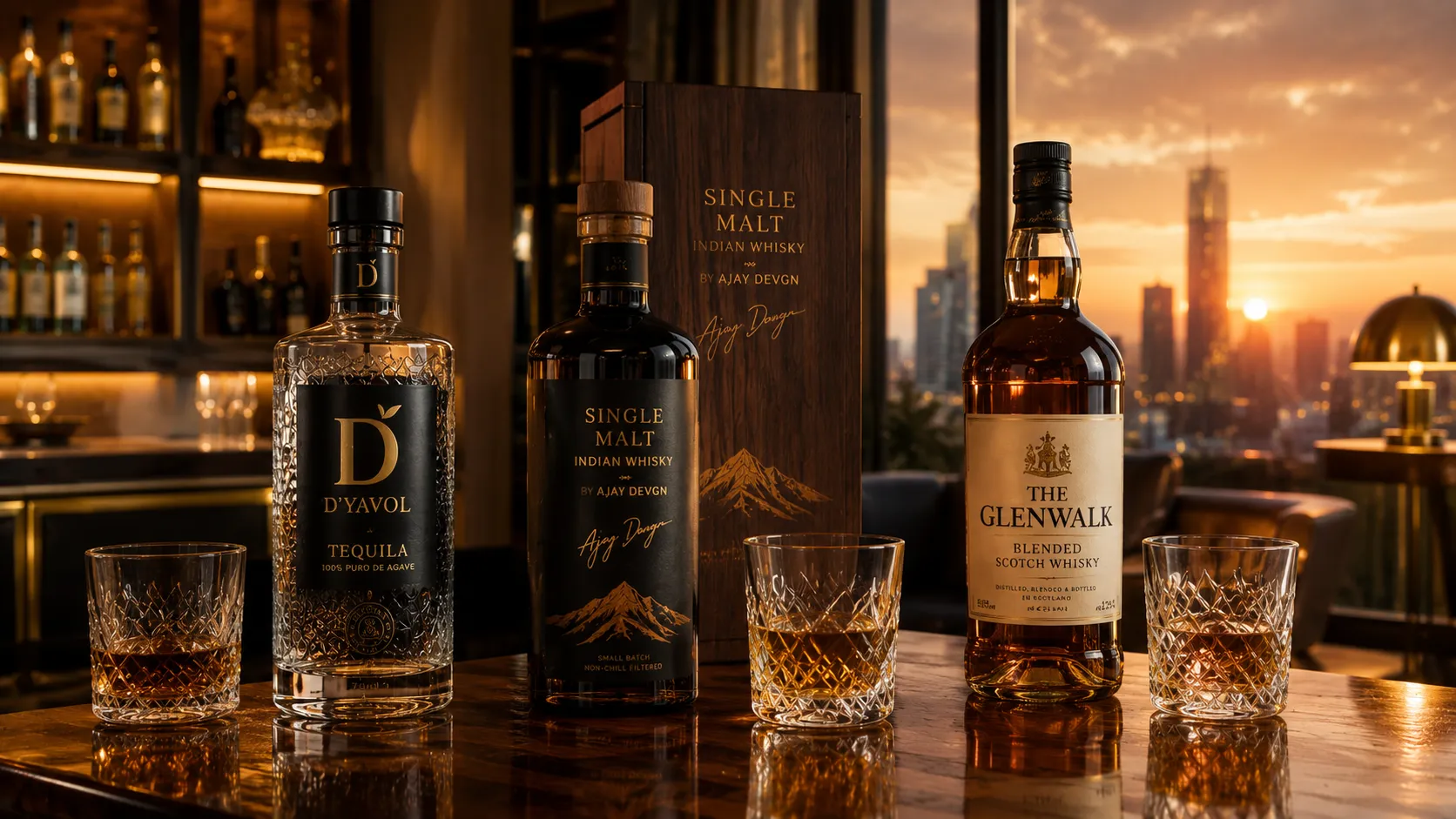
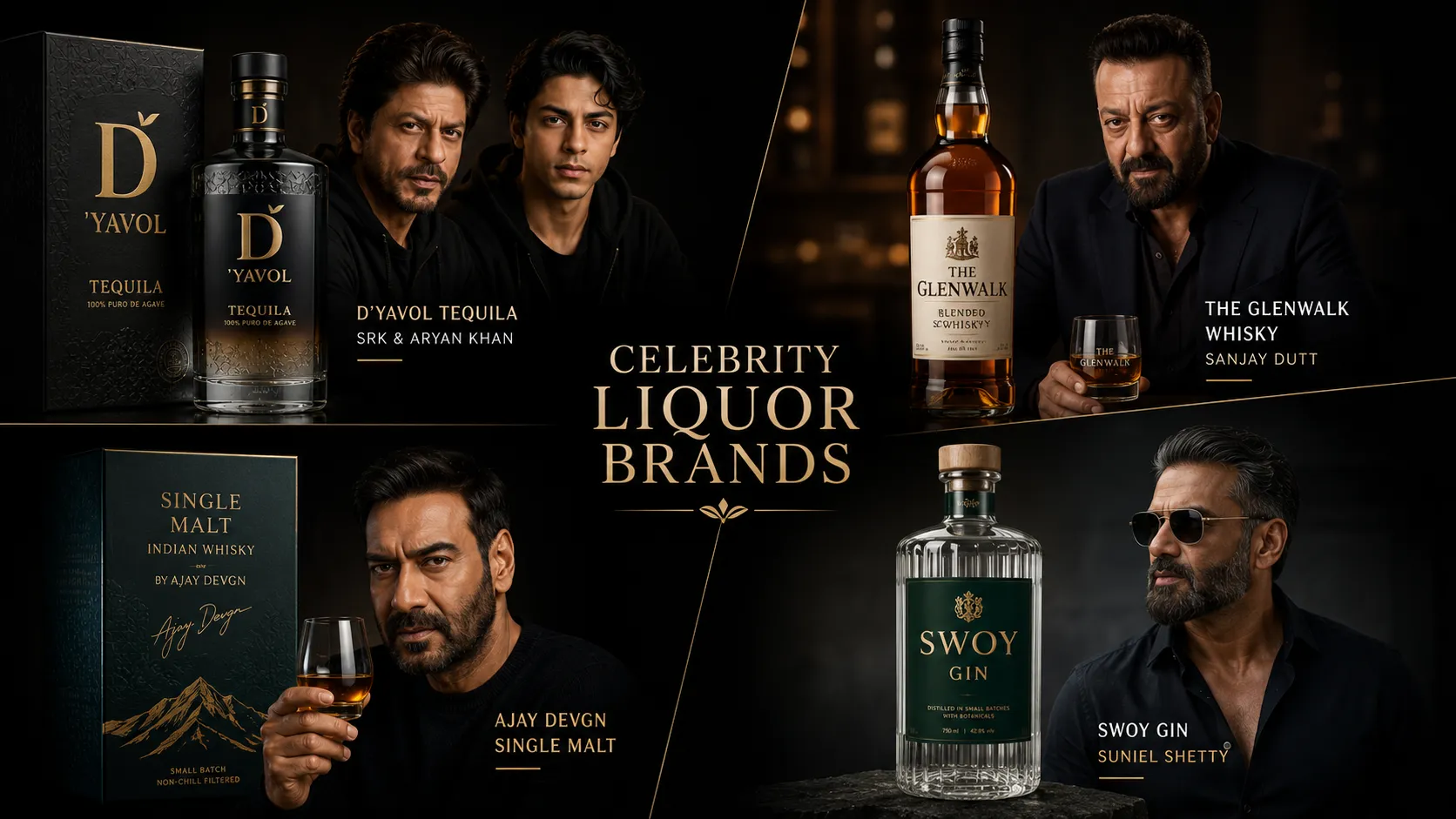
In late 2024, Shah Rukh Khan and his son Aryan Khan made an announcement that surprised everyone: they were launching a premium tequila brand called D’Yavol (love spelled backwards). The brand was created in partnership with Radico Khaitan, one of India’s oldest and largest spirits manufacturers. D’Yavol was positioned as a luxury lifestyle brand, not just a drink. Bottles were priced at ₹4,500 for the blanco and ₹12,000 for the añejo.
The launch was backed by a massive social media campaign featuring SRK himself. Within weeks, D’Yavol sold out its first batch. The brand is now available in premium nightclubs and five‑star hotels across India, with plans to export to Dubai and London.
SRK was not the first Bollywood star to enter the alcohol business. But his entry signaled that celebrity liquor brands had moved from a trend to a mainstream strategy.
Why Alcohol? The Economics of Celebrity Spirits
The global premium spirits market is growing at 8% annually, driven by younger consumers who prefer quality over quantity. In India, the alco-bev industry is worth over $52 billion, with premium and super‑premium segments growing the fastest. Traditional celebrities endorsement deals pay ₹2–5 crore per year. But owning a brand can generate ₹50 crore or more annually in profit—if successful.
The model is simple: a celebrity partners with an established distiller or manufacturer. The celebrity brings brand equity, marketing reach, and aspirational appeal. The distiller brings production, distribution, and regulatory expertise. The profits are split, typically 60:40 or 70:30 in favor of the distiller.
For the celebrity, the upfront investment is modest (₹2–5 crore). The potential returns, however, can be life‑changing.
Ajay Devgn’s ₹60,000 Single Malt
In 2025, Ajay Devgn launched a limited‑edition single malt whisky priced at ₹60,000 per bottle. Only 500 bottles were produced, making it a collectors’ item. The whisky was aged for 25 years in oak casks and came in a handcrafted wooden box. It sold out within hours.
Ajay’s strategy was different from SRK’s. He targeted the ultra‑luxury segment, not the mass premium. The brand was not meant to be a volume driver but a statement of craftsmanship and exclusivity. It also elevated Ajay’s personal brand, associating him with sophistication and rarity.
While the single malt contributed little to the bottom line, it created a halo effect for his other business ventures, including his production house and real estate investments.
Sanjay Dutt’s The Glenwalk — ₹15 Crore in 45 Days
Sanjay Dutt took a different approach. His brand, The Glenwalk, is a Scotch whisky positioned at the affordable premium segment — ₹1,200–1,500 per bottle. It is widely available in retail stores, bars, and restaurants across India. The brand’s tagline, “Walk with the Stars,” plays on Sanjay’s rugged, macho image.
The Glenwalk was launched in late 2024. Within 45 days, it reportedly generated ₹15 crore in revenue. By early 2026, the brand was on track to cross ₹200 crore in annual sales. Sanjay’s stake is estimated to be worth over ₹100 crore.
His strategy was simple: mass appeal, wide distribution, and aggressive marketing. Sanjay appears in TV commercials, print ads, and social media campaigns. He also makes personal appearances at brand events. Unlike SRK’s luxury positioning, Sanjay went for the volume game.
Other Bollywood Entrants
The trend is spreading. Suniel Shetty launched a premium gin brand, SWOY, in 2024. Arjun Rampal is the face of a craft beer brand. John Abraham has his own vodka label. Even former cricket stars like Yuvraj Singh have launched their own spirits.
What’s changing is the nature of the deal. Earlier, celebrities would simply endorse a brand for a fee. Today, they demand equity. They want to be owners, not just ambassadors. This shift reflects a broader trend in Bollywood: stars are becoming entrepreneurs.
The Economics of Celebrity-Backed Spirits
Let’s look at the numbers. A typical celebrity‑backed premium spirits brand requires:
Initial investment: ₹5–10 crore for production, packaging, and launch marketing
Distribution network: Tied to the manufacturing partner
Break-even point: Typically 12–18 months
Profit margins: 30–40% for premium segments, 15–20% for mass premium
For the celebrity, a 20–30% equity stake in a brand doing ₹200 crore in annual sales could be worth ₹40–60 crore. Compare that to a ₹5 crore endorsement fee. The economics strongly favor ownership.
Risks include regulatory hurdles (liquor licenses vary by state), competition from global brands, and changing consumer preferences (the rise of no‑alcohol alternatives). But so far, the early movers have succeeded.
The Future: A Bollywood Spirits Conglomerate?
Industry watchers predict that within five years, there will be a Bollywood‑owned spirits conglomerate—a holding company that manages multiple celebrity brands under one roof. Such a company could negotiate better distribution deals, share marketing costs, and even launch a common loyalty program.
SRK’s Red Chillies Entertainment is already a diversified media and entertainment company. Adding a spirits division would be a natural extension. Similarly, Sanjay Dutt’s family office has the capital to acquire smaller brands.
The next frontier could be international expansion. Indian celebrities have massive followings in the Middle East, the UK, and the US. A Bollywood‑backed tequila or whisky could find buyers among the Indian diaspora worldwide.
Critiques and Concerns
Not everyone applauds this trend. Public health advocates argue that celebrities glamorize alcohol consumption, especially among impressionable youth. In India, where alcohol abuse is a serious problem, a star promoting liquor can have negative social consequences.
The celebrities defend themselves by pointing out that they are not promoting excessive drinking. Their brands emphasize quality, craftsmanship, and responsible consumption. Some also donate a portion of profits to charity.
Another critique is that these brands are overpriced and rely purely on star power rather than product quality. But blind taste tests have rated D’Yavol and The Glenwalk as competitive with global peers in their price segments.


