BIOTECH'S COMEBACK
Why VCs are betting on "small data, big insights" – and leaving the genomics bubble behind
BOSTON, Massachusetts – Three years ago, biotech was the hottest ticket in venture capital.
Startups with names like Grail, Tempus, and 23andMe raised billions to sequence the world's DNA. The promise was intoxicating: big data would unlock the secrets of cancer, aging, and every rare disease. Investors threw money at anything with a sequencer and a cloud platform.
Then the reckoning came.
Sequencing costs plummeted, but the insights did not materialize. Data lakes became data swamps. Precision medicine turned out to be more complex than anyone imagined. By late 2024, biotech funding had cratered 70% from its 2021 peak. The phrase "genomics winter" entered the lexicon.
But now, something unexpected is happening.
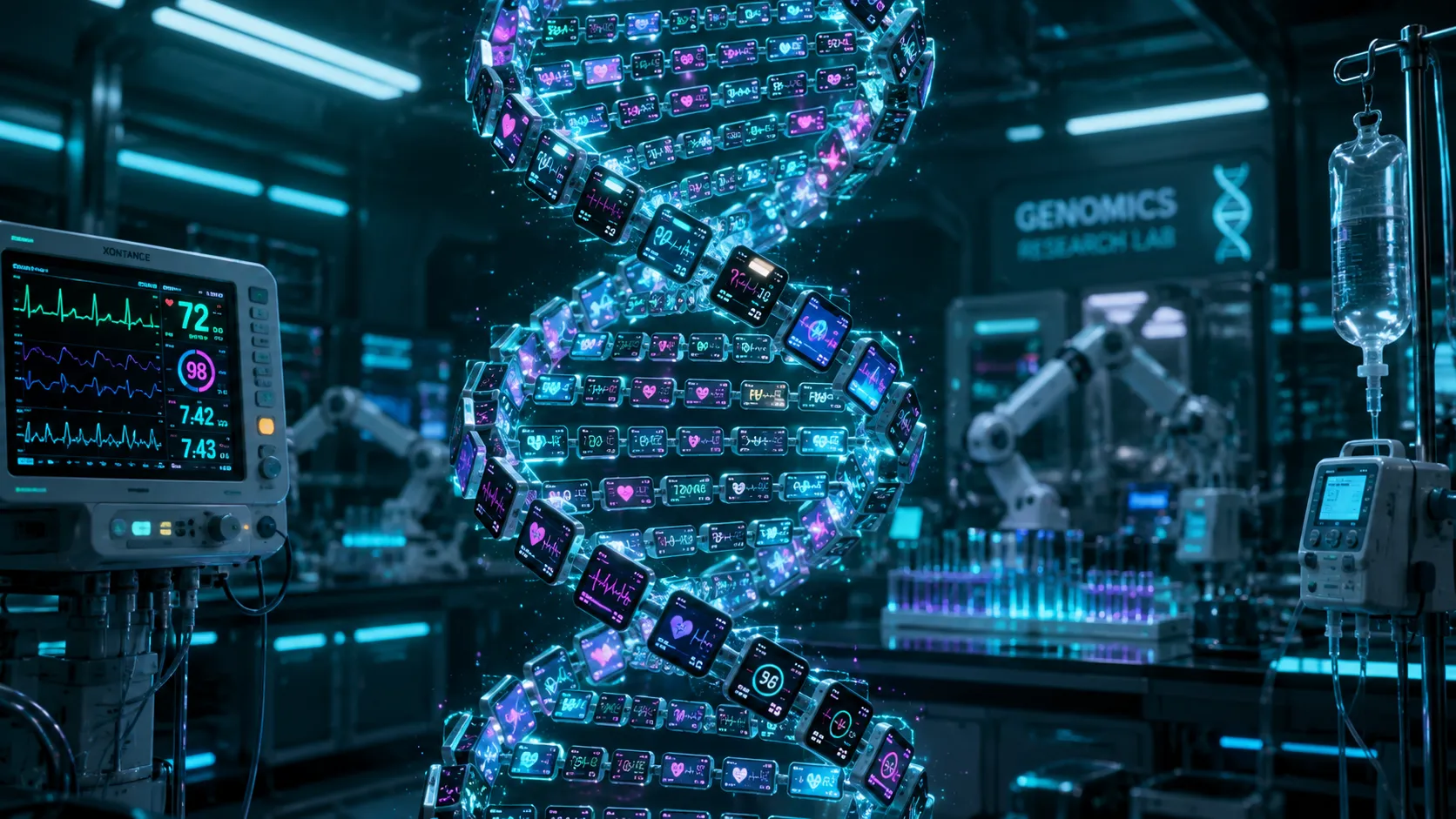
Biotech is back – but not the biotech you remember. The new wave of startups is not chasing petabytes of genomic data. They are chasing small, clean, clinically relevant datasets – often collected from wearables, electronic health records, and real-world clinical settings. The mantra has shifted from "big data" to "smart data."
And the money is flowing again.
According to Rock Health, digital health and biotech funding in the U.S. reached $6.2 billion in Q1 2026 – up 35% year‑over‑year. But the average deal size has dropped 20% – a sign of discipline. Investors are writing smaller checks for more focused, more validated science.
"We learned that sequencing a million genomes does not automatically cure cancer," says Vineeta Agarwala, a general partner at Andreessen Horowitz's Bio fund. "Now we are funding startups that start with a clinical problem, not a technology platform. That is a fundamentally different approach."
The Poster Child: Remi Health
The most telling example comes not from Boston or San Francisco, but from Germany – with a significant U.S. expansion.
Remi Health, a diagnostics startup based in Berlin with a new Boston headquarters, just raised €5 million (about $5.4 million) for its "Diagnostics‑as‑a‑Service" platform. The goal: process 100 million medical tests annually by 2030 – from blood work to urine analysis to rapid antigen tests – using AI to interpret results and triage patients.
What makes Remi different? It does not own a single sequencer. It does not claim to cure anything. Instead, it integrates with existing labs, clinics, and at‑home testing kits, then applies machine learning to existing, clinically validated data to produce faster, cheaper interpretations.
"We are not inventing new biomarkers," says Dr. Lukas Maier, Remi's co‑founder. "We are making existing diagnostics smarter. That is a revenue model, not a science experiment. Every test we process generates cash. We do not need to wait for a breakthrough."
Remi already has contracts with three European hospital networks and just signed a pilot with Partners HealthCare in Boston. The company expects to be cash‑flow positive by Q4 2026.

The Three Pillars of the New Biotech
Based on interviews with a dozen investors and founders, the new biotech landscape rests on three pillars.
1. Real‑World Evidence Over Genomic Pyramids
In the old days, startups would sequence thousands of tumors, then look for patterns. The problem: most patterns were noise.
The new approach starts with real‑world clinical data – electronic health records, insurance claims, wearable sensor data – and asks a specific question. Does this blood pressure pattern predict heart failure six months before symptoms? Does this cough signature on a smartwatch identify pneumonia with 90% accuracy?
Delfi Diagnostics, a Baltimore startup, used this approach to develop a liquid biopsy test for early liver cancer. Instead of sequencing everything, they looked for fragmentation patterns in cell‑free DNA – a signal that is both sensitive and cheap. The test is now in clinical trials with Johns Hopkins.
"We asked a simple question," says Dr. Victor Velculescu, Delfi's co‑founder. "What can we measure that is different in cancer patients, but that does not require expensive whole‑genome sequencing? The answer was fragmentomics. That is small data, but powerful data."
2. Wearables as Diagnostic Engines
The second pillar is the explosion of consumer and medical wearables. Apple Watch, Oura Ring, Whoop, and Dexcom continuous glucose monitors are generating billions of data points per day. Startups are now using that data to diagnose conditions earlier and more accurately.
Earli, a San Francisco startup, takes a different tack. It uses synthetic biomarkers – engineered molecules that are injected into the body and then detected by a wearable optical sensor. The company just raised $150 million from Temasek and Perceptive Advisors.
"We are building a 'cancer breathalyzer,'" says Cyrus Ramin, Earli's CEO. "You inhale a harmless molecule. If a tumor is present, the molecule is cleaved and detected by a small wearable patch. No needles, no radiation, no expensive imaging."
3. AI‑Designed Antibodies and Small Molecules
The third pillar is perhaps the most dramatic: using AI to design drugs from scratch, rather than screening millions of compounds in a lab.
DynamiCure, a Waltham, Massachusetts startup, uses generative AI to design antibodies that bind to previously "undruggable" targets. The company just announced a $120 million Series B led by Flagship Pioneering.
"Traditional drug discovery is like looking for a key by trying a million keys," says Dr. Noubar Afeyan, Flagship's CEO. "AI‑designed drugs are like having a locksmith who can cut a new key from a photo of the lock. It is faster, cheaper, and more precise."
DynamiCure has two candidates in preclinical trials for autoimmune diseases. If successful, the company could go from concept to clinic in three years – compared to the traditional five to seven.
The FDA Accelerates
The new biotech is also benefiting from a more favorable regulatory environment. The FDA has launched a "Digital Health Innovation Action Plan" that creates a streamlined pathway for software‑based diagnostics and AI‑guided clinical decisions.
Under the new framework, startups can submit a "software precertification" application that, if approved, allows for iterative updates without full re‑review. The goal: reduce the time from algorithm development to clinical deployment from years to months.
"We are moving from a world where every software change required a 510(k) submission to a world where approved platforms can evolve rapidly," says Dr. Bakul Patel, former FDA digital health director. "That is a game‑changer for startups."
The Geography of New Biotech
The new discipline is also reshaping where biotech startups are born.
Boston remains the undisputed capital, with over $2 billion in biotech funding in Q1 2026. But Salt Lake City has emerged as a surprising hub for wearables‑based diagnostics, thanks to the presence of Recursion Pharmaceuticals and the University of Utah's biomedical engineering program.
San Diego continues to dominate in antibody engineering, while Pittsburgh – with its strength in robotics and sensors – is seeing a mini‑boom in diagnostic wearables.
"The old biotech was centered on Boston and San Francisco," says Dr. Jennifer Doudna, Nobel laureate and CRISPR pioneer. "The new biotech is distributed. You can build a company anywhere if you have a clear clinical problem and a clean dataset."
The Bottom Line: Small Data, Big Returns
After a brutal correction, biotech is finding its footing again. But the companies that survive and thrive are not the ones that promised to sequence the world. They are the ones that asked a narrow, practical question: What can we measure right now, with existing tools, that will improve patient outcomes today?
That shift – from big data to smart data, from platforms to problems – is the real story of biotech's comeback.
"The genomics bubble was a necessary learning experience," says Dr. Daphne Koller, founder of Insitro. "But the future of biotech is not about more data. It is about better questions. And the startups that ask those questions are the ones we are betting on."
In the new biotech, smaller is smarter. And smarter is finally profitable.


