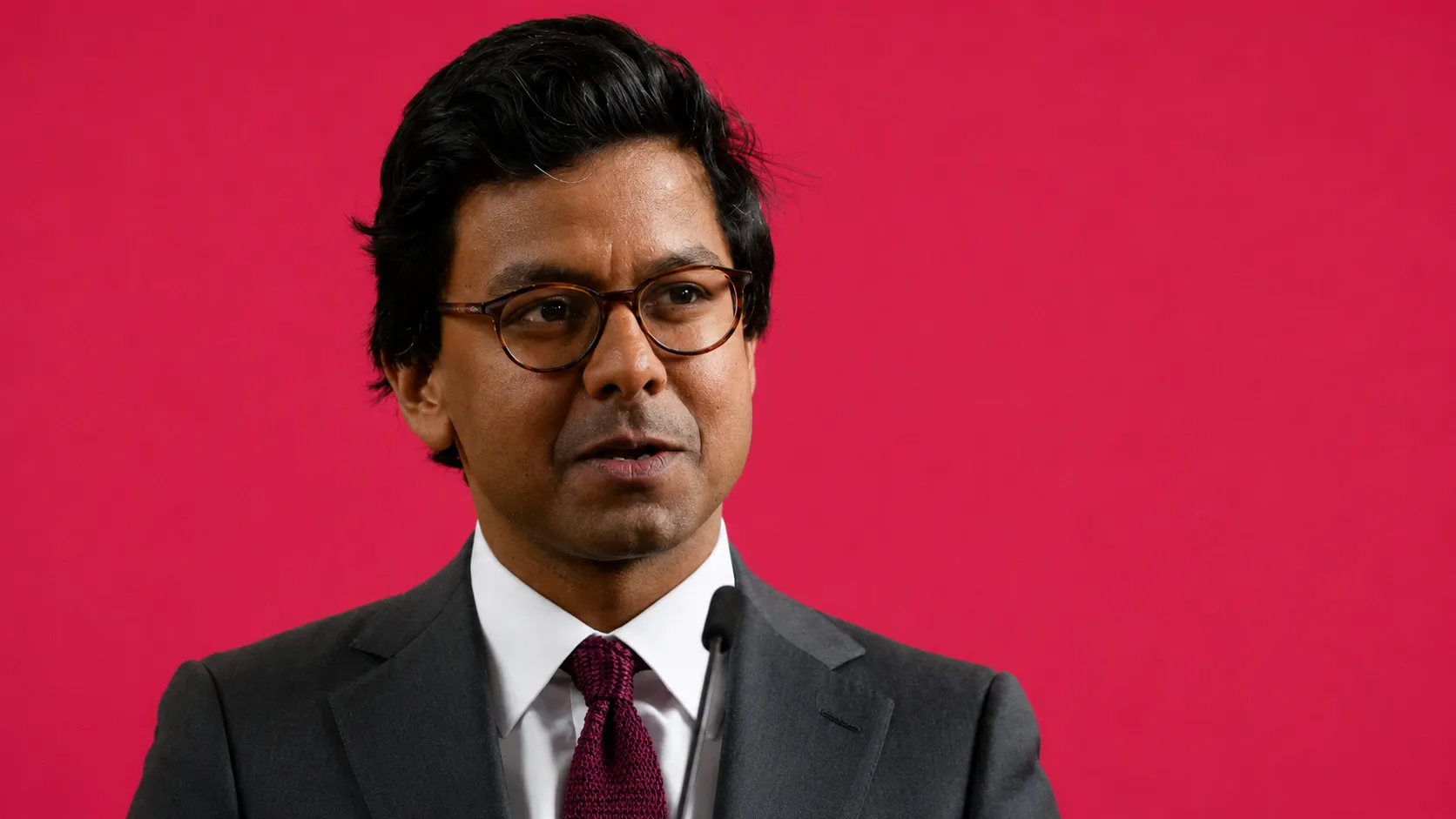
Kanishka Narayan, a Bihar-born British Member of Parliament, has become the United Kingdom's first-ever Cabinet-level Minister for Artificial Intelligence, appointed by Prime Minister Andy Burnham on July 20, 2026, in a move that marks the first time a UK minister dedicated exclusively to AI policy has held a permanent seat at the Cabinet table. In the days since his initial appointment, Narayan has been further tapped to lead a newly established Prime Minister's Artificial Intelligence Taskforce, positioning him at the centre of the government's overall AI strategy as the technology's role in the British economy and public services continues to expand rapidly.
Narayan's formal title is Minister of State for Artificial Intelligence, a post he holds jointly across the Cabinet Office and the newly restructured Department for Business, Innovation, Science and Trade — itself a product of Burnham's decision to dissolve the previous Department for Science, Innovation and Technology and merge several of its functions into a broader business and trade portfolio, with Jonathan Reynolds appointed Secretary of State overseeing the newly combined department. Narayan previously served as Parliamentary Under-Secretary of State for AI and Online Safety within the former department, a role he had held since September 2025 under then-Prime Minister Keir Starmer, before Burnham's elevation of the post to full Cabinet status this month.
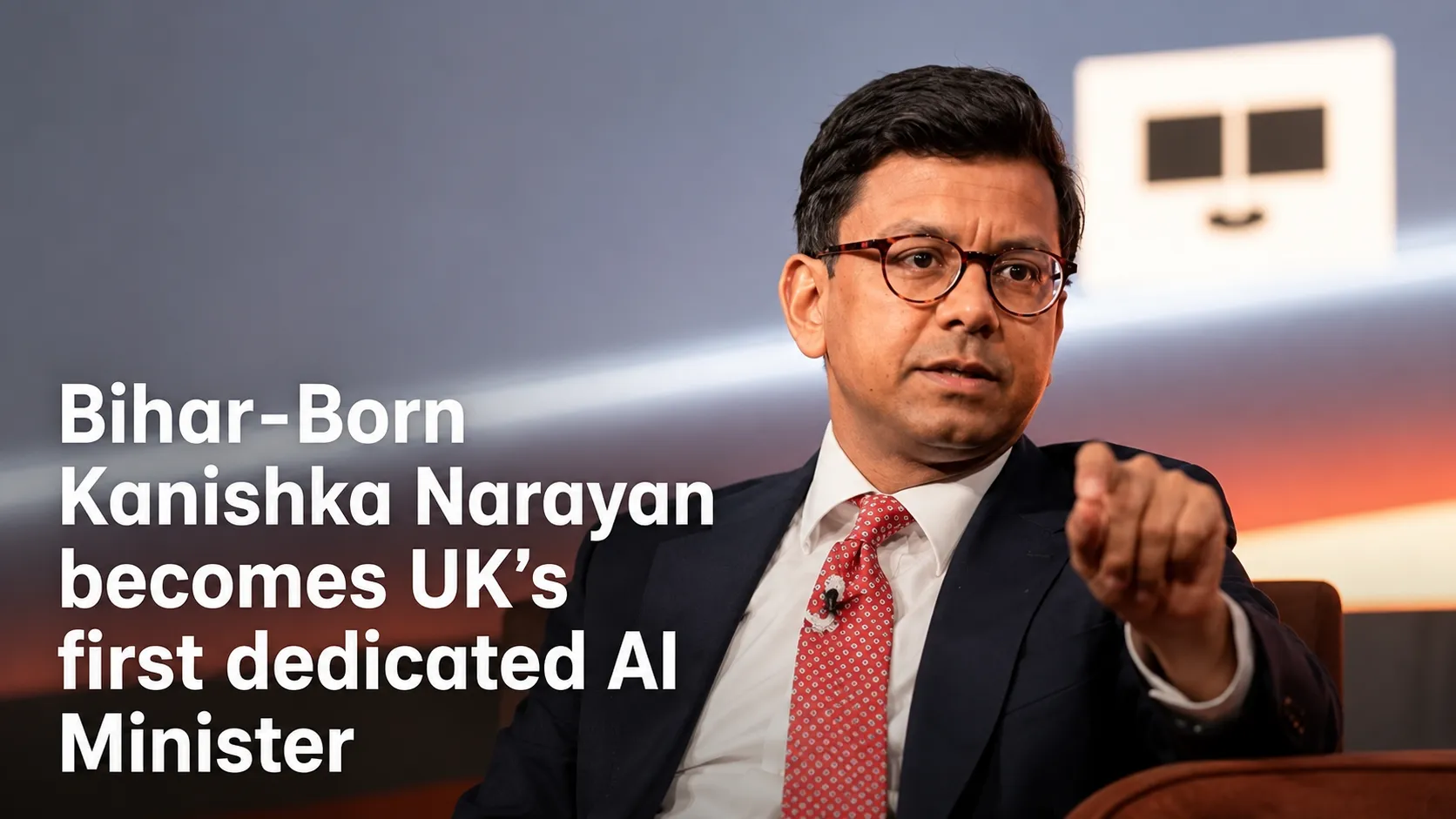
The newly announced AI Taskforce, which Narayan will now oversee, will be chaired by Lord Patrick Vallance, the former UK Government Chief Scientific Adviser who played a prominent public role in Britain's response to the Covid-19 pandemic between 2018 and 2023, and will report directly to Prime Minister Burnham. According to the government's own description, the taskforce is intended to direct and implement the UK's overall AI strategy, coordinate AI adoption across government departments, support economic growth, and examine how the technology can improve the delivery of public services — with Narayan working alongside Cabinet Secretary Antonia Romeo in overseeing its work.
Narayan's personal journey to this position carries a genuinely distinctive diaspora narrative. Born in India, he spent his early childhood in Bihar before his family moved to Delhi, and later relocated to Cardiff, Wales, when he was 12 years old. He went on to study Philosophy, Politics and Economics at the University of Oxford before completing an MBA at Stanford University in the United States — an educational trajectory spanning three continents before his eventual entry into British politics. In 2024, Narayan made history as Wales's first ethnic-minority Member of Parliament after winning the Vale of Glamorgan constituency, a seat he has held since the July 2024 general election.
The scale of significance attached to Narayan's appointment extends well beyond his own individual career trajectory, given that the UK becomes only the latest in a small group of nations to establish a dedicated, Cabinet-level AI ministerial position, following comparable moves by France and Canada over the preceding two years. Britain's decision to elevate the role reflects a broader strategic calculation that AI policy — spanning economic competitiveness, national security, regulatory framework design, and public-sector transformation — has become significant enough to warrant permanent, senior representation at the highest table of government decision-making, rather than remaining a junior ministerial responsibility housed within a broader science and technology portfolio.
Narayan's appointment drew swift praise from prominent figures within the global AI industry, including Google DeepMind CEO and Nobel laureate Demis Hassabis, who publicly welcomed the move as positive news for Britain's AI ecosystem. That kind of high-profile industry endorsement carries particular weight given Britain's stated ambition to position itself as a leading global hub for AI research, investment, and company formation, home to prominent AI companies and research institutions including Google DeepMind itself, alongside Wayve and ElevenLabs, built atop what the country has long considered one of its deepest pools of engineering and scientific talent.
That ambition has not been without its critics, with the UK government facing sustained criticism over recent years for what commentators have characterised as inconsistent technology policy and underinvestment relative to the scale of its stated AI ambitions, particularly when measured against the vastly larger capital commitments being made by the United States and China within the same technology race. Whether the creation of a dedicated Cabinet-level ministerial position, now paired with a taskforce chaired by one of Britain's most respected former scientific advisers, translates into a meaningfully more coherent and better-resourced national AI strategy remains a question industry observers are likely to watch closely over Narayan's tenure.
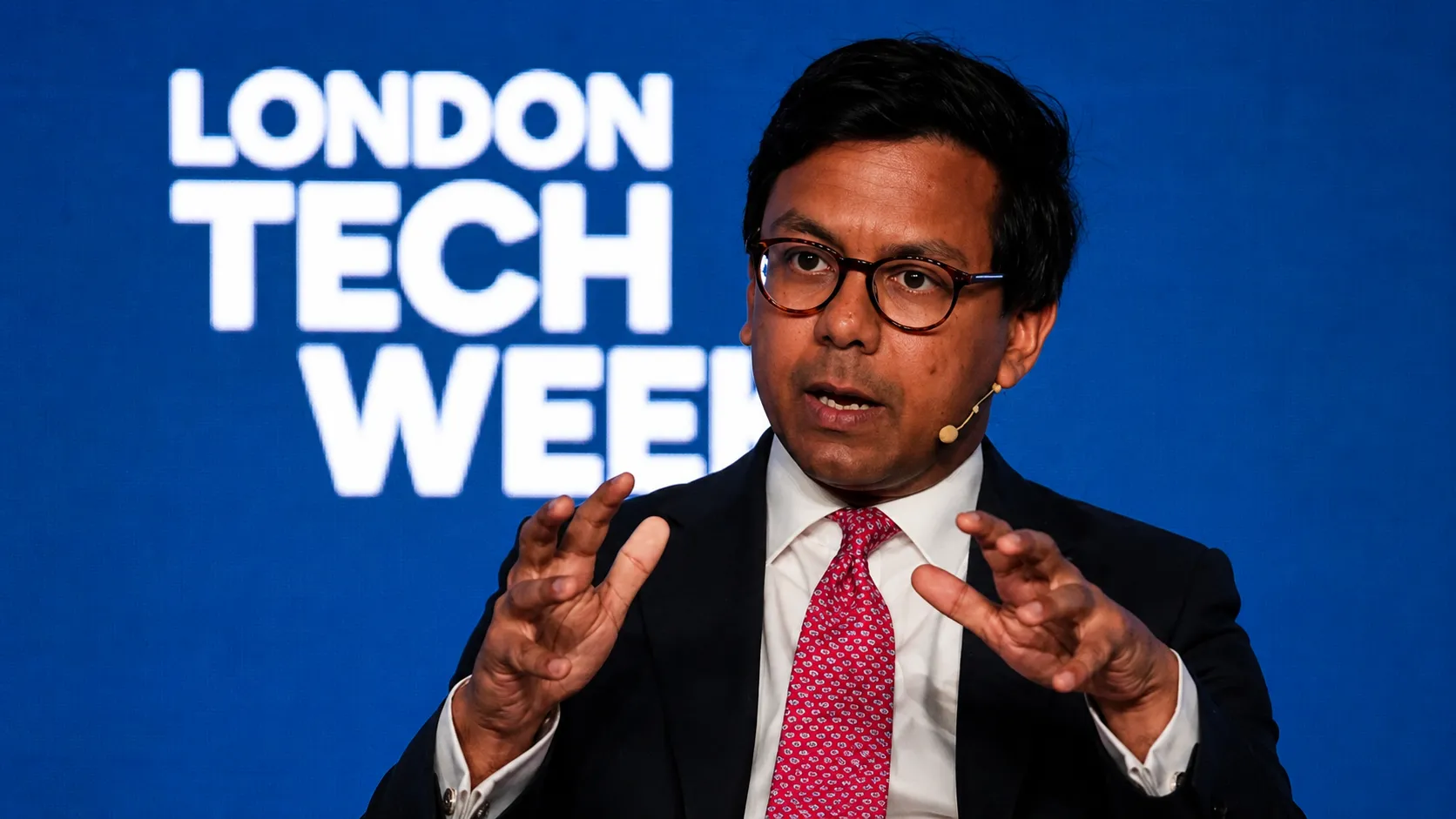
During his earlier tenure as the more junior AI and Online Safety minister, Narayan oversaw the UK's AI Security Institute and announced substantial new government investment specifically targeting UK semiconductor and AI start-up companies — a track record that likely factored into Burnham's decision to entrust him with the considerably expanded Cabinet-level mandate. Narayan has publicly signalled that continued close collaboration with industry leaders will remain central to his approach in the new role, framing Britain's AI leadership ambitions as directly tied to translating technological strength into tangible domestic economic opportunity and high-quality employment, rather than allowing the country's research strength to primarily benefit companies and investors based elsewhere.
For Britain's Indian diaspora specifically, Narayan's appointment adds a genuinely prominent new figure to a growing roster of Indian-origin politicians occupying senior UK government positions, joining figures including Culture Secretary Lisa Nandy, whose father was born in Kolkata, within a Labour government that has seen Indian-origin representation at the most senior levels of British politics continue expanding steadily since the 2024 general election first brought a historically large cohort of Indian-origin MPs into Parliament.
As Narayan now transitions into leading the newly formed AI Taskforce alongside his existing Cabinet-level ministerial brief, the coming months are likely to bring considerably closer scrutiny of exactly how Britain intends to translate its stated AI ambitions into concrete policy outcomes — a test that will fall substantially on the shoulders of a minister whose own life story, spanning Bihar, Delhi, Cardiff, Oxford, and Stanford, embodies precisely the kind of global talent mobility that Britain's broader AI strategy is ultimately hoping to both attract and retain.
Whitehall observers note that the true test of Narayan's expanded mandate will come not from the announcement itself but from how effectively the new taskforce structure manages to cut through the kind of departmental turf battles and funding fragmentation that have historically hampered UK technology policy coordination, even when nominally championed at the highest levels of government.
For Narayan personally, the coming months will likely involve an unusually demanding balancing act between his substantive AI policy responsibilities and the broader political visibility that comes with being the public face of Britain's most closely watched new Cabinet position — a visibility that carries both opportunity and risk given how quickly AI policy missteps, real or perceived, tend to attract sustained media and industry scrutiny in the current environment.