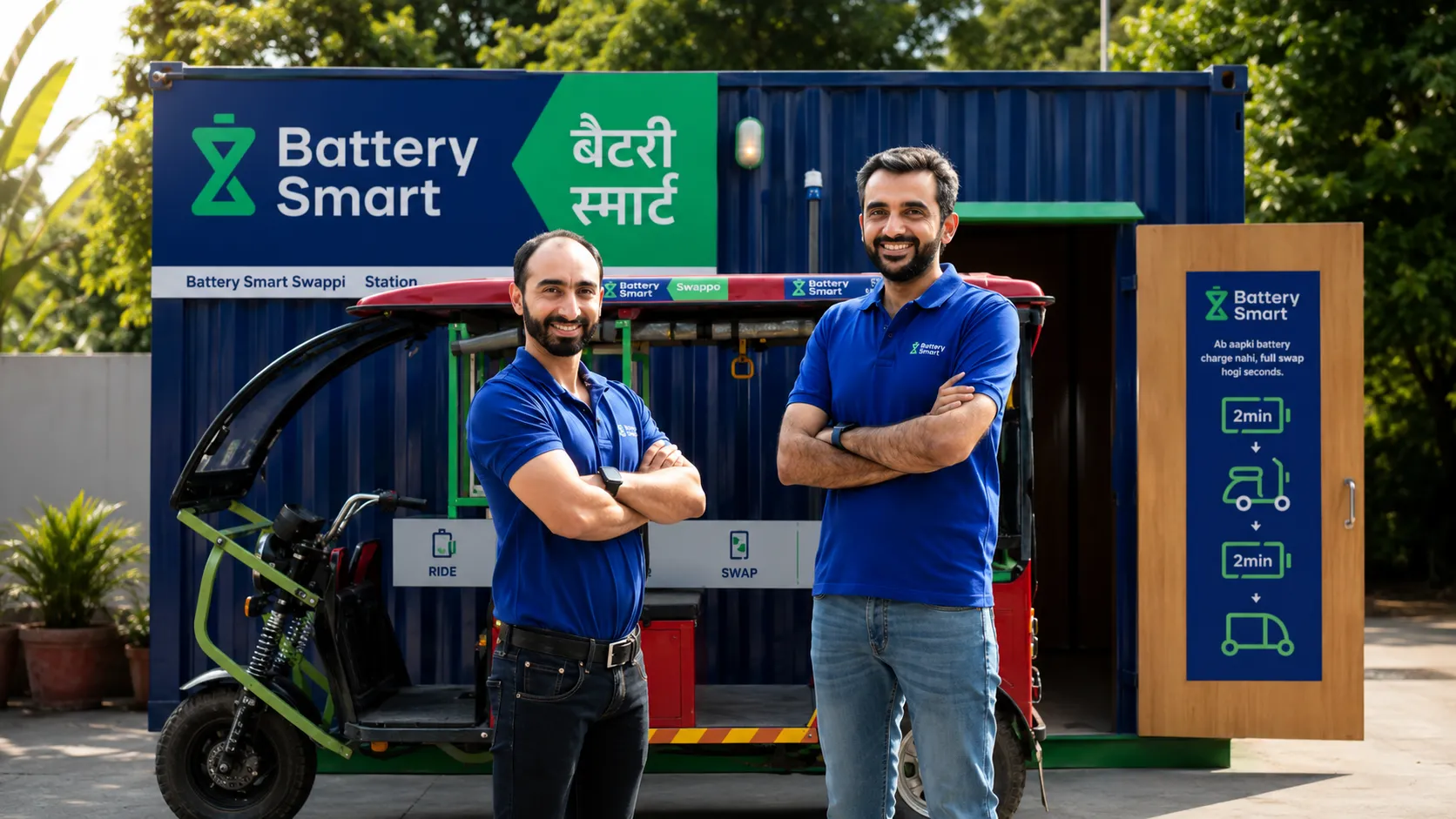
The Two-Minute Swap That's Changing EV Adoption
The single biggest barrier to electric vehicle adoption in India is not range anxiety—it's charging time. For gig workers and delivery drivers, every minute spent waiting for a vehicle to charge is a minute not earning money. Gurugram-based Battery Smart has built a solution that reduces that wait time to under two minutes.
On April 28, 2026, the company announced it had secured $15 million (approximately ₹124 crore) in debt funding from Mirova, an affiliate of Natixis Investment Managers focused on sustainable investing. The fresh capital will be used to expand the company's battery-as-a-service (BaaS) infrastructure and strengthen its partner-led swapping station network across urban and semi-urban markets in India.
The Numbers Behind India's Largest Swapping Network
Battery Smart's reach is significant. The company currently operates over 1,600 partner-led swapping stations across 50 cities, with 300 of those in Delhi alone. Founded in 2019 by Pulkit Khurana and Siddharth Sikka, the company services electric two- and three-wheelers.
The network's activity is substantial. Battery Smart claims to serve approximately 70,000 drivers daily and processes more than 125,000 battery swaps every day. The company has an estimated 36% market share in India's battery swapping segment and has deployed 281,587 batteries across its network.
The business model is straightforward. Instead of owning a battery as part of their vehicle purchase, drivers subscribe to Battery Smart's network and pay a per-use fee for swapping. This lowers the upfront cost of EV ownership—a critical factor for gig workers and small fleet operators.
The Partner-Led Model That Enables Scale
Unlike many infrastructure-heavy mobility startups, Battery Smart has adopted an asset-light expansion strategy. The company partners with local shopkeepers and small business owners who host swapping stations at their premises. This partner-led model helps Battery Smart avoid the fixed costs associated with company-owned stations, such as rent and salaries.
The financial impact on drivers is significant. According to company data, gig workers using Battery Smart's network see their daily earnings rise from approximately ₹700 to ₹800 to between ₹1,200 and ₹1,500—enough to cover the service fees. The two-minute swap time also means drivers spend more time earning and less time waiting. Battery life also improves because swapping replaces fast, high-voltage charging with slower, controlled charging.
The model is gaining traction as India's EV ecosystem matures. Battery swapping has been formally recognized by the government through NITI Aayog, and the country now has at least 98 battery-swapping firms. E-commerce and quick-commerce growth has driven demand, as delivery workers seek cheaper and faster alternatives to petrol-powered vehicles.
The Debt Strategy: Why Debt Over Equity
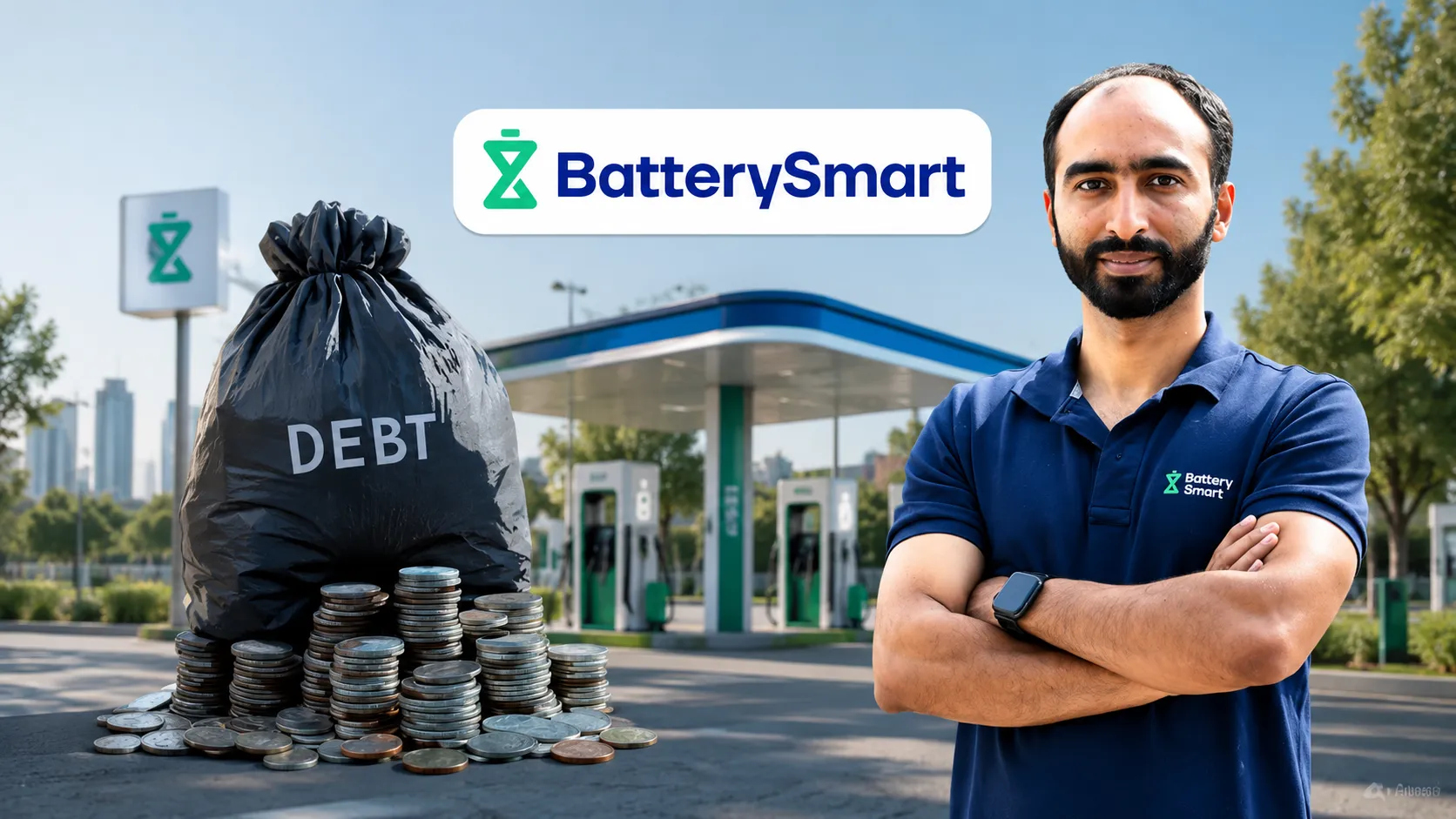
Battery Smart's $15 million debt round is part of a broader financing strategy. The company has raised more than $116 million in debt funding to purchase the batteries it holds on its balance sheet. The debt-backed approach helps the company scale its network and operations without excessive equity dilution.
The company has a track record of attracting significant capital. In June 2024, it secured $65 million in a Series B funding round led by LeapFrog Investments, with participation from MUFG Bank, Panasonic, Ecosystem Integrity Fund, Blume Ventures, and British International Investment. In 2023, it raised $33 million in a pre-Series B round. The company's total funding has crossed $378 million.
Mirova's decision to invest reflects its continued focus on climate and clean mobility solutions in emerging markets. Priyanka Mehrotra, Investment Director at Mirova, noted that the transaction marked the firm's third investment in India, demonstrating "continued commitment to supporting high-impact climate solutions in emerging markets". Mirova has financed 7.7 GW of clean energy installed capacity in emerging markets since 2022.
The Market Tailwinds
Battery Smart's expansion comes as India's electric vehicle market hits record highs. EV sales in India reached 696,769 units in the first quarter of 2026, an increase of over 35.5% year-over-year against the 514,198 units in Q1 2025. EVs now account for 9% of overall automobile sales, which totaled 7,889,101 units in Q1 2026.
The government has also created a supportive policy environment. In October 2025, the Ministry of Heavy Industries notified operational guidelines for deploying EV public charging stations under the PM Electric Drive Revolution in Innovative Vehicle Enhancement program, with subsidies available for both battery-swapping and battery-charging stations.
Battery swapping has found its most natural application in the high-usage segments of last-mile delivery and passenger mobility. For gig economy drivers who rely on their vehicles for income, the two-minute swap offers a significant advantage over traditional charging, which can take hours.
The Bottom Line
Battery Smart's $15 million debt round is a signal that battery-as-a-service is no longer an experiment—it is a scalable business model with measurable impact on driver earnings and EV adoption. The company's partner-led network, combined with its data-driven approach to station placement, has made it India's largest battery swapping player.
Pulkit Khurana, Founder and CEO of Battery Smart, framed the milestone in terms of impact: "With Mirova's support, we aim to accelerate network expansion and further our focus on making electric mobility more accessible, affordable and inclusive for drivers across the country". For the 70,000 drivers who rely on Battery Smart's network daily, that is not just a statement—it is a lifeline.


