For more than thirteen years, the trading floors of the Calcutta Stock Exchange have sat idle — a once-vibrant institution that competed with the Bombay Stock Exchange in trading volumes during its heyday, now reduced to a largely dormant legal entity working its way through a formal exit process. That process, however, may now be reversed. The West Bengal government has thrown its political and budgetary weight behind an ambitious effort to revive the 118-year-old exchange, setting up a genuinely uncertain but closely watched contest between institutional inertia and renewed political will.
The exchange's troubles trace back to April 2013, when the Securities and Exchange Board of India suspended CSE's trading operations after the exchange repeatedly failed to meet basic regulatory requirements, including sufficient trading volumes and functioning clearing and settlement infrastructure. The roots of that decline run deeper still, back to the early 2000s, when a ₹120-crore scam linked to stockbroker Ketan Parekh triggered a payment crisis at the exchange, with several brokers defaulting on settlement obligations — an episode that severely damaged both investor trust and regulatory confidence in the institution, setting off a period of steady decline through the subsequent decade that ultimately culminated in the 2013 trading suspension.
After years spent contesting the suspension through litigation before the Calcutta High Court and the Supreme Court, CSE's board made a decisive strategic pivot in December 2024, deciding to withdraw all ongoing legal cases and instead pursue a voluntary exit from its status as a recognised stock exchange — a plan formally endorsed by shareholders in April 2025, and followed by the formal submission of a voluntary exit application to SEBI in February 2025. Upon receiving that application, SEBI appointed an independent valuer to assess CSE's underlying assets and formed a dedicated working group to determine the specific process governing the exchange's exit under the regulatory framework applicable to regional stock exchanges.

Crucially, however, SEBI has not yet issued a final exit order on that application — a procedural gap that has left open a narrow but genuine legal window for the exchange to reverse course and argue for a revival instead, rather than proceeding to a formal wind-down. It is precisely this window that West Bengal's government now appears determined to exploit. Presenting the state's 2026-27 budget — notably, the first budget presented by the state's BJP-led government — Finance Minister Swapan Dasgupta placed the revival of the Calcutta Stock Exchange at the centre of his speech, describing the effort as a way to improve access to capital for businesses across eastern India while restoring Kolkata's historical position as a major financial centre, framing the initiative within the broader Viksit Bharat and Viksit Bengal development frameworks the state government has adopted as guiding policy themes.
According to Dasgupta, the exchange's historical challenges have stemmed primarily from legal and regulatory hurdles rather than any fundamental lack of underlying commercial rationale for its existence — a framing that positions the revival effort as addressing a solvable process and compliance problem, rather than attempting to resurrect an institution whose core business model has been rendered permanently obsolete by the rise of India's now heavily NSE- and BSE-dominated national equity trading infrastructure. To restart the formal exit-reversal process, CSE's board will need to pass a fresh resolution formally reversing its own December 2024 decision, and then notify SEBI in writing that it wishes to withdraw its previously submitted voluntary exit application — procedural steps that, while seemingly straightforward on paper, will require the exchange to satisfy a range of underlying regulatory requirements before SEBI would realistically consider permitting any actual return to active trading operations.
Industry veterans familiar with the exchange's operational history have offered a mixed but broadly cautious perspective on what a genuine revival would actually require in practice. JM Chaudhury, a former CSE president who served three separate terms between 1994 and 2000, has argued that any credible revival would necessarily require the exchange to operate its own functioning trading system, pointing specifically to C-STAR — CSE's proprietary, screen-based electronic trading platform, launched on February 26, 1997 — as an illustrative example of the type of dedicated technological infrastructure a revived exchange would need to rebuild or modernise. That platform had originally replaced the open-outcry trading system that CSE brokers had relied upon for decades prior to its introduction, representing what was, at the time of its launch, a genuinely significant technological modernisation for the exchange.
Chaudhury further suggested that a genuinely functioning, revived CSE could meaningfully reduce trading costs for brokers based in eastern India — many of whom, in the years following CSE's 2013 suspension, shifted their business activity entirely to the National Stock Exchange and Bombay Stock Exchange, the two dominant national platforms that have, over the intervening period, absorbed the overwhelming majority of trading volume that regional exchanges like CSE historically handled prior to India's broader shift toward large-scale, electronically-integrated national equity markets. "A functioning CSE could reduce trading costs for brokers in eastern India," Chaudhury observed, articulating what remains the core commercial argument in favour of the revival: that a genuinely operational regional exchange, even in an era of national electronic trading dominance, could still offer meaningful cost and access advantages for market participants specifically based in and around Kolkata and the broader eastern Indian region.
Yet industry participants have also, according to reporting on the matter, cautioned that any revival effort faces genuine structural headwinds that political will and state government support alone cannot fully overcome. The state government's backing, while significant in helping the exchange seek investors, secure broader policy attention, and coordinate across relevant institutional stakeholders, ultimately cannot substitute for the regulatory approval SEBI alone has the authority to grant. SEBI will need to be satisfied that any proposed revival plan is genuinely credible, adequately funded, and fully compliant with the current rules governing exchange operations within India's securities market — a bar that, given CSE's specific history of prior non-compliance and the payment crisis that had originally damaged confidence in the institution, will likely require considerably more than a supportive state budget announcement to clear.
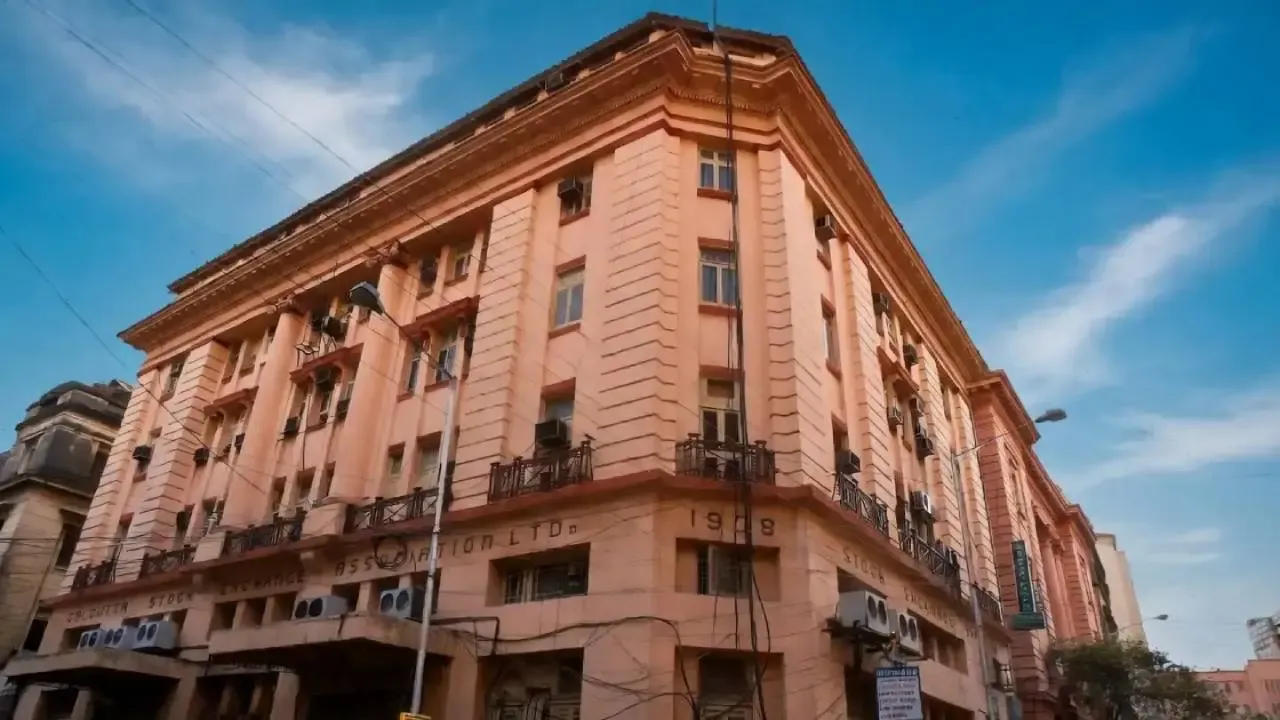
A recent delegation from CSE's leadership had already met with West Bengal Industry Minister Tapas Roy specifically to request government support for the institution's survival, underscoring the extent to which the exchange's own management has been actively working to build the kind of political and institutional backing the state's budget announcement now formally provides. Separately, the West Bengal government has indicated its intent to list profit-making state public sector undertakings on public stock exchanges as part of a broader disinvestment strategy — though whether any such state PSU listings would eventually route through a revived CSE specifically, or continue to list on the NSE and BSE as has become standard practice for virtually all significant Indian public offerings in recent years, remains an open question that will likely only be resolved once the broader viability of the CSE revival effort itself becomes clearer.
Whether the Calcutta Stock Exchange ultimately succeeds in reversing its own voluntary exit and rebuilding into a genuinely functioning regional trading venue — a feat no other Indian regional stock exchange has managed to achieve after going down the exit path, with close to twenty regional exchanges having already completed voluntary exits in recent years, including significant ones in Delhi, Chennai, and Bengaluru — will depend on a combination of factors extending well beyond the state government's political support: SEBI's ultimate willingness to approve the reversal, CSE's own ability to rebuild the technological and governance infrastructure required of a modern regulated exchange, and, perhaps most fundamentally, whether there remains genuine, durable commercial demand among eastern Indian market participants for a regional trading venue in an era when NSE and BSE's national electronic platforms have made physical or regional proximity to a trading floor almost entirely irrelevant to most investors' actual trading experience.