The $1 Billion Idea That Started With a Missed Call
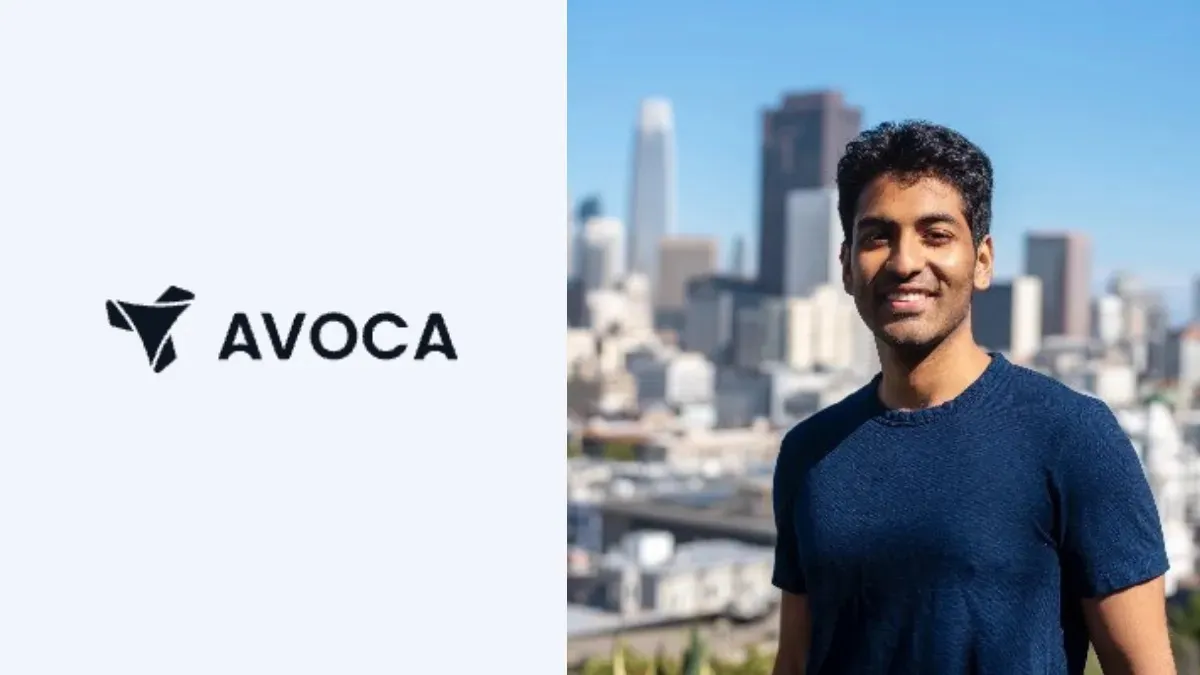
When a restaurant misses a phone call, the loss is a $30 or $40 order. When a home service business misses a call, the loss could be a $30,000 to $40,000 HVAC install . That simple arithmetic became the foundation of Avoca, a startup co-founded by first-generation Indian-American Apurva Shrivastava, which just reached a $1 billion valuation .
Shrivastava's journey to unicorn status began far from Silicon Valley. In Michigan, he grew up helping his family manage phone calls for their small business, personally handling thousands of customer calls . He learned a brutal lesson early: in the home services world, if you don't answer the phone, you don't get the job .
That lesson led to a company that serves over 800 customers, manages nearly $1 billion in job bookings, and has raised $125 million across three funding rounds. Today, Avoca is a unicorn.
The MIT Origins
Shrivastava moved from Michigan to Cambridge to attend MIT, where he studied Computer Science and Math, became a deep-tech specialist conducting AI research, and served as a teaching assistant for the university's largest AI courses . His early career included internships at Apple and Google, and engineering roles at Retool and Sunshine .
But it was a poker night at MIT that changed everything. There, Shrivastava met Tyson Chen, another engineer who shared his background. Chen had grown up helping his mother run a small business . Both had experienced firsthand the cost of a missed call .
In 2022, the two college friends co-founded Avoca. They joined the Y Combinator Winter 2023 batch with a simple but radical idea: an AI agent that sounds human, answers the phone in seconds, and handles everything from scheduling to CRM entries .
The Pivot That Made a Unicorn
The Avoca founders initially built an AI answering service for restaurants . At a Texas restaurant conference, they were approached by Rescue Air, a Dallas heating and air company . "When a restaurant misses a phone call, that's a $30, $40 order," Chen said. "When a home service business misses a phone call, that could be a $30,000, $40,000 HVAC install they're missing. So, instantly, we thought: 'wait, this is a completely different order of magnitude'" .
For three months in 2023, Shrivastava and Chen built a product specifically for Rescue Air. That company became their launchpad, helping them find their first several customers .
Today, Avoca serves over 800 clients, including national brands like 1-800-GOT-JUNK? and Goettl Air Conditioning . The company surpassed eight figures in annual recurring revenue in 2025 and is on track to book nearly $1 billion in jobs for its clients in 2026 .
What Avoca Actually Does
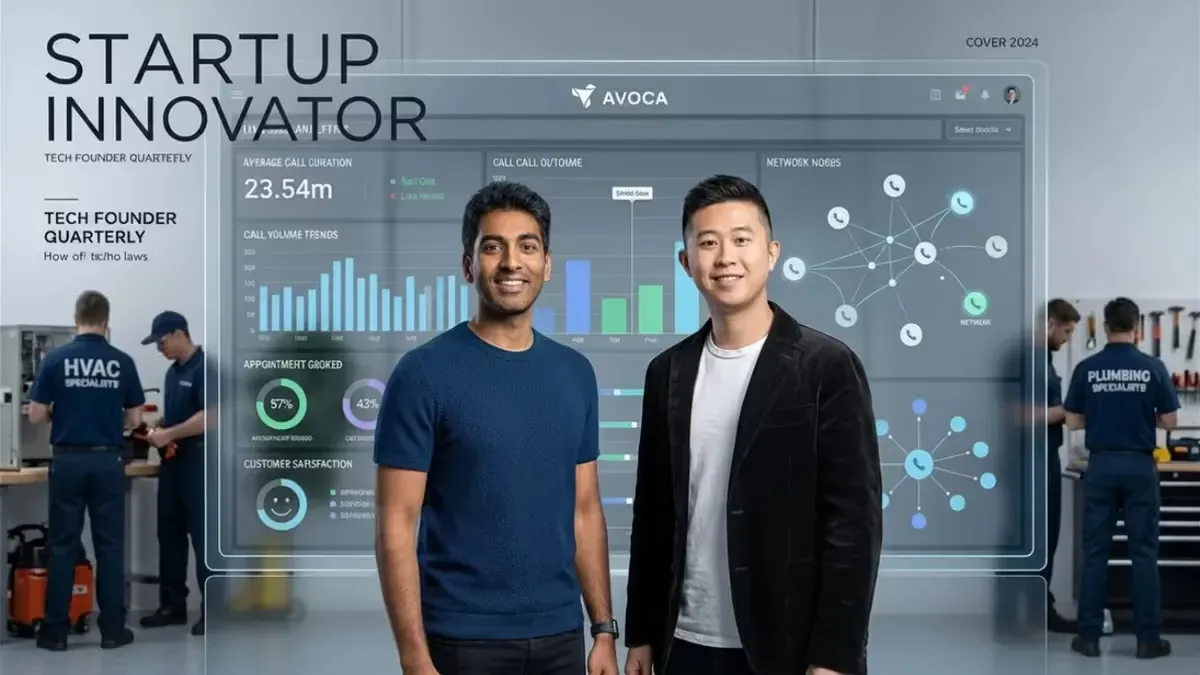
Avoca provides an AI workforce that acts as a 24/7 customer service representative. These AI agents don't just record voicemails—they engage in complex, human-like conversations .
Unlike basic bots, Avoca is deeply integrated with industry CRMs like ServiceTitan and Housecall Pro. It checks real-time calendars and books appointments directly into the company's system. The AI proactively calls or texts customers with outstanding estimates or missed appointments, "filling the board" without human intervention .
One of Shrivastava's core contributions is the Avoca Coach—a platform that lets AI listen to customer calls handled by real employees and provides real-time scoring and coaching insights . "AI changes the math," Shrivastava says. "For the first time, every contractor in America can have a concierge-grade revenue operation" .
The Blue-Collar AI Bet
Unlike most AI startups chasing general-purpose intelligence, Avoca focuses on the "main characters" of the physical economy: technicians, plumbers, roofers, and electricians . "Everyone's trying to build for the Fortune 500, but there's this giant, trillion-dollar economy no one is touching," Chen said .
The timing is strategic. The company's success hinges on a future where plumbers and technicians remain human, at least for the next five years . "With all that's happening in AI, the next million-dollar-job is the job of plumber, the job of the technician," Shrivastava said .
"This is definitely an industry that's been overlooked by Silicon Valley," said Leigh Marie Braswell, a partner at Kleiner Perkins. "I think people don't realize how big it is or, quite frankly, how important it is" .
The Bottom Line
Shrivastava's story is a reminder that the most successful AI companies aren't always building the flashiest technology. Sometimes, they're solving the oldest problem in business: answering the phone.
"When a home service business misses a call, that could be a $30,000, $40,000 HVAC install they're missing."


