
Most Women's Health Brands in India Exist for One Moment. Avni Wellness Was Built for a Lifetime.
The Indian women's health market is enormous, underserved, and structurally fragmented. The feminine hygiene segment alone is projected to reach ₹70.20 billion by 2025. The broader global wellness economy was valued at $6.8 trillion in 2024. India is projected to be among the fastest-growing major wellness markets at approximately 11 per cent annually. And yet, the brands that serve Indian women's health needs — particularly in the categories of menstrual wellness, hormonal health, cycle nutrition, and the specific health transitions that women navigate across their lifetimes — are sparse, science-shallow, and rarely built by people who have lived the problems they are solving.
Avni Wellness was founded in 2021 in Mumbai by Sujata Pawar and Apurv Agarwal with a founding premise that cuts through the category noise: Indian women deserve science-backed, toxin-free products that serve them across every stage of life, from first menstruation through menopause, without compromise on ingredient quality or the kind of honest communication about how products actually work that most women's health brands systematically avoid.
The company raised ₹4 crore in a seed funding round led by Proteus Partners, with participation from a group of angel investors who bring both financial backing and sector credibility: Puru Gupta, co-founder of True Elements; Sreejith Moolayil, co-founder of True Elements; Dr A. Velumani, the founder of Thyrocare Technologies, one of India's most respected diagnostic companies; and Somya Nigam.
The presence of Dr A. Velumani in the round is a specific and meaningful signal. His career has been built on the conviction that accurate diagnostic information, made accessible and affordable to ordinary Indians, can transform health outcomes — the same thesis that underlies Avni Wellness's approach to women's health at the product and education level.
What Avni Wellness Actually Sells — and Why the Science Matters
The Avni Wellness product range is built around two foundational commitments: that women's health products should be free of the toxins and synthetic materials that have become standard in category incumbents, and that nutrition for women's health — specifically cycle nutrition — is an underserved product category with genuine clinical basis.
The flagship product category is menstrual products — specifically patented toxin-free, plastic-free menstrual pads and related hygiene products. The conventional menstrual hygiene market in India is dominated by products containing superabsorbent polymers, synthetic fragrances, bleached fibres, and plastic backing materials that create both environmental waste and the potential for skin irritation and endocrine disruption with prolonged use. Avni's products are built without these components — clean-label, tested, and designed for the kind of sustained daily contact that menstrual products involve.
The cycle nutrition range addresses the hormonal and nutritional dimension of women's health that the menstrual products category traditionally ignores. The menstrual cycle creates specific nutritional demands at different phases — iron needs that peak around menstruation, magnesium that supports the follicular phase, the specific micronutrients that support the luteal phase. Most women's nutrition products on the Indian market are designed for general wellness rather than cycle-specific support. Avni's formulations are built around the specific nutritional requirements of the menstrual cycle and the hormonal transitions that define different life stages.
The brand's scope extends across the life stages that most women's health brands choose between rather than integrating: adolescence (menarche, first period education and product introduction), reproductive years (ongoing cycle support, hormonal health, fertility-adjacent wellness), and menopause and perimenopause (the transition that is perhaps the most poorly served by the existing Indian women's health market).
Over one lakh women have used Avni's products, and the company has been growing at a compound annual growth rate of approximately 47 per cent.
The Women-Led Micro-Entrepreneur Network — Distribution as Social Impact
The dimension of Avni Wellness's model that most distinguishes it from conventional D2C women's health brands is the deliberate integration of livelihood generation into the distribution strategy.
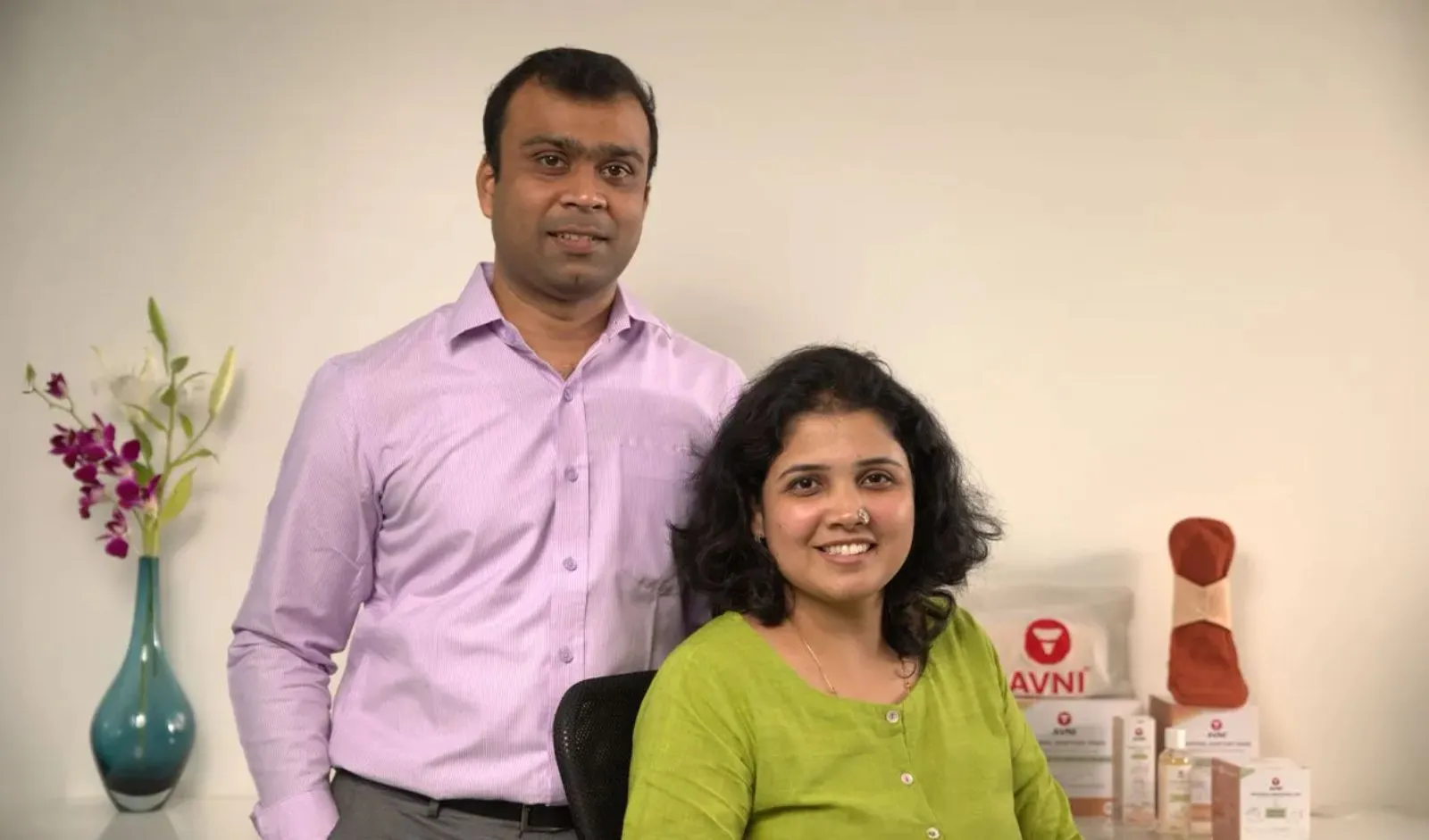
Avni operates a women-led micro-entrepreneur network — a distribution model in which women entrepreneurs in communities across India sell Avni products directly to consumers in their networks. This model serves two functions simultaneously: it creates a distribution channel that can reach women in communities where e-commerce penetration is lower and where trusted peer recommendation matters more than performance marketing, and it creates economic income for the women who operate as Avni's distribution partners.
The model reflects a founding philosophy that was articulated from the beginning: that women's wellness cannot be separated from women's economic empowerment. A woman whose menstrual health is better managed is a woman who loses fewer days of school or work. A woman who earns income through selling products she believes in is a woman whose economic standing in her household improves. Avni sees these as connected rather than separate outcomes, and has built its distribution model to pursue both.
What the Capital Will Do
The ₹4 crore seed round will be deployed across four specific areas that reflect where the business needs investment to grow.
Digital commerce capability strengthening means building the technology and content infrastructure that allows Avni to serve customers across online marketplaces and its own D2C channels with the kind of educational, honest, and product-specific communication that women's health products require for trust to develop. The women's health category sells more through information than through advertising — customers who understand why a product is formulated the way it is are more likely to buy and more likely to retain.
Cycle nutrition product range expansion extends the science-backed formulation philosophy into new products that serve the specific nutritional requirements of different cycle phases and different life stages. The opportunity to expand from menstrual products into a broader nutritional supplement range is significant: the same customer who trusts Avni for her menstrual hygiene products is a natural customer for the cycle nutrition products the brand is building.
Women-led micro-entrepreneur network growth means expanding the distribution partnership programme to more women in more communities — growing both the brand's reach and the number of women who earn income through the network.
Online marketplace presence expansion means deepening the brand's presence on the platforms — Amazon, Nykaa, and the quick commerce channels — where urban Indian women are already discovering and buying health products, and where Avni's science-backed positioning and clean-label credentials are most legible to consumers who are already comparing options.
The Market Opportunity
The women's wellness category in India is at a specific inflection point in 2026. Consumer awareness of menstrual health, hormonal health, and the specific nutritional requirements of different life stages has increased substantially over the past three years, driven by social media education, improved health literacy, and a generation of women who are more willing to invest in preventive health than the generation before them.
The heat and cold therapy market, the broader sports recovery market, the hormonal health supplements market, and the menstrual hygiene market are all growing. The feminine hygiene products market is expected to reach ₹70.20 billion. The women who are the customers in all of these categories are increasingly able to evaluate ingredient quality, to understand the difference between products that work and products that market, and to choose brands whose values align with their own understanding of what their health deserves.
Avni Wellness competes with Pee Safe, Nua, and Plush in the menstrual hygiene segment — companies that have established the category and built consumer familiarity with the concept of premium, alternative menstrual products. The differentiation Avni brings is the integration of science-backed cycle nutrition into the same brand relationship, the clean-label rigour across all product categories, and the women-led distribution model that extends the brand's social impact beyond the products themselves.
The ₹4 crore seed round is the capital that lets Avni Wellness grow from a brand that over one lakh Indian women have discovered into the brand that defines how Indian women care for their health across every stage of their lives.
That is a large ambition. It is also the right ambition for a market of 700 million women whose health needs have been systematically underserved.


