The Year Everything Worked. The Raise That Funds What Comes Next.
In September 2024, Ather Energy filed its draft prospectus with SEBI for a ₹4,500 crore IPO at a valuation of $2.5 billion. It was a company that had spent eleven years proving that building premium electric scooters in India was possible — and that Indian consumers would pay for technology, software, and an ownership experience that put them in a different category from the mass-market alternatives.
In May 2025, it listed on the BSE and NSE. And then, in the twelve months that followed, it delivered the best financial and operational performance in its history.
FY26 total income: ₹3,823 crore, up 66 per cent year-on-year. Units sold: 2,62,942, up 69 per cent. Net loss narrowed 36 per cent to ₹517 crore from ₹812 crore in FY25. Q4 alone saw revenue of ₹1,214 crore — up 76 per cent — with EBITDA loss narrowed to ₹30 crore and EBITDA margin improving by 2,080 basis points year-on-year. Adjusted gross margins expanded to 25 per cent. Loss per share improved from ₹8.93 to ₹2.62 in Q4. Non-vehicle revenue — software, charging services, accessories — grew to 13 per cent of total income, beginning to look like the durable, recurring revenue layer that defines the most valuable technology-enabled product businesses.
Now, the board has approved a plan to raise up to ₹2,500 crore. The company is in discussions with at least three investment banks and is expected to launch the fundraising process as early as July 2026 — up to ₹1,500 crore through a qualified institutions placement of equity shares, and up to ₹1,000 crore through equity, foreign currency convertible bonds, or other eligible instruments. The stock has gained sharply from its January lows on improving financials, growing investor interest in electric mobility, and expectations around the raise.
This is what the capital is for. And this is what the company that is asking for it has spent twelve years building.
How Ather Actually Got Here — the Product Story Behind the Numbers
Ather Energy was founded in 2013 by Tarun Mehta and Swapnil Jain — IIT Madras alumni who started with a single conviction that stuck: that an electric scooter could be a genuinely desirable product rather than a compromise, and that Indian consumers would choose it if it were built well enough.
That conviction required proof. Ather spent its first seven years building the proof. The 450X — its flagship high-performance electric scooter — established the brand as the premium option in Indian electric two-wheelers, building a reputation for build quality, performance, and the Ather Grid fast-charging network that gave it a tangible infrastructure advantage over competitors who relied on the general charging ecosystem.
But the 450X had a ceiling. A premium scooter priced at the top of the market addresses a specific customer — the urban professional, the performance enthusiast, the early adopter. India's two-wheeler market is not dominated by that customer. It is dominated by the family buyer, the daily commuter, the person for whom the scooter is a household necessity rather than a lifestyle choice.
In April 2024, Ather launched Rizta — a family scooter specifically designed for that customer. Comfortable seating for two adults, practical storage, simplified user experience, and a price point calibrated for the mass market rather than the premium tier. Rizta was the product that changed the trajectory.
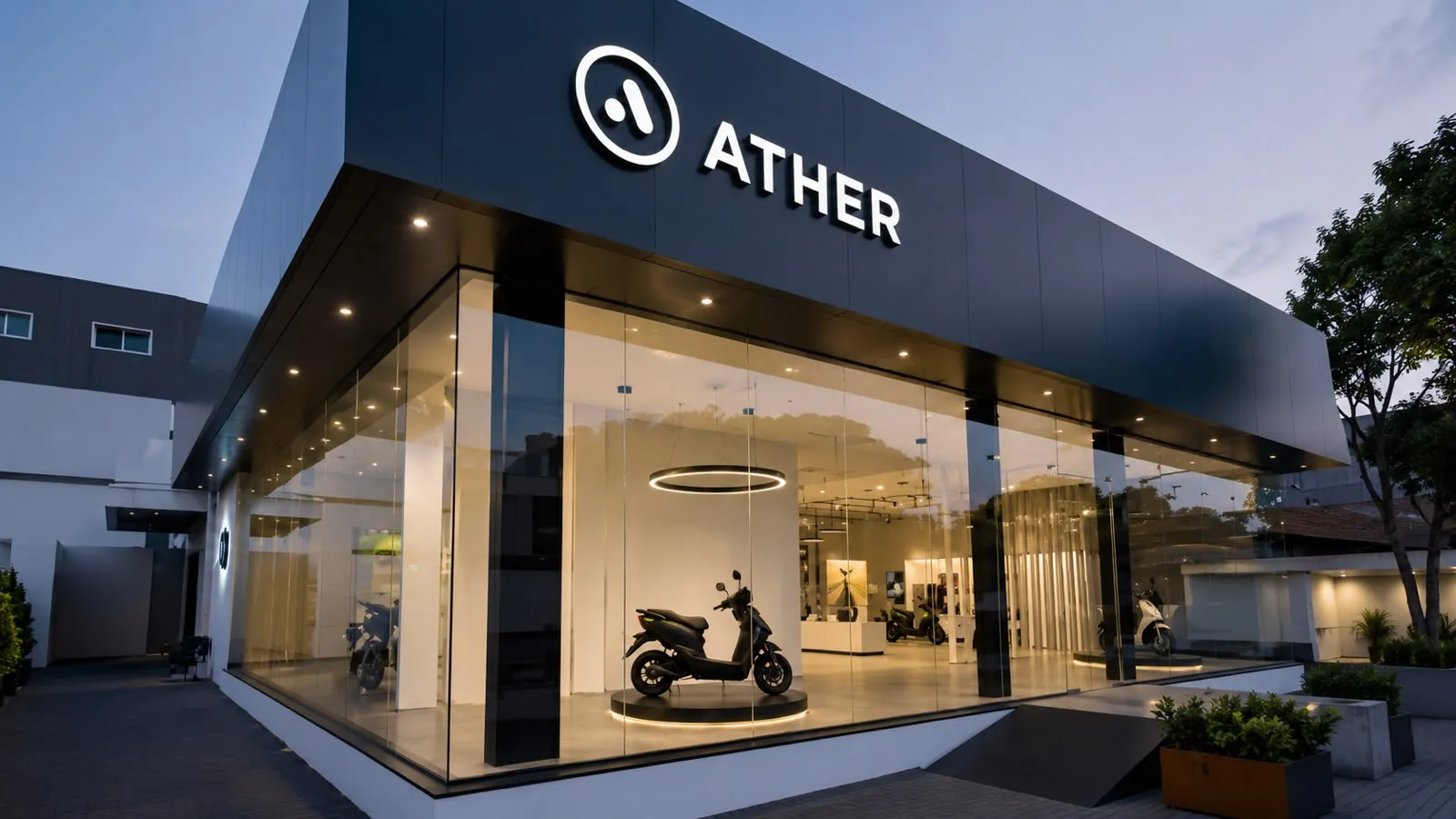
In FY26, Rizta helped unlock a much larger addressable market. Retail network expansion tracked demand: 351 Experience Centres at the start of FY26, 700 by the end. Service centres nearly doubled to 548. Geographic expansion moved Ather from its South India stronghold — where it retained 23.5 per cent market share in Q4 FY26 — into markets across the country.
AtherStack Pro — the Software Bet That 93% of Customers Are Taking
The number buried in Ather's Q4 FY26 results that deserves its own paragraph: 93 per cent of customers opted for AtherStack Pro.
AtherStack Pro is Ather's premium software subscription — the layer of connected features, over-the-air updates, advanced analytics, and enhanced riding modes that sits on top of the hardware. It is not the only option. Customers can buy the scooter without it. But 93 out of every 100 Ather customers are choosing to pay for it.
That number is not a software conversion rate. It is a statement about Ather's product positioning and its customers' willingness to pay for the technology experience — the same willingness that has made Apple's services revenue more durable and more valuable than its hardware margins. A customer who has bought into the software ecosystem, who has a riding history, a charging network relationship, and over-the-air updates connected to their scooter, has a switching cost that a purely hardware competitor cannot easily undercut on price alone.
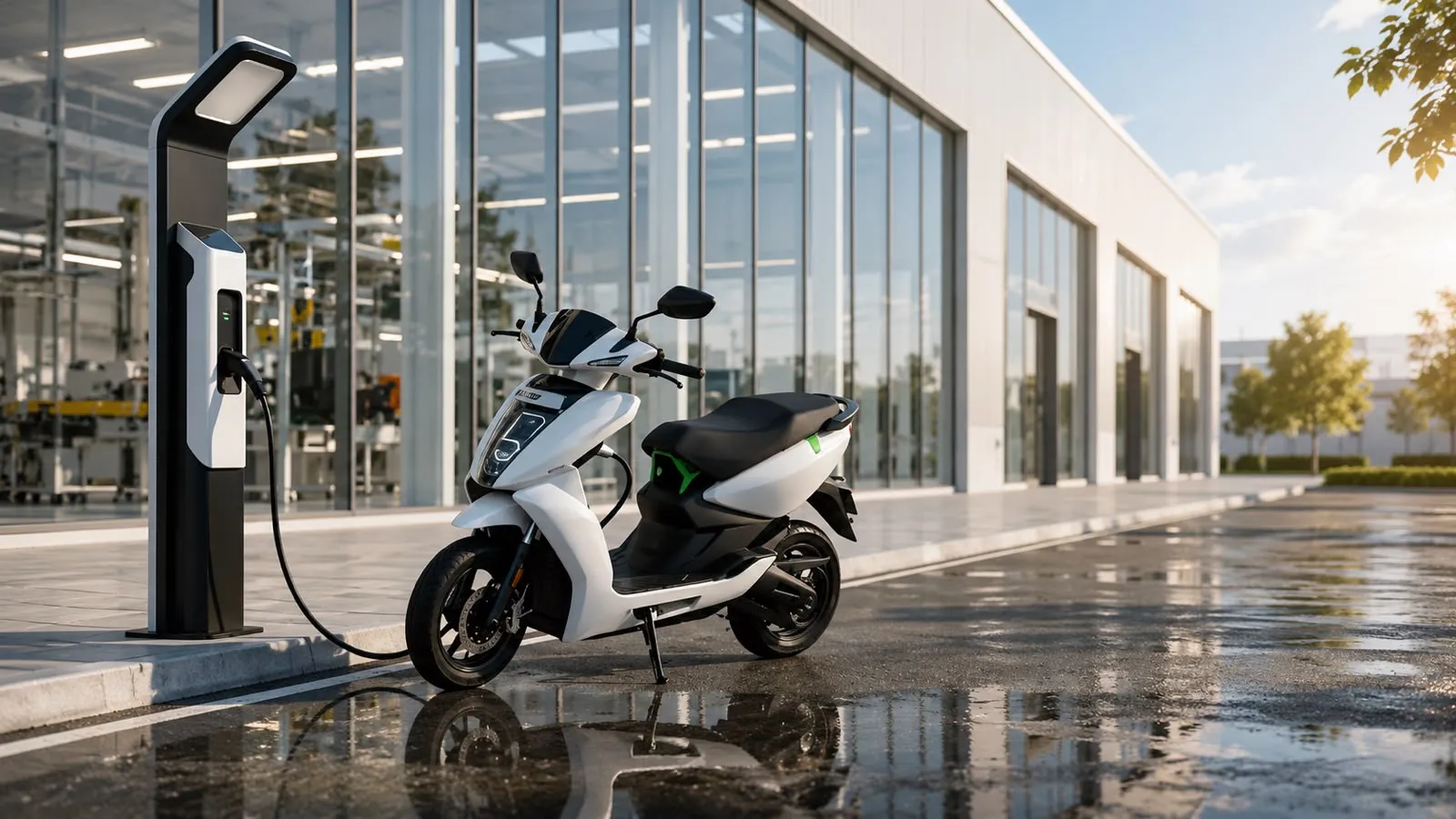
Non-vehicle revenue growing to 13 per cent of total income in FY26 is the early financial expression of that dynamic. The number will grow as more units are on the road, as more customers renew AtherStack Pro, and as the Ather Grid charging network — now over 6,000 charge points across 395 cities — generates recurring revenue alongside network effects that increase the value of owning an Ather scooter.
This is the model that Ather has been building toward since its founding: not a vehicle company with software features, but a mobility platform that begins with a vehicle and accumulates value over the ownership lifetime through connected services.
What the ₹2,500 Crore Is Building
The two investments that the capital raise is expected to fund tell you where Ather sees the next phase of growth.
Factory 3.0 at AURIC — Ather's new manufacturing facility at the Aurangabad Industrial City in Maharashtra — is the scale play. The company's existing production infrastructure served the volumes of FY26 adequately. The EL platform and the volume ambitions that follow require a manufacturing capacity that the existing footprint cannot support. Factory 3.0 is the infrastructure bet that allows Ather to serve the demand it intends to create, rather than being constrained by supply at the moment demand materialises.
The EL Platform — announced as the next-generation scooter architecture — is the product bet. Mehta has described it as targeting the biggest total addressable market in the Indian electric two-wheeler segment. If Rizta opened up the family scooter category, EL is intended to go further into the mass commuter market — the category that represents the largest volume of two-wheeler sales in India and that no premium brand has yet addressed at the right price-performance-quality combination.
The geometry of the raise reflects this: ₹1,500 crore through QIP targets institutional investors who understand growth-stage manufacturing and can price the profitability trajectory. The remaining ₹1,000 crore in flexible instruments — FCCBs, equity — provides optionality around timing, currency exposure, and investor type that a single instrument would not.
What the Post-IPO Period Has Revealed
Ather's first year as a listed company has produced a specific kind of evidence that pre-IPO capital does not always generate: the evidence of what happens to the operating metrics when the distribution infrastructure is in place and the market responds at scale.
The India electric two-wheeler market grew at approximately 25 per cent in FY26. Ather grew at 69 per cent. That 44-percentage-point outperformance of the market is the clearest possible signal that the company is not merely riding the EV wave — it is taking share within it. From competitors who offer lower-priced alternatives. From the conventional ICE two-wheeler market, as buyers who might otherwise have purchased a petrol scooter chose Ather's combination of total cost of ownership, software experience, and charging network instead.
The IPO gave Ather the balance sheet of a public company and the accountability that public markets impose — quarterly results, analyst scrutiny, institutional investor expectations. Those accountability mechanisms are, paradoxically, the framework that makes the ₹2,500 crore raise credible. Every number in the prospectus is audited. Every claim can be cross-referenced against a public financial record. Institutional investors committing to a QIP do not do so on faith in a management narrative. They do so because the Q4 results file is public and the trajectory is legible.
The trajectory says: from ₹812 crore net loss in FY25 to ₹517 crore in FY26. From 351 Experience Centres to 700. From 1,55,800 units to 2,62,942. From EBITDA margins of negative 18 per cent to negative 2.5 per cent in the most recent quarter. Loss per share from ₹8.93 to ₹2.62.
The lines are moving in one direction. The ₹2,500 crore is what it looks like when a company decides to use the momentum of its best year to fund a significantly larger ambition.


