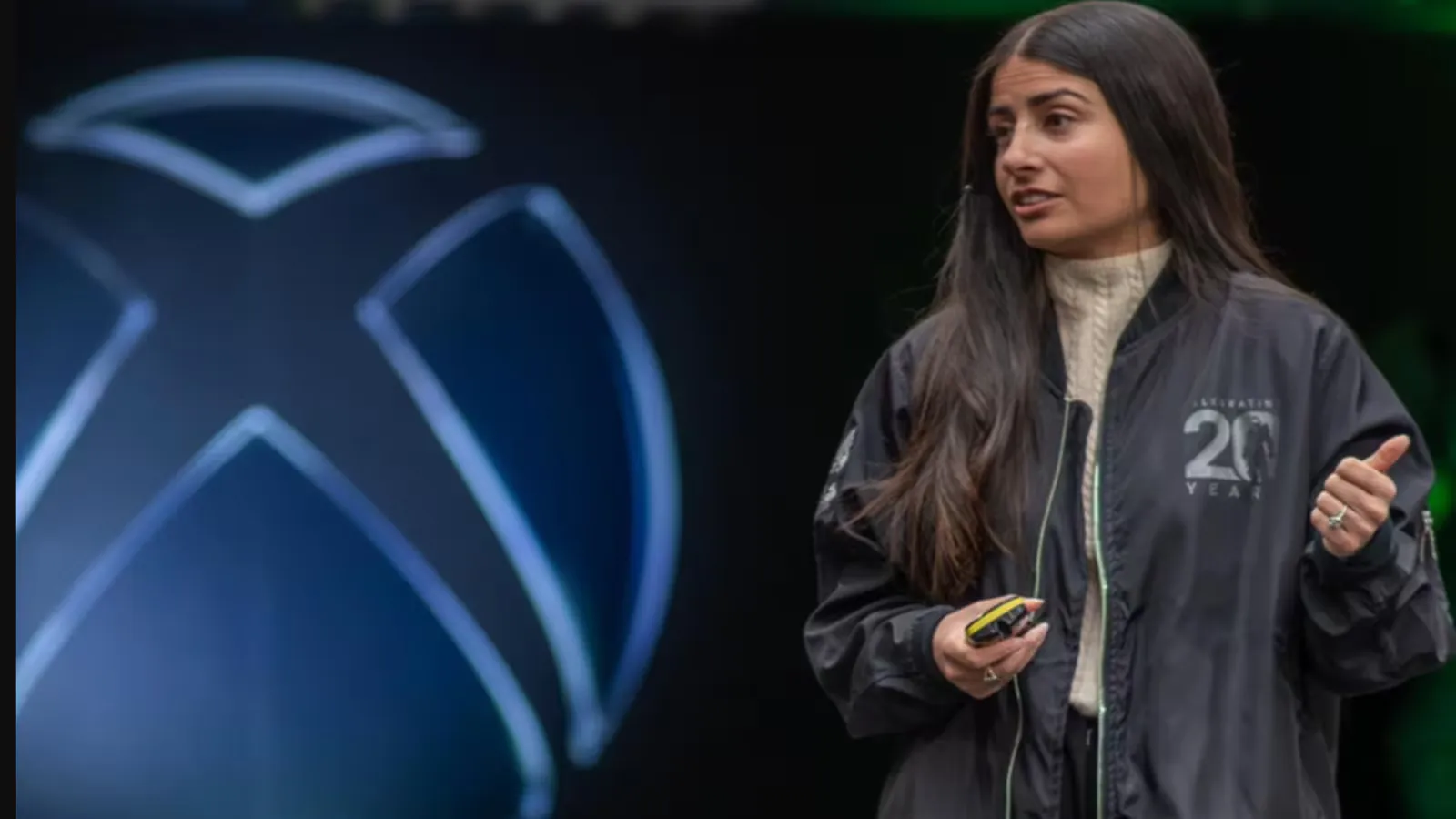
She Inherited a Business Losing 64 Cents on Every Dollar It Invested in Game Studios. She Has Five Months In. Here Is What She Is Doing.
When Asha Sharma was named Chief Executive of Xbox in February 2026, succeeding Phil Spencer who had led the division for a decade, the scale of the challenge she was inheriting was not publicly quantified. On July 6, 2026, she quantified it herself — publicly, bluntly, and in full.
In a memo posted to the official Xbox Wire blog and simultaneously sent to all Xbox employees globally, Sharma wrote: our business today is not healthy. She disclosed that despite investing over $20 billion in content and hardware over the past five years, excluding the Activision Blizzard acquisition, Xbox annual revenue had declined by nearly half a billion dollars. She disclosed that Xbox's operating margins are three to ten times lower than comparable platform and publishing businesses. She disclosed that in a typical year, Xbox loses 64 cents for every dollar it invests in its game studios.
And then she announced what she is going to do about it.
Approximately 3,200 positions will be eliminated throughout fiscal year 2027. Around 1,600 of those cuts took effect on July 7, as part of a broader round of 4,800 layoffs across Microsoft. The remaining Xbox reductions will follow across the coming months. The cuts reach across Activision, Bethesda and ZeniMax, Blizzard, King, Mojang, and Xbox Game Studios to varying degrees — almost every division affected. Four game studios will leave Xbox to new management.
Sharma's memo is titled "Resetting XBOX." It is the most consequential public statement any Xbox leader has made in the division's 25-year history.
Who Asha Sharma Is — and Why This Appointment Made Sense
Asha Sharma was not the obvious choice for Xbox CEO to anyone watching from the outside. She had not spent her career in gaming. She came from Microsoft's AI side, where she had spent the previous two years as a senior executive, and before that she had been a startup founder and operator with experience across consumer technology.
She was promoted to Xbox CEO over Sarah Bond, who had been leading the Xbox brand publicly and who had pursued an "Xbox everywhere" multi-platform strategy. That strategy placed the Xbox brand beyond its core console business on mobile and other platforms — but as Sharma has made clear in public appearances since February, the console represents 80 per cent of the Xbox business, and the multi-platform expansion did not grow fast enough to offset the stagnation in that core.
Her background on the AI side of Microsoft is relevant to the Xbox reset in a specific way. The skills required to evaluate where an investment is producing returns and where it is not, to make clear-eyed decisions about what to cut and what to double down on, and to communicate those decisions to large organisations in ways that maintain trust during difficult transitions — these are skills that Sharma developed in an environment where the pace of change was faster, the investment stakes were larger, and the accountability for outcomes was more immediate than the games division had been operating under.
Fortune's Sebastian Herrera, who interviewed Sharma for an exclusive at the Fortune Brainstorm Tech conference in Aspen in June, captured her central diagnosis in a single phrase that she delivered at that event: we spread ourselves too thin.
She told employees in the July 6 memo the same thing in more detail: we bet on Game Pass, multi-platform, and a broader portfolio of content. Those decisions created meaningful value, but did not grow at the pace we expected. They weakened Xbox as a whole.
The Four Studios Leaving — and What It Means
The studio changes announced alongside the layoffs are the most structurally significant element of the restructure for the gaming industry.
Ninja Theory — best known for Senua's Saga: Hellblade II — and Undead Labs — the studio behind State of Decay 3 — are being sold to currently unnamed buyers. Funding is in place to complete their current projects while supporting future growth. The Senua franchise will remain active, and State of Decay 3 will continue development under new ownership.
Compulsion Games — the Canadian studio that made South of Midnight — and Double Fine Productions — Tim Schafer's studio behind the Psychonauts franchise — are returning to their existing management teams and becoming fully independent, taking their intellectual property and current projects with them.
In France, the future of Arkane Lyon remains undecided, with Sharma noting that Arkane's management has begun consultations with its Works Council to examine potential strategic options, reflecting French labour law requirements for employee consultation before major organisational changes.
The context for these decisions sits in a stark statistic that Sharma disclosed publicly: in a typical year, Xbox lost 64 cents for every dollar invested in its game studios. The studios being spun out are not being closed and their games are not being cancelled — Sharma was explicit that no publicly announced first-party games or projects are being cancelled as part of the reductions. But the costs associated with owning and operating them are being removed from Microsoft's books.
As Sharma wrote: it is neither possible nor desirable to own every great independent studio. We have also learned that we are not the best home for every type of studio.
The Structural Changes — From 14 Layers to Five
Beyond the headcount and studio changes, Sharma's memo outlines a structural reorganisation of how Xbox is managed that may prove more consequential in the long term than any individual cut.
Xbox has been operating with as many as 14 layers of management — a bureaucratic depth that Sharma described as having slowed decision-making and blurred accountability to the point where the division could not move quickly enough to respond to competitive pressure, market changes, or product quality issues.
The target: no more than five management layers, and in some cases as few as three. Each layer will have directly responsible individuals who own key decisions and outcomes.
Vendor spending will be cut by 50 per cent.
King and Mojang — the two largest sources of monthly active players in the Xbox portfolio, through Candy Crush and Minecraft respectively — will now report directly to Sharma rather than through intermediate management layers. The logic is that the businesses generating the most engagement and potentially the most revenue should have the most direct relationship with the CEO.
Helen Chiang, the former Mojang corporate VP who led the Minecraft franchise for years, has been named Xbox's first-ever Chief Operating Officer. She will be accountable for profits and losses across Xbox's content, hardware, platform, and services businesses — a new structural accountability that did not previously exist in a form that reported directly to the CEO.
The Financial Reality That Made This Necessary
The numbers Sharma disclosed are worth stating clearly because they contextualise the scale of the restructure.
Microsoft reported a seven per cent decrease in quarterly gaming revenue in its most recent financial report, driven by a 33 per cent drop in Xbox hardware revenue and a five per cent decline in Xbox content and services. Hardware component costs are rising — Sharma described the industry as facing the most severe hardware crisis in Xbox history — and the economics of console manufacturing have shifted in ways that make the premium, high-performance console model less viable as a mass market proposition.
The division is responsible for only six per cent of Microsoft's total revenue. Despite that modest revenue contribution, it carries one of the largest workforces and one of the most complex organisational structures in the company — the product of a decade of acquisitions that added studios, headcount, and management layers faster than the underlying business grew.
Satya Nadella, Microsoft's CEO, has been explicit that the era of subsidising Xbox as a long-term strategic bet on the living room is over. He has noted publicly that YouTube creators make more money from Xbox games than Microsoft does. The restructure that Sharma is executing is the direct consequence of that strategic shift.
What Sharma Says the Reset Is For
The restructure, as Sharma frames it, is not about a smaller Xbox. It is about a healthier one.
Her closing statement in the July 6 memo: we will return to growth in 2027. History is full of companies that mistake longevity for inevitability. We will not be one of them.
The long-term ambition she articulated in her email and at the Fortune Brainstorm Tech conference is to build a platform capable of entertaining more than one billion players worldwide — a scale that would require Xbox to be a genuinely global, platform-agnostic, content-focused business rather than primarily a console hardware company.
The path to that ambition runs through the reset. Fewer studios. Fewer management layers. Lower vendor costs. Higher focus on the businesses and franchises that are actually generating engagement and revenue. Minecraft. Candy Crush. The core console business. The content that the 25-year Xbox catalogue contains.
These changes are about a bigger future for Xbox, not a smaller one, Sharma wrote. The next decade of gaming will be larger, more global, and more creative than anything we have seen before.
Whether that ambition proves right will be determined over years, not months. But the woman tasked with making it happen has made one thing clear from her first public statement as CEO: she will not pretend the problems are smaller than they are.


