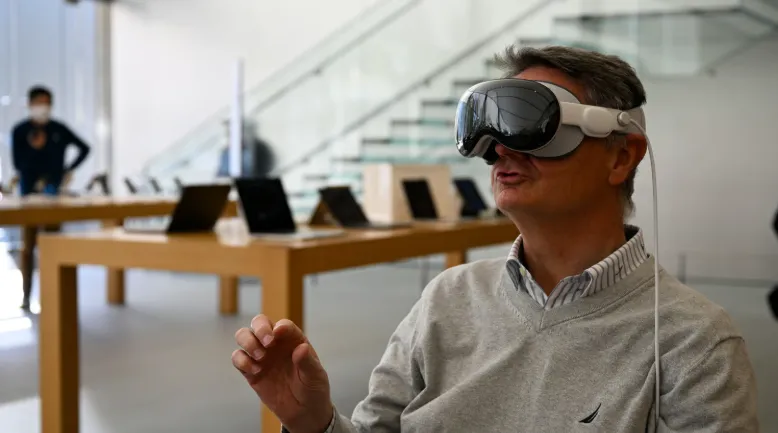
The skeptics said Apple had lost its magic. The Vision Pro, released in 2024, was a technological marvel but a commercial curiosity – too heavy, too expensive, too isolated. It sold about 500,000 units in its first year, a fraction of what analysts had predicted. Apple went back to the drawing board. Today, the company has emerged with the Vision Pro 2, and the numbers are staggering: 2 million units sold in the first week, making it the fastest‑selling wearable in Apple’s history. The mixed‑reality market, long dismissed as a niche for gamers and enterprise early adopters, has finally found its iPhone moment.
The first‑week sales figures, confirmed by Apple’s earnings supplement, represent a 300% increase over the original Vision Pro’s debut. By comparison, the original iPhone sold 270,000 units in its first weekend; the iPad sold 300,000; the Apple Watch sold 1 million. The Vision Pro 2 has outperformed all of them. Tim Cook, in a brief statement, said: “We believe spatial computing will replace the smartphone within a decade. This is just the beginning.”
What changed? Everything. The Vision Pro 2 is lighter, faster, cheaper, and more comfortable – but the real transformation is in software and ecosystem. Apple has addressed nearly every complaint from early adopters and, in the process, created a device that feels less like a prototype and more like the future.
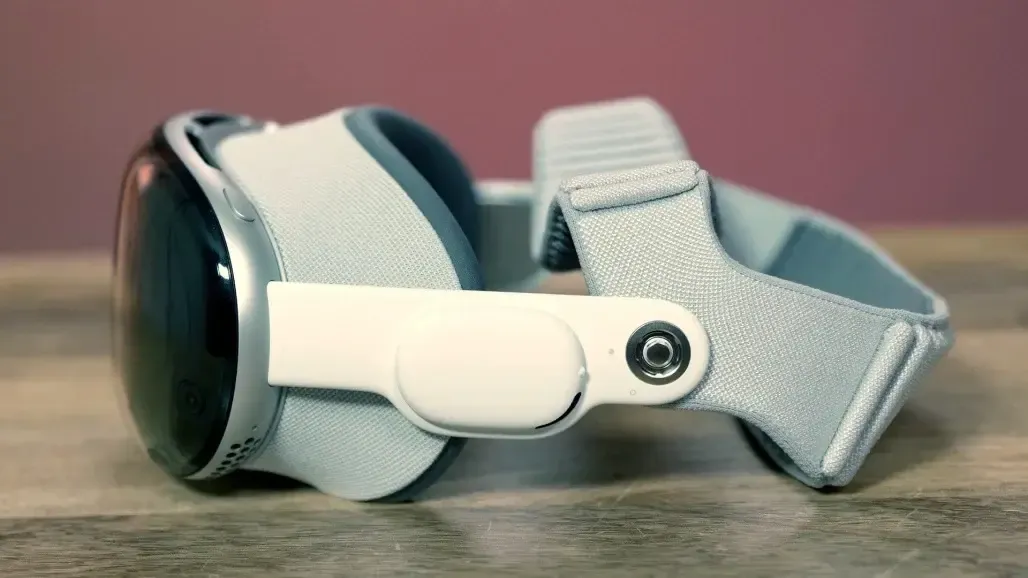
The hardware improvements are immediately noticeable. At 350 grams, the Vision Pro 2 is 40% lighter than the original. The external battery pack is now magnetic and can be swapped in seconds (the original required a tool to disconnect). The new M4 processor, designed specifically for spatial computing, delivers twice the graphics performance of the M2 while consuming 30% less power. The displays are still 4K per eye, but the refresh rate has been boosted to 120Hz, eliminating motion blur. And the field of view has expanded to 120 degrees, approaching the limits of human peripheral vision.
“The first Vision Pro was a developer kit disguised as a consumer product,” said technology analyst Carolina Milanesi of Creative Strategies. “The Vision Pro 2 is a consumer product disguised as a developer kit. It’s the difference between a proof of concept and a platform.”
But the hardware is only half the story. The Vision Pro 2 ships with visionOS 2, an operating system that has been completely rethought. The original visionOS was essentially iPadOS in 3D – windows floated in space, but the interaction model was the same: point and click. visionOS 2 introduces “gaze and gesture” as the primary input. Users simply look at a button and pinch their fingers to activate it. No more reaching out to tap virtual controls. The system learns which parts of the interface you look at most often and pre‑loads those elements, making the entire experience feel instantaneous.
The killer feature, however, is “Mac Infinity.” When a Vision Pro 2 wearer is within range of a Mac (any Mac with an M1 chip or later), the headset detects it and offers to “borrow” the Mac’s screen – not just mirror it, but expand it into a massive virtual display that can be placed anywhere in the room. The Mac’s keyboard and trackpad work directly with the headset’s windows. It is, in effect, a multi‑monitor setup that fits in a backpack. For knowledge workers, this alone may justify the price.
The app ecosystem has exploded. Apple says there are now 10,000 apps optimized for visionOS, up from 1,500 at the launch of the original. The list includes a native Zoom client that puts meeting participants in “personas” (realistic 3D avatars) around a virtual table; a Microsoft 365 suite that turns Excel spreadsheets into interactive 3D visualizations; and a Disney+ app that can transform your living room into the bridge of the Millennium Falcon. Notably absent are games – Apple is still courting developers for dedicated VR gaming, but early offerings are limited.
The enterprise push has been even more successful. Apple has quietly courted businesses, offering volume discounts and custom enterprise support. JPMorgan Chase has ordered 50,000 units for its traders, who will use the headset to visualize complex financial instruments in 3D. Lockheed Martin is using Vision Pro 2 to design the next generation of fighter jets, with engineers collaborating in shared virtual spaces. The Mayo Clinic has deployed the headset for surgical planning, allowing doctors to rehearse procedures on 3D models derived from patient scans. According to Apple, 30% of first‑week sales were to businesses – a much higher proportion than for any previous Apple product.
The price remains high: $3,499 for the standard model, $3,999 for the “Pro” with additional storage and sensors. But Apple has also introduced a $1,499 “Developer Edition” with fewer features (lower‑resolution displays, no eye tracking, plastic instead of aluminum chassis). This is aimed at students and indie developers who could not afford the original. Early reviews say the Developer Edition is perfectly usable for coding and basic spatial computing, though not for immersive media consumption.
The competitive landscape is shifting. Meta’s Quest 4, released a month before Vision Pro 2, has sold 1.5 million units in its first month – a respectable figure, but less than half of Apple’s week‑one volume. Meta’s device costs $499, but it lacks the polish, the ecosystem, and the integration with Mac and iPhone. Microsoft’s HoloLens 3, delayed again, is now expected in 2027. Google’s AR glasses project has been cancelled. Apple is, for the moment, alone at the top of the spatial computing market.
“The Quest is a gaming console for your face,” said developer Simon Park, who has built apps for both platforms. “The Vision Pro is a computer for your face. That distinction matters. You wouldn’t do your taxes on an Xbox, and you wouldn’t play Call of Duty on a MacBook. Different devices for different jobs. Right now, Apple owns the productivity and creativity use cases, and Meta owns gaming. But productivity is a much larger market.”
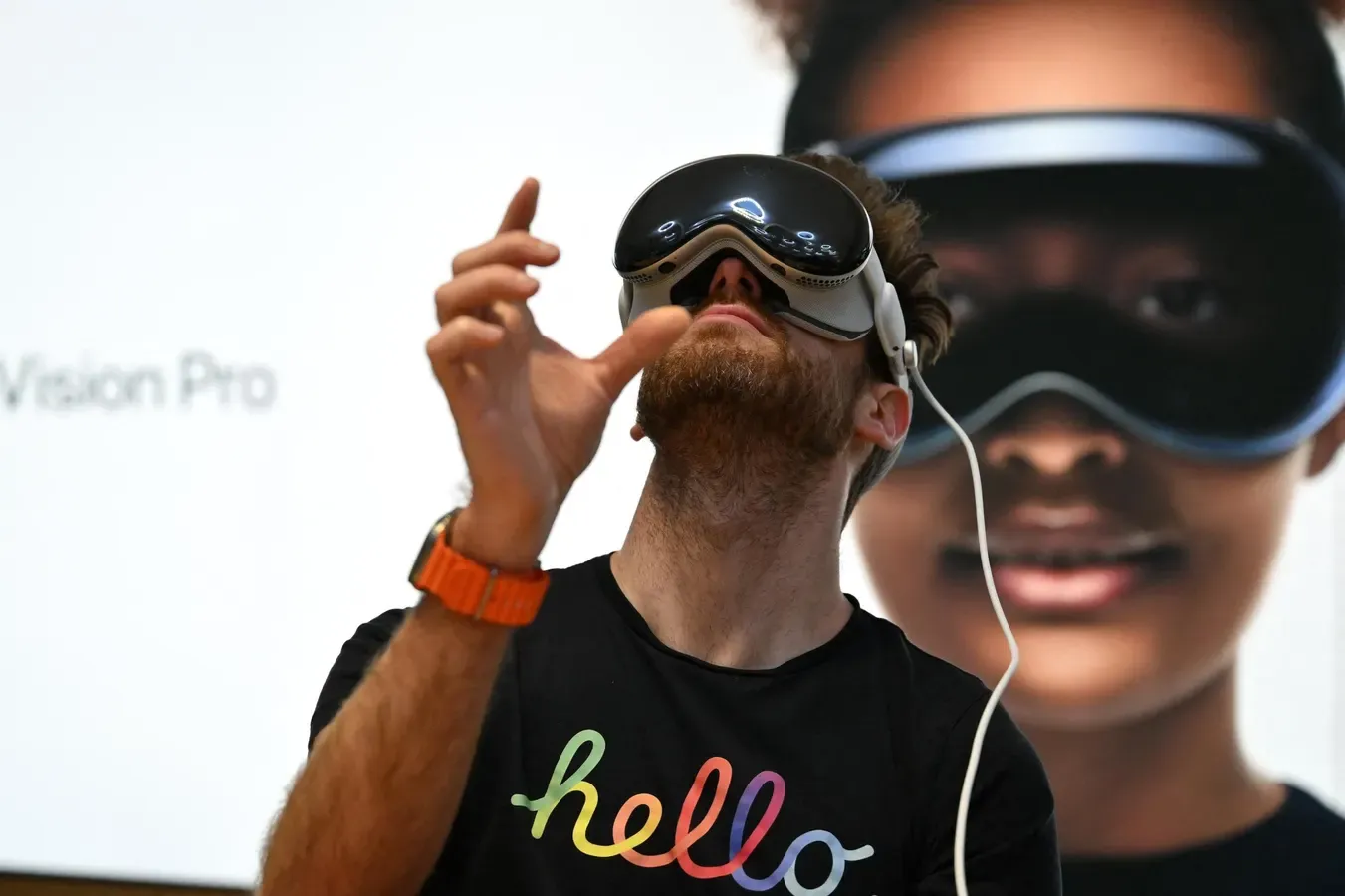
Privacy concerns remain. The Vision Pro 2 has 12 cameras and 5 sensors, including an eye‑tracking system that can determine precisely where you are looking. Apple says all eye‑tracking data stays on the device and is not shared with apps unless the user explicitly permits it. But civil liberties groups have warned that eye‑tracking could be used for subliminal advertising or psychological profiling. Apple has responded by requiring apps that request eye‑tracking permission to explain exactly how the data will be used, and the company conducts random audits to enforce compliance.
The biggest question is long‑term adoption. Two million units in a week is a triumph, but the smartphone market sells 1.5 billion units annually. To replace the smartphone, spatial computing needs to reach hundreds of millions of users. That will require a device that is smaller, cheaper, and more socially acceptable than even the Vision Pro 2. Apple is reportedly working on “Apple Glass” – a pair of ordinary‑looking glasses with AR capabilities – for a 2028 launch. But that project has faced technical hurdles; projecting high‑resolution images onto transparent lenses without draining the battery remains unsolved.
For now, Apple is celebrating. The Vision Pro 2 has exceeded internal projections by a wide margin. Supply chain checks indicate that Apple has secured enough OLEDoS displays for 12 million units by year‑end. The company has raised its full‑year forecast to 8‑10 million units. That would make the Vision Pro family a $30‑35 billion business in its second year – larger than the iPad, larger than the Mac, and approaching the Apple Watch.
Tim Cook’s prediction – that spatial computing will replace the smartphone – still sounds ambitious. But after the first week of Vision Pro 2 sales, it no longer sounds ridiculous. The line outside Apple stores on launch day was not just for a new gadget. It was for a glimpse of the future. And for 2 million early adopters, that future has already arrived.


