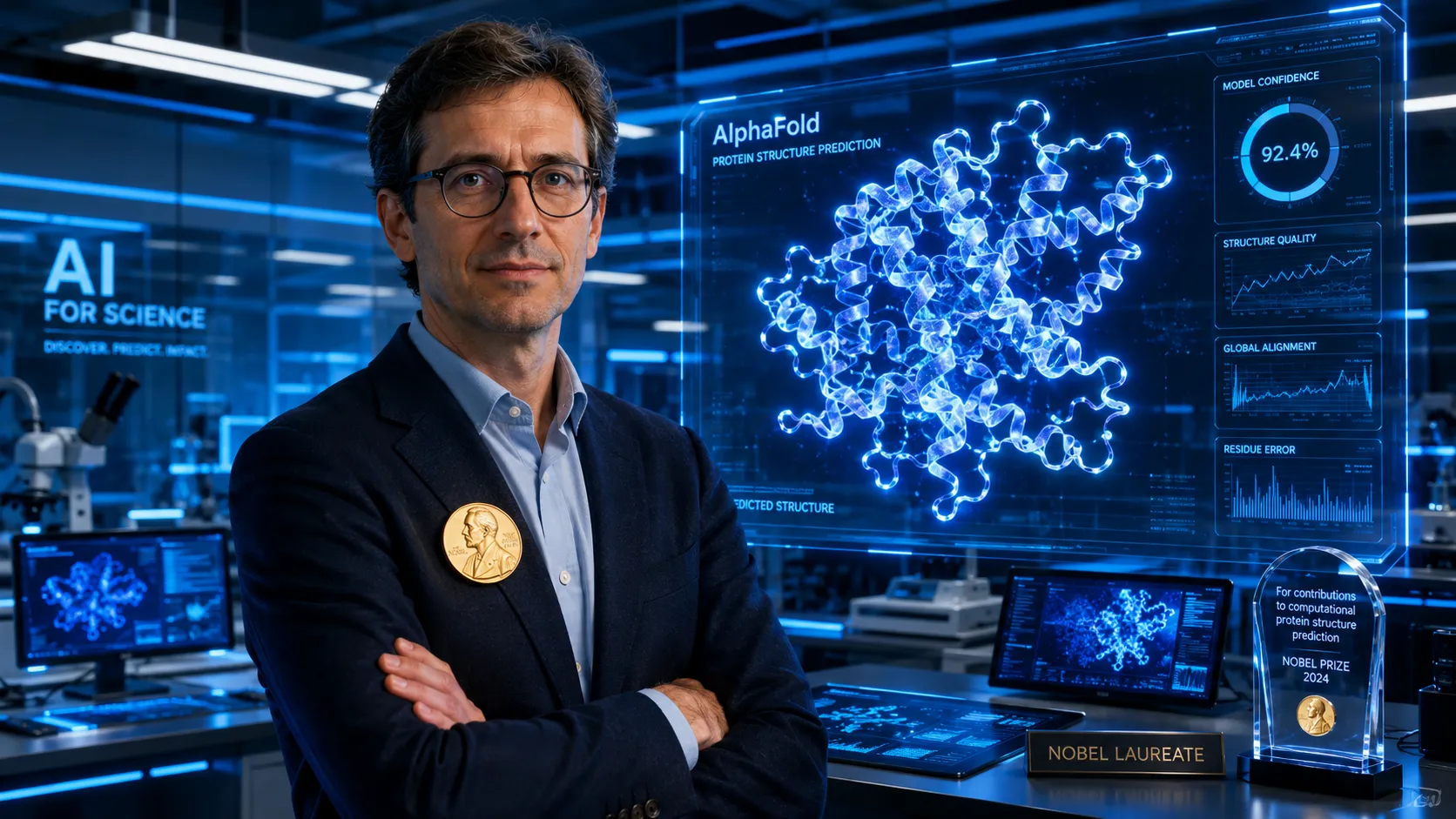
Nobel laureate John Jumper — the man behind AlphaFold, the AI that solved biology's greatest puzzle — is leaving Google DeepMind to join Anthropic. It's not just a hire. It's a statement. The AI talent war just got a new front.
The news landed on a Friday morning, and by midday, it had sent shockwaves through every AI lab from Mountain View to London. John Jumper — Nobel laureate, VP and Engineering Fellow at Google DeepMind, the man who led the team that built AlphaFold and effectively solved the 50-year-old protein-folding problem — had decided to leave.
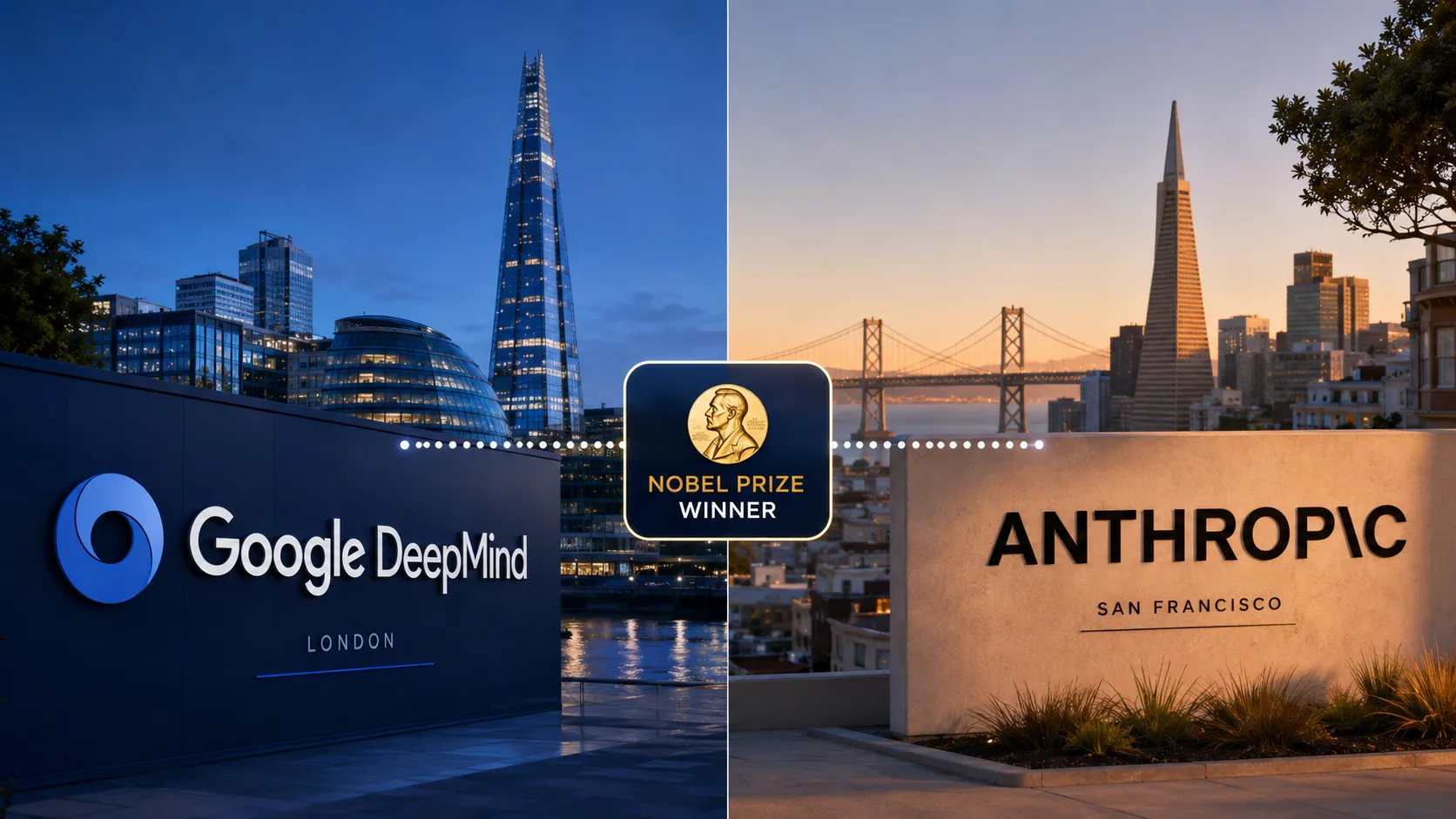
After nearly nine years at Google DeepMind, Jumper announced he would be joining Anthropic, the AI startup that has positioned itself as the "responsible" alternative to OpenAI. The move is a coup for Anthropic and a significant loss for Google, coming just weeks after the departure of another DeepMind luminary: Noam Shazeer, one of the inventors of the Transformer architecture, who left for OpenAI.
"For nearly a decade, Google DeepMind has been my home," Jumper wrote in a post on X. "Demis Hassabis took a real chance letting me lead the AlphaFold team just six months after finishing my PhD. I am deeply grateful for the experience and the trust." He added that he would be taking some time off to rest and recharge before starting at Anthropic. But the message was unmistakable: the AI talent war has a new front, and Anthropic just won its most symbolic battle yet.
The Man Who Solved Biology's Greatest Puzzle
To understand why Jumper's departure matters, you have to understand what he built.
AlphaFold, the AI system that Jumper's team developed at DeepMind, effectively solved the protein-folding problem — a challenge that had stumped biologists for half a century. Proteins are the building blocks of life, and their function is determined by their three-dimensional shape. Predicting that shape from a protein's amino acid sequence was considered impossible. AlphaFold made it routine.
In 2024, Jumper was awarded the Nobel Prize in Chemistry for his work on AlphaFold, alongside Demis Hassabis, the founder of DeepMind. The prize was a watershed moment for AI — the first time a purely AI-driven breakthrough had been recognised with science's highest honour. It cemented DeepMind's reputation as the world's premier AI research lab and made Jumper one of the most sought-after scientists on the planet.
He was not just a manager. He was the technical leader who built a team from scratch and delivered a result that changed biology forever. His departure is not a loss of one person — it is a loss of institutional knowledge, team cohesion, and the gravitational pull that keeps top researchers at a lab.

Anthropic's Calculated Gambit
For Anthropic, the acquisition of Jumper is the latest and most significant in a series of high-profile hires that signal its ambition to compete not just with OpenAI, but with Google itself.
Anthropic was founded in 2021 by siblings Dario and Daniela Amodei, former OpenAI executives who left over disagreements about the company's direction. The startup has positioned itself as the "safe AI" alternative — a company that prioritises alignment and safety over breakneck commercialisation. It has attracted billions in funding from Google and Amazon, among others, and has built a reputation for rigorous research.
But Anthropic has also been embroiled in a high-stakes legal and regulatory battle with the US government. The startup is reportedly under investigation for potential violations of export controls and national security laws, adding a layer of risk to any executive considering a move. That Jumper chose Anthropic anyway — despite the legal uncertainty — is a vote of confidence in the company's long-term prospects.
"He is moving to Anthropic at a time when the startup is embroiled in a high-stakes legal and regulatory battle with the US government," one report noted. The decision suggests that Jumper believes Anthropic's scientific mission outweighs its regulatory risks — or that he sees an opportunity to shape the company's research agenda in ways that Google could no longer offer.
The Talent War Intensifies
The AI talent war has been raging for years, but 2026 has seen it escalate to new heights.
Technology giants including Meta and Alphabet, along with AI upstarts such as Anthropic and OpenAI, are locked in a fierce competition for elite researchers as they race to build next-generation AI systems. The demand for top-tier AI talent has driven salaries into the stratosphere, with senior researchers commanding packages worth tens of millions of dollars.
But the war is not just about money. It is about mission, culture, and scientific freedom. Researchers who spent years at large tech companies are increasingly drawn to startups where they can have more influence over the research agenda. Anthropic, with its focus on safety and alignment, offers a different kind of mission — one that appeals to researchers who are concerned about the existential risks of AI.
Jumper's departure also highlights a growing trend: the movement of talent from Google to its rivals. In the past year alone, Google has lost multiple senior AI researchers to OpenAI, Anthropic, and other startups. The company's once-unassailable position as the world's premier AI lab is showing cracks.
The DeepMind Reaction
Google DeepMind issued a statement confirming Jumper's departure and thanking him for his contributions. The tone was diplomatic, but the subtext was clear: this is a significant loss.
"Demis Hassabis took a real chance letting me lead the AlphaFold team just six months after finishing my PhD," Jumper wrote, in a post that balanced gratitude with finality. He said he is "grateful for the experience" but has decided to move on.
The departure of Jumper follows a pattern of high-profile exits from DeepMind in recent years. The lab has lost several senior researchers to competitors, though it has also continued to attract top talent. The question for Google is whether the outflow will accelerate — and whether it can afford to lose any more of its brightest stars.
What This Means for AI Research
The movement of Jumper from Google DeepMind to Anthropic is more than a personnel change. It is a rebalancing of power in the AI industry.
DeepMind has long been the gold standard for AI research, with a track record of breakthroughs that includes AlphaGo, AlphaZero, AlphaFold, and more. But the company has struggled to commercialise its research, while competitors like OpenAI have raced ahead with products like ChatGPT. The gap between research and product has become a source of tension at Google, with some researchers feeling that their work is not being translated into real-world impact.
Anthropic, by contrast, is building both research and product in parallel. Its Claude chatbot is a direct competitor to ChatGPT, and the company has been aggressive in developing enterprise applications. The acquisition of Jumper suggests that Anthropic is doubling down on research — betting that scientific breakthroughs will lead to product differentiation.
For Jumper, the move offers an opportunity to build something new. At DeepMind, he was part of a large, established institution. At Anthropic, he will have the chance to shape the company's research agenda from the ground up. For a scientist of his calibre, that may be the most compelling offer of all.
The Bottom Line
Nobel laureate John Jumper — the man behind AlphaFold, one of the most significant AI breakthroughs in history — has left Google DeepMind to join Anthropic. It is the most symbolic hire in the AI talent war to date, a signal that Anthropic is willing and able to compete with the world's largest tech companies for the best minds in the field.
For Google, it is a loss. For Anthropic, it is a statement. For the AI industry, it is a reminder that the talent war is far from over — and that the most valuable asset in the race to build AGI is not compute, not data, but the people who know how to use them.
Jumper will join Anthropic after a period of rest. When he does, he will bring with him not just his Nobel Prize, but the knowledge, the network, and the reputation of one of the most accomplished scientists in the world. The talent war has a new front. And Anthropic just won the most important battle yet.