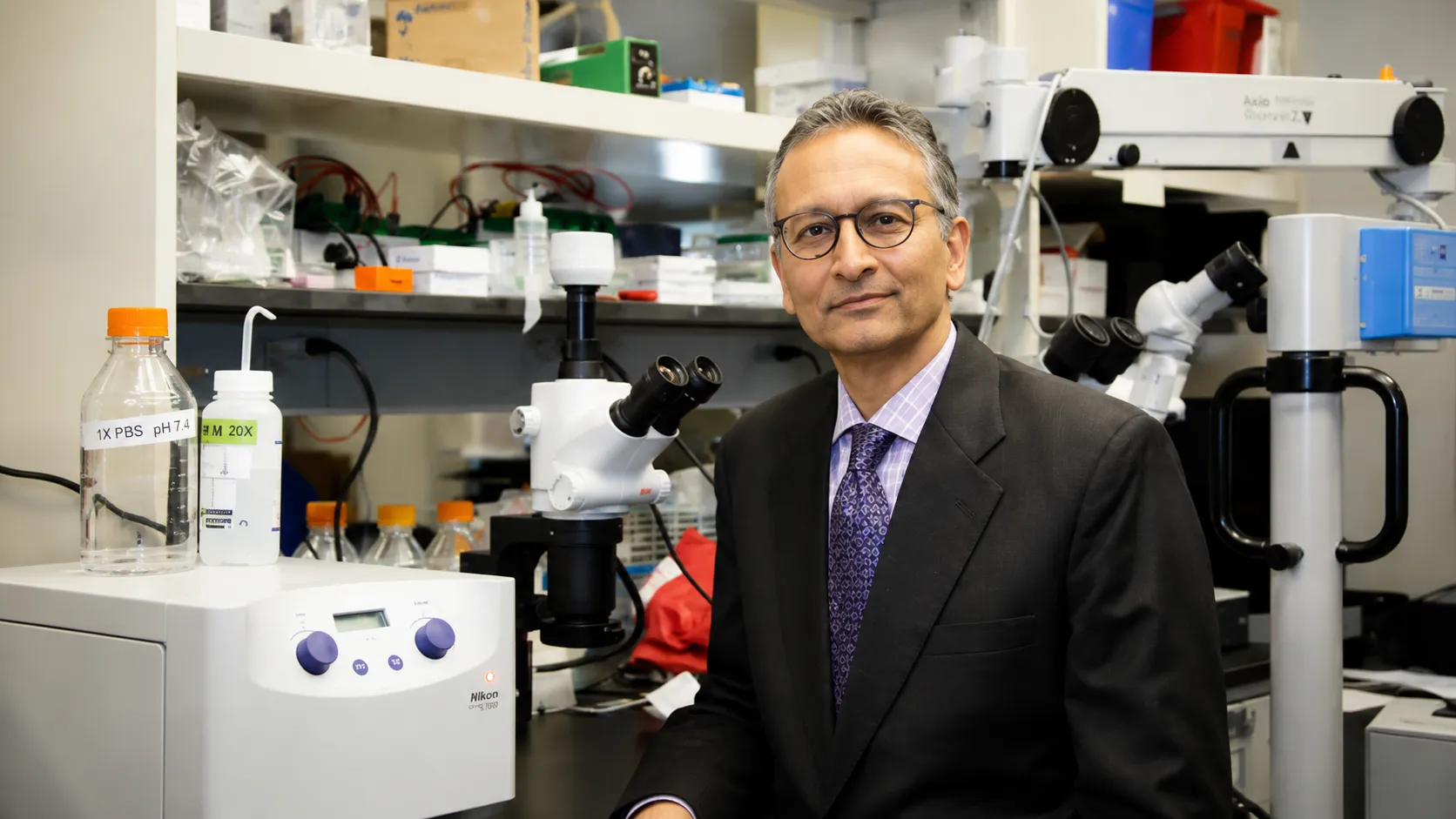
Most stories about the Indian diaspora reinvesting in India involve capital: a donation, an endowment, a founder's gift large enough to make headlines on its own and generate a press release celebrating the amount. Anil K. Lalwani's decision to leave Columbia University and relocate to India in July 2026 involves something considerably harder to write a check for — his own presence, his own laboratory, and the accumulated expertise of a career spent at the very top of American academic medicine, all being physically relocated to help build IIT Kanpur's new medical school from its earliest, most formative stages.
Lalwani is not a young researcher taking a chance on an unproven institution early in his career, when such risks are more easily absorbed. He is a leading authority on hearing disorders and surgical innovation who has held senior positions at some of the most respected academic medical institutions in the United States, including New York University, the University of California, San Francisco, and, most recently, Columbia's own medical school — a career trajectory that placed him firmly among the most accomplished physician-scientists of Indian origin working anywhere in American medicine today. His decision to leave that established position, at a career stage when most similarly accomplished academics are more likely to be consolidating their legacy than starting over in a new country, is precisely what makes his move worth examining closely.
A Career Built Across America's Best Medical Institutions
Lalwani's professional path traces a route familiar to many of the most accomplished Indian-origin physicians in American academic medicine: rigorous training, followed by a series of increasingly senior positions at institutions widely regarded as among the best in their respective specialties. His work has focused on hearing disorders and surgical innovation, a subspecialty within otolaryngology that combines detailed clinical care for patients experiencing hearing loss with active surgical and technological research aimed at improving the tools and techniques available to treat those conditions, work that sits at the intersection of hands-on clinical medicine and genuinely novel biomedical engineering, two disciplines that rarely intersect this productively within a single career.
That combination of clinical practice and active research productivity across three of America's most competitive academic medical environments — NYU, UCSF, and Columbia — reflects a career built on sustained, demonstrated excellence rather than any single breakthrough discovery that might otherwise explain a more sudden rise to prominence. Academic medicine at this level rewards researchers capable of maintaining both a productive laboratory generating original scientific contributions and a clinical practice serving patients directly, a dual demand that filters out all but the most capable and most disciplined physician-scientists over the course of a multi-decade career spent balancing both sets of obligations simultaneously, year after year, without sacrificing quality in either domain.
Why IIT Kanpur, and Why Now
IIT Kanpur's decision to build a medical school represents one of Indian higher education's more ambitious, closely watched, and carefully scrutinized recent bets: an attempt to fuse the institution's existing strength in engineering and technology education with an entirely new medical training program, built from the ground up around the premise that physicians trained at a technology-focused institution will bring fundamentally different instincts to medicine than those trained through India's more traditional medical college system. That premise has already attracted substantial and growing diaspora backing, including a commitment exceeding ₹100 crore from Rakesh Gangwal, the Indian American co-founder of IndiGo, alongside a coordinated Founder's Circle of fellow IIT Kanpur alumni providing both capital and professional expertise to the project from its earliest planning stages onward, well before construction of any physical campus infrastructure had even begun in earnest.
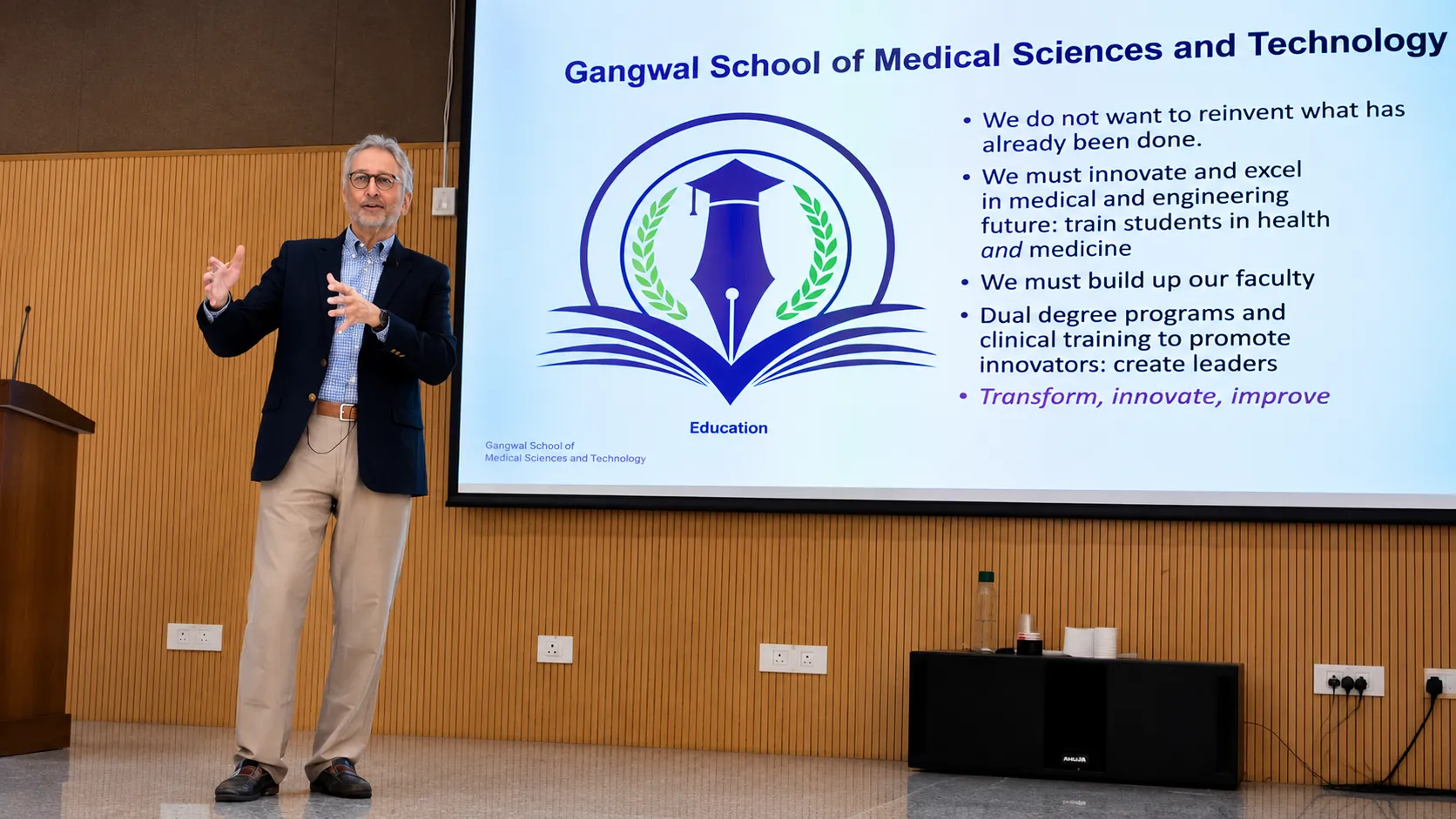
What that existing diaspora backing has provided, primarily, is capital and strategic guidance from successful alumni operating at a distance, contributing their reputations and resources without necessarily relocating their own careers to be physically present for the institution's early development and day-to-day growth. Lalwani's decision to relocate represents a meaningfully different kind of contribution: not capital deployed from abroad, but hands-on clinical and academic leadership delivered in person, during the specific early period when a new medical school's culture, standards, and institutional identity are still being actively formed rather than already established and set in stone.
The Difference Between Funding and Building
There is a meaningful distinction between diaspora philanthropy that funds an institution from a distance and diaspora expertise that relocates to actively build one, and Lalwani's move falls squarely into the second, considerably rarer category. A financial gift, however substantial, purchases infrastructure, faculty salaries, and operational capacity, but it cannot by itself transmit the accumulated tacit knowledge of how a world-class academic medical institution actually functions day to day — how faculty recruitment should be structured, how a research culture that rewards genuine scientific rigor gets established and defended against the pressure to prioritize prestige or output volume over substance, how clinical training programs should be designed to produce physicians capable of both technical competence and genuine patient care simultaneously, rather than one at the expense of the other.
That kind of tacit institutional knowledge is transmitted primarily through direct, sustained personal presence — mentorship, participation in early hiring decisions, direct involvement in curriculum design, and the simple modeling of professional standards that new faculty and students absorb by working alongside someone who has spent decades inside institutions that already embody those standards. Lalwani's relocation provides IIT Kanpur's medical school with exactly that kind of direct transmission mechanism, at a formative moment when the institution's founding culture is still being actively shaped rather than already set in place, a window that closes permanently once an institution's early habits and standards have hardened into settled practice.
A Broader Pattern of Diaspora Return
Lalwani's move fits within a broader, still-emerging pattern often described as reverse brain drain: accomplished diaspora professionals, having built substantial careers abroad, choosing to relocate back to India specifically to contribute their expertise to Indian institutions, rather than limiting their engagement to periodic visits, remote consulting, or purely financial contributions from a distance. That pattern remains considerably rarer than diaspora philanthropy in general, precisely because relocating an established career carries costs that writing a check does not: disrupted professional networks, family relocation, and the genuine uncertainty of whether a still-developing institution can offer the same research infrastructure and professional environment that a leading American university already provides as a matter of course.
The broader Indiaspora Forum, convened in 2026 specifically to deepen diaspora engagement with India across business, innovation, culture, and philanthropy, has repeatedly returned to this same theme in its discussions and panel sessions throughout the year: that the most valuable form of diaspora contribution increasingly extends beyond capital alone, into the kind of direct expertise transfer that only physical relocation, even if only for a period of years rather than permanently, can actually provide. Lalwani's decision offers a concrete, individual example of that broader institutional aspiration translating into an actual personal choice, made not by a committee or a foundation board but by a single accomplished physician-scientist weighing his own remaining career against the opportunity to help build something genuinely new.
What Success Would Look Like
Whether Lalwani's relocation ultimately succeeds in shaping IIT Kanpur's medical school into the kind of world-class institution its founders envision will likely take years, if not a full decade, to determine with any real confidence. Academic medical institutions develop their reputations slowly, through accumulated research output, successful graduate outcomes, and sustained faculty recruitment success, none of which can be meaningfully assessed within the institution's first few years of operation, however promising its early founding choices might appear. What can be assessed sooner is whether Lalwani's presence succeeds in establishing the kind of rigorous research culture and clinical training standards that took his own American academic institutions decades to build — the specific, hard-to-quantify institutional quality that his relocation is explicitly designed to help transmit to a new generation of Indian physicians.
A Personal Decision With Institutional Stakes
None of this diminishes the significance of the capital-based diaspora contributions that preceded Lalwani's own decision, including Gangwal's nine-figure commitment and the broader Founder's Circle's combined resources. Capital remains a necessary precondition for any institution-building project of this scale, and IIT Kanpur's medical school could not have reached even its current early stage of development without the substantial financial backing already committed by its diaspora donors well before Lalwani's own relocation was announced. What Lalwani's move adds is a second, complementary layer of contribution — one that capital alone, however generously provided, was never going to be sufficient to supply on its own.
It is worth acknowledging what a decision like Lalwani's actually requires at a deeply personal level, beyond the institutional framing that necessarily dominates most coverage of diaspora return stories. Relocating an established academic medical career, built over decades across some of America's most prestigious institutions, involves genuine personal and professional risk: leaving behind an established laboratory, established collaborative relationships, and an established professional reputation, in exchange for the considerably less certain proposition of building something new in an institution still finding its footing in a competitive academic landscape. That kind of decision is easier to celebrate in the abstract than it is to actually make, which is part of why moves like Lalwani's remain comparatively rare relative to the much larger volume of diaspora philanthropy that flows through purely financial contributions alone.
For IIT Kanpur's medical school, and for the broader project of building India's higher education and healthcare infrastructure with meaningful diaspora participation, Lalwani's relocation represents a genuinely significant vote of confidence — not just in the institution's financial backing, which was already substantial before his decision, but in its underlying academic vision and its capacity to eventually become the kind of institution capable of attracting and retaining a physician-scientist who could, by any reasonable measure, have chosen to remain comfortably at the top of American academic medicine indefinitely instead, without ever having to prove anything further to anyone.
What Indian Medical Education Stands to Gain
India's medical education system, despite its considerable scale, has long struggled with a persistent gap between the number of qualified applicants seeking medical training and the number of available seats at institutions capable of providing genuinely world-class education, a gap that has driven decades of Indian medical students to seek training abroad instead, in countries ranging from Russia and China to the Caribbean and Eastern Europe, often at considerable financial and logistical cost to their families and with mixed results once they return to practice in India. A new medical school built around IIT Kanpur's existing reputation for rigorous technical education, staffed in part by returning diaspora physician-scientists with direct experience of what genuinely world-class medical training actually looks like, offers a potential template for closing at least part of that gap domestically, rather than continuing to export the problem to medical schools in other countries with far less oversight of educational quality.
Lalwani's specific subspecialty — hearing disorders and surgical innovation — also carries particular and immediate relevance for India's own public health landscape, where hearing loss and related disorders affect a substantial population, often without access to the kind of specialized surgical and technological interventions that his research has focused on advancing over the course of his career. His relocation therefore carries a dual significance: contributing to the broader institutional project of building a world-class medical school, while also potentially establishing a specific center of clinical and research excellence in a subspecialty where India's existing healthcare infrastructure has historically been under-resourced relative to the scale of patient need across both urban and rural populations alike.
The Long Timeline of Institution-Building
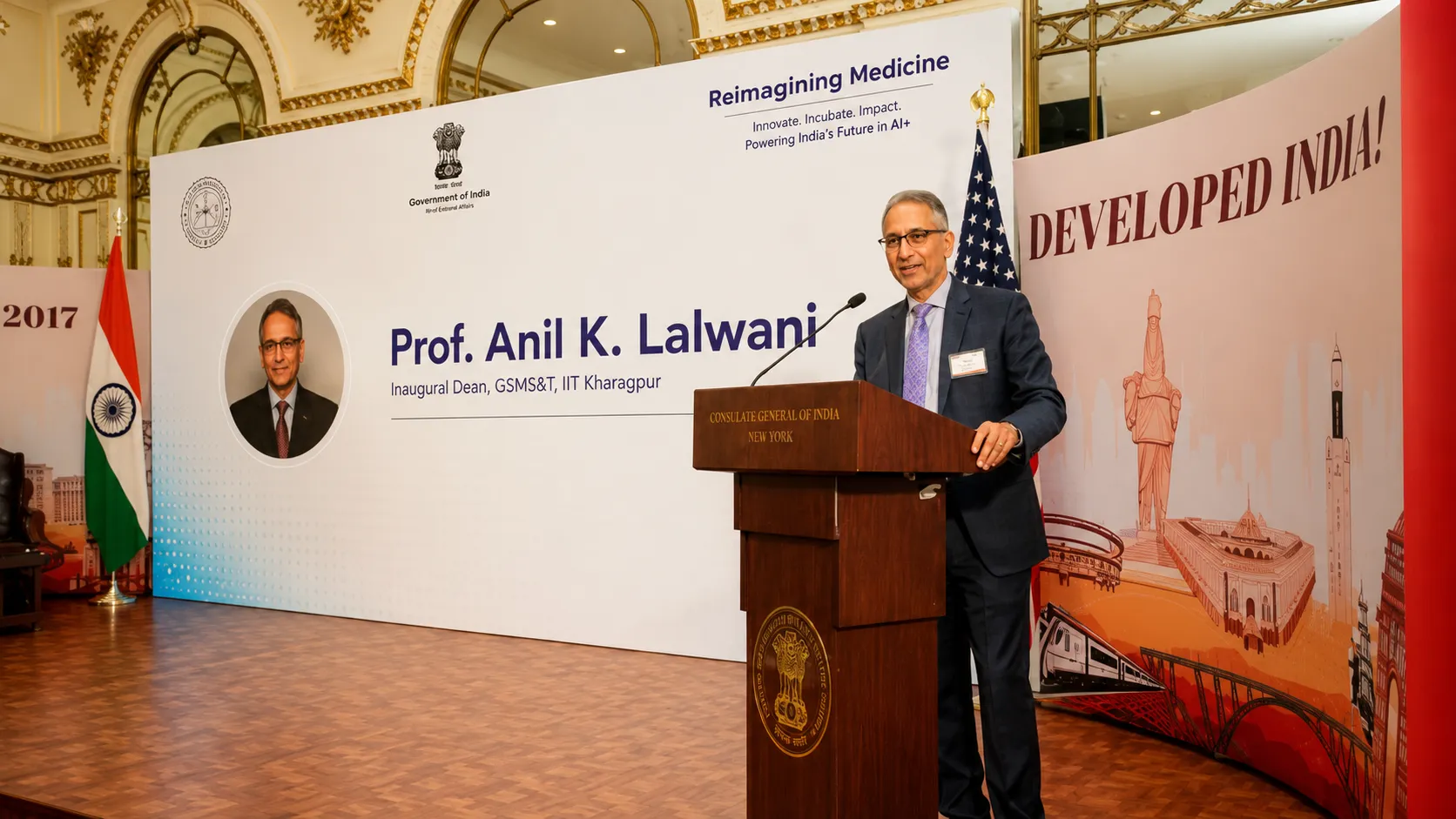
Anyone evaluating the significance of Lalwani's move needs to reckon honestly with the timeline involved. Building a genuinely world-class medical school is not a project that succeeds or fails within a single academic year, or even within a single presidential term of an Indian government whose political attention span rarely extends much beyond the next election cycle. It is a multi-decade undertaking, requiring sustained investment, sustained faculty recruitment, and sustained institutional patience through the inevitable early setbacks that accompany any new academic institution finding its footing in a competitive global landscape. Lalwani's own decision to relocate reflects, implicitly, a bet that he is willing to commit a meaningful portion of the remainder of his own career to that multi-decade timeline, rather than treating his involvement as a shorter-term advisory or visiting role that allows for an easy exit if early progress proves slower than hoped, an important distinction between symbolic involvement and genuine institutional commitment.


