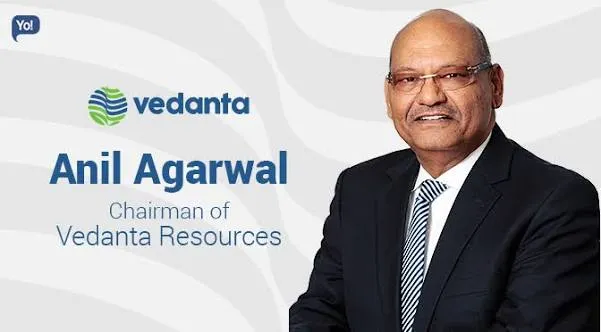
Mumbai: Anil Agarwal, the billionaire founder of the Vedanta Group, is preparing to embark on what industry watchers are describing as the most ambitious capital deployment programme of his decades-long career in Indian natural resources, with plans to invest twenty billion dollars over the next three to five years across the group's newly demerged businesses. The investment plan, largely to be funded through internal cash generation rather than fresh external borrowing, represents a significant bet on the durability of India's long-term demand for natural resources even as global commodity markets navigate a period of considerable uncertainty.
The announcement comes at a pivotal moment for the Vedanta Group, which recently completed a landmark corporate restructuring that reshaped Vedanta Limited, once a sprawling conglomerate spanning everything from aluminium and zinc to oil and gas and power generation, into five independently listed entities. This demerger, one of the most closely watched corporate restructurings in recent Indian business history, was designed to unlock what Agarwal and his advisors have long argued was significant value trapped within the conglomerate structure, allowing investors to value each business — spanning aluminium, oil and gas, power, steel and ferrous materials, and base metals — on its own distinct merits rather than through the lens of a diversified holding company discount that had persistently weighed on Vedanta's overall market valuation.
A BET HINGING ON EXECUTION AND COMMODITY CYCLES
Industry analysts covering the natural resources sector have been quick to note that the success of Agarwal's twenty-billion-dollar investment programme will hinge on three critical and interconnected factors: disciplined execution across a portfolio of capital-intensive projects, the trajectory of global commodity price cycles over the coming years, and India's continued appetite for the raw materials that underpin its own industrial and infrastructure ambitions. Each of these variables carries considerable uncertainty, making the scale of Agarwal's commitment all the more notable as a statement of conviction in India's long-term growth trajectory.
The decision to fund the bulk of this investment through internal cash generation, rather than relying heavily on fresh debt or equity issuance, marks a deliberate strategic choice that reflects lessons learned from the Vedanta Group's own history. The conglomerate has, at various points over the past decade, faced scrutiny over its debt levels and the complex web of intercompany transactions and loans that characterised its structure prior to the recent demerger. By committing to a largely self-funded investment programme, Agarwal appears intent on demonstrating financial discipline to a market that has, at times, expressed concerns about the group's leverage and capital allocation practices.

WHERE THE MONEY IS LIKELY TO FLOW
While the group has not detailed a granular project-by-project breakdown of the twenty-billion-dollar commitment, industry observers expect the bulk of the investment to flow toward expanding capacity across the group's core commodity businesses, including aluminium smelting and refining capacity, base metals production, and continued development of the group's oil and gas exploration and production assets. Each of these sectors sits at the intersection of two powerful and somewhat contradictory global trends: on one hand, the accelerating pace of India's own infrastructure and manufacturing build-out, which continues to drive robust domestic demand for metals and energy; and on the other, a global commodity price environment that has been subject to significant volatility amid geopolitical tensions, shifting trade policies, and evolving expectations around the pace of the global energy transition.
Aluminium, in particular, has emerged as a strategic priority for the group, given India's growing domestic demand for the metal across sectors ranging from automotive and construction to renewable energy infrastructure, including the aluminium-intensive components required for solar power installations and transmission networks. The Vedanta Group has historically maintained a dominant position in India's aluminium industry through its Odisha-based operations, and further capacity expansion in this segment would reinforce that leadership position at a time when domestic aluminium demand continues to outpace the growth in indigenous smelting capacity, leaving India reliant on imports to bridge the gap.
THE BROADER CONTEXT: INDIA'S NATURAL RESOURCES AMBITIONS
Agarwal's investment plans arrive amid a broader national conversation about India's strategic positioning in the global race to secure access to critical minerals and natural resources essential to both traditional industrial applications and the emerging technologies that will define the next phase of global economic competition, including electric vehicles, renewable energy infrastructure, and advanced electronics manufacturing. The Indian government has, in recent years, placed increasing policy emphasis on reducing the country's dependence on imported critical minerals, launching various initiatives aimed at encouraging domestic exploration, processing, and refining capacity across a range of strategically important commodities.
Within this context, large-scale private sector investment commitments of the kind Agarwal has outlined carry significance that extends well beyond the immediate commercial interests of the Vedanta Group itself. They represent a tangible signal of private sector confidence in India's natural resources sector at a moment when the government has been actively courting exactly this kind of capital commitment as part of its broader industrial policy objectives.
RISKS AND CHALLENGES AHEAD
Despite the scale of ambition on display, analysts have flagged several risks that could complicate the execution of Agarwal's twenty-billion-dollar investment programme. Commodity price cycles remain notoriously difficult to predict, and a sustained downturn in global prices for aluminium, zinc, or other key commodities in the Vedanta portfolio could materially affect the cash flow generation that the group is counting on to fund its investment plans without resorting to significant fresh borrowing. The current environment of elevated and volatile crude oil prices, driven by ongoing tensions in the Middle East, adds a further layer of complexity, given the direct and indirect ways in which energy costs feed into the economics of energy-intensive industries like aluminium smelting.
Regulatory and environmental considerations also loom large over any large-scale expansion of mining and metals capacity in India. Securing the necessary environmental clearances, land acquisitions, and mining leases for new or expanded projects has historically been a source of delay and cost overrun for large industrial projects across the country, and the Vedanta Group's own history includes instances of high-profile regulatory and community opposition to specific projects that have, at times, significantly altered the group's expansion plans.
Execution risk across such a large and geographically dispersed portfolio of projects also cannot be understated. Managing simultaneous capital expenditure programmes across aluminium, base metals, oil and gas, and other business lines, each now operating as an independently listed entity following the recent demerger, will require careful coordination and disciplined capital allocation to ensure that the group's overall twenty-billion-dollar commitment translates into value creation rather than the kind of capital misallocation that has periodically challenged large diversified industrial groups in India and globally.
MARKET AND INVESTOR REACTION
The announcement has drawn considerable attention from investors and analysts tracking the newly demerged Vedanta entities, each of which is now being evaluated on its own distinct merits following the group's restructuring. The scale of the investment commitment is likely to feature prominently in analyst assessments of each entity's medium-term growth trajectory, with particular attention likely to focus on how the capital is allocated across the various businesses and the specific return metrics management is targeting for each major project within the broader twenty-billion-dollar envelope.
For a business empire built over decades on Agarwal's willingness to make large, often contrarian bets on Indian natural resources at moments when others were more cautious, this latest commitment fits a familiar pattern, even as the scale involved marks a new high-water mark for the group's ambitions. Whether this bet pays off in the way Agarwal and his team envision will depend on a complex interplay of factors largely outside the group's direct control, from the trajectory of global commodity cycles to the pace of India's own infrastructure and industrial expansion over the coming years.
LOOKING AHEAD
As the newly demerged Vedanta entities begin to chart their independent courses in public markets, Agarwal's twenty-billion-dollar investment commitment will serve as one of the defining narratives shaping investor perceptions of the group's prospects through the remainder of this decade. For India's broader natural resources sector, the announcement adds further momentum to a period of significant capital commitment and strategic repositioning, as domestic and global players alike position themselves to capture what many continue to view as a multi-decade opportunity tied to India's industrial and infrastructure ambitions.
THE DEMERGER'S ROLE IN UNLOCKING CAPITAL FOR EXPANSION
The recently completed demerger of Vedanta into five independently listed companies is itself an important enabler of the group's expanded investment ambitions, beyond simply improving valuation transparency for investors. Under the conglomerate's previous unified structure, capital allocation decisions across the group's diverse business lines were made centrally, with cross-subsidisation between businesses at times drawing scrutiny from minority shareholders and credit rating agencies concerned about the flow of cash between the parent and its various subsidiaries. The demerger, by creating distinct, independently managed and independently financed entities for each major business line, allows each unit to pursue its own capital raising and investment strategy more directly tied to its specific project economics and growth opportunities, without the complexity of navigating group-level capital allocation priorities that may not always align with the optimal strategy for each individual business.
This structural clarity is particularly relevant for the twenty-billion-dollar investment programme, as it allows each demerged entity — whether focused on aluminium, oil and gas, power, steel, or base metals — to pursue financing structures, whether through internal cash generation, project-specific debt, or targeted equity raises, that are most appropriate to its own risk profile and growth trajectory, rather than being constrained by considerations relevant to the broader conglomerate's overall balance sheet position.
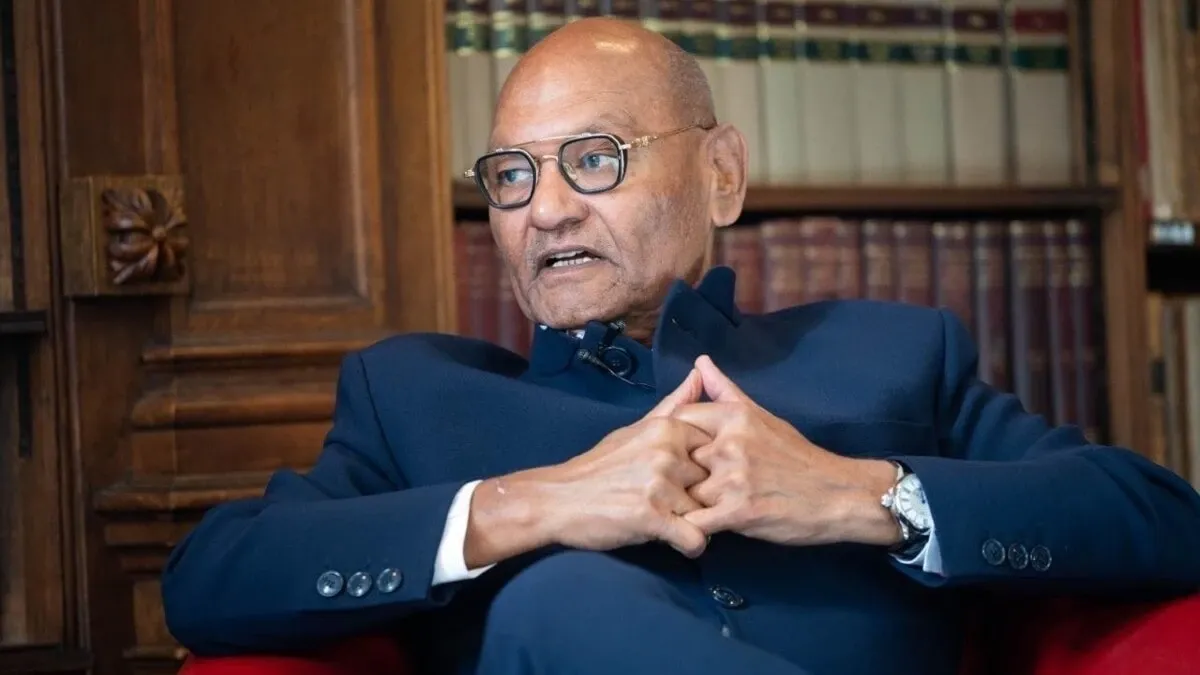
GLOBAL CONTEXT: INDIA'S PLACE IN THE CRITICAL MINERALS RACE
Agarwal's investment announcement also arrives amid an intensifying global competition for access to and control over critical minerals and natural resources considered essential to the technologies that will define the next phase of global economic development. Major economies, including the United States, China, and the European Union, have each articulated explicit strategic priorities around securing supply chains for critical minerals, ranging from rare earth elements used in advanced electronics to the base metals essential for renewable energy infrastructure and electric vehicle production.
India's own position within this global competition has been the subject of considerable policy attention, given the country's substantial but historically underdeveloped mineral resource base relative to its geological potential. Government initiatives aimed at reforming India's mining sector regulatory framework, encouraging greater private sector participation in exploration and production, and building strategic reserves of critical minerals have all gathered momentum in recent years, creating a more supportive policy backdrop for exactly the kind of large-scale private investment that Agarwal is now committing to deploy.
Large domestic players like the Vedanta Group are increasingly viewed by policymakers as strategically important partners in this broader national effort to reduce India's dependence on imported critical minerals and build more resilient, domestically-controlled supply chains for the raw materials that will underpin the country's industrial and technological ambitions over the coming decades, a dynamic that adds a layer of strategic, and not merely commercial, significance to Agarwal's latest investment commitment.
WORKFORCE AND REGIONAL ECONOMIC IMPLICATIONS
Beyond the financial and strategic dimensions, an investment programme of this scale carries significant implications for employment and regional economic development across the states where Vedanta Group operations are concentrated, including Odisha, where the group maintains substantial aluminium operations, and various other states hosting the group's mining, power, and oil and gas assets. Large-scale capital expenditure programmes in the natural resources sector typically generate substantial direct and indirect employment, both during the construction phase of new or expanded facilities and subsequently through ongoing operations, along with broader multiplier effects on local economies through increased demand for ancillary goods and services.
State governments hosting Vedanta Group operations have historically taken a keen interest in the pace and scale of the group's investment plans, given the significant contribution such investments make to state-level industrial output, employment generation, and tax revenues, adding a further dimension of political and economic significance to how this twenty-billion-dollar commitment ultimately translates into on-the-ground project execution across the country.


