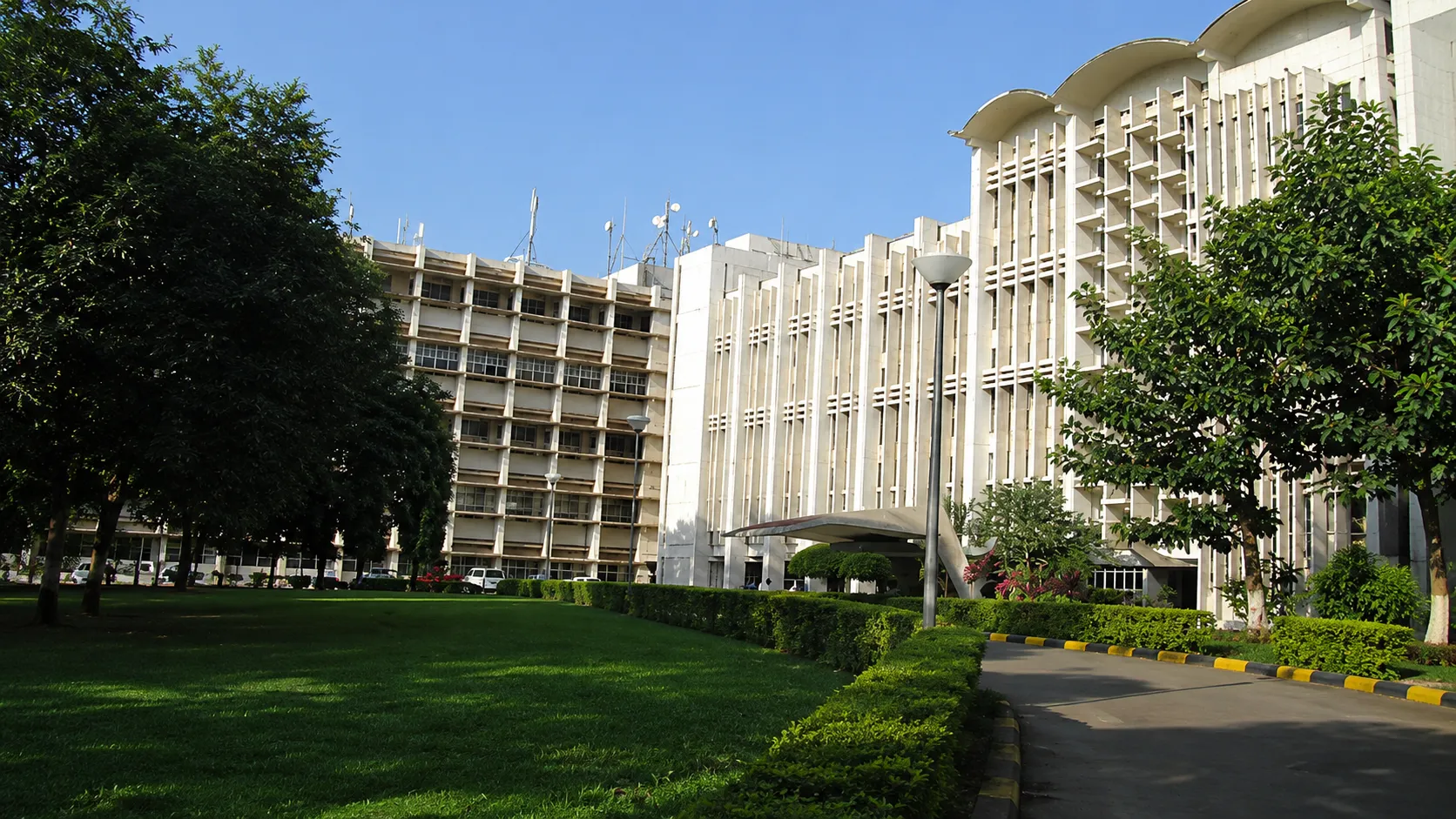
For nearly seven decades, the relationship between India's Institutes of Technology and the United States has followed a remarkably consistent pattern: India trains some of the world's most sought-after engineering and technology talent through its famously competitive, rigorous IIT system, and a significant share of that talent subsequently departs for graduate study, research careers, and eventually permanent settlement in the United States, contributing to the extraordinary concentration of IIT alumni across Silicon Valley boardrooms, Wall Street trading floors, and America's most prestigious research universities. That decades-old pattern is now, for the first time, beginning to show signs of running in the opposite direction, with the announcement of an Indian Institute of Technology establishing a physical campus presence on American soil — a development that education policy watchers and diaspora community leaders alike are describing as a genuinely symbolic milestone in the long, intertwined history between Indian technical education and the American economy it has so profoundly shaped.
Alongside this broader development, IIT Bombay — widely regarded as one of the flagship institutions within the broader IIT system — has announced a new partnership with SUNY Old Westbury, seeding what is described as IIT Bombay's first sub-campus on US soil, with the collaboration first announced in late June and further developments expected to unfold over the coming year.
WHY THIS MOMENT MATTERS SO MUCH TO THE DIASPORA
For the Indian-American diaspora community, and particularly for the many IIT alumni who form one of its most influential and tightly networked professional subgroups, the prospect of the IIT brand and educational model establishing a genuine physical presence within the United States carries a symbolic weight that extends well beyond the practical details of any specific academic partnership or campus opening. The IIT system has, for generations of Indian families, represented the single most prestigious and competitive pathway into technical higher education, with admission to an IIT programme functioning as one of the most closely watched, high-stakes achievements within Indian educational culture — comparable in cultural significance, within the Indian context, to admission to the most elite Ivy League institutions within American culture.
For decades, accessing that IIT educational experience has required physical presence in India itself, given the historically India-only campus footprint of the IIT system. The prospect of an IIT-affiliated educational presence becoming accessible on US soil represents, for many within the diaspora community, a meaningful evolution in how Indian educational institutions are choosing to engage with their global alumni network and the broader Indian-American community, rather than treating that community purely as a source of outbound talent departing India's own higher education system permanently.

THE BROADER CONTEXT OF INDIA'S GLOBAL EDUCATION AMBITIONS
This development does not exist in isolation. It arrives amid a broader, increasingly active push by Indian higher education institutions and policymakers to expand India's global education footprint, both through Indian institutions establishing international campuses and through reciprocal arrangements bringing foreign universities into India itself. In a parallel development, Illinois Institute of Technology has become the first American university cleared by India's University Grants Commission to open an independent, degree-granting campus within India, with Illinois Tech–Mumbai planned to open in the Vikhroli area of Mumbai in the fall of 2026 — illustrating that this expanding cross-border education relationship is very much a two-way exchange, rather than a one-directional Indian institution expanding into the United States alone.
This bidirectional pattern reflects a broader strategic shift within India's higher education policy landscape, driven partly by the country's own National Education Policy reforms, which have explicitly encouraged greater international collaboration and cross-border campus development as part of a broader ambition to position India as a genuine global higher education hub, rather than solely a talent pipeline feeding into other countries' universities and economies. For Indian policymakers, encouraging institutions like the IITs to establish international campus presences, including within the United States specifically, serves multiple strategic objectives simultaneously: strengthening ties with the substantial and influential Indian-American alumni and diaspora community, creating new revenue and brand-building opportunities for India's flagship technical institutions, and potentially creating new pathways for engaging diaspora students and professionals who may be interested in an IIT-affiliated educational experience without requiring full relocation to India itself.
WHAT THE IIT BOMBAY-SUNY OLD WESTBURY PARTNERSHIP MIGHT LOOK LIKE
While full operational details of the IIT Bombay-SUNY Old Westbury collaboration continue to be developed following its initial announcement, partnerships of this nature between prestigious international institutions and US-based universities typically involve some combination of joint degree programmes, faculty and research exchange arrangements, and shared campus facilities that allow students to access coursework, faculty expertise, and institutional branding from both partner institutions simultaneously. For SUNY Old Westbury, a partnership of this prominence with one of India's most globally recognised technical institutions offers a significant opportunity to enhance its own international profile and attract students specifically interested in accessing IIT-affiliated educational content and credentialing without needing to relocate to India for the entirety of their academic programme.
For IIT Bombay, establishing this kind of US-based sub-campus presence offers a mechanism for extending its brand, curriculum, and institutional reach into the American higher education market, potentially serving diaspora students who may have strong family and cultural ties to the IIT system's reputation and prestige, but whose own educational path has unfolded primarily within the US school system, making a US-based access point to IIT-affiliated education considerably more practical than requiring full relocation to India for an undergraduate or graduate programme.
WHAT THIS MEANS FOR PROSPECTIVE STUDENTS
For Indian-American students and families evaluating higher education options, the emergence of IIT-affiliated educational opportunities accessible within the United States introduces a genuinely new category of consideration into what has traditionally been a binary choice: pursuing higher education entirely within the US system, or returning to India specifically to compete for the notoriously selective IIT admissions process through the Joint Entrance Examination and its associated preparation ecosystem. A US-based IIT-affiliated campus presence could, depending on its specific admissions requirements and academic structure, offer a middle path — access to IIT-affiliated curriculum, faculty expertise, and institutional branding without necessarily requiring the same admissions pathway or full relocation that a traditional IIT education in India has historically demanded.
This could prove particularly appealing to diaspora families who have long valued the IIT system's reputation and rigour but who may have found the practical logistics of sending a US-raised child to compete in India's famously intense JEE preparation ecosystem, and subsequently relocate for a multi-year undergraduate programme in India, to be a genuinely difficult proposition given the different educational systems, cultural adjustment, and family logistics involved.
THE BROADER SIGNIFICANCE FOR INDIA-US EDUCATIONAL TIES
Beyond the direct impact on prospective students and their families, this development carries broader symbolic and practical significance for the overall trajectory of India-US educational and economic ties. Education exchange has long served as one of the most consequential, if sometimes under-appreciated, pillars of the broader India-US relationship, with the flow of Indian students into American universities over decades having created deep, lasting institutional and personal relationships that have subsequently translated into significant technology sector collaboration, research partnerships, and business ties between the two countries.
The emergence of reciprocal campus development — Indian institutions establishing US presence, and American institutions like Illinois Tech establishing presence within India — suggests a maturing, increasingly bidirectional educational relationship between the two countries, one that may prove increasingly important as both nations navigate ongoing questions about international student mobility, skilled immigration policy, and the broader global competition for research talent and educational prestige that has intensified across the international higher education landscape in recent years.
WHAT COMES NEXT
As these campus development initiatives move from initial announcement toward actual operational reality — with Illinois Tech-Mumbai targeting a fall 2026 opening, and the IIT Bombay-SUNY Old Westbury partnership continuing to develop following its June announcement — diaspora families, prospective students, and education policy observers alike will be watching closely to see how these ambitious cross-border campus development plans translate into concrete admissions processes, curriculum structures, and ultimately, the lived educational experience of the first cohorts of students to enrol through these new institutional pathways. For a diaspora community whose relationship with India's premier technical education system has, for generations, been defined by departure and distance, the prospect of that same system establishing a genuine, accessible presence within the United States itself represents a change worth watching closely, regardless of how quickly or smoothly these ambitious plans ultimately unfold in practice.
WHAT THIS MEANS FOR THE JEE PREPARATION ECOSYSTEM
One of the more interesting second-order questions raised by this development concerns its potential impact on the vast, highly organised ecosystem of coaching institutes, test preparation programmes, and family strategies built around India's Joint Entrance Examination — the notoriously competitive gateway examination that determines admission to the traditional IIT system within India. This ecosystem, which has grown into a multi-billion-dollar industry in its own right, has historically been oriented almost entirely toward domestic Indian students, with diaspora families representing a comparatively small, if growing, niche within the broader JEE preparation market, given the relatively small number of diaspora students who have historically pursued the traditional India-based IIT admissions pathway.
Should IIT-affiliated educational options accessible from within the United States develop distinct admissions pathways — potentially less dependent on the specific JEE examination structure, and more aligned with standard US higher education admissions processes such as standardised testing, academic transcripts, and extracurricular achievement — this could meaningfully expand the diaspora population able to access IIT-affiliated education without requiring the same multi-year, intensive JEE preparation investment that has traditionally been a prerequisite for accessing the IIT brand and educational experience. This potential shift would represent a significant evolution in how the IIT system engages with diaspora talent, moving beyond the traditional single, highly selective admissions gateway that has defined access to the institution for generations of Indian and Indian-origin students alike.

THE LONG VIEW: BUILDING A GENUINELY GLOBAL IIT BRAND
Ultimately, this development fits within a longer-term strategic vision, increasingly articulated by IIT leadership and Indian higher education policymakers, of building the IIT brand into a genuinely global higher education institution, comparable in international reach and recognition to leading American, British, and other internationally prominent university systems that have long maintained multiple campus locations and international partnership networks spanning several countries. Whether the IIT system's first steps into US-based campus presence ultimately grow into a substantial, multi-campus international network, or remain a more limited, symbolic first step, will likely depend heavily on how successfully these initial partnerships and campus developments perform over their first several years of operation — providing an important early test case that Indian higher education leadership, and the diaspora community watching closely from across the United States, will be tracking with considerable interest in the years immediately ahead.
For now, the announcement alone has already achieved something notable: it has shifted, if only slightly, a decades-old conversation about Indian technical education from a story purely about departure and brain drain, toward one that at least begins to include the possibility of return, presence, and genuine institutional roots being planted on American soil, brick by brick, partnership by partnership.
FOR DIASPORA PARENTS, A NEW CONVERSATION AT THE DINNER TABLE
For the many Indian-American parents who themselves navigated the intensely competitive JEE process, or who chose instead to build their careers within the American system after emigrating, this development introduces a genuinely new conversation into family discussions about their children's higher education options. Where once the choice was framed starkly — pursue the American university system familiar from their own adopted country, or send a child back to India to compete for the prestige of an IIT seat — the emergence of IIT-affiliated options accessible from within the United States offers a third path that may resonate strongly with families who have always wanted their children to carry some tangible connection to that specific institutional legacy, without requiring the kind of full relocation and cultural transition that a traditional India-based IIT education would have demanded. Whether that third path proves as academically rigorous, prestigious, and career-advantageous as the original India-based IIT experience remains to be seen, but its mere existence marks a meaningful expansion of the options available to the next generation of Indian-American students.


