
The Unlikely Path to a $1.05 Million Bet
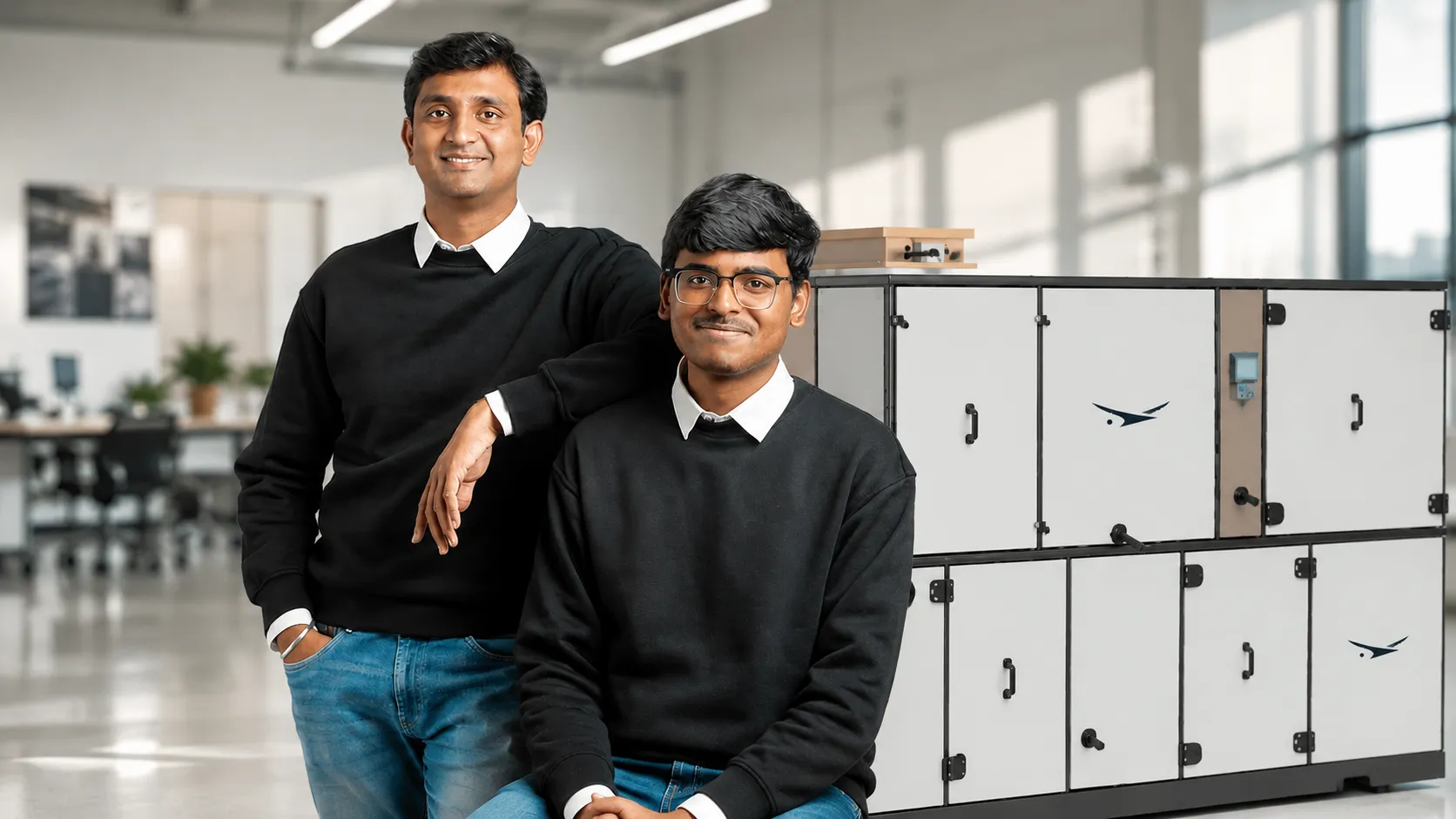
In 2019, two researchers at IIT Madras—Sudarsan M.S. and Srihari Balaji—were working on separate projects at the Centre for Innovation. Sudarsan was dealing with fluid science, Srihari with thermal engineering. They started collaborating on air conditioning, a field where both disciplines converge .
Two years later, in 2021, they co-founded Albatross Energetics. The name was deliberate—the albatross is known for its energy-efficient flight, and the founders wanted their company to embody that same principle .
On June 29, 2026, their bet paid off. The Mumbai-based deep-tech startup announced it had raised $1.05 million (₹10 crore) in a pre-Series A funding round led by Transition VC, a Bengaluru-based venture capital firm focused on energy transition . This follows an earlier ₹1.3 crore seed round in 2024 from Social Alpha and SINE .
Fresh capital will be used to establish pilot-scale manufacturing capabilities for critical components like heat-and-mass exchangers and liquid desiccants, expand commercial deployments across industrial sectors, strengthen engineering and quality teams, and accelerate research and development for next-generation cooling technologies .
How It Works: Independent Control of Heat and Humidity
Traditional air conditioning works by cooling air to remove humidity—a process that is energy-intensive and inefficient because the system must overcool the air to condense moisture out of it.
Albatross Energetics takes a fundamentally different approach. The company uses proprietary liquid desiccant technology that independently controls heat and humidity, lowering power consumption .
A desiccant is a substance that absorbs moisture from the air—similar to the silica gel packets that come with shoes. In Albatross's system, a liquid desiccant (typically lithium chloride) flows through a heat and mass exchanger where it directly removes moisture from the incoming air. Unlike conventional systems where a refrigerant removes both heat and moisture, this configuration decouples the two processes .
The result is what the company calls Active Liquid Desiccant Dehumidification. A second configuration—Integrated Active Passive Cooling—goes even further, using evaporative cooling for part of the heat removal along with the desiccant for humidity control . As co-founder Sudarsan explained, "We use the refrigerant to only cool the liquid desiccant—and not the air" .
The Numbers That Matter: 30-50% Energy Savings
The technology delivers measurable results. In trials at IIT Bombay, where the startup was incubated, a prototype with a 2-ton capacity achieved energy savings of 25-30% over conventional vapour-compression refrigeration systems . A 5-ton unit is currently undergoing trials, with plans to scale up to 20 tons .
Social Alpha, an early investor, estimated that the liquid desiccant hybrid air conditioning (LDHAC) technology offers 30-50% better energy efficiency compared to traditional systems . If implemented at scale, the technology could avoid at least 72 KtCO2e of greenhouse gas emissions by 2030 through energy savings alone .
The potential savings are most significant in industrial applications where humidity control is critical. The company designs, manufactures, and deploys industrial cooling systems for sectors including pharmaceuticals, semiconductors, electronics, batteries, food processing, chemicals, and textiles .
The Market Opportunity: A $1.2 Lakh Crore Industrial Cooling Problem
India's industrial cooling market is vast and growing. Estimates suggest that by 2050, 45% of India's energy demand will come from space cooling alone . Industrial air conditioning is one of the most energy-intensive processes in manufacturing, and the demand for efficient humidity control is only increasing.
Albatross's technology addresses the gap between current inefficient systems and India's cooling needs. The company's fresh air handling unit, which brings outdoor air into buildings rather than recirculating indoor air, is particularly suited for hospitals, hotels, and other enclosed spaces with large numbers of occupants .
The startup plans to expand beyond industrial applications into commercial buildings and broader global cooling markets . It competes with global players including BlueFrontier, Mojave, and Transaera .
What the Investors See
Transition VC's investment thesis is clear. The firm, which closed its debut fund at ₹700 crore ($77 million), focuses on engineering-led companies in the energy transition sector . Its strategy emphasizes backing post-product, pre-product-market-fit startups that have demonstrated technical feasibility and are emerging in the market .
Albatross fits this template perfectly. The technology has been validated through trials, the product is ready for commercial deployment, and the market opportunity is substantial.
Social Alpha, an early backer, expressed enthusiasm about the startup's potential. "We are delighted that the founders of Albatross Energetics have taken entrepreneurial risks to venture into this area and offer 30-50% better energy efficiency than traditional cooling technologies," the firm stated .
The Bottom Line: Scaling the Quiet Revolution
Albatross Energetics has built a technology that addresses a fundamental inefficiency in industrial cooling. By decoupling humidity control from temperature control, the company's liquid desiccant systems dramatically reduce energy consumption, lower operating costs, and cut carbon emissions.
With the fresh capital, the company plans to establish pilot-scale manufacturing, expand commercial deployments, and accelerate R&D . The founders are clear about the next steps: expanding beyond industrial applications, entering commercial buildings, and eventually competing in global cooling markets .
In a world where energy efficiency is no longer optional, Albatross Energetics is offering industrial customers a path to lower costs and lower emissions—without compromising on the precise humidity control that their processes demand. And that, in the end, is the quiet revolution that matters.


