Adapt or Die: Inside the Conference Room Where Michael Dell Told Every Business on Earth That AI Is No Longer Optional
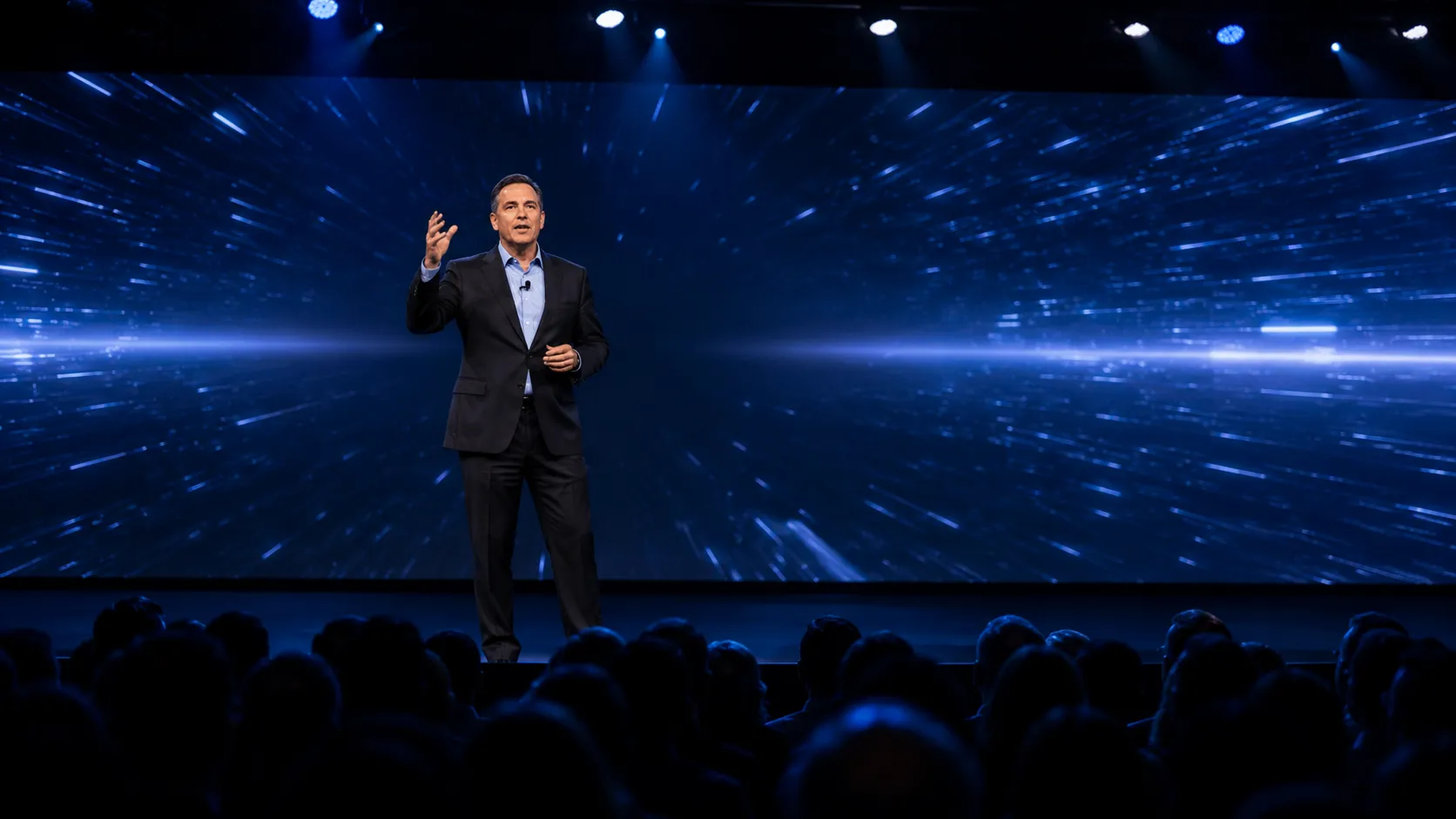
LAS VEGAS — May 22, 2026 — At Dell Technologies World 2026 in Las Vegas this week, Michael Dell took the stage before thousands of partners, customers, and technology executives and delivered a message stripped of the usual corporate diplomacy. Companies that do not become AI‑first organizations, he told the audience, “might not be here in the future.” The line landed in the conference hall with the weight of a CEO who has spent four decades navigating technology transitions—from the PC revolution to the internet, from mobile to cloud—and who now believes the current transition is moving faster and cutting deeper than any that came before.
“AI doesn’t just change technology,” Dell said during his keynote address. “It changes the economics of technology in favor of enterprise infrastructure.” The statement was both a warning and an advertisement. Dell Technologies, the $60 billion infrastructure giant that bears his name, has bet its future on a simple thesis: the AI buildout will require enormous quantities of servers, storage, networking, and professional services, and the companies that control the infrastructure layer will capture a disproportionate share of the value. Dell Technologies intends to be one of those companies. Its founder, meanwhile, is telling anyone who will listen that the alternative is irrelevance.
The Infrastructure Play
The economic logic underpinning Dell’s warning is straightforward. The global AI infrastructure buildout—data centers, servers, GPUs, networking equipment, storage systems—is the largest capital-expenditure cycle in the history of technology. The four largest hyperscalers are spending approximately $725 billion in 2026 alone. Dell Technologies, which supplies the physical infrastructure on which AI workloads run, is positioned at the center of that spending. The company’s PowerEdge servers, PowerSwitch networking equipment, and PowerStore storage arrays are being deployed in AI data centers across the world. Its professional services division is helping enterprises design and deploy their own AI infrastructure, either on-premises or in co‑location facilities.
But Dell’s argument extends beyond selling hardware. He is telling his partners—the thousands of resellers, system integrators, and managed-service providers who account for a significant share of the company’s revenue—that they, too, must adapt. The enterprises they serve are moving AI workloads from the cloud to on-premises infrastructure for reasons of cost, performance, and data sovereignty. The partners who understand how to design, deploy, and manage hybrid AI environments will thrive. Those who continue to sell commoditized hardware without the services layer will be disintermediated.
“CIOs are aggressively pivoting to hybrid AI,” Dell said, citing internal research showing that 67 percent of enterprises are already running at least one AI workload on-premises. The figure is significant because it contradicts the dominant narrative that all AI workloads are migrating to the public cloud. Dell’s bet—and the bet he is urging his partners to make—is that the economics of large-scale inference and the regulatory pressure for data sovereignty will push a growing share of AI compute back into enterprise-controlled environments.
The Supply Chain Bottleneck
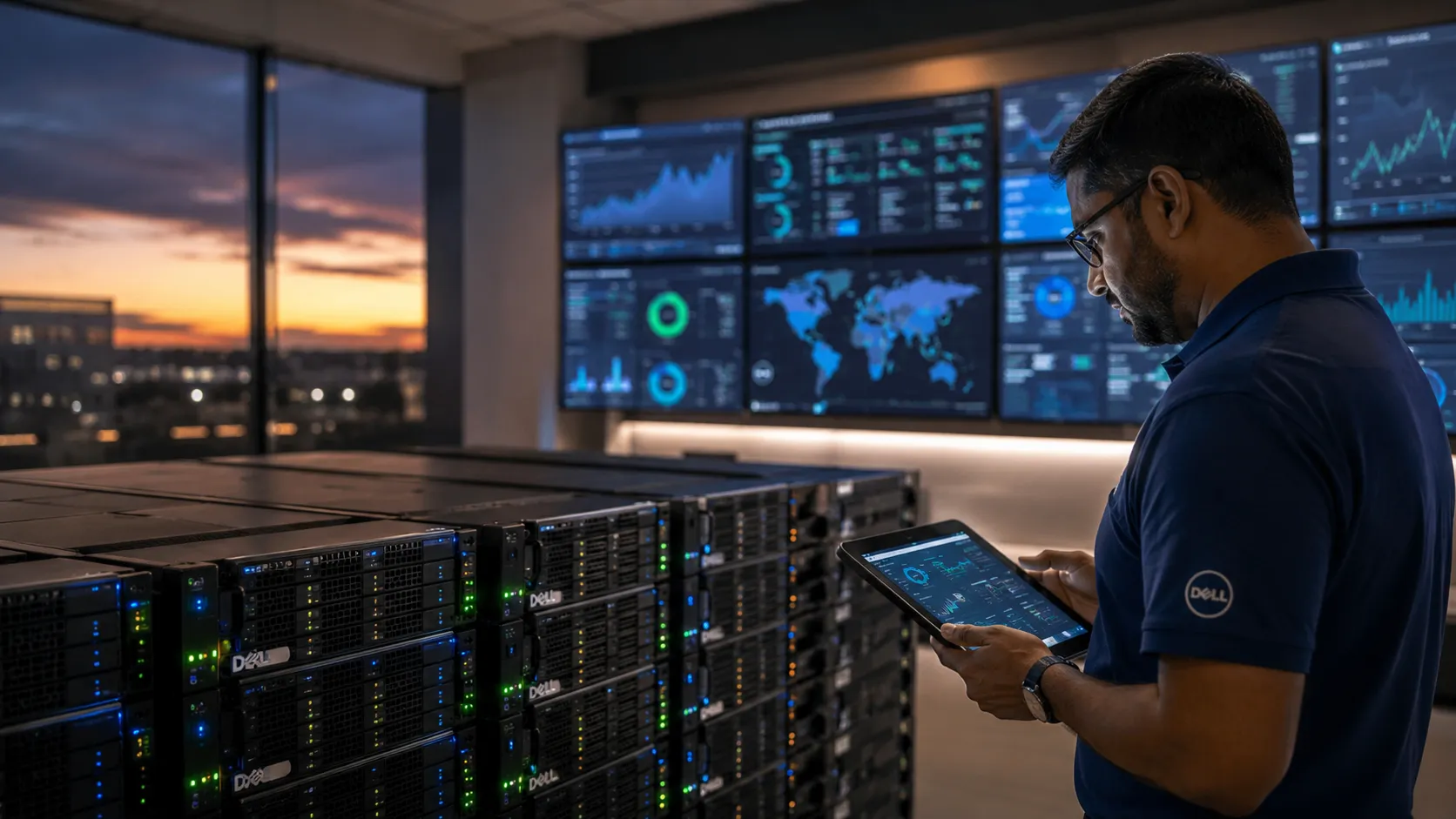
One of the most revealing exchanges at Dell Technologies World occurred not during a keynote but during a press briefing, when a Dell executive disclosed that the company is “sold out of GPUs, memory, and CPUs” and that lead times for certain configurations have stretched into months. The admission underscored the central tension of the AI infrastructure buildout: demand is accelerating faster than the supply chain can accommodate, and the companies that can secure component supply are the ones that will capture revenue.
Dell’s ability to secure supply is a function of scale. The company is one of the largest purchasers of semiconductors in the world, and its relationships with Nvidia, Intel, AMD, and the major memory manufacturers give it preferential access to constrained components. Smaller competitors—system integrators without Dell’s purchasing power, enterprises building their own infrastructure—are being squeezed. The supply-chain bottleneck, Dell argued, is a competitive advantage for the company and its partners. The companies that can deliver AI infrastructure today, rather than in six months, will win the market.
The bottleneck also reinforces Dell’s hybrid-AI thesis. If public-cloud GPU instances are unavailable or prohibitively expensive, enterprises have no choice but to build their own AI infrastructure. Dell is positioning itself as the primary supplier for that buildout, and the sold‑out status of its component inventory suggests the thesis is working.
What This Signals
Michael Dell’s warning is not new. Technology CEOs have been telling audiences for decades that the latest platform shift is existential. But the specificity and intensity of Dell’s message—delivered not to Wall Street analysts but to the partners whose businesses depend on his advice—suggests something more than a marketing pitch. The AI infrastructure buildout is happening at a speed that has surprised even the companies at its center. The supply chain is stretched. The technology is evolving faster than the workforce can absorb. The economic incentives for enterprises to deploy AI workloads on-premises are strengthening.
Dell Technologies, the company that Michael Dell founded in his University of Texas dorm room in 1984, has survived every technology transition since the PC revolution. It survived the dot‑com crash. It survived the shift to mobile. It survived the cloud. Its founder, now 61, is telling anyone who will listen that this transition is different—faster, more consequential, less forgiving. The companies that become AI‑first will survive. The ones that do not, in his telling, “might not be here in the future.” The audience in Las Vegas took notes. The question is whether they will act on them.


