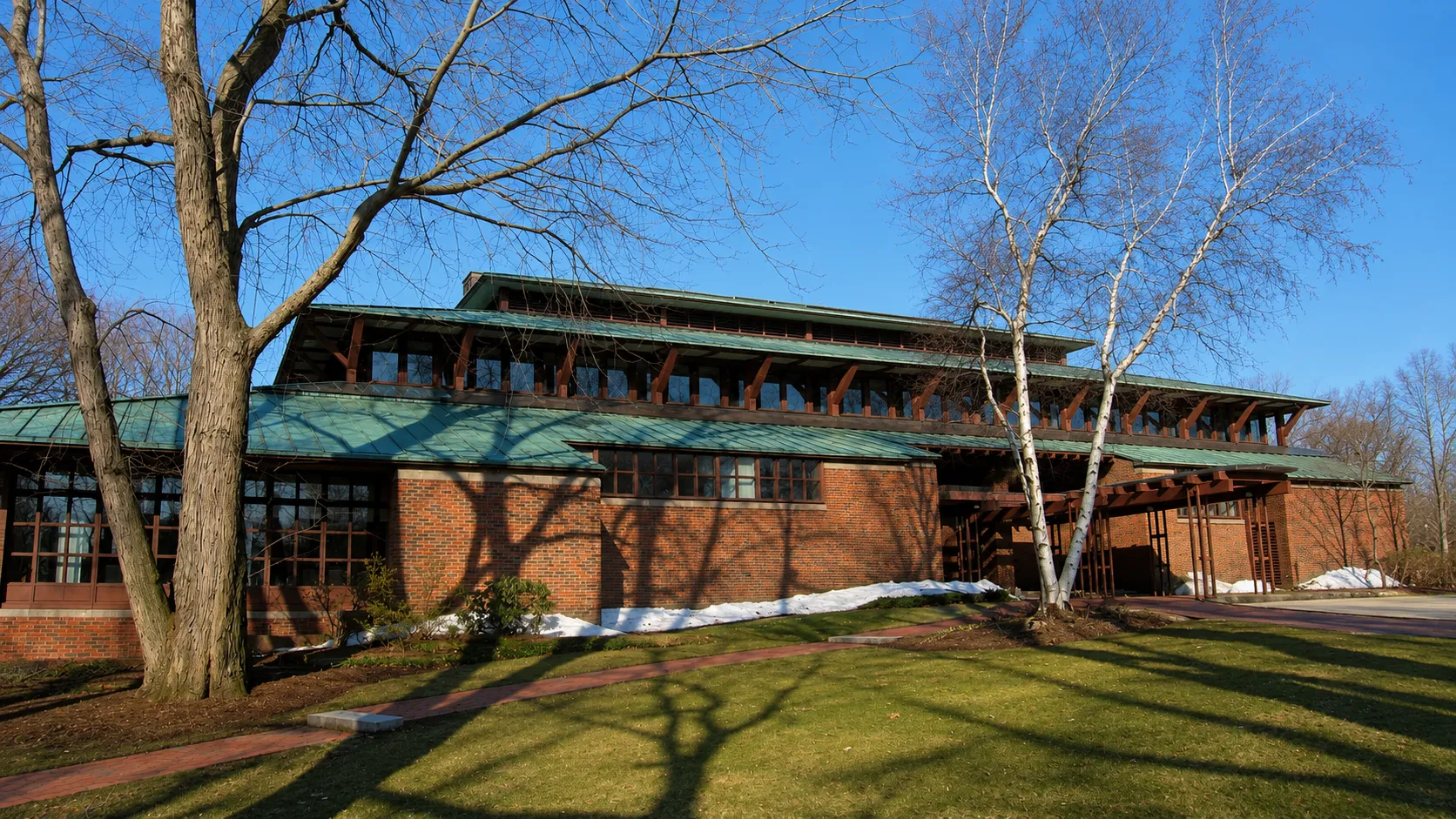
Institutions old enough to have outlived empires do not hand out recognition lightly. The American Academy of Arts and Sciences was founded in 1780, four years after the signing of the Declaration of Independence, by a group of scholars and statesmen — John Adams among them — who believed the young republic needed a body dedicated to honoring and advancing knowledge across every field, not merely government or commerce. Two hundred and forty-six years later, that same institution has inducted its 2026 class of fellows, and ten of the names on that list carry Indian origins.
The Academy's 2026 class includes more than 250 distinguished leaders drawn from academia, industry, public policy, and the arts — physicists alongside playwrights, economists alongside engineers. Being named to that list has long been treated as one of the most prestigious honors an American scholar or professional can receive, on par with membership in the National Academy of Sciences or the American Philosophical Society. That ten of this year's inductees trace their origins to India is not, on its own, a record-breaking number. What makes it noteworthy is the range of fields those ten names span, and what that range says about how far the Indian diaspora's influence has traveled beyond the industries it is most commonly associated with.
Beyond the Familiar Success Story
When most people think of Indian success abroad, the mental image that comes to mind tends to be narrow: a technology executive running a Silicon Valley giant, or a doctor at a major American hospital. Those stories are real and significant, but they represent only a fraction of the diaspora's actual footprint. The Academy's 2026 class is a useful corrective, because its ten Indian-origin honorees were not selected for running companies or hospitals. They were selected for original contributions to knowledge — the kind of work that rarely makes headlines in the moment it happens, but that quietly reshapes entire fields over a career.
Consider Shwetak Patel, one of the class's most prominent Indian-origin inductees, recognized for his pioneering work in ubiquitous computing and health technologies. Patel's research has focused on making health monitoring cheap, accessible, and unobtrusive — building sensing technologies that can track vital signs and environmental conditions using hardware people already own, rather than expensive specialized medical devices. It is research aimed less at the wealthy hospitals of the world and more at the billions of people who will never set foot in one, a body of work that has already influenced how public health researchers think about low-cost monitoring at scale

A Different Kind of Contribution
Also honored in the 2026 class is Reshma Saujani, whose recognition comes from an entirely different corner of public life: her advocacy for gender equality in technology. Through the organization she founded, Saujani has spent years working to close the gap between how many young men and how many young women pursue computer science, building programs that have introduced thousands of young women to coding and technical careers that, for much of the industry's history, were effectively closed to them by culture and circumstance rather than by ability.
What connects Patel's health-sensing research and Saujani's advocacy work is not an obvious professional overlap — one is a hardware and computing researcher, the other a movement-builder and nonprofit founder — but a shared instinct toward closing gaps that the mainstream technology industry has been content to ignore. Patel is closing a gap in who has access to affordable health monitoring. Saujani is closing a gap in who gets to build the technology of the future in the first place. Both forms of contribution are difficult to capture in a headline, and both are exactly the kind of quiet, structural work that institutions like the American Academy exist to recognize when the broader public might otherwise overlook it.
The Academy's own history offers a useful lens for understanding why this particular kind of diversification matters. Its founding members in 1780 were drawn overwhelmingly from a narrow slice of colonial American society — lawyers, ministers, and physicians from a handful of port cities along the Eastern seaboard, almost all of them men, almost all of them descended from English colonial settlers. The Academy's evolution over two and a half centuries into an institution that now regularly inducts first- and second-generation immigrants working in fields as varied as computational health sensing and gender-equity advocacy is itself a quiet record of how thoroughly American intellectual life has been reshaped by successive waves of immigration, of which the post-1965 wave of Indian professionals and scholars is only the most recent chapter.
Part of a Larger Pattern of Recognition
The Academy's announcement did not arrive in isolation. It landed in the middle of a year already thick with formal recognition of Indian-origin achievement in the United States, timed in part to the country's 250th anniversary of independence. The Carnegie Corporation of New York used the same milestone to announce its 2026 Great Immigrants, Great Americans list, honoring twenty-five naturalized citizens from twenty-one countries — among them four more Indian-origin leaders spanning technology, medicine, psychology, and biotechnology, joining past honorees who have included a Nobel laureate in economics, a former United States Surgeon General, and some of the most recognizable names in American corporate technology leadership.
Taken together, these parallel honors describe a diaspora whose contributions are increasingly being read by American institutions not as a story of assimilation against the odds, but as a straightforward account of excellence that happens to have Indian roots. That distinction is subtle but important. A story about overcoming barriers implicitly frames Indian origin as a disadvantage to be surmounted. A story about being selected for the country's oldest honorary society on the merits of original research and advocacy work treats that origin as simply one part of a life spent doing consequential work — no longer news in itself, only the achievement is.
It is worth pausing on just how unusual it is for an institution like the Academy to recognize advocacy work of the kind Saujani has built her career around. Learned societies of this vintage have historically reserved their honors almost exclusively for original scholarship — peer-reviewed research, scientific discovery, literary achievement judged by conventional academic standards. Extending that recognition to someone whose primary contribution has been building an organization and a movement, rather than publishing a body of research, reflects a broadening of what the Academy itself considers worthy of its oldest honor, one that happens to have opened space for exactly the kind of diaspora contribution that does not fit neatly into a laboratory or a peer-reviewed journal.
Why the Timing Matters
It would be easy to read the Academy's 2026 induction as simply one more item in a long-running trend of Indian-origin success stories in the United States, a trend that has been building for decades and shows no sign of slowing. But the timing of this particular recognition — arriving during the same year the United States marks two and a half centuries of independence — adds a layer of symbolic weight that is hard to ignore. The Academy itself was founded in the earliest days of the republic, by men who believed the new nation's long-term strength would depend on cultivating knowledge across every discipline, not just political and military power. Two hundred and forty-six years later, a meaningful share of the scholars it has chosen to honor in its anniversary-adjacent class trace their intellectual lineage back to a country the Academy's founders would scarcely have imagined as a source of American scientific and civic leadership.
That arc — from a fledgling academy founded by a handful of colonial statesmen to an institution now regularly inducting scholars whose families arrived from South Asia within living memory — is itself a quiet testament to how thoroughly immigration has reshaped the intellectual and scientific life of the United States. The ten Indian-origin fellows named this year did not simply happen to be talented individuals who moved to America. Many of them built entire fields of inquiry, or entire advocacy movements, using American institutions and American capital, but drawing on perspectives, problems, and life experiences shaped substantially by India.
What the Diaspora Gains From Moments Like This
Formal recognition of this kind matters beyond the individuals who receive it. Every time an institution as old and selective as the American Academy inducts a cohort with meaningful Indian representation, it reinforces a signal to younger members of the diaspora — students, early-career researchers, first-generation founders — that the full range of American intellectual and civic life is genuinely open to them, not merely the narrower lanes of technology and medicine that popular narratives most often highlight.
A Wider Lens on Diaspora Contribution
It is worth resisting the temptation to flatten this story into another entry on a growing list of "Indians who made it in America." The more accurate reading is that the American Academy's 2026 class reflects a diaspora that has diversified far beyond its most visible professional clusters. A health-technology researcher building low-cost monitoring tools and a gender-equity advocate rebuilding the pipeline into computer science do not share a professional field, an industry, or even a similar day-to-day working life. What they share is a willingness to spend a career solving a problem most of the world had simply learned to live with — and an American institution old enough to remember its own founding chose, in 2026, to say that work mattered.
For a diaspora that numbers in the tens of millions and spans every inhabited continent, honors like these function less as a single triumphant headline and more as a slow accumulation of evidence: evidence that the range of what "Indian-origin achievement" looks like abroad is far wider, and far less predictable, than the narrower stories that tend to dominate popular coverage. The American Academy's 2026 class, quietly and without much fanfare beyond specialist circles, added ten more data points to that accumulating record.
The Institutions Behind the Individuals
It is also worth remembering that neither Patel's research nor Saujani's advocacy happened in a vacuum. Both built their careers within American research universities and nonprofit ecosystems that provided the funding, the platforms, and in many cases the initial audiences for work that eventually reached national and global scale. That context matters, because it complicates any narrative that treats diaspora achievement as a purely individual triumph, unconnected to the institutions that made the work possible in the first place. The more accurate story is one of partnership: American universities, research hospitals, and philanthropic foundations providing infrastructure and resources, and diaspora scholars supplying ideas, energy, and often a distinctive perspective shaped by growing up in a different country entirely.
That partnership runs in both directions. Just as American institutions have benefited enormously from the scholars and entrepreneurs the Indian diaspora has sent through their doors over the past half-century, India itself has increasingly begun looking to its own diaspora scholars as a resource to be actively cultivated rather than simply celebrated from a distance — inviting fellows like these back for lectures, research collaborations, and increasingly for direct involvement in Indian institution-building projects, a pattern visible elsewhere in this same news cycle.
Whatever comes next for Patel's research, for Saujani's advocacy work, and for the other eight Indian-origin fellows inducted alongside them, this year's induction will likely be remembered less for any single achievement it celebrated and more for the shape of the group it assembled — proof that the Indian diaspora's contribution to American public life now runs through laboratories and nonprofits as fluently as it runs through corporate boardrooms. For a community still often reduced in popular imagination to a single professional archetype, that broader shape may end up mattering more than any individual name on the list, a signal worth remembering the next time a single, familiar success story threatens to stand in for the whole, and worth carrying forward into how the diaspora's future contributions get noticed, described, discussed, and ultimately understood by the institutions and audiences that encounter them next.


