Silicon Valley's appetite for acquiring small, technically excellent Indian AI teams has become one of the more consistent patterns in global technology dealmaking over the past two years. What makes Noon's acquisition of Bengaluru-based FinalRun worth examining closely isn't the deal's size — the financial terms weren't disclosed, and by most standards this is a modest, early-stage transaction — but what it reveals about how quickly a genuinely excellent, narrowly focused Indian AI team can go from founding to acquisition, and what that compressed timeline says about the maturity of India's specialised AI engineering talent pool.
The Deal
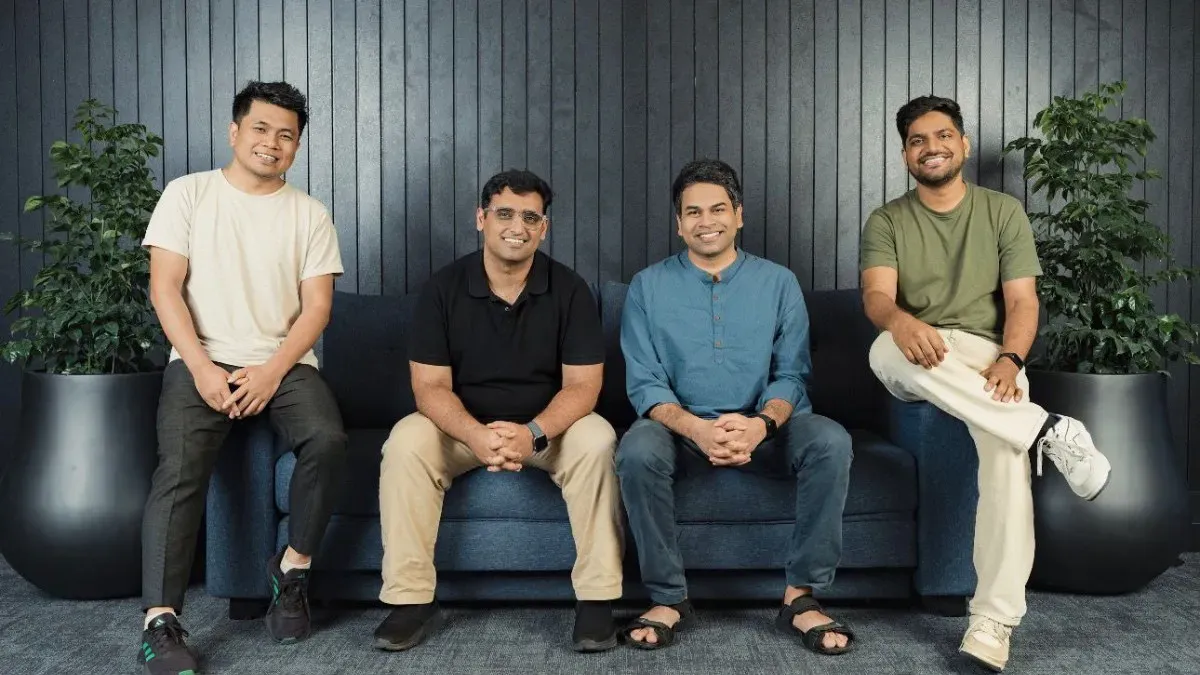
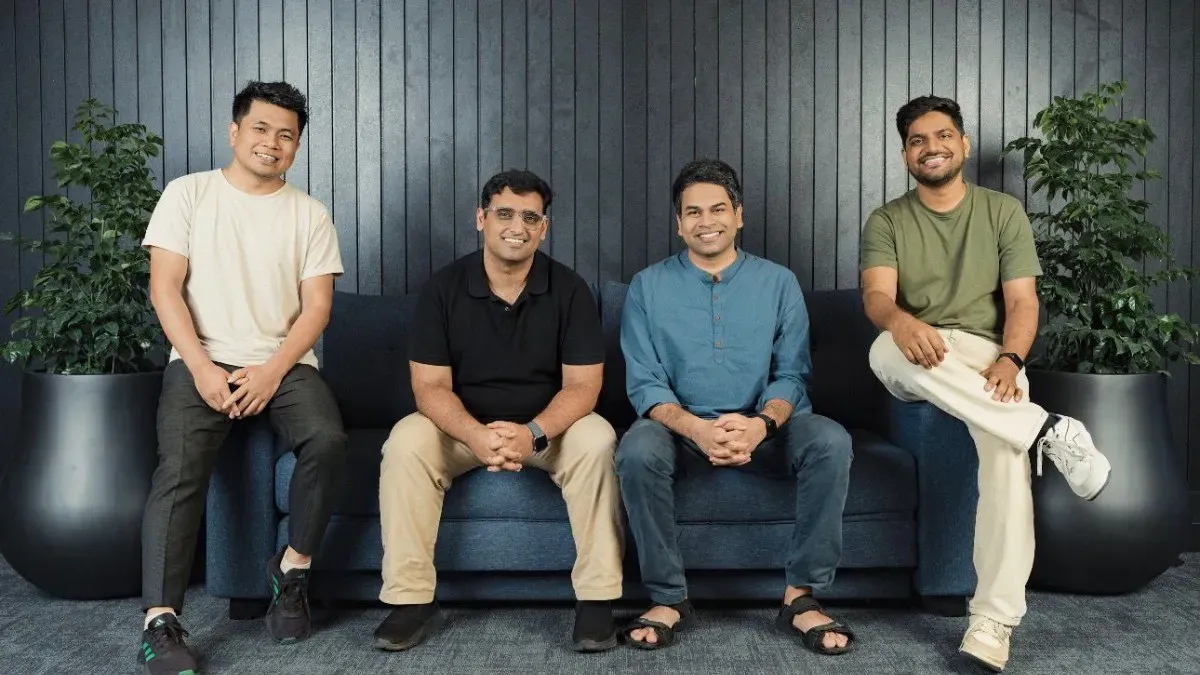
Noon, a US-based artificial intelligence startup founded by Indian American entrepreneurs, has acquired FinalRun, a Bengaluru-based AI engineering startup, in a move aimed at accelerating the development of AI-powered product design tools while expanding Noon's engineering footprint in India. The acquisition brings FinalRun's engineering team and underlying technology directly into Noon's AI-native platform, which is designed to help product managers, designers and software developers collaborate more efficiently across the full product development lifecycle.
As part of the transaction, FinalRun's co-founders, Arnold Laishram and Ashish Yadav, are joining Noon as Members of Technical Staff — a detail that matters considerably for understanding the deal's actual strategic logic. This is not a pure technology or intellectual-property acquisition where the founding team departs once the deal closes; it is explicitly structured to retain the specific engineering talent that built FinalRun's core technology, integrated directly into Noon's ongoing product roadmap.
What FinalRun Actually Built
Founded in 2025, FinalRun developed AI agents specifically designed for mobile test automation — technology capable of executing software tests directly on Android and iOS devices using natural language instructions, rather than requiring engineers to write and maintain the kind of rigid, code-based test scripts that have traditionally made mobile app testing a slow, labour-intensive and frequently neglected part of the software development process. The company's tools were designed more broadly to streamline product planning and software development workflows, automating repetitive product management tasks while helping teams move from initial product ideas to actual deployment considerably faster than traditional development processes typically allow.
The most striking evidence of FinalRun's technical capability arrived in April 2026, when the company topped Google DeepMind's Android World benchmark with a 97.4 percent success rate — a genuinely exceptional result on a benchmark specifically designed to evaluate how well AI agents can navigate and complete tasks within real Android application environments. For a team founded barely a year earlier to top a benchmark maintained by one of the world's most resourced AI research organisations is a meaningful technical achievement, and almost certainly the single data point that made FinalRun a genuinely attractive acquisition target for a company like Noon, rather than merely a promising early-stage startup among many.
Noon's Broader Ambition
Noon itself is a product design platform founded in 2024, having previously raised $44 million to build its AI-native approach to product development collaboration. According to the company, integrating FinalRun's mobile test automation capabilities strengthens its broader vision of creating a genuinely end-to-end AI platform for building digital products — spanning not just the design and planning phases where Noon has historically focused, but extending all the way through to automated testing and quality assurance, historically one of the more manual, time-consuming stages of the software development lifecycle that AI-native product platforms have been slower to meaningfully address.
This acquisition reflects a broader, increasingly common pattern among well-funded AI companies: rather than attempting to build every technical capability internally from scratch, companies are increasingly using targeted acquisitions of small, deeply specialised teams to accelerate specific product capabilities and reduce time to market — effectively treating acquisition as a faster, if more expensive, alternative to internal research and development for narrowly defined but technically demanding capabilities like mobile test automation, where genuine expertise is scarce and difficult to build quickly through hiring alone.
Why Bengaluru, and Why Now
The deal also illustrates a broader dynamic reshaping how global AI companies think about engineering talent location. Rather than building a single, centralised engineering team in the United States, Noon's decision to acquire and directly integrate a Bengaluru-based team — while explicitly stating an intention to expand its engineering footprint in India through the deal — reflects an increasingly common strategy among AI companies: leveraging specialised technical talent across both the United States and India simultaneously, rather than treating India primarily as a lower-cost outsourcing destination for less specialised engineering work, the framing that dominated much of the previous two decades of US-India technology collaboration.
This shift matters structurally. FinalRun was not acquired because it offered cheaper engineering labour than Noon could find domestically — it was acquired because it had built genuinely category-leading technical capability, validated against one of the most credible external benchmarks available, within an extremely narrow and technically demanding specialisation. That is a fundamentally different value proposition than the cost-arbitrage model that has historically characterised much India-US technology collaboration, and it reflects a broader maturation of India's specialised AI engineering talent pool that has become increasingly visible across a wave of similar acquisitions over the past two years.
Part of a Larger Diaspora Entrepreneurship Story
Noon's acquisition also sits within a broader, increasingly visible pattern of Indian American-founded AI companies actively building bridges back into India's technical talent ecosystem, rather than operating purely as US-based businesses with no meaningful India-facing engineering presence. The transaction highlights the growing role Indian-origin founders continue to play in shaping the global AI landscape more broadly — Indian American entrepreneurs have launched and scaled numerous AI companies across Silicon Valley in recent years, and an increasing number of them are explicitly leveraging technical talent across both the United States and India simultaneously to build products serving enterprise customers worldwide, rather than treating the two talent pools as separate or hierarchically distinct.
For FinalRun specifically, the acquisition provides direct access to Noon's existing global customer base and the considerably greater resources needed to scale a technology that, while technically excellent, would likely have required years of independent fundraising and business development to reach comparable market reach as a standalone company. For Noon, the deal provides not just a specific, benchmark-validated technical capability, but a direct engineering presence in Bengaluru — one of the world's most important concentrations of specialised AI and software engineering talent — that the company can continue building on as it pursues its stated ambition of an end-to-end AI platform spanning the entire product development lifecycle, from a team's very first idea through to the moment their product actually ships.
What to Watch Next
As competition intensifies across generative AI, software development tooling and enterprise productivity platforms more broadly, the strategic logic behind Noon's FinalRun acquisition — buy proven, benchmark-validated technical capability rather than attempting to build every specialised function internally — is likely to remain a consistent pattern among well-funded AI companies over the coming year, particularly as genuinely excellent, narrowly focused technical teams continue to emerge from India's rapidly maturing AI engineering ecosystem. Whether FinalRun's mobile test automation technology, now embedded within Noon's broader platform, delivers the kind of seamless design-to-deployment experience the acquisition is explicitly betting on will become clearer as Noon's integrated platform reaches more customers over the coming months — but the underlying signal from this deal is already clear: India's specialised AI talent pool has matured to the point where global companies are acquiring it specifically for technical excellence, not merely for cost advantage.

Reading the Broader Acqui-Hire Wave
Noon's FinalRun deal fits within a considerably larger, fast-moving wave of AI acqui-hires and technology acquisitions playing out across the global AI industry through 2026, in which well-capitalised companies have increasingly opted to acquire small, technically excellent teams rather than compete purely on open-market hiring for the same specialised talent. Within India specifically, this pattern has become particularly pronounced in narrow, technically demanding AI sub-specialties — mobile test automation, as with FinalRun, being one clear example — where a small team's ability to demonstrably outperform on a credible external benchmark, rather than raw headcount or funding history, has become the primary signal driving acquisition interest from larger, better-resourced companies.
For India's broader AI startup ecosystem, this dynamic creates a genuinely interesting incentive structure: rather than optimising primarily for large funding rounds or rapid user growth, early-stage Indian AI teams building within narrow, technically demanding specialisations increasingly have a credible, benchmark-driven path to a meaningful acquisition outcome within twelve to eighteen months of founding — a considerably faster and, for many founding teams, considerably less capital-intensive path to a successful outcome than the multi-year fundraising and scaling trajectory that characterised the previous generation of Indian startup exits. Whether that dynamic continues to hold as more capital flows into India's specialised AI talent pool, or whether valuations for this kind of narrowly focused, benchmark-validated team eventually rise to the point where acquisitions like FinalRun's become considerably more expensive for acquirers like Noon, will be one of the more interesting undercurrents to watch across India's AI startup ecosystem through the remainder of 2026 and into 2027.
The Benchmark Itself Deserves Attention
It is worth dwelling briefly on why Google DeepMind's Android World benchmark specifically carries the credibility it does within the AI industry. Benchmarks built and maintained by major AI research labs function as a kind of neutral, third-party validation layer in a market otherwise saturated with startups making unverifiable claims about their own AI systems' capabilities. A 97.4 percent success rate on a benchmark FinalRun's own team did not design or control removes much of the scepticism that typically attaches to a young startup's self-reported performance claims, and it is precisely this kind of externally verifiable technical proof point — rather than user growth, revenue, or funding history, the metrics that more commonly drive acquisition interest in consumer-facing startups — that appears to have made FinalRun a genuinely compelling acquisition target for Noon within barely a year of the company's founding.
A Fast-Moving Playbook for India's Youngest AI Founders
For the current generation of Indian engineers considering whether to found their own narrowly focused AI startup rather than joining an established company, FinalRun's trajectory offers a genuinely compelling, fast-moving playbook: identify a specific, technically demanding capability gap, build a small team capable of genuine excellence within that narrow specialisation, validate that excellence against a credible external benchmark rather than relying purely on internal or investor-facing claims, and let that verifiable proof point do the work of attracting acquisition interest from better-resourced global players. Compressed into barely twelve months from founding to acquisition, FinalRun's path stands in sharp contrast to the multi-year fundraising and scaling grind that defined the previous generation of Indian startup outcomes — a considerably faster, narrower, and for the right technically excellent team, considerably more achievable route to a meaningful outcome than building toward an eventual IPO ever was, and one that a growing number of India's most technically gifted young engineers appear increasingly willing to pursue over the traditional path of joining an established company straight out of graduation, betting instead on narrow excellence, a credible benchmark, and a fast-moving acquirer willing to notice — a wager that, for FinalRun's founders at least, appears to have paid off considerably faster than anyone might reasonably have expected a year ago, and one that a growing number of India's most technically ambitious young engineers now have genuinely real reason to consider attempting for themselves, benchmark by benchmark.


