Precision Oncology Was Built on Data From a Fraction of the World's Cancer Patients. 4baseCare Is Fixing That.
When an oncologist uses a genomic test to guide cancer treatment — to understand which mutation is driving the tumour, which therapy the patient is likely to respond to, which drug combination has the strongest evidence base for their specific cancer profile — they are relying on databases built from decades of clinical research.
Most of that research was conducted in North America and Europe. Most of it was conducted on patients of predominantly European ancestry. The genomic signatures, the mutation frequencies, the drug response patterns, and the population risk profiles that form the scientific foundation of precision oncology were largely developed from a patient population that does not reflect the majority of the world's cancer patients.
This is not a minor methodological footnote. It is a structural gap that affects the accuracy of precision oncology for every patient whose ancestry is not well-represented in the existing databases. An Indian patient with a lung adenocarcinoma may have a different distribution of driver mutations than a European patient with the same diagnosis. A South Asian patient may have different allele frequencies for pharmacogenomic variants that affect drug metabolism. The clinical decision support that works well for the population that contributed the data may work less well — or in some cases, may systematically mislead — for the population that did not.
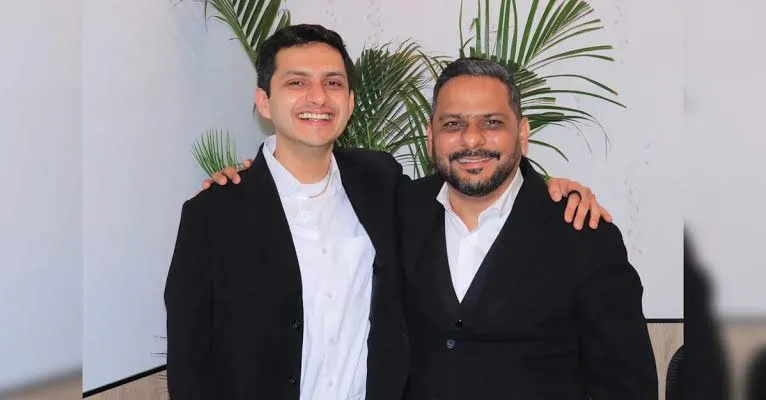
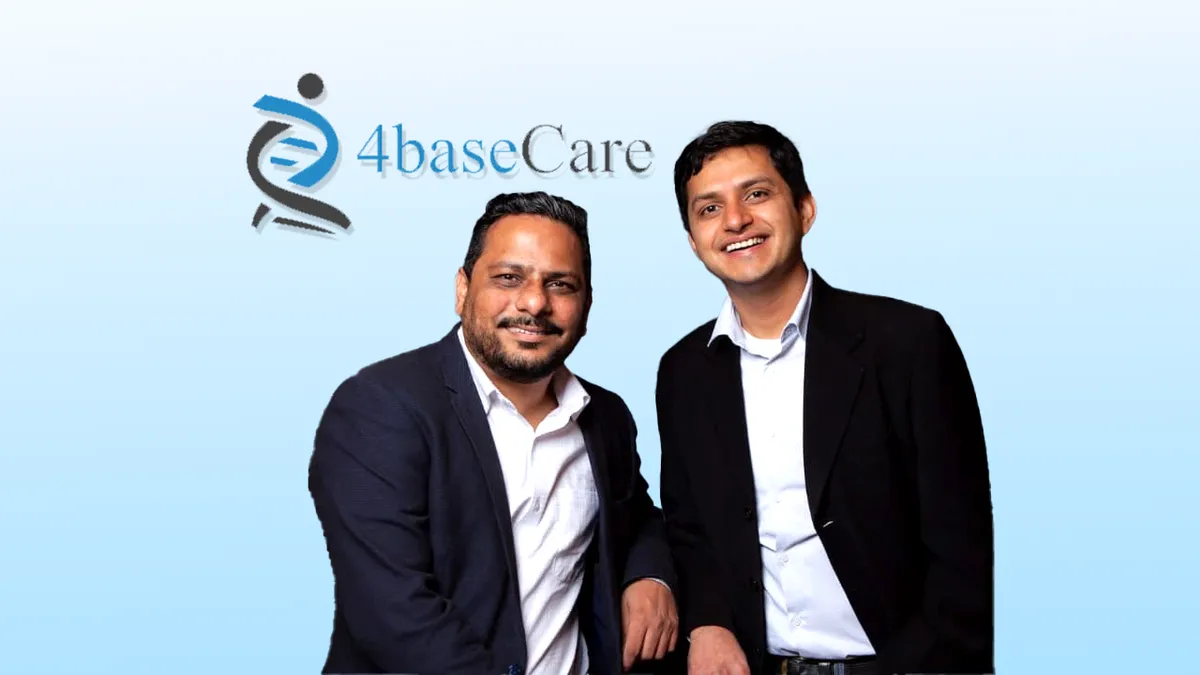
4baseCare was founded in Bengaluru in 2019 by Hitesh Goswami and Kshitij Rishi specifically to address this gap. The company's mission, as Goswami has articulated it consistently, is to make precision oncology more accessible, inclusive, and data-driven — and the "inclusive" dimension of that mission is the founding insight. You cannot make precision oncology truly useful for South Asian, Middle Eastern, Southeast Asian, and Latin American patients without building the genomic and clinical databases that represent those populations.
On June 11, 2026, 4baseCare closed its Series B round at ₹128 crore total, announcing a ₹38 crore extended close led by growX Ventures with participation from existing investors. This follows the ₹90 crore first close in January 2026, co-led by Ashish Kacholia and Lashit Sanghvi with participation from Yali Capital. The combined investor base — which also includes Infosys, the IT services giant whose name adds both institutional credibility and technology infrastructure access to the cap table — reflects conviction about both the scientific thesis and the commercial opportunity.
OncoTwin — the AI Platform at the Centre of the Strategy
4baseCare's flagship product is OncoTwin — an AI-powered precision oncology platform that enables oncologists to derive treatment insights from real-world clinico-genomic and outcomes-linked datasets.
The name reflects the platform's design philosophy. OncoTwin creates, in the company's framing, a digital twin of a cancer patient — a computational model built from the patient's genomic data, clinical data, imaging data, and blood test results that can be used to simulate likely treatment responses before a treatment is administered.
The OncoTwin-3D model, which 4baseCare presented at the American Association for Cancer Research (AACR) conference in 2026, combines CT scan data, blood test results, patient information, and genomic data to predict treatment responses in cancer patients. The AACR is one of the most significant scientific venues in oncology — presenting research there signals that the company's science has passed peer scrutiny from the global cancer research community.
The clinical validation story went further in 2025. OncoTwin was selected for the Memorial Sloan Kettering Cancer Center's Innovation Hub Challenge 2025 programme in New York — one of the world's most prestigious cancer centres — where it is undergoing further validation using global healthcare datasets. This is not a commercial partnership or a marketing arrangement. It is a scientific validation programme at the institution that most cancer researchers would identify as a global gold standard.
The platform's current capabilities include TARGT First for quick treatment decisions in time-sensitive clinical situations, TARGT Absolute for detailed comprehensive genomic analysis, and the SoLiQ portfolio that integrates multiple DNA testing modalities into a single report. Together, these products give an oncologist a structured, AI-assisted approach to the question of what to do next for this specific patient with this specific cancer.
The Laboratory Network — Building the Infrastructure for Non-Western Genomics
OncoTwin is a software platform. But it is a software platform that is only as good as the data it is trained on and the samples it analyses. The genomics laboratory network that 4baseCare is building is the physical infrastructure that makes the data and the analysis possible.
The company currently operates genomics laboratories in Bengaluru, Dubai, Nepal, and the Philippines. The Bengaluru facility — the flagship — was inaugurated by Infosys co-founder N. R. Narayana Murthy in May 2025, a public endorsement that carries the weight of one of India's most respected technology leaders validating the scientific and commercial ambition of a Bengaluru deeptech startup.
The Dubai laboratory, launched in October 2024 at Dubai Science Park in partnership with Innovate Life Sciences, received CAP accreditation in March 2025. CAP accreditation — from the College of American Pathologists — is the international quality standard for clinical laboratory testing that enables a laboratory to serve patients and healthcare providers at the same level as the most rigorous laboratories in the United States. A CAP-accredited laboratory in Dubai serving the Middle East creates a regional hub for 4baseCare's precision oncology services in a geography where cancer incidence is rising and genomic testing capacity is limited.
The Philippines laboratory is the country's first clinical genomics laboratory — another regional first that positions 4baseCare as the founding infrastructure of precision oncology in Southeast Asian markets rather than as a late entrant competing with established players.
The hospital-linked genomics laboratory model — placing lab infrastructure inside or adjacent to hospital networks — is the distribution strategy that gets genomic testing to oncologists and patients rather than requiring patients to navigate separate laboratory appointments. Hospital partnerships currently include AIIMS Jammu, Max Healthcare, and Shankara Hospital, with 25 new lab partnerships planned over the next 18 months.
The company conducts approximately 1,500 genomic tests per month and projects growth to 8,000 to 10,000 tests per month as the laboratory network expands.
The Population Gap — Why This Is the Right Problem to Solve
Ashish Taneja, Founder and CEO of growX Ventures and one of the extended Series B lead investors, articulated the investment thesis with a clarity that goes to the core of why 4baseCare exists.
One of the biggest gaps in precision oncology today, he said, is the underrepresentation of non-Caucasian populations in genomic datasets, which limits the relevance of clinical decision-making. 4baseCare is addressing this through genomics infrastructure, clinically contextualised data, and AI-driven intelligence.
The three components of that description — infrastructure, data, and intelligence — are precisely the three things that the ₹128 crore Series B is building. The laboratory network is the infrastructure. The clinical partnerships and patient data collected through those partnerships are the data. OncoTwin is the intelligence layer that converts data into the clinical decision support that oncologists actually need at the point of care.
The populations that 4baseCare is targeting — Indian, South Asian, Middle Eastern, Southeast Asian, Latin American, Central Asian — collectively represent the majority of the world's cancer patients and the minority of the world's cancer genomics data. The commercial opportunity that creates is proportional to the scientific gap: if you build the platform that fills the gap, you serve the majority of the market that current precision oncology tools underserve.
The Financial Trajectory and What ₹128 Crore Enables
4baseCare reported revenue of more than ₹35 crore in FY25 and is targeting ₹100 crore in revenue within the next 12 to 18 months — a nearly three-fold growth trajectory supported by the geographic expansion, the hospital network scale-up, and the increasing adoption of OncoTwin as a clinical decision support tool.
The ₹90 crore first close of the Series B in January 2026, followed by the ₹38 crore extended close in June 2026, reflects the investor community's willingness to back 4baseCare's expansion in tranches aligned with commercial milestone achievement. The full ₹128 crore Series B enables the company to plan its 8-to-10-country geographic expansion, fund 25 new hospital lab partnerships, and invest in the AI platform development that OncoTwin requires to maintain its scientific edge.
The LuNGS Alliance and pharmaceutical company collaborations represent a dimension of the business model that goes beyond genomic testing services — the use of 4baseCare's datasets and clinical intelligence as the basis for partnerships with pharmaceutical companies that need population-specific clinical data to understand how their drugs perform in non-Western patient populations.
Goswami's summary of the round's strategic importance captures the vision: the additional capital will help expand the genomics lab network globally and further scale OncoTwin to support clinicians with deeper, real-world, clinically actionable insights.
Real-world. Clinically actionable. Those words are the operational translation of the founding mission. The gap in precision oncology is not a shortage of clever algorithms. It is a shortage of real-world data from the populations that need precision oncology most — and 4baseCare is building the infrastructure to close it.


