25 Microseconds vs. 10⁴² Years: Inside China's Jiuzhang 4.0 — the Quantum Machine That Just Redrew the Map of Global Computing Power
HEFEI, China — May 18, 2026 — On May 13, 2026, the international journal Nature published a paper whose central claim was so extreme that it required a moment of cognitive recalibration. A team of Chinese scientists, led by quantum physicist Pan Jianwei at the University of Science and Technology of China, reported that their newest photonic quantum computer — Jiuzhang 4.0 — had completed a Gaussian boson sampling calculation in 25 microseconds. The same task, the researchers estimated, would require El Capitan, currently the world's most powerful classical supercomputer housed at Lawrence Livermore National Laboratory in California, more than 10⁴² years to finish. That is a trillion trillion trillion trillion years — a span of time roughly 10³² times longer than the current age of the universe.
The quantum advantage ratio — the factor by which the quantum machine outperforms the best classical alternative — is 10⁵⁴. The previous record, held by Jiuzhang 3.0 in 2023, was 10¹⁶. The leap from 10¹⁶ to 10⁵⁴ is not an incremental improvement. It is a chasm. It represents the largest single-generational jump in quantum computational advantage since the concept was first demonstrated, and it has reignited — with unusual intensity — the debate over whether the age of quantum supremacy has already arrived.
What Jiuzhang 4.0 Actually Is
To understand the magnitude of the achievement, it helps to understand what Jiuzhang 4.0 actually is — and what it is not.
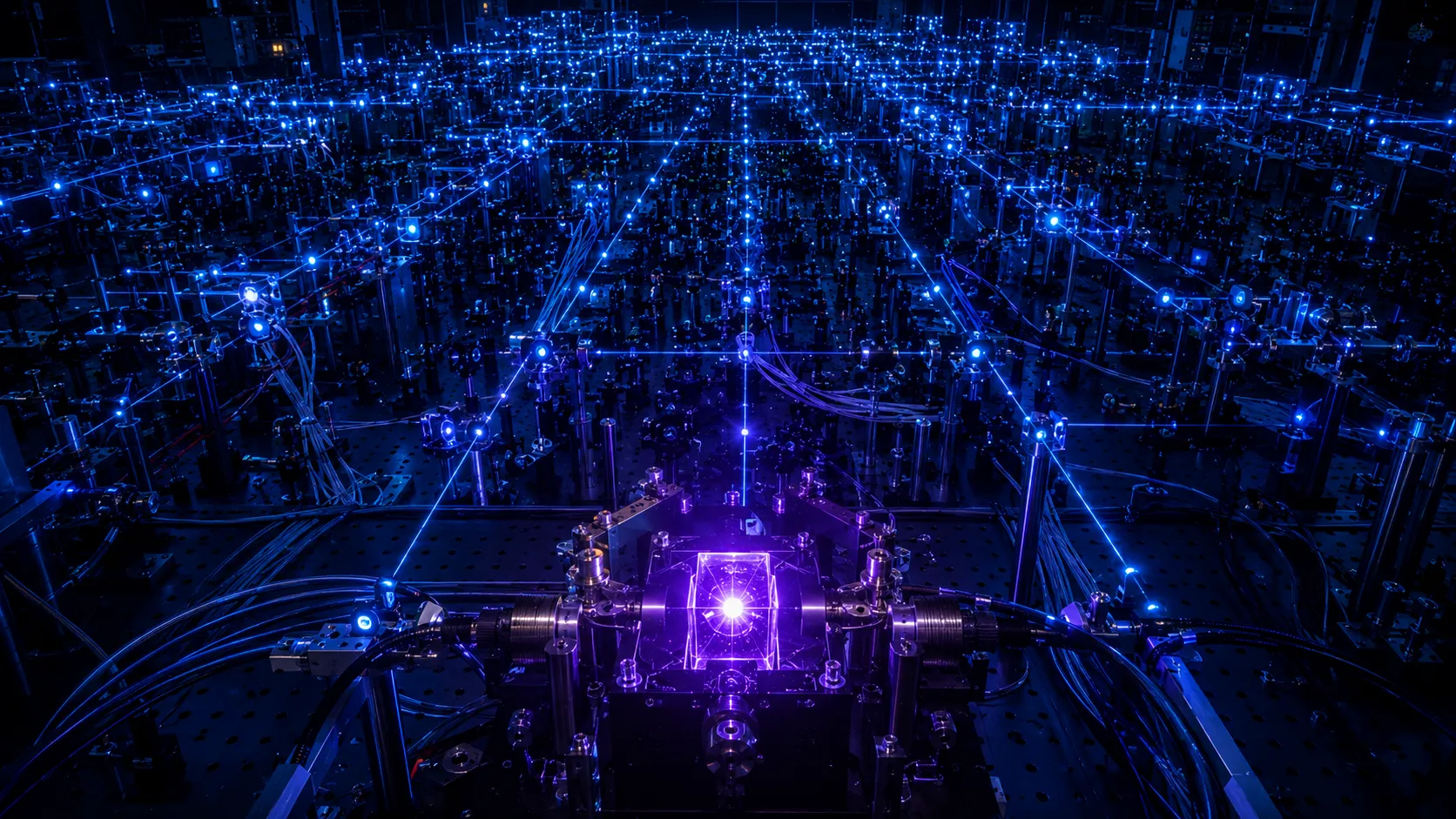
It is not a general‑purpose quantum computer. It cannot run Shor's algorithm to break RSA encryption. It cannot execute arbitrary quantum circuits. It is, in the language of the field, a noisy intermediate‑scale quantum device optimized for a single, highly specific task: Gaussian boson sampling. That task involves calculating the probability distribution of photons passing through a complex interferometric network — essentially, predicting where particles of light will emerge after navigating a maze of beam splitters and mirrors. It is a problem that is exponentially hard for classical computers and natively suited to photonic quantum systems.
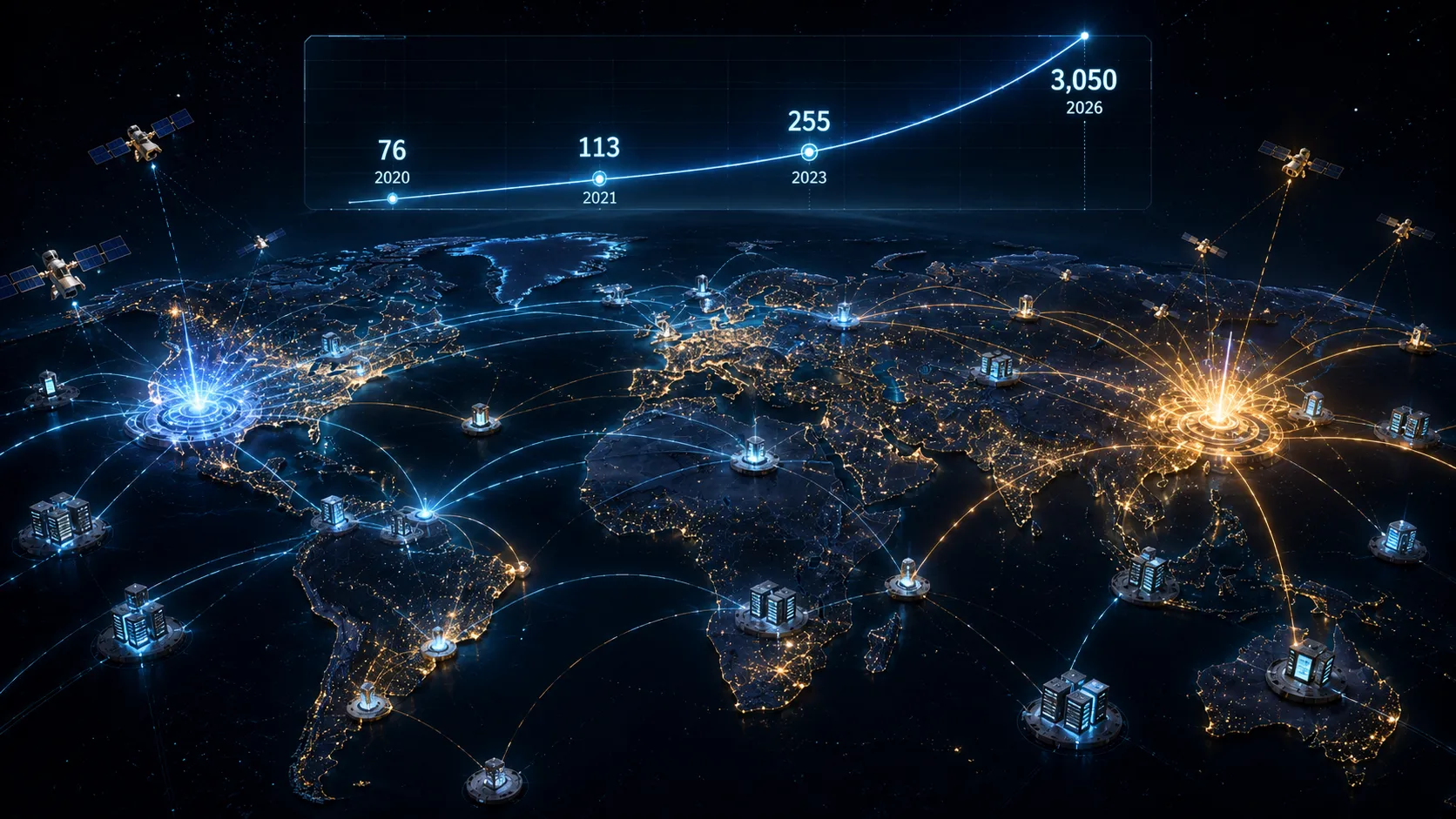
What separates Jiuzhang 4.0 from its predecessors — and from every other photonic quantum computer ever built — is scale. The system operates with 1,024 squeezed‑state inputs across an 8,176‑mode interferometric network. It can manipulate and detect up to 3,050 photons simultaneously — more than ten times the 255 photons achieved by Jiuzhang 3.0 in 2023, and more than 40 times the 76 photons of the original Jiuzhang machine that first demonstrated photonic quantum advantage in 2020. The processor represents, in Pan's words, "an order‑of‑magnitude increase in scale over previous demonstrations."
The technical breakthrough that enabled this leap was a new architecture the team calls "programmable spatiotemporal hybrid encoding." In previous photonic systems, expanding the network required adding more physical optical components — more beam splitters, more mirrors, more fiber segments — in a linear fashion that quickly became unwieldy. Each additional component introduced photon loss. Photons, being massless and nearly impossible to store, tend to leak out of large optical systems, and the cumulative loss degraded computational power faster than the additional components could increase it. This was the fundamental bottleneck of photonic quantum computing — the reason no one had pushed beyond a few hundred photons, and the reason many researchers believed the photonic approach would eventually hit a wall.
Jiuzhang 4.0 broke through that wall by encoding information in both space and time simultaneously. Instead of requiring a separate physical path for each mode, photons are made to interfere across time‑delayed loops as well as spatial pathways, effectively multiplying the network's connectivity without multiplying its physical footprint. "The spatiotemporal hybrid encoding achieves cubic expansion of connectivity," the team wrote, enabling the system to sample from a Hilbert space of 10²⁴⁶¹ dimensions. The source efficiency reached 92 percent, and the overall system efficiency — a measure of how many photons survive the journey through the entire apparatus — reached 51 percent, overcoming the loss bottleneck that had constrained all previous large‑scale photonic systems.
The Geopolitics of the Qubit
The Jiuzhang 4.0 announcement is not merely a scientific milestone. It is a geopolitical signal, and it has landed in an environment already thick with quantum competition.
China is now the only country to have demonstrated quantum computational advantage on two separate hardware platforms: photonic (the Jiuzhang series) and superconducting (the Zuchongzhi series, which achieved advantage in 2021 and has since been upgraded). The United States, through Google's Sycamore and Willow processors, has demonstrated advantage on superconducting qubits but has no comparable photonic program at this scale. Canada's Xanadu, which in 2022 became the second team globally to demonstrate photonic quantum advantage with its 216‑photon Borealis processor, remains well behind the Jiuzhang series in photon count and system scale.
The Nature paper's publication comes at a moment of intensifying U.S.‑China competition in advanced computing. The Trump‑Xi summit on May 15 — two days after the Nature publication — failed to produce any agreement on semiconductor or quantum technology controls. Chinese firms, facing ongoing U.S. export restrictions on advanced chips, are increasingly turning to domestic alternatives for AI and quantum computing hardware, targeting 60 percent growth in domestic chip deployment. The quantum computing race, unlike the AI chip race, is not primarily about access to advanced semiconductor fabrication. It is about fundamental physics, algorithmic innovation, and the engineering of systems that operate at the edge of what is physically possible. In that race, export controls are largely irrelevant — and China has been investing at a scale that few Western observers fully appreciate.
The country's 14th Five‑Year Plan identified quantum information science as a strategic priority. The National Laboratory for Quantum Information Sciences in Hefei, where much of the Jiuzhang work was conducted, has received billions in state funding. China leads the world in quantum communication patents and has deployed the longest terrestrial quantum key distribution networks. The Jiuzhang 4.0 result is not an isolated achievement. It is the latest data point in a sustained, well‑funded, multi‑decade national effort to achieve dominance in quantum information science.
Beyond Gaussian Boson Sampling
The most significant sentence in the Jiuzhang 4.0 paper may be one that has received relatively little attention in the initial wave of coverage. "Beyond foundational interest," Pan and his colleagues wrote, "this architecture also enables immediate applications in the noisy intermediate‑scale quantum era, such as image recognition and cryptographic one‑way functions."
The phrase "immediate applications" is notable because Gaussian boson sampling, while a powerful benchmark for demonstrating quantum advantage, has historically been viewed as a somewhat artificial problem — a proof of principle rather than a practical tool. The Jiuzhang 4.0 team is now suggesting that the same architecture can be turned toward real‑world tasks, even before the arrival of fault‑tolerant quantum error correction that remains years or decades away.
The USTC announcement also explicitly linked the achievement to the long‑term goal of building fault‑tolerant photonic quantum computers. The team noted that Gaussian boson sampling is not only a demonstration of quantum advantage but also a building block for generating the bosonic error‑correction codes and large‑scale entangled cluster states required for universal, fault‑tolerant quantum computation. The 8,176‑mode network, they suggested, is a step toward the "trillion‑mode three‑dimensional cluster states" that would be needed for a fully scalable photonic quantum computer.
In the nearer term, the researchers point to applications in image recognition — where the massive parallelism of the photonic system could be applied to pattern‑matching problems that are computationally expensive for classical processors — and in cryptography, where Gaussian boson sampling can be used to construct one‑way functions that are secure against both classical and quantum attacks. These are not theoretical possibilities. They are applications that the team explicitly named in the Nature paper and in the Chinese state media coverage that accompanied the announcement.
What This Means for the Global Quantum Race
The Jiuzhang 4.0 result does not settle the debate over which quantum computing hardware platform will ultimately prove scalable. Superconducting qubits, pursued by Google, IBM, and China's own Zuchongzhi series, have the advantage of fast gate speeds and a mature fabrication ecosystem borrowed from the semiconductor industry. Trapped ions, pursued by Honeywell and IonQ, offer the highest gate fidelities and the longest coherence times. Neutral atoms, pursued by QuEra and Atom Computing, are emerging as a dark horse with rapid scaling potential. Photonics, pursued by Xanadu and the Jiuzhang team, offers room‑temperature operation and natural compatibility with optical communication networks — advantages that become decisive if the goal is to build a quantum internet.
What the Jiuzhang 4.0 result does settle is that photonic quantum computing, which many Western researchers had written off as unscalable due to photon loss, is not only alive but advancing faster than any other platform by the raw metric of quantum advantage. The leap from 255 photons to 3,050 photons in a single generation — and from 10¹⁶ to 10⁵⁴ in quantum advantage ratio — is the kind of acceleration that rewrites roadmaps.
For the American technology industry, the message is clear. The quantum computing race is not a distant prospect. It is unfolding in real time, in laboratories in Hefei and Shanghai, and the gap between the United States and China in photonic quantum computing is not closing — it is widening. The CHIPS Act and the National Quantum Initiative have directed billions toward American quantum research, but the Jiuzhang 4.0 result suggests that the pace of progress in China has been underestimated.
The 25‑microsecond calculation that Jiuzhang 4.0 performed last month did not break any encryption. It did not discover a new drug or optimize a financial portfolio. What it did was demonstrate that the boundary between what quantum computers can do and what classical computers can even approximate has moved, in a single leap, farther than most physicists thought possible. The machine in Hefei is not yet a universal quantum computer. But it is the closest thing to one that has ever been built — and it was built in China, published in Nature, and announced to the world in the same week that the leaders of the two largest economies on Earth met to discuss, among other things, the future of technology competition. The quantum race has a new leader. The question is what the rest of the world intends to do about it.


