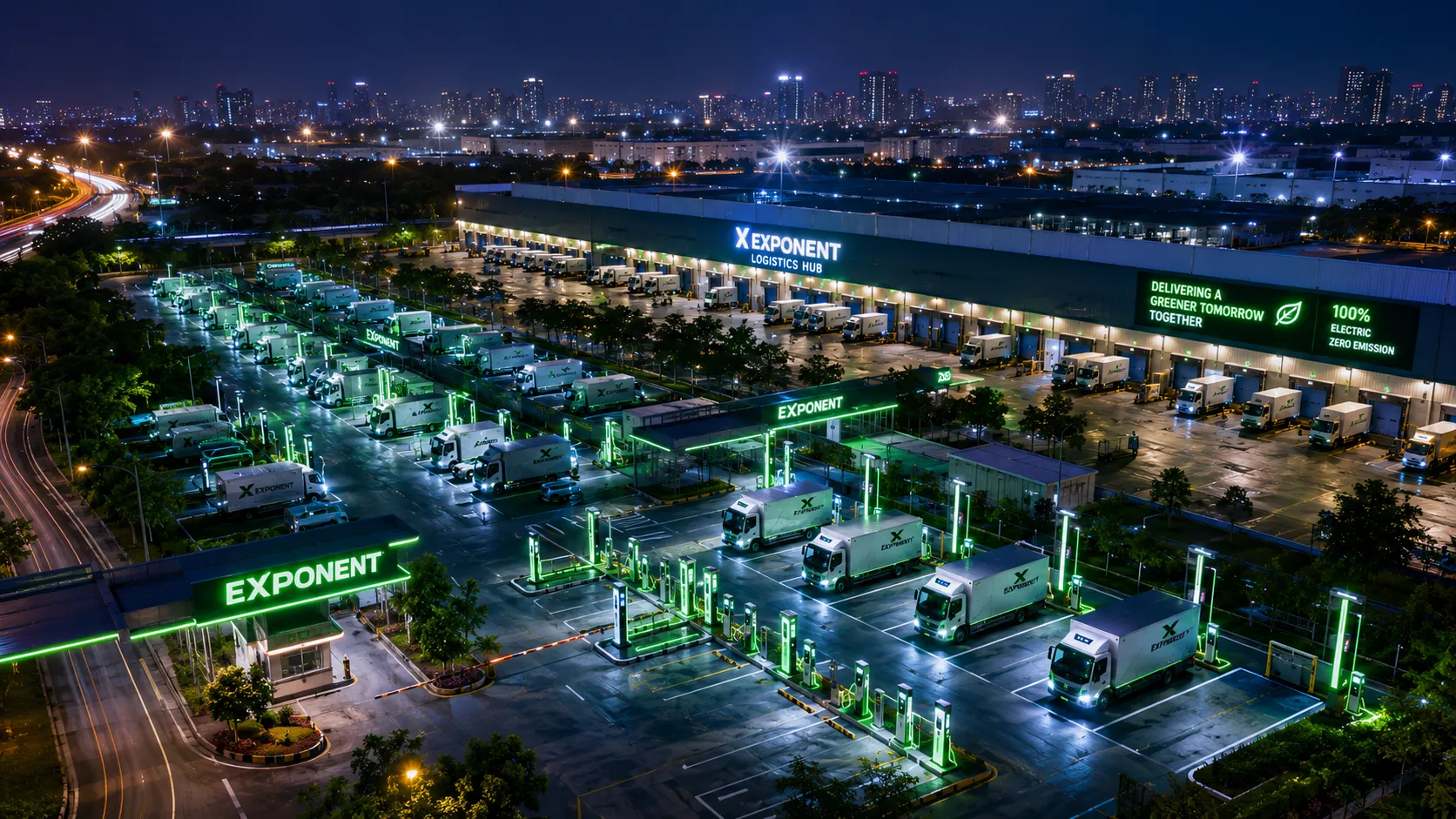
What if you could charge a fleet of electric trucks in the time it takes to drink a cup of chai? What if the total cost of owning an electric vehicle was already cheaper than a diesel guzzler—without a single government subsidy? And what if the world's most sophisticated investors—from Japanese industrial giants to global venture capital firms—were betting $21 million that this is exactly the future of Indian logistics? That's not a hypothetical. That's Exponent Energy. And it just proved that the era of diesel dominance in Indian commercial transport is running on borrowed time.
For decades, the math was simple. Diesel was cheap. Diesel was reliable. Diesel was everywhere. Electric vehicles were expensive, slow to charge, and plagued by range anxiety. For fleet operators moving goods across India's vast, chaotic roads, the choice was obvious: stick with diesel.
Not anymore.
On June 10, 2026, Exponent Energy—a Bengaluru-based energy technology startup founded in 2020 by former Ather Energy executives Arun Vinayak and Sanjay Byalal Jagannath—announced it had raised ₹200 crore ($21.1 million) in a funding round that reads like a who's who of global institutional capital. The round was co-led by 360 ONE Asset (marking its maiden investment in the EV sector) and TDK Ventures (an existing backer increasing its stake), with participation from Hitachi Ventures—making its first-ever investment in India's energy sector. Existing investors including Eight Roads Ventures, Lightspeed, 3one4 Capital, AdvantEdge VC, and YourNest (which invested an additional $4 million through its Continuum Fund) also participated. The six-year-old company has now raised a total of $65.7 million since inception.
But this isn't just another funding story. This is a story about the end of diesel.
The 15-Minute Revolution
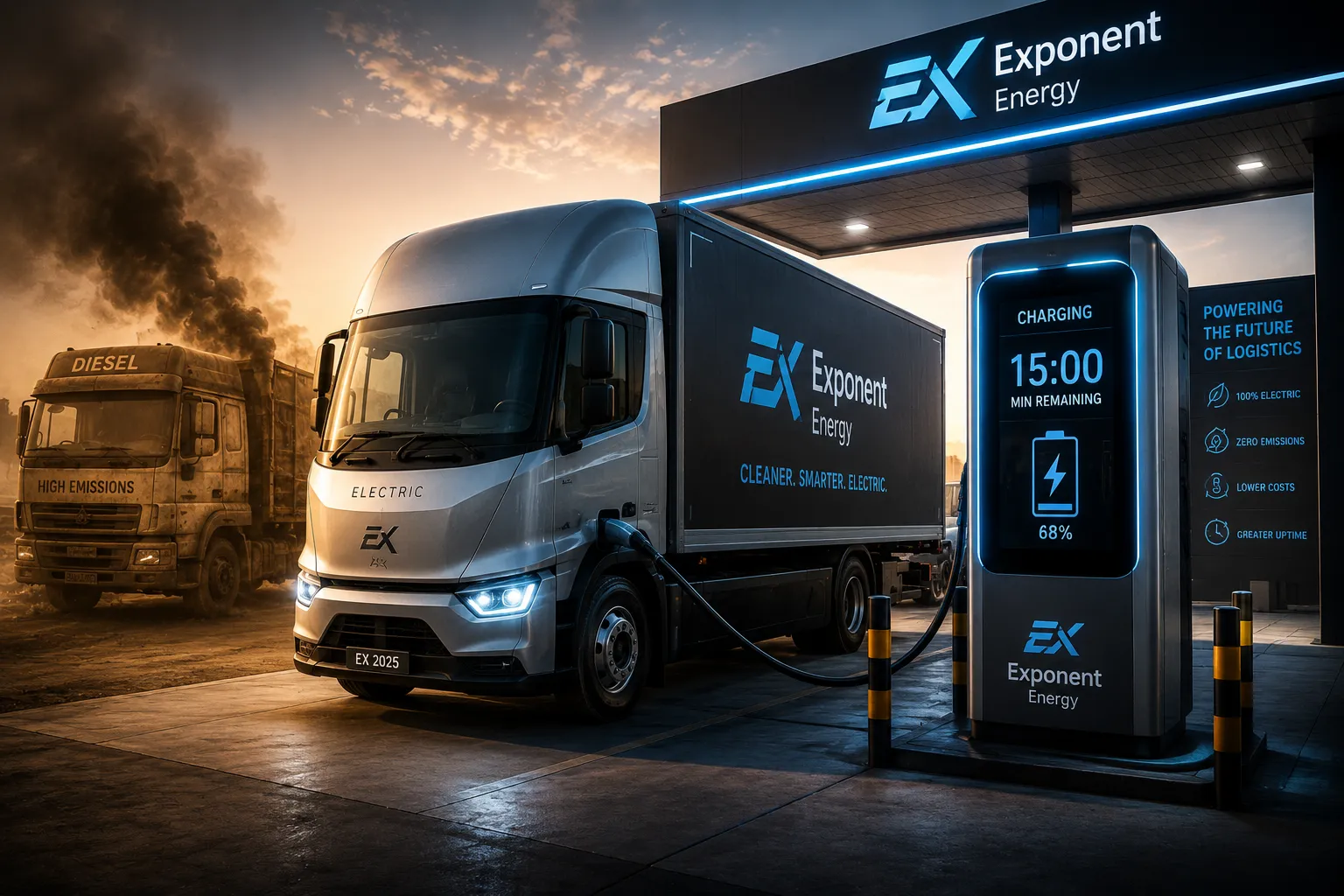
The core of Exponent's proposition is breathtakingly simple: charge an electric commercial vehicle in 15 minutes and deliver a battery life of up to 3,000 charging cycles. For a fleet operator, that means a truck can pull into a charging station, recharge during a mandatory driver break, and be back on the road with minimal downtime. No overnight parking. No range anxiety. No loss of revenue.
The company has already proven this isn't a lab concept. "Millions of charging sessions and three-plus years of field performance later, we have proven this isn't a lab concept—it's a road reality, at price points and reliability that matter," said Arun Vinayak, Founder and CEO of Exponent Energy. The company has expanded its technology stack from a 10 kWh three-wheeler battery pack to a 420 kWh bus battery pack, demonstrating its ability to scale across vehicle categories.
Currently operating about 200 charging stations across Bengaluru and Delhi, Exponent Energy is primarily focused on electric three-wheelers but is rapidly expanding into new vehicle segments. The fresh capital will accelerate expansion into new cities, support new commercial vehicle categories, and deepen investment in research and development.
The Full-Stack Approach
What sets Exponent apart from pure-play charging infrastructure companies is its integrated ecosystem approach. The company isn't just building chargers; it's building an entire energy platform.
Its offering combines three critical components:
The Energy Stack: Proprietary battery packs and rapid-charging stations designed specifically for commercial EVs.
The Mobility Platform: Exponent OTO, which connects fleet operators with charging infrastructure and provides real-time operational insights.
The Financing Arm: Exponent ONE, which provides vehicle retrofits and financing solutions for fleet operators—addressing the single biggest barrier to EV adoption: upfront capital costs.
This full-stack approach is deliberate. As Vinayak told Economic Times: "As transportation becomes electric, energy management itself becomes a technology-first problem. In petroleum, energy access is mostly an infrastructure problem. In EVs, electricity is already everywhere—in homes, offices and cities". The challenge isn't finding electricity; it's managing it intelligently. And that's exactly what Exponent is built to do.
The Economics of Impact
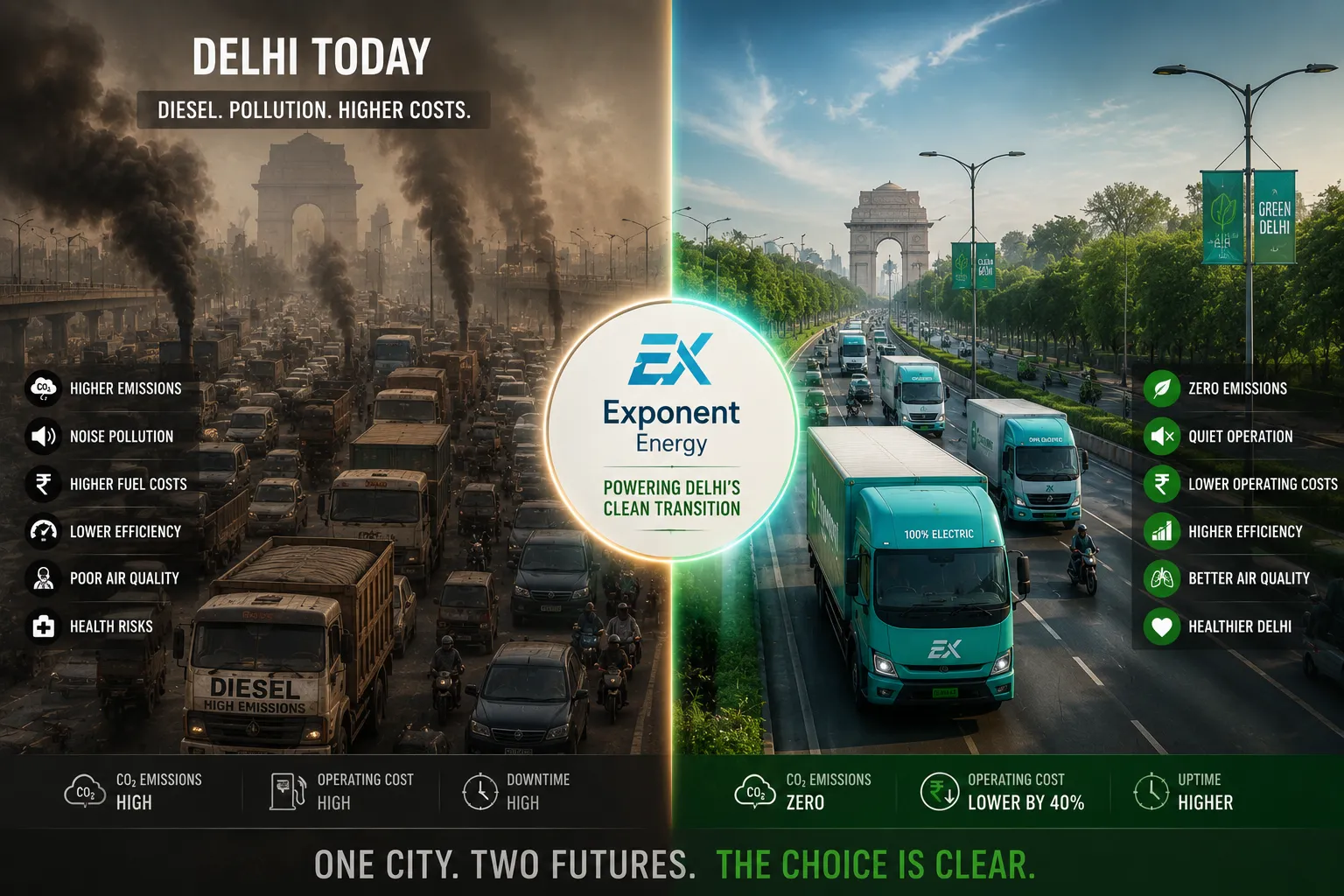
The social impact of Exponent's model is quantifiable and immediate. For fleet operators in metro cities, expanding charging networks means up to 40% lower operating costs on EVs compared to diesel fleets. The total cost of ownership (TCO) advantage is so compelling that Sumit Jain, Head of Venture Growth Investments at 360 ONE Asset, described it as "the incredible TCO advantage offered by the EV paradigm".
This isn't charity. This is better business.
For India's logistics sector—a sprawling, fragmented industry that moves goods across 3.3 million square kilometers—the implications are staggering. Diesel trucks are responsible for a disproportionate share of urban air pollution, particularly in cities like Delhi, Mumbai, and Bengaluru. The World Health Organization consistently ranks Indian cities among the most polluted globally, with transportation emissions being a primary contributor.
Every diesel truck that shifts to electric is a direct reduction in particulate matter, nitrogen oxides, and carbon emissions. And every fleet operator that saves 40% on operating costs can reinvest those savings into their business, hire more drivers, and expand their operations.
Hitachi Ventures' Tobias Jahn captured the investment thesis perfectly: "Exponent sells fleet uptime and energy charging—their complete battery and charging stack is what guarantees that promise. That full-stack proprietary solution is what builds the moat, and the recurring revenue flywheel from here is what makes this a genuinely exciting EV charging investment".
The Policy Backdrop
Exponent's funding comes at a pivotal moment for India's EV ecosystem. The government has approved proposals worth ₹503.86 crore for installing 4,874 EV chargers across the country under the PM E-DRIVE scheme. The scheme has a total outlay of ₹10,900 crore for promoting electric mobility across multiple segments. Tamil Nadu alone has been allocated ₹34.6 crore for 498 new charging points.
But the transition isn't without friction. Transporters are being asked to replace ₹35–45 lakh diesel trucks with electric vehicles costing up to ₹1 crore, while customers negotiate freight contracts largely on lowest cost. The PM E-DRIVE scheme has seen only three electric truck approvals so far, highlighting the gap between ambition and reality.
This is precisely where Exponent's model bridges the gap. By offering financing solutions through Exponent ONE, the company directly addresses the upfront cost barrier. By delivering 15-minute charging, it addresses the operational feasibility barrier. By building an integrated platform, it addresses the fragmentation that has historically plagued India's EV ecosystem.
The Road Ahead
Documents filed with the corporate affairs ministry suggest a valuation of ₹1,200–1,300 crore after this round. But for Vinayak and his team, valuation is secondary to mission. The company's ambition extends well beyond charging to becoming the "Energy Partner" for OEMs in India.
"The first five years were about building the core technology and proving that rapid charging works reliably," Vinayak said. "Exponent 2.0 is about leveraging that foundation to build a category-defining energy company for electric mobility. With this capital, we are well-positioned to expand our footprint, enter new segments, and accelerate the transition to commercial EVs across India".
The goal is to power millions of commercial vehicles across India and make electric the better energy choice—"one that is more rapid, reliable, and affordable than petroleum".
A Model for the Future
Exponent Energy represents something larger than a single funding round. It represents a new model for climate-tech investment in India—one where social impact and commercial returns are not competing priorities but complementary forces.
The company is building the energy backbone for India's commercial EV transition. It is helping fleet operators shift off diesel, reducing urban air pollution, and lowering operating costs. It is creating jobs, fostering innovation, and positioning India as a global leader in the transition to electric mobility.
The investors who backed this round aren't philanthropists. They are sophisticated financial institutions—360 ONE Asset, TDK Ventures, Hitachi Ventures—that see a clear path to returns. They are betting that the future of Indian logistics is electric, and that Exponent Energy is the company best positioned to build that future.
If they are right—and the evidence suggests they are—then the era of diesel dominance in Indian commercial transport is not just ending. It's being replaced by something faster, cleaner, and more profitable.
And it charges in 15 minutes.


