
SEO Title: Over 1 Lakh Indian Startups Have Women Directors: DPIIT Data And Funding Breakdown
Meta Description: Government data shows 1,02,054 of India's 2,12,283 recognised startups have at least one woman director or partner, with ₹2,995 crore in AIF funding for women-led ventures.
---
Numbers presented in Parliament rarely capture headlines the way a splashy funding round or a celebrity founder profile might, but the data Commerce and Industry Minister of State Jitin Prasada shared with the Lok Sabha this year offers something arguably more consequential for understanding the actual state of gender representation in Indian entrepreneurship: a systematic, government-verified accounting of exactly how many of the country's officially recognised startups include women in genuine leadership positions, rather than the more impressionistic, headline-driven narratives that typically dominate coverage of women in Indian business.
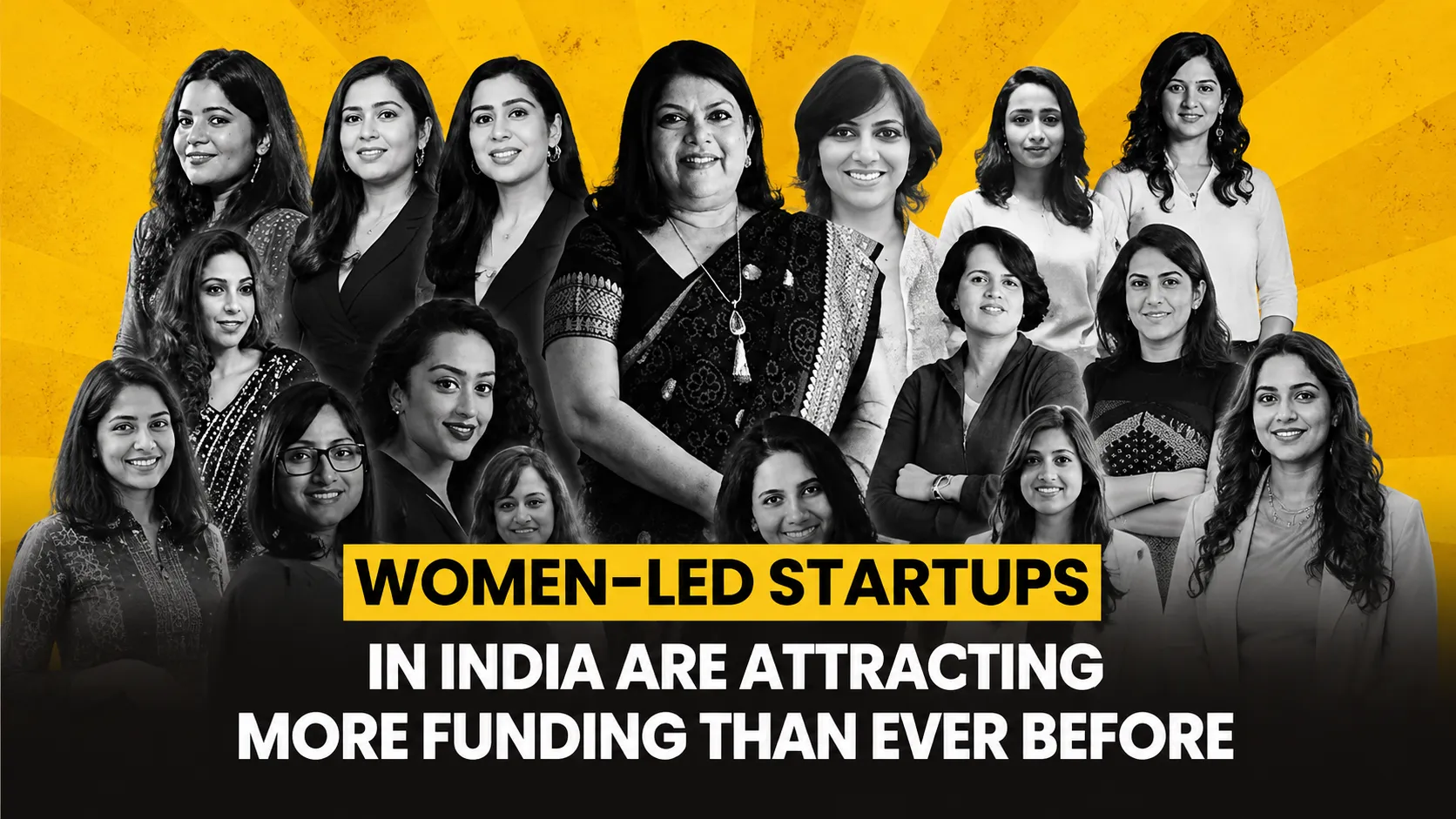
More than one lakh startups in India have at least one woman director or partner, according to data shared in Parliament by the Minister of State for Commerce and Industry. As of January 31, 2026, a total of 2,12,283 entities had been recognised as startups by the Department for Promotion of Industry and Internal Trade (DPIIT). Of these, 1,02,054 startups — just under half of the entire recognised startup ecosystem — have at least one woman director or partner. Figures of this granularity, verified through official government channels rather than industry self-reporting, are relatively rare in public discourse about Indian entrepreneurship, making this disclosure a genuinely useful reference point for researchers and policymakers alike.
What "Recognition" Actually Means, And Why The Distinction Matters
To properly interpret this data, it is worth understanding what DPIIT recognition specifically represents. The Startup India initiative, launched in January 2016, established a formal recognition process through which qualifying young companies — meeting specific criteria around incorporation age, revenue thresholds, and innovation or scalability characteristics — can register with DPIIT to access a defined set of government benefits, including tax exemptions, easier compliance processes, and eligibility for various government-backed funding schemes. This recognition framework provides a genuinely useful, standardised dataset for tracking Indian entrepreneurship trends precisely because it captures a consistent, officially verified universe of companies, rather than relying on the more informal, self-reported "startup" labelling that characterises much less rigorous private-sector startup ecosystem data and reporting.
That said, DPIIT recognition also captures a specific, somewhat narrower slice of India's total entrepreneurial activity than the phrase "startup" might suggest to a general audience — it excludes the vast universe of traditional micro, small and medium enterprises that do not meet DPIIT's specific innovation and scalability recognition criteria, meaning this data should be read as describing India's formally recognised innovation-economy startup ecosystem specifically, rather than female entrepreneurship across the Indian economy as a whole, which extends considerably further into more traditional small business ownership.
The Institutional Funding Numbers Behind The Headline Figure
Beyond the headline count of startups with women in leadership, the government data provides useful visibility into the scale of institutional capital specifically flowing toward women-led ventures through India's various government-backed funding mechanisms. The Fund of Funds for Startups, operationalised by the Small Industries Development Bank of India (SIDBI), is designed to catalyse venture capital investment by channelling government capital through SEBI-registered Alternative Investment Funds (AIFs), which then make the actual investment decisions into individual startups. As of January 31, 2026, these AIFs backed by the Fund of Funds had invested approximately ₹25,859 crore into startups overall, of which approximately ₹2,995 crore — roughly 11.6% of the total — had flowed specifically into women-led ventures since the scheme's inception in 2020.
Separately, under the Startup India Seed Fund Scheme, implemented from April 2021 to provide earlier-stage capital than the Fund of Funds structure typically reaches, incubators have approved funding of around ₹592 crore to startups overall, with nearly ₹294 crore of that — very close to half of total seed fund disbursements — allocated specifically to women-led startups. That comparatively higher proportional allocation at the seed stage relative to the later-stage AIF funding suggests India's earliest-stage government funding mechanisms may be somewhat more effective at reaching women-led ventures than the later-stage venture capital ecosystem the Fund of Funds channels capital through — though drawing firm conclusions from this comparison would require more granular data than currently available in the public Parliament disclosure.
Startup Attrition: Women-Led Ventures And Company Closures
The government data also sheds light on a less frequently discussed dimension of the startup ecosystem: company closures. Data from the Ministry of Corporate Affairs shows that 6,789 recognised startups have been categorised as closed — dissolved or struck off — as of the reporting period. Among these closed entities, 2,950 had at least one woman director or partner, representing roughly 43.5% of all closed startups — a proportion reasonably close to, though modestly below, the 48% share of women-led ventures among the total recognised startup population, suggesting women-led startups have not experienced a dramatically disproportionate closure rate relative to their overall representation in the ecosystem, though the data does not allow for more granular analysis of whether closure rates vary meaningfully by sector, funding stage, or other characteristics that might reveal more nuanced patterns beneath this aggregate comparison.
Reading This Data Against Other Available Estimates
This Parliament-sourced government data is worth situating against other, independently compiled estimates of women's participation in Indian entrepreneurship, which sometimes present a somewhat different picture depending on methodology and definitional scope. Separate industry analysis has estimated that India is home to more than 7,000 active women-led startups specifically — defined more narrowly than DPIIT's "at least one woman director or partner" criteria, likely requiring majority women ownership or founder-level leadership rather than simply board representation — accounting for roughly 7.5% of the country's total startup base by that narrower definition, with these ventures having collectively raised over $26 billion in cumulative funding.
The apparent discrepancy between that considerably lower 7,000-startup, 7.5%-of-total figure and the government's much larger 1,02,054-startup, roughly-48%-of-total figure is not necessarily contradictory — it likely reflects the different thresholds each dataset applies for counting a startup as "women-led." The government's "at least one woman director or partner" standard is a considerably lower bar than requiring majority women ownership or founder-level control, meaning a very large number of startups with predominantly male founding teams but at least one woman on the board or in a partnership role would count toward the government's larger figure, while being excluded from narrower "women-led" classifications used by some industry trackers. Both figures carry genuine value for understanding different dimensions of the same underlying question — board and leadership diversity broadly, versus founder-level women's entrepreneurship specifically — but should not be casually conflated or compared without acknowledging this definitional difference.