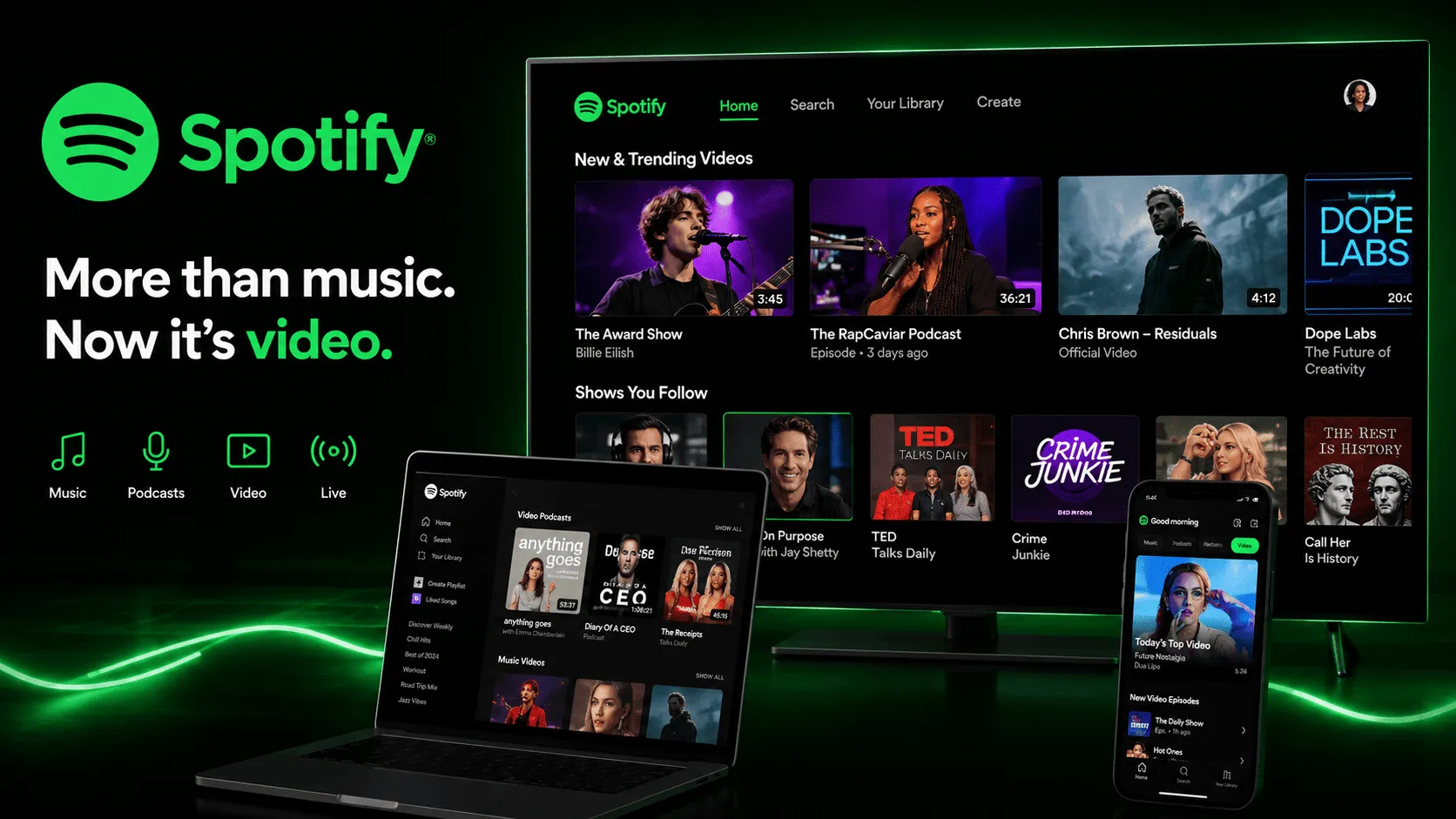
Music Made Spotify A Global Giant. Video May Define Its Next Decade Of Growth.
For most people, Spotify is still a music company.
The platform transformed how the world consumes music by replacing ownership with access. Instead of purchasing albums or downloading songs, users gained access to millions of tracks through a subscription. The model reshaped the economics of music streaming and helped establish Spotify as one of the most recognizable technology brands in the world. Yet while the company continues to be associated primarily with music, its long-term strategy is increasingly moving in a different direction. Behind the scenes, Spotify is gradually evolving into something much broader than a streaming service for songs.
The shift has been years in the making.
Podcasts were the first major signal. Spotify spent billions acquiring podcast companies, signing exclusive content deals and building infrastructure designed specifically for creators. At the time, many observers viewed podcasts as a natural extension of audio. What seemed less obvious was that Spotify's ambitions extended beyond sound alone. The company was quietly laying the foundation for a larger creator platform where music, podcasts, video and audience engagement could eventually coexist within a single ecosystem.
Today, that vision is becoming increasingly visible.
Video content is occupying a larger role on the platform, creator tools continue expanding and Spotify is positioning itself as a destination for audiences rather than simply a place to listen to songs.
The Problem With Being Only A Music Company
Despite its scale, music streaming has always been a challenging business.
Consumers love music, but the economics of music streaming are often more complicated than they appear. Platforms must pay substantial licensing fees to rights holders, labels and artists. Competition remains intense, with Apple Music, YouTube Music and Amazon Music all competing for subscribers. While Spotify successfully built one of the world's largest audio audiences, maintaining strong profitability within the music business alone has never been straightforward.
This reality encouraged management to think beyond songs.
The company recognized that relying exclusively on music created limitations. Every stream generated costs. Margins remained constrained. Differentiation became increasingly difficult because competing services often offered similar music catalogs. To create a stronger business, Spotify needed categories where it could exercise greater control over content, monetization and user relationships.
Podcasts offered that opportunity.
Unlike licensed music, podcasts allowed Spotify to develop original content, own distribution relationships and create new advertising inventory. More importantly, podcasts introduced Spotify to the creator economy, a sector that was becoming increasingly influential across digital media.
The move into video represents the next logical step.
The Creator Economy Is Becoming Too Big To Ignore
One of the most significant trends shaping media is the rise of individual creators.
For decades, entertainment was dominated by institutions such as television networks, film studios and record labels. Today, individual creators often command audiences comparable to traditional media companies. YouTubers, podcasters and digital personalities attract millions of followers while generating substantial advertising and subscription revenue. The creator economy has evolved from a niche segment into a major force within global media.
Spotify increasingly wants to participate in that growth.
The company understands that audiences are often more loyal to creators than platforms. People follow personalities across multiple channels because they value relationships and content rather than the technology delivering it. As a result, attracting creators has become one of the most important competitive battles in digital media.
Video strengthens Spotify's position in this contest.
Many creators already produce both audio and visual content. Podcasters film interviews. Influencers publish videos alongside audio clips. Educational creators blend discussion with visual explanations. By supporting video, Spotify becomes more useful to creators who previously relied heavily on platforms such as YouTube.
The strategy is not simply about adding a feature.
It is about becoming a more comprehensive creator destination.
Why YouTube Is The Real Competitor
When people think about Spotify's competitors, they often focus on music services.
Apple Music, Amazon Music and other streaming platforms certainly matter. Yet Spotify's long-term strategic challenge increasingly comes from YouTube. The Google-owned platform dominates creator-driven media, combining video, advertising, discovery and audience engagement within a single ecosystem. For many creators, YouTube serves as both a distribution platform and a business model.
Spotify sees an opportunity to challenge part of that dominance.
Podcasting provided an entry point because many creators wanted alternatives to traditional video-first platforms. As Spotify expanded podcast capabilities, it gradually developed tools supporting broader forms of creator content. Video is a continuation of this effort because it enables the company to compete for audiences who increasingly consume content across multiple formats.
The battle extends beyond entertainment.
Advertising dollars increasingly follow creator engagement. Brands want access to loyal communities rather than generic audiences. Platforms capable of attracting creators therefore gain valuable monetization opportunities. Spotify's investment in video reflects recognition that future growth may depend as much on creator relationships as on music subscriptions.
This is why the company's evolution matters.The competition is no longer solely about streaming songs.It is increasingly about owning attention.
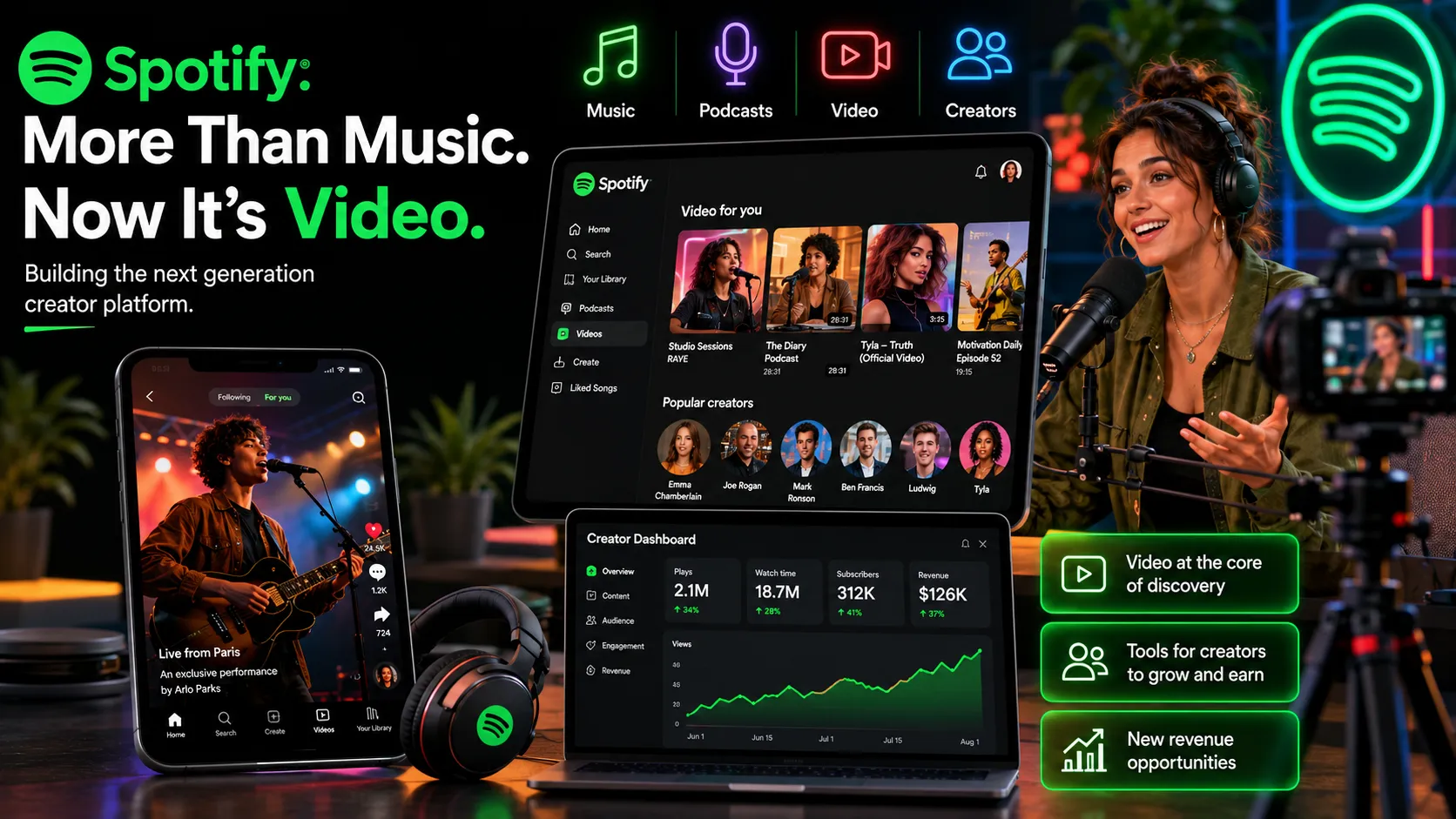
The Economics Of Video Look Attractive
Video also offers compelling business advantages.
Consumers spend enormous amounts of time watching content online. Advertisers value video because it supports richer storytelling and often generates higher engagement than many other formats. Successful video ecosystems can therefore create revenue opportunities extending far beyond subscription fees.
Spotify understands this dynamic.
The company has spent years building advertising infrastructure around podcasts and digital audio. Video expands the inventory available to advertisers while creating additional ways for creators to monetize their audiences. More content formats generally translate into more commercial opportunities.
The economics become particularly attractive when viewed through the lens of creator-generated content.
Rather than financing every piece of content internally, Spotify can benefit from creators producing material independently. This model resembles the strategies that helped platforms such as YouTube scale rapidly. As more creators join, content volume increases, audience engagement expands and monetization opportunities grow.
Video therefore strengthens multiple parts of Spotify's business simultaneously.
It supports creators, attracts users and expands revenue potential.
A Company In The Middle Of Reinvention
The most interesting aspect of Spotify's transformation is that it is occurring gradually.
Unlike dramatic corporate pivots, the company is not abandoning music. Music remains the foundation of the platform and will likely continue serving as its largest category for years. Instead, Spotify is expanding around that foundation, building additional layers designed to increase engagement and diversify revenue.
This approach reduces risk.
The company retains its core identity while simultaneously exploring new opportunities. Users still arrive for music, but they increasingly encounter podcasts, creator content and video experiences. Over time, these categories may become larger components of the overall platform.
The strategy mirrors how many successful technology companies evolve.
They begin by solving a specific problem before gradually expanding into adjacent markets where existing audiences create new opportunities. Spotify started with music. Today it is becoming something closer to a media ecosystem.
The Future May Look Very Different
Spotify's long-term ambitions are becoming increasingly clear.
The company does not simply want to be the place where people listen to music. It wants to be a platform where creators build audiences, publish content and generate revenue across multiple formats. Music remains central to that vision, but it is no longer the entire story.
That is why the rise of video deserves attention.
The development is not merely about podcasts adding cameras or creators uploading clips. It represents a strategic shift toward a broader media model capable of competing in a world where audiences move seamlessly between audio, video and interactive content.For years, Spotify was defined by what people listened to.The next chapter may be defined by what they watch.And if that transition succeeds, Spotify could eventually look less like a music service and more like one of the most influential creator platforms in digital media.