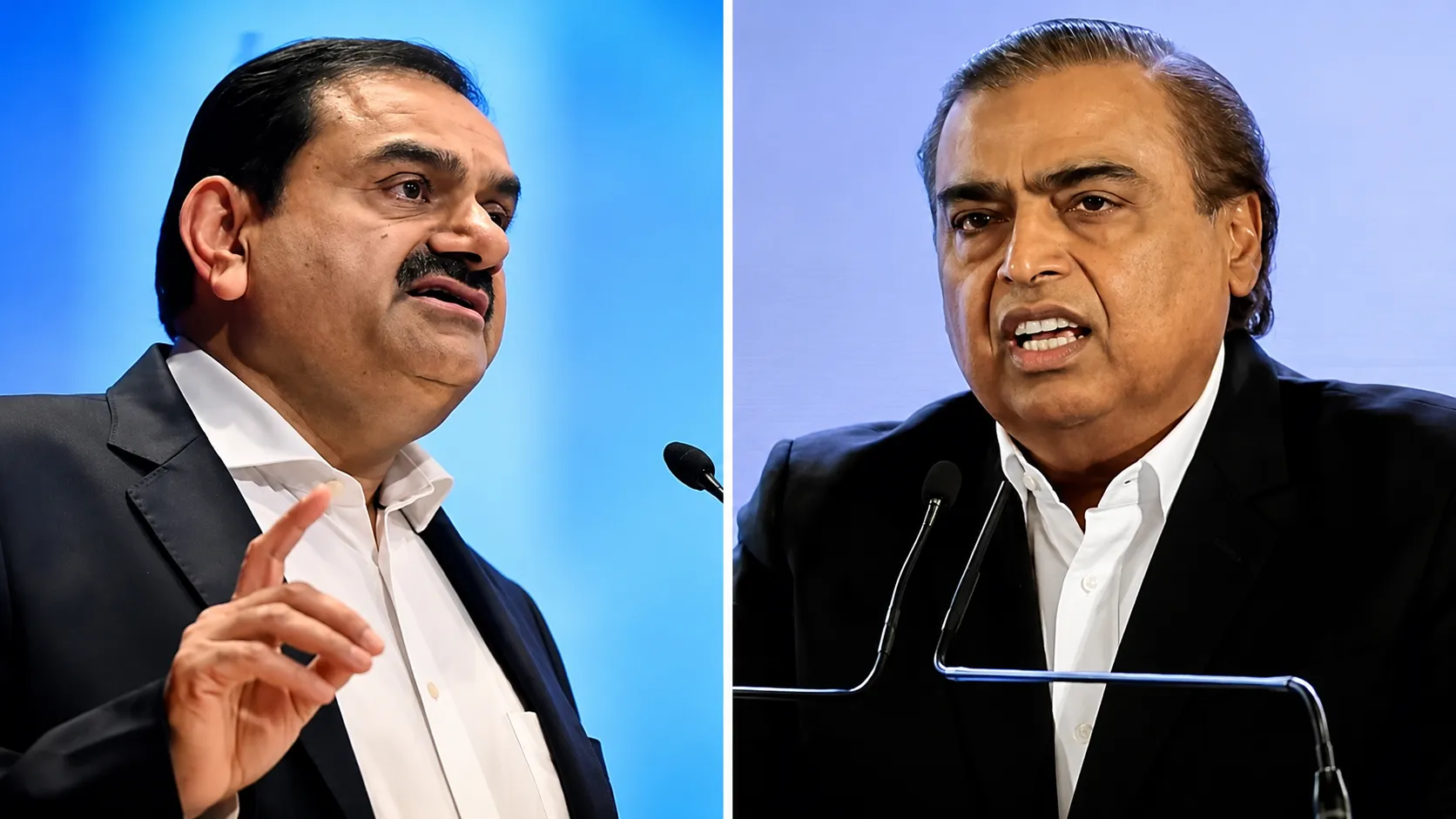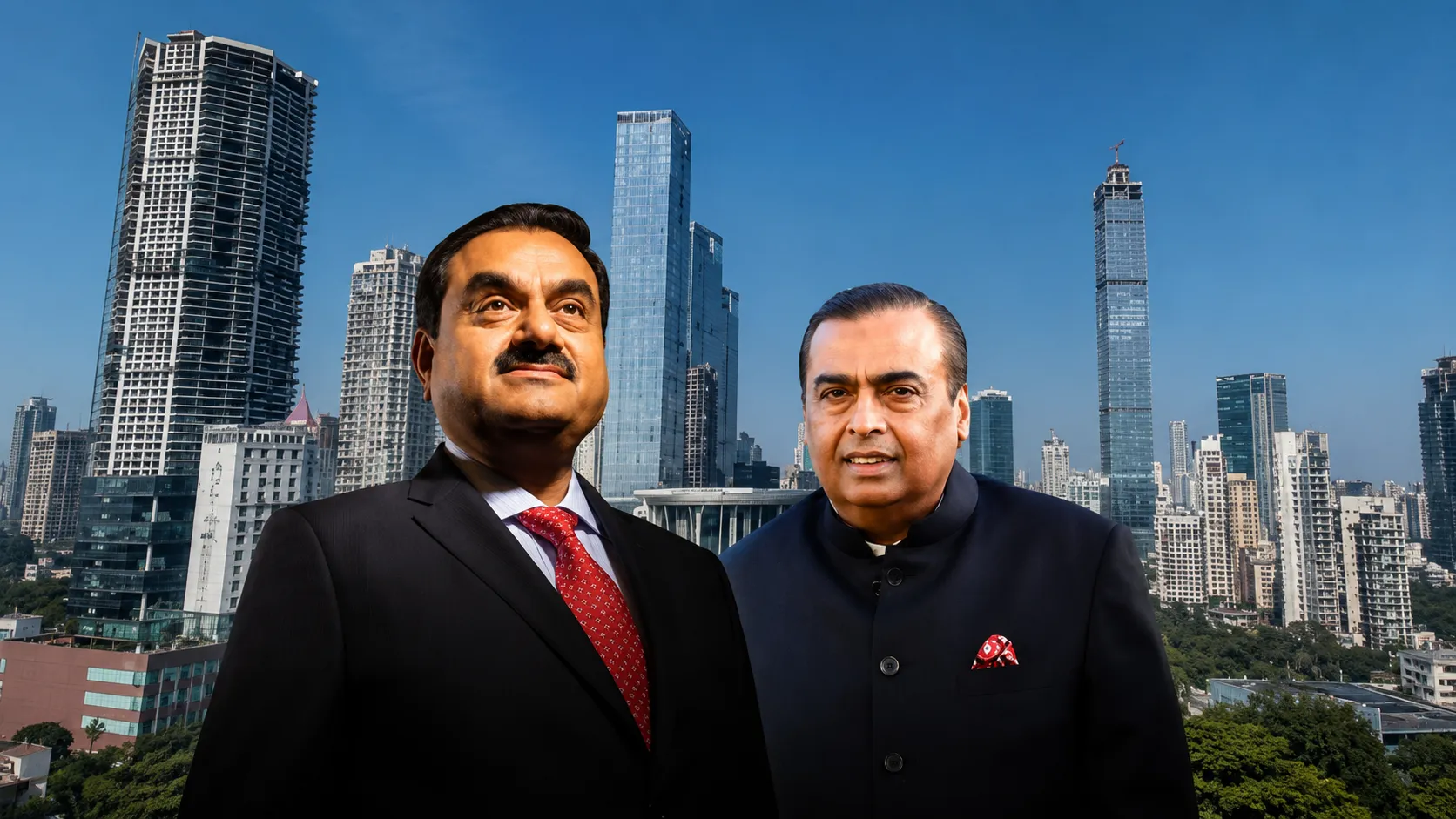
In the long and storied history of Indian capitalism, there have been periods of extraordinary private enterprise — the Tatas building steel plants in Jamshedpur, Dhirubhai Ambani conjuring a petrochemical empire from nothing, the liberalisation era unleashing a new generation of entrepreneurs. But what is happening today, in 2026, with Gautam Adani and Mukesh Ambani, is something qualitatively different. It is not just large — it is structurally transformative. Two men, two companies, and a combined investment of ₹3.2 lakh crore in a single financial year. That is approximately 28% of all private capital expenditure in India. No other pair of promoters in Indian history — and arguably in the history of any major economy — has exercised this degree of concentrated investment influence.
For the readers of theimpactfulglobalindian.com, this is the defining business story of our era. What Adani and Ambani decide to build, where they decide to invest, and how they choose to finance it will shape India's infrastructure, energy landscape, digital economy, and global positioning for the next two to three decades. This is not hyperbole. This is the arithmetic of ambition at civilisational scale.
The Numbers: Putting ₹3.2 Lakh Crore in Context
Gautam Adani, Chairman of the Adani Group, disclosed at his group's 34th Annual General Meeting that his companies deployed ₹1.53 lakh crore in new investment in FY26 — which he claimed represented more than 30% of India's total new private capex for the year. The actual audited capex figure across Adani Group operating companies is even higher, at approximately ₹1.76 lakh crore, when all subsidiaries and special purpose vehicles are accounted for.
Mukesh Ambani, Chairman and Managing Director of Reliance Industries Limited (RIL), made a parallel statement at his company's 49th Annual General Meeting: Reliance had contributed almost a third of the capital invested by India's top 50 listed companies over a five-year period. RIL's FY26 capex came in at approximately ₹1.44 lakh crore, making it the second-largest private capital spender in India — and the most diversified, spanning energy, retail, digital services, media, and now AI infrastructure.
Together, ₹1.76 lakh crore (Adani) plus ₹1.44 lakh crore (Ambani) equals ₹3.2 lakh crore — against the National Statistical Office's estimate of approximately ₹11.44 lakh crore in total private capex for FY26. The two conglomerates, driven by their respective founder-promoters, thus account for nearly 28 paise of every rupee of private investment in India. This is a concentration of capital deployment unprecedented in India's post-independence economic history.

The AI Race: Gigawatts, GPUs and the Battle for India's Digital Future
Perhaps the most significant convergence between the two groups is in Artificial Intelligence infrastructure. Both Adani and Ambani have made enormous, binding commitments to building AI data centres in India — and both have secured partnerships with global technology titans to anchor these facilities.
Adani's data centre business, operated through AdaniConnex — a joint venture between Adani Group and US-based EdgeConneX — is on track for a 3 GW platform by 2030. The anchor commitment is a binding deal with Google for a gigawatt-scale AI data centre hub in Visakhapatnam, Andhra Pradesh. The $15 billion Adani-Google joint investment in this facility represents one of the largest single AI infrastructure investments in Asia. Adani's group has also incorporated two nuclear vehicles in April 2026 with token capital, positioning itself for readiness under India's SHANTI small reactor framework.
Reliance, through its Jamnagar campus in Gujarat, has committed $110 billion over seven years to AI and data centres — a number so large it requires a moment of reflection. By the end of 2026, Reliance will have 120 MW of AI data centre capacity live at Jamnagar, with ambitions for more than 200,000 high-end GPUs on its infrastructure stack. Both Meta and Google are on Reliance's AI infrastructure stack — making Jamnagar not just an energy refinery but the emerging nerve centre of India's AI economy.
Energy Strategy: Where the Two Visions Diverge
While Adani and Ambani converge on AI, their energy strategies reveal fundamentally different visions for India's power future — and both visions have profound implications for the country's energy security, industrial competitiveness, and climate commitments.
Adani's 45 GW power expansion plan is anchored in a $20–22 billion thermal investment running to FY32. This is a deliberately pragmatic bet: coal and gas remain the most reliable baseload power sources for a country that still faces significant industrial power demand gaps. Adani Power has re-levered to 2.3 times net debt to EBITDA as its thermal programme ramps. In addition, Adani has structured a 10 GW nuclear target by 2035 and a 5,000 MW hydropower tie-up with Bhutan — creating a diversified energy portfolio that spans thermal, renewable, nuclear, and hydro. This is a full-spectrum power strategy, designed to ensure that no single technology risk can undermine Adani's energy supply commitments.