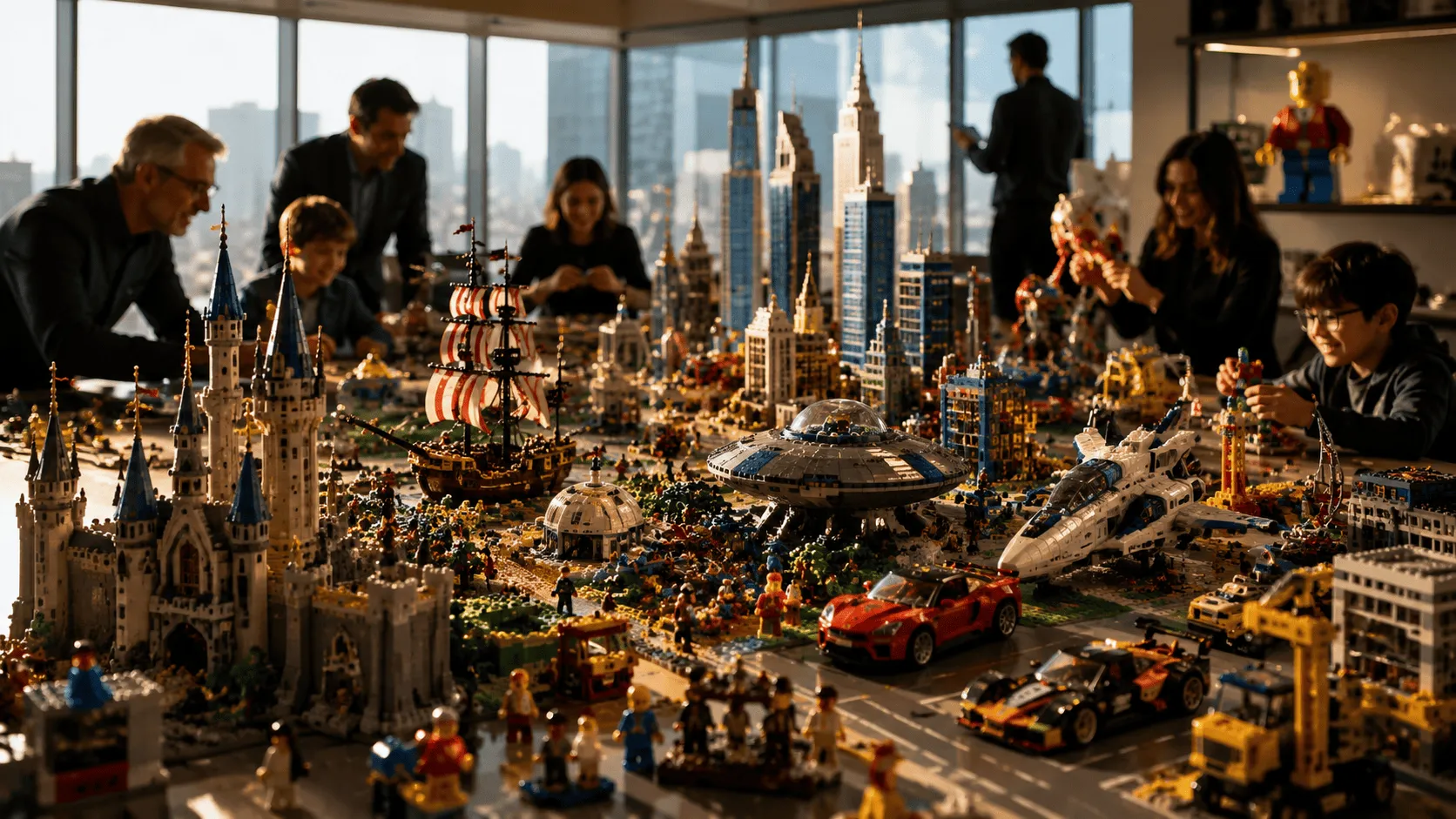
While Many Toy Companies Spend Their Time Chasing The Next Trend, Lego Has Quietly Built One Of The Most Durable Entertainment Businesses In The World.
The toy industry has always been unforgiving.
Children's preferences change rapidly, entertainment habits evolve constantly and products that dominate one year can become irrelevant the next. For decades, toy manufacturers have faced the difficult challenge of predicting what young consumers will want before those consumers know it themselves. The rise of video games, smartphones, streaming platforms and social media only intensified that pressure. Many traditional toy companies found themselves competing not just against rival brands but against entirely new forms of digital entertainment capable of capturing attention for hours every day.
Yet while much of the industry struggled to adapt, Lego continued growing.
The Danish company has repeatedly expanded revenue, strengthened its global brand and maintained relevance across multiple generations. Unlike many competitors that depend heavily on seasonal hits or short-lived trends, Lego has built a business model designed for longevity. It sells products that appeal to children, teenagers, adults, collectors, educators and entertainment fans simultaneously. More importantly, it has transformed itself from a toy manufacturer into something much larger: a global intellectual-property and entertainment company whose influence extends far beyond the toy aisle.
What makes Lego fascinating from a business perspective is that its success was never guaranteed.
The company faced serious financial difficulties in the early 2000s and at one point appeared vulnerable to the same industry pressures affecting many competitors. Its resurgence offers valuable lessons about brand building, customer loyalty and the growing importance of intellectual property in the modern economy.
Lego Sells Creativity Instead Of Consumption
Most toys are designed around a relatively simple business model.
A company creates a product, a child receives it and eventually moves on to something new. The value of the product often declines after the initial excitement fades because the experience remains largely fixed. Whether it is an action figure, board game or electronic toy, there are usually limits to how much engagement a single product can generate. This creates constant pressure for manufacturers to release new items capable of replacing previous ones.
Lego operates according to a fundamentally different philosophy.
Rather than selling finished experiences, the company sells creative possibilities. Every set represents a starting point rather than a destination. A castle can become a spaceship. A city can become a fantasy world. Individual pieces can be combined with thousands of others accumulated over years. The value therefore comes not only from what Lego designs but from what customers create themselves. This dramatically extends engagement because imagination becomes part of the product. A child can return to the same collection repeatedly while discovering entirely new ways to use it.
This distinction helps explain why Lego remains relevant even as entertainment habits evolve.
The company is not competing directly against video games, streaming services or social media. Instead, it occupies a category centered on creativity and participation. Consumers are not simply watching stories unfold. They are building them. That interactive element gives Lego a resilience that many traditional toys struggle to match.
The Company Turned Intellectual Property Into A Growth Engine
For much of its history, Lego's success depended primarily on original products and internal creativity.
While the brand was already respected globally, management eventually recognized that major entertainment franchises could significantly expand its reach. Partnerships with Star Wars, Harry Potter, Marvel, DC and numerous other properties transformed Lego from a toy company associated mainly with construction sets into a brand connected to some of the world's most valuable entertainment universes.
The brilliance of this strategy was that it created benefits for both sides.
Popular franchises gained a new way to engage fans while Lego gained access to audiences already emotionally invested in characters and stories. A child who loved Star Wars might buy a Lego set because of the franchise. A longtime Lego fan might become interested in a new property because of the construction experience. The relationship strengthened both brands while expanding the company's addressable market far beyond traditional toy consumers.
Importantly, Lego never allowed licensing partnerships to define the entire business.
Many toy companies become heavily dependent on a small number of external properties. Lego maintained a balance between licensed products and original themes, ensuring that its own brand remained the primary source of value. This approach allowed the company to benefit from entertainment trends without becoming vulnerable to them.
Adults Became One Of Lego's Most Valuable Customers
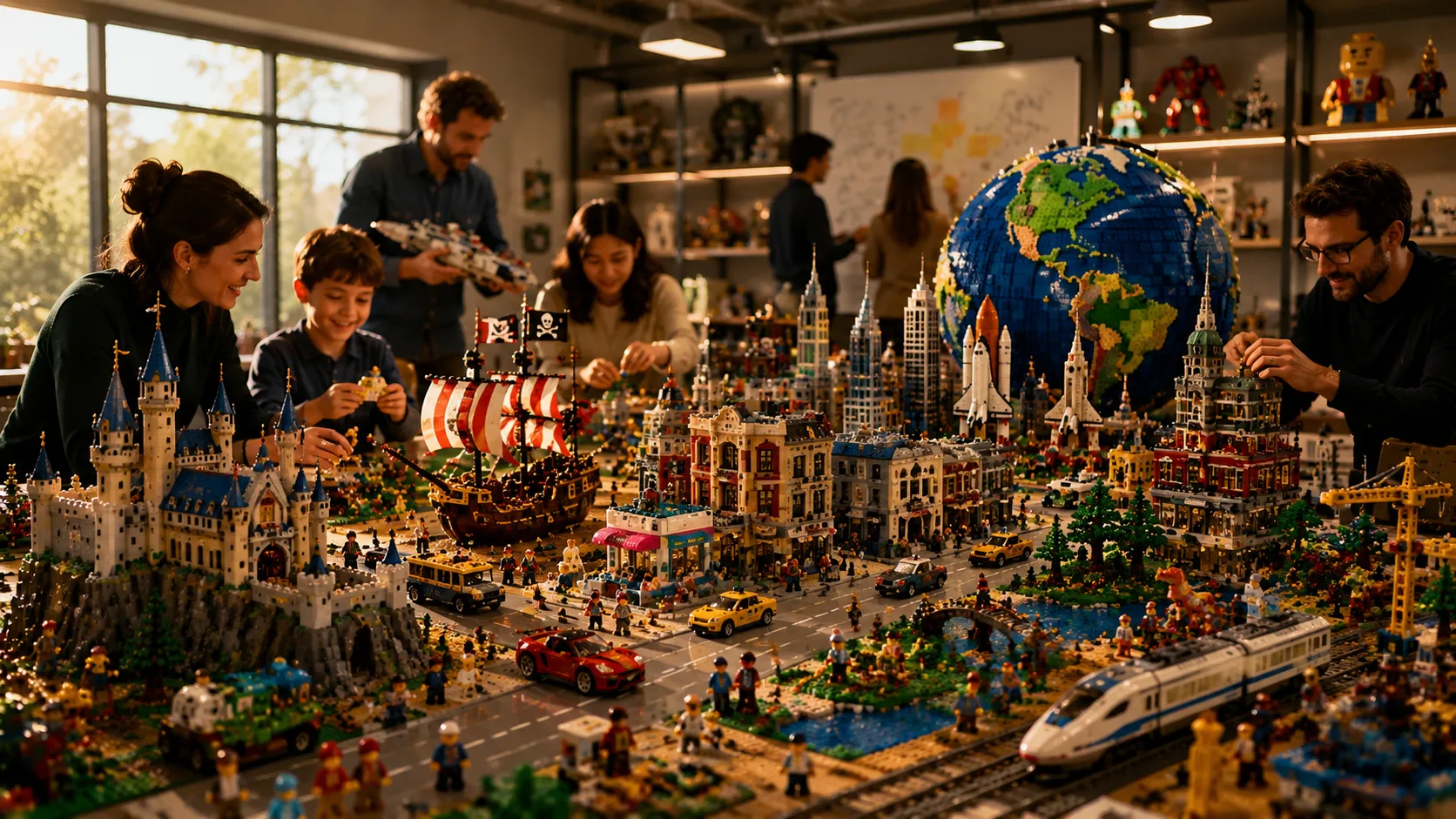
Perhaps the most significant shift in Lego's business over the past decade has been its growing appeal among adults.
Historically, toy companies focused almost entirely on children because that was where the industry's spending originated. Marketing campaigns targeted families, product development centered around younger age groups and long-term growth depended on capturing the attention of each new generation. Lego eventually realized it possessed something many competitors lacked: millions of adults who had grown up with the brand and retained strong emotional connections to it.
Rather than treating nostalgia as a marketing tool alone, the company transformed it into a major business opportunity.
Complex architectural models, luxury vehicle replicas, movie-themed collector sets and intricate display pieces were introduced specifically for older audiences. These products often require dozens of hours to complete and can cost hundreds of dollars, positioning Lego closer to premium hobbies than traditional toys. For many consumers, building became a form of relaxation, creativity and personal expression. The company effectively expanded its market by serving customers throughout multiple stages of life rather than limiting itself to childhood purchases.
This diversification created enormous strategic advantages.
While many toy manufacturers remain dependent on children's spending patterns, Lego generates substantial revenue from adults whose purchasing power is often significantly greater. The result is a broader, more stable customer base capable of supporting growth even as demographic trends shift.
Community Became One Of Lego's Strongest Competitive Advantages
One of the most valuable assets in modern business is an engaged community.
Companies spend billions attempting to build customer loyalty, encourage participation and create emotional connections with audiences. Lego benefits from a global network of enthusiasts who actively contribute to the brand's growth through events, online communities, exhibitions and user-generated creations. These communities extend the company's reach far beyond traditional marketing efforts because customers themselves become ambassadors for the brand.
The scale of engagement is remarkable.
Around the world, builders share increasingly ambitious projects, organize conventions and develop communities dedicated to showcasing creativity. Social media platforms have amplified this activity by allowing fans to display creations to global audiences. Many builders invest hundreds or even thousands of hours into projects that generate no direct financial reward, purely because they enjoy participating in the ecosystem. Few consumer brands inspire this level of voluntary engagement.
The business implications are substantial.
Strong communities create network effects that competitors struggle to replicate. They generate content, strengthen loyalty and reinforce brand relevance across generations. Lego's success is therefore not driven solely by the products it sells but also by the culture surrounding those products.
Digital Entertainment Did Not Destroy Lego
For years, analysts predicted that digital entertainment would eventually weaken traditional toy companies.
The argument seemed logical. Children were spending increasing amounts of time on smartphones, gaming consoles and streaming platforms. Physical toys appeared vulnerable to technologies capable of delivering endless content and constant updates. Many manufacturers struggled to respond effectively because they viewed digital entertainment primarily as a threat rather than an opportunity.
Lego adopted a different approach.
Instead of resisting technological change, the company embraced it selectively. Video games, digital experiences, movies and online content became extensions of the broader Lego ecosystem. The objective was never to replace physical building but to strengthen engagement with the brand across multiple channels. This strategy allowed Lego to remain relevant in digital environments while preserving the unique qualities that differentiated it from purely virtual entertainment.
The approach proved remarkably successful.
Consumers could enjoy Lego through games, films and online experiences while continuing to purchase physical products. Rather than competing against digital entertainment, the company integrated itself into the broader entertainment landscape. This flexibility helped Lego adapt to changing consumer behavior without abandoning the core principles that made the brand successful.
Lego Is Becoming An Entertainment Company
The most important lesson from Lego's growth is that the company no longer operates like a traditional toy manufacturer.
It sells construction sets, but it also monetizes intellectual property, content, licensing, community engagement and premium experiences. The business increasingly resembles companies such as Disney and Nintendo, which generate value across multiple categories rather than relying on a single product line. Toys remain important, but they are now part of a much larger ecosystem designed to strengthen long-term brand relevance.
This evolution has created a business capable of adapting to changing consumer trends while preserving its core identity.
The company can benefit from major entertainment franchises, cultivate adult hobbyists, expand digital experiences and leverage one of the world's strongest consumer communities simultaneously. Few competitors possess such a diverse collection of growth drivers. That diversity provides resilience in an industry where trends often change quickly and unpredictably.
Lego's greatest achievement may not be creating one of the world's most recognizable toys.
Its greatest achievement may be building a brand capable of remaining culturally relevant across generations while expanding into entirely new forms of entertainment. In an industry defined by constant disruption, that ability to evolve without losing its identity has become one of the company's most valuable assets.