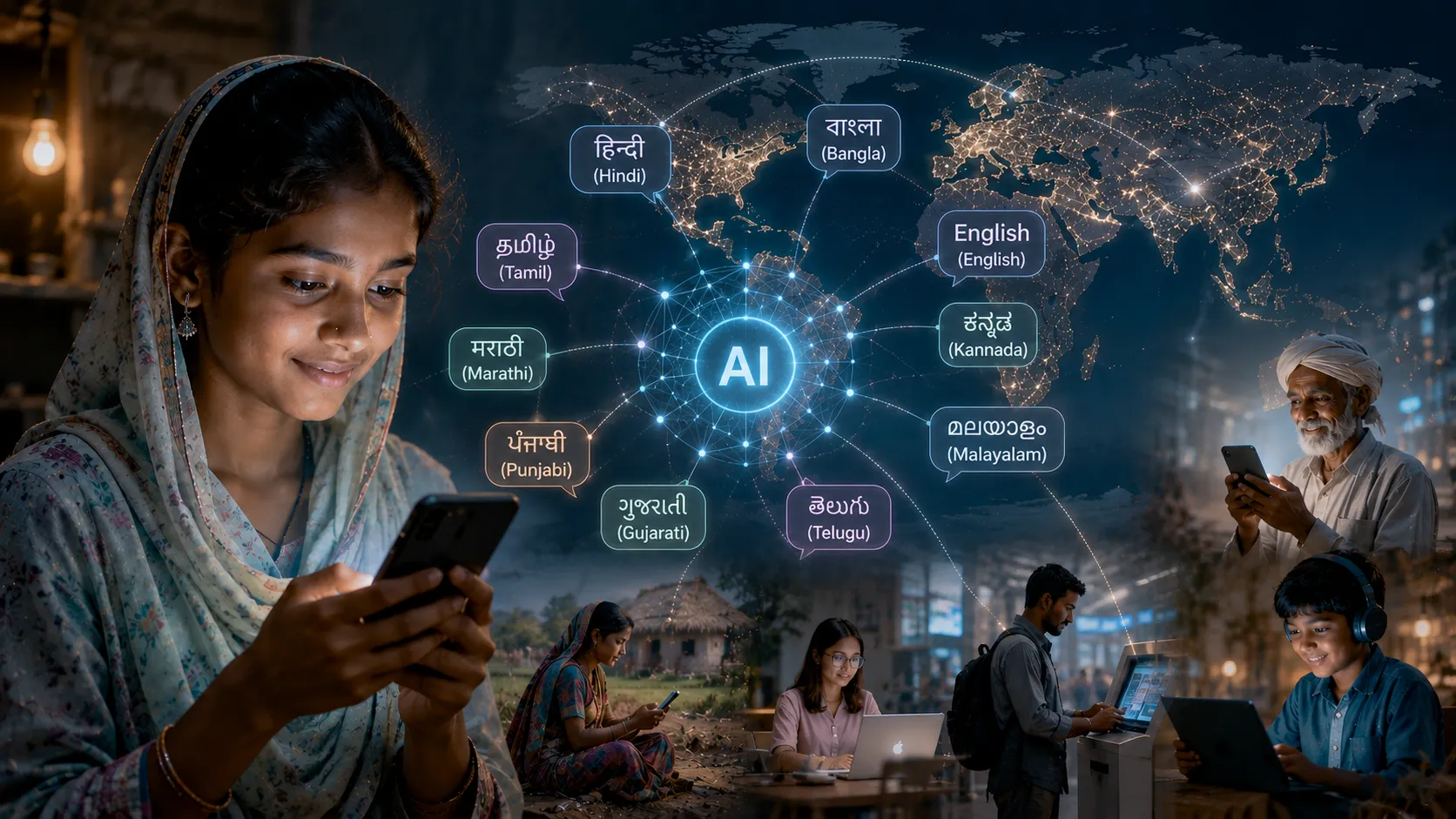
For much of the internet era, access to technology was measured through infrastructure. The conversation centered around smartphones, broadband networks, affordable devices and internet penetration. The assumption was relatively straightforward: connect more people and digital inclusion would naturally follow. But as artificial intelligence becomes embedded into everyday life, a different question is beginning to emerge. Access may no longer depend only on whether people can reach technology. Increasingly, it may depend on whether technology can understand people.
That distinction matters more than it initially appears. While billions of people are connected to digital platforms today, large sections of the global population continue interacting with systems built primarily around a relatively small number of dominant languages. Search engines, online services, educational platforms and AI tools have historically performed strongest in English and a limited set of globally represented languages. For many communities, the challenge has never simply been internet access. It has been language access.As artificial intelligence expands into education, healthcare, government services and everyday communication, industry researchers and policymakers are increasingly warning that language barriers risk becoming one of the next major digital divides. According to UNESCO, nearly 40% of the global population does not have access to education in a language they speak or fully understand, a challenge that extends far beyond classrooms and increasingly intersects with technology systems as well. As AI becomes a larger interface layer between people and information, questions around language accessibility are beginning to move from technical concerns toward broader social and economic issues.
The issue becomes particularly visible across emerging markets. Countries such as India, Indonesia, Nigeria and large parts of Africa and Latin America represent some of the world’s fastest-growing internet populations. Yet many users in these regions communicate through highly diverse linguistic ecosystems. India alone has hundreds of languages and thousands of dialect variations spoken across communities. Building digital systems capable of serving populations at that scale presents challenges extending well beyond translation.
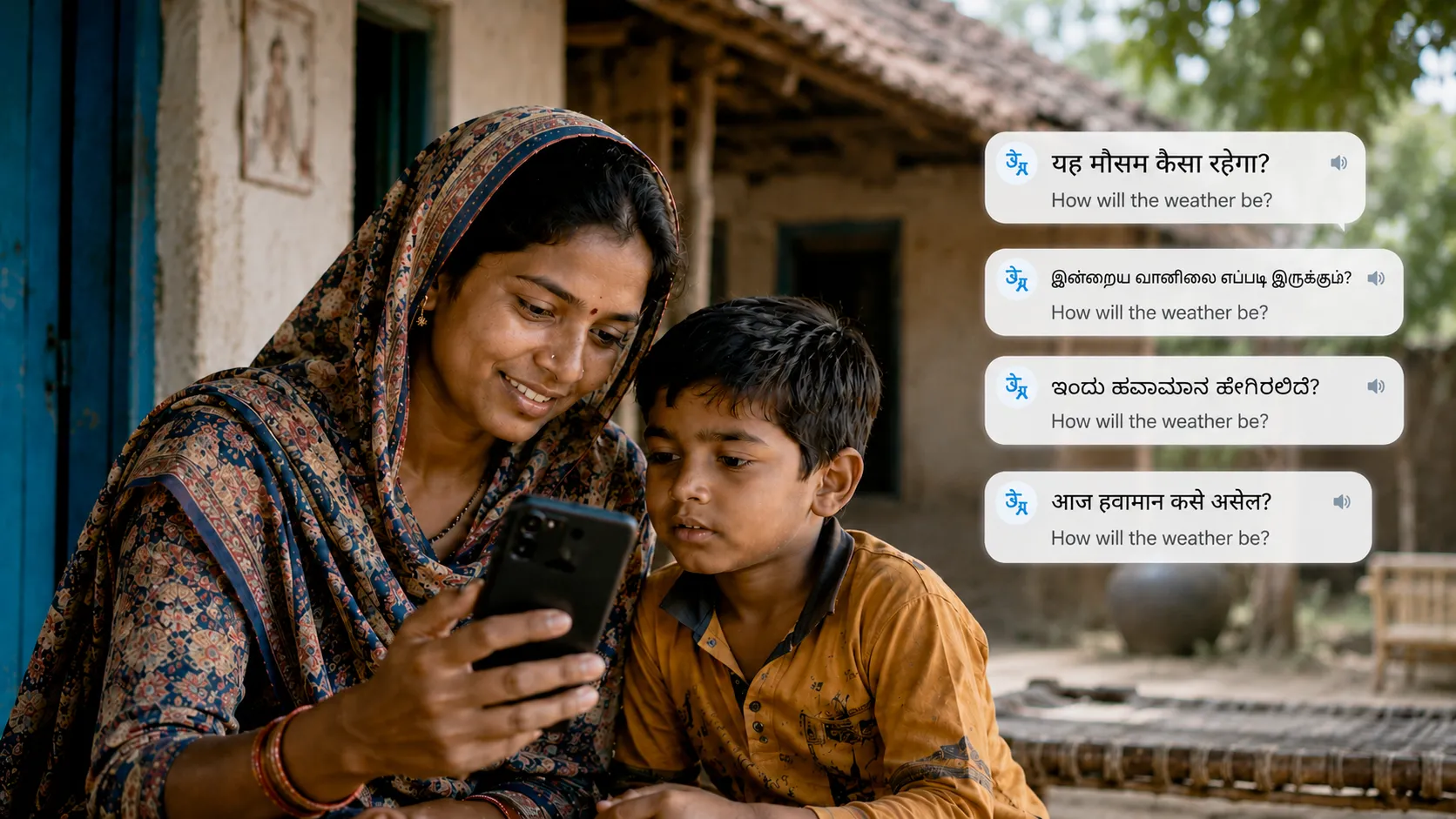
Recent developments across artificial intelligence research suggest that companies increasingly recognize the opportunity. Global technology firms and AI startups are investing heavily in multilingual models capable of handling larger language sets and stronger contextual understanding. Open-source initiatives and regional AI ecosystems have also begun focusing more aggressively on local language development, speech recognition systems and translation infrastructure designed specifically for underrepresented communities.
Several governments have begun approaching language AI as infrastructure rather than optional technology enhancement. Across markets, public and private initiatives are increasingly attempting to develop datasets, language repositories and localized AI systems designed to improve accessibility. In India, efforts linked to language technology initiatives and broader digital public infrastructure conversations have highlighted multilingual access as an important long-term priority. Similar conversations are emerging across Southeast Asia, Africa and Latin America.
Yet language inclusion involves more than translating words. Human communication carries context, cultural nuance, emotion and social meaning that often changes dramatically across regions. A direct translation system may convert vocabulary accurately while still missing intention entirely. Researchers increasingly argue that future AI systems will need to understand not only language syntax but also cultural context if they are expected to serve users effectively.
The implications extend beyond convenience. Access to language-enabled AI increasingly influences access to services themselves. A farmer attempting to understand weather information, a patient seeking medical guidance, a student using educational tools or a small business owner navigating digital systems may all experience technology differently depending on whether platforms understand the language they naturally use.
One area where this challenge is becoming increasingly visible is healthcare. Across many developing regions, healthcare information often reaches people through systems designed around dominant languages or urban populations. Artificial intelligence tools capable of supporting multilingual conversations may gradually change that dynamic. Health-tech researchers and digital policy groups increasingly believe AI-powered language systems could improve how medical information, preventive care guidance and public health services reach underserved populations. The impact may extend beyond convenience and increasingly influence outcomes themselves.
Education systems may experience similar changes. For years, digital education platforms attempted to improve access primarily through connectivity and online learning models. Artificial intelligence now introduces a different possibility: personalized educational experiences delivered in languages students actually use every day. Experts suggest multilingual tutoring systems and voice-based AI learning tools could eventually help reduce barriers affecting millions of students, particularly in regions where educational resources remain unevenly distributed.
Language access also increasingly intersects with financial inclusion. Across many economies, digital banking, government platforms and financial services continue expanding rapidly. Yet for first-time users and rural populations, navigating digital systems often remains challenging because interfaces are not designed around local communication patterns. AI systems capable of interacting naturally through regional languages and voice interfaces may gradually reduce friction and make services more accessible to broader populations.
Technology firms themselves increasingly appear to recognize the strategic importance of this shift. Over the last year, several major AI companies introduced multilingual capabilities and expanded support for regional languages across products. Industry observers suggest the next major AI competition may not be defined solely around model size or computational power. Increasingly, companies capable of serving diverse populations across languages and cultures may gain meaningful long-term advantages.
The economic implications may ultimately prove just as significant as the technological ones. Digital participation increasingly influences employment opportunities, entrepreneurship, education access and economic mobility. If artificial intelligence becomes the primary interface layer between people and information, language capability could become one of the defining factors determining who benefits most from digital economies in the future.
The challenge ahead remains significant. Building high-performing multilingual systems requires extensive data collection, stronger regional partnerships and significant investment in languages that historically received limited digital representation. Many low-resource languages still lack sufficient datasets required to train advanced AI systems effectively.
Yet for many observers, the larger story is becoming increasingly difficult to ignore. The first phase of digital inclusion focused on connecting people to the internet. The next phase may focus on ensuring technology can understand the people it reaches.
Because access is changing. Increasingly, digital inclusion may no longer be measured only by who is online. It may also be measured by who is understood.