For years, the Indian film industry has publicly projected itself as a single entertainment ecosystem despite functioning through multiple regional industries with very different cultures, audiences and power structures. Bollywood traditionally occupied the center of that perception because Hindi cinema often dominated national visibility, celebrity culture and media coverage. Success inside Mumbai’s film ecosystem frequently translated into wider recognition because distribution networks, television exposure and mainstream entertainment journalism remained heavily concentrated around Bollywood for decades.
That structure has gradually started changing.
Regional industries including Tamil, Telugu, Malayalam and Kannada cinema have expanded aggressively over the last several years because audiences increasingly consume content across languages through streaming platforms, dubbed releases and pan-India theatrical strategies. Films from the South are no longer treated as “regional successes” alone because many now shape national box office trends, visual storytelling standards and audience conversations across India. As this shift accelerated, discussions about creative freedom, industry hierarchies and cultural bias also began surfacing more openly.
That larger context is partly why recent remarks by A. R. Rahman triggered such a massive online reaction.
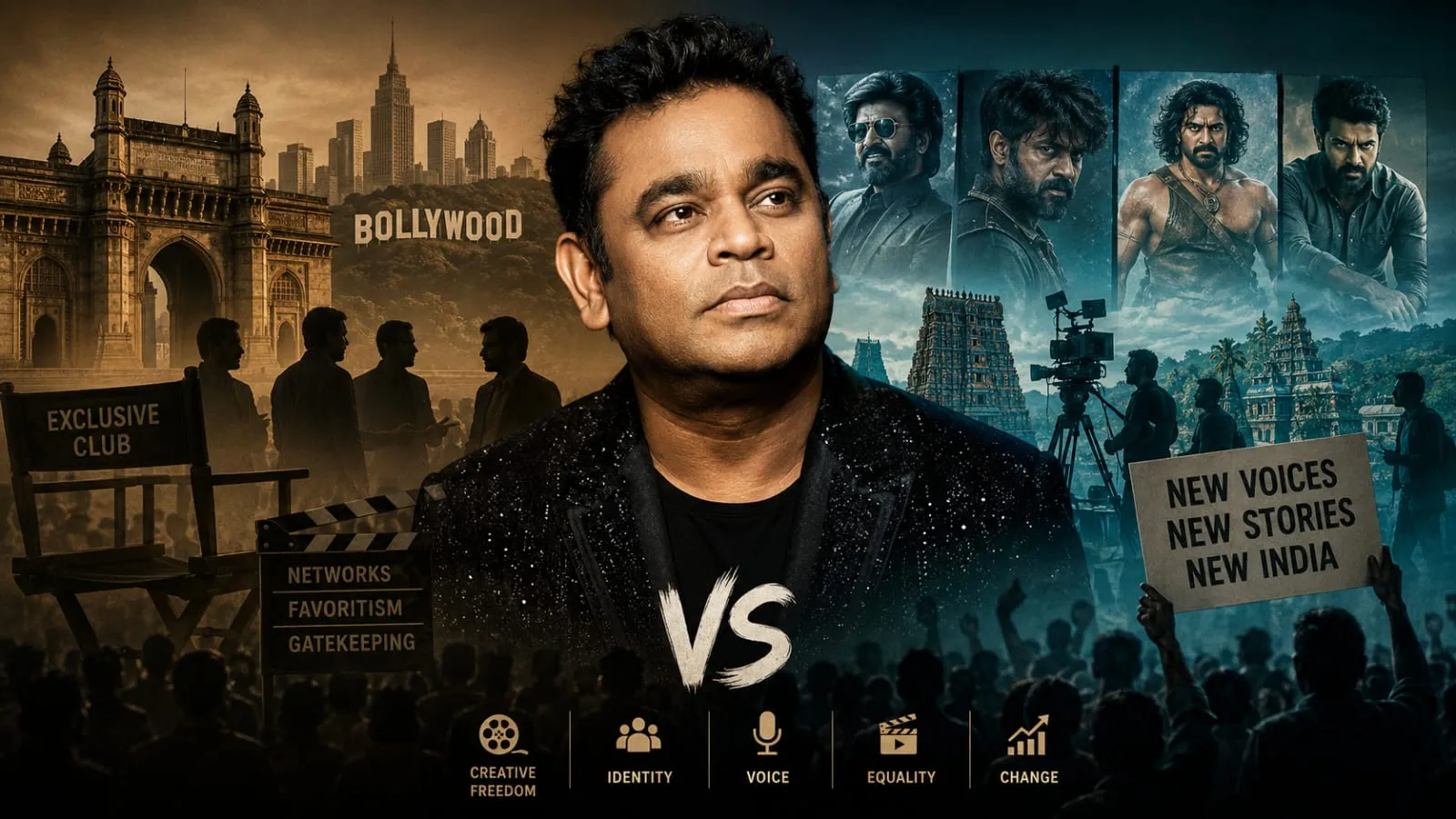
Rahman recently spoke about feeling sidelined within parts of Bollywood and suggested that certain narratives or perceptions may have limited opportunities and collaborations around him. While his comments were interpreted differently across platforms, they quickly exploded into a broader debate about whether Bollywood has historically created exclusive ecosystems that favor certain networks, camps or personalities while making others feel professionally isolated. Social media discussions intensified because Rahman is not viewed as just another celebrity voice. He is one of India’s most globally respected composers, associated with landmark films, international awards and decades of influence across multiple industries.
The reaction online revealed how emotionally charged these conversations have become.
Some audiences strongly supported Rahman, arguing that Bollywood has long operated through informal circles of influence where outsiders, independent voices or creators from non-Hindi industries often struggle for sustained acceptance despite success. Others felt the issue was being exaggerated and argued that Rahman himself achieved extraordinary recognition in Hindi cinema through films like Roja, Dil Se.., Rockstar and Slumdog Millionaire. The debate quickly moved beyond one interview because people began connecting it to wider industry conversations around favoritism, gatekeeping and the shifting balance of power between Bollywood and South Indian cinema.
What made the discussion even more significant was timing.
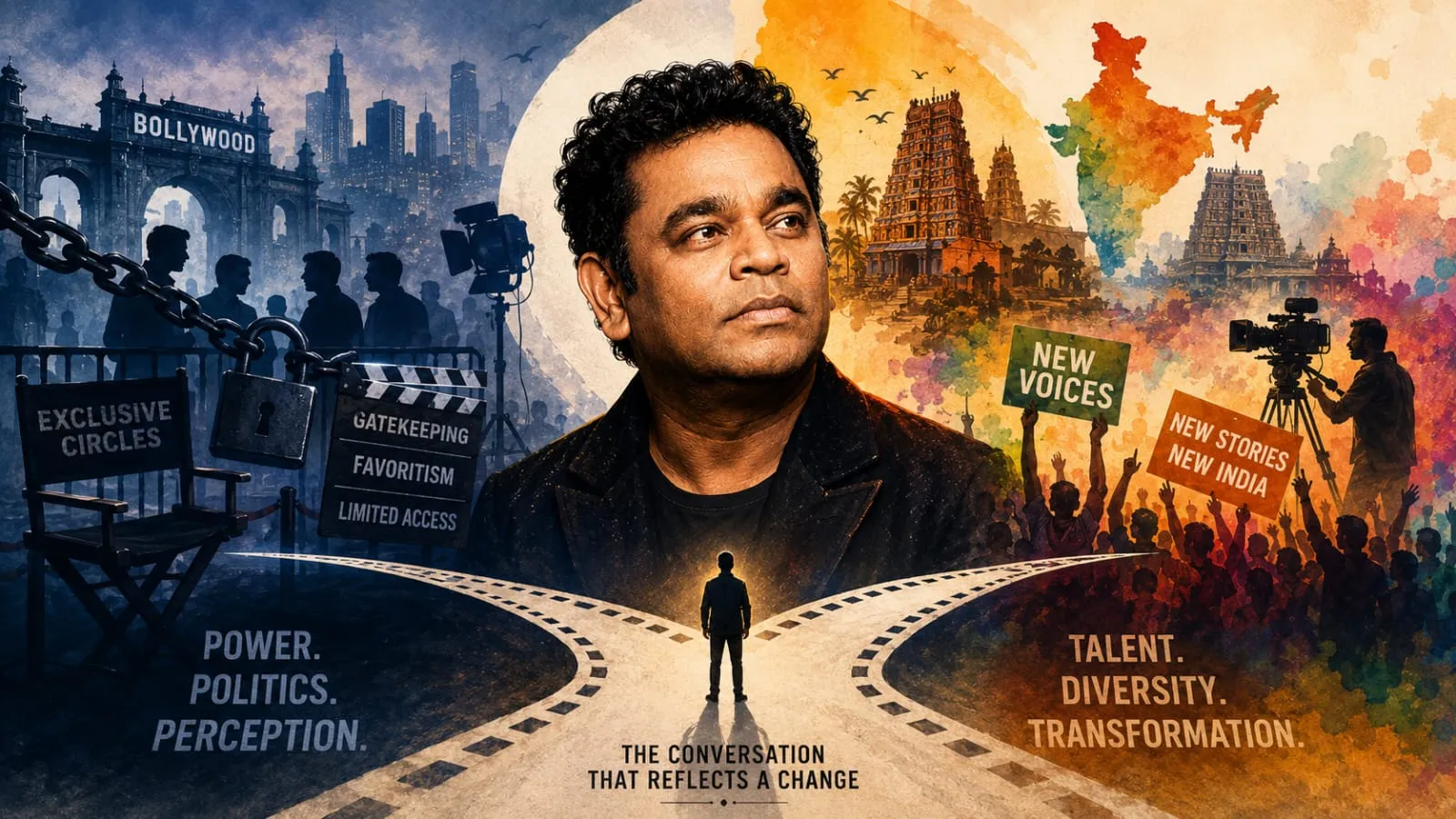
Bollywood has already been navigating a period of intense self-reflection because audience behavior has changed dramatically in recent years. Several big-budget Hindi films have underperformed while South Indian productions increasingly dominate national conversations through scale, storytelling and theatrical momentum. This has created growing scrutiny around how Bollywood functions internally because audiences are questioning not just content quality but also the industry culture shaping creative decisions. In that environment, even relatively restrained remarks from a figure like Rahman naturally carried larger symbolic weight.
The conversation also highlighted how differently industries approach talent relationships.
Many people online contrasted Bollywood’s star-driven ecosystem with the collaborative reputation often associated with parts of South Indian cinema, particularly Tamil and Malayalam industries. Whether fully accurate or partly romanticized, these comparisons continue gaining traction because audiences increasingly perceive regional industries as more creator-focused and less dependent on rigid power circles. Rahman’s remarks therefore became less about one composer’s experience and more about contrasting cultural identities inside Indian entertainment itself.
Social media amplified every layer of the debate.
Clips, quotes and interpretations spread rapidly across platforms because modern entertainment discussions now evolve through fragments rather than full interviews. Supporters and critics both projected broader frustrations onto the controversy, turning a nuanced industry observation into a nationwide argument about fairness, insecurity, creative politics and cultural dominance. In many ways, the intensity of the response reflected how polarized conversations around Bollywood have become online.
Yet the most interesting part of the episode may be what it reveals about Indian cinema’s ongoing transition.
For decades, Bollywood largely shaped the national definition of mainstream Indian entertainment. Today that dominance feels far less absolute because audiences consume stories across languages, platforms and regions more fluidly than before. As power decentralizes, older industry hierarchies are increasingly being questioned publicly by artists, filmmakers and audiences alike. Rahman’s remarks resonated because they arrived during a moment when Indian entertainment itself is renegotiating who gets visibility, influence and creative authority.
The debate therefore was never only about one statement.
It became a reflection of a larger shift happening inside Indian cinema where identity, language, regional pride and industry power are colliding more openly than ever before. And as audiences continue moving beyond traditional Bollywood-centered viewing habits, these conversations may only grow louder.
Because today, the biggest battle inside Indian entertainment may no longer be about box office competition alone.
It may increasingly be about who gets to define the future of Indian cinema itself.