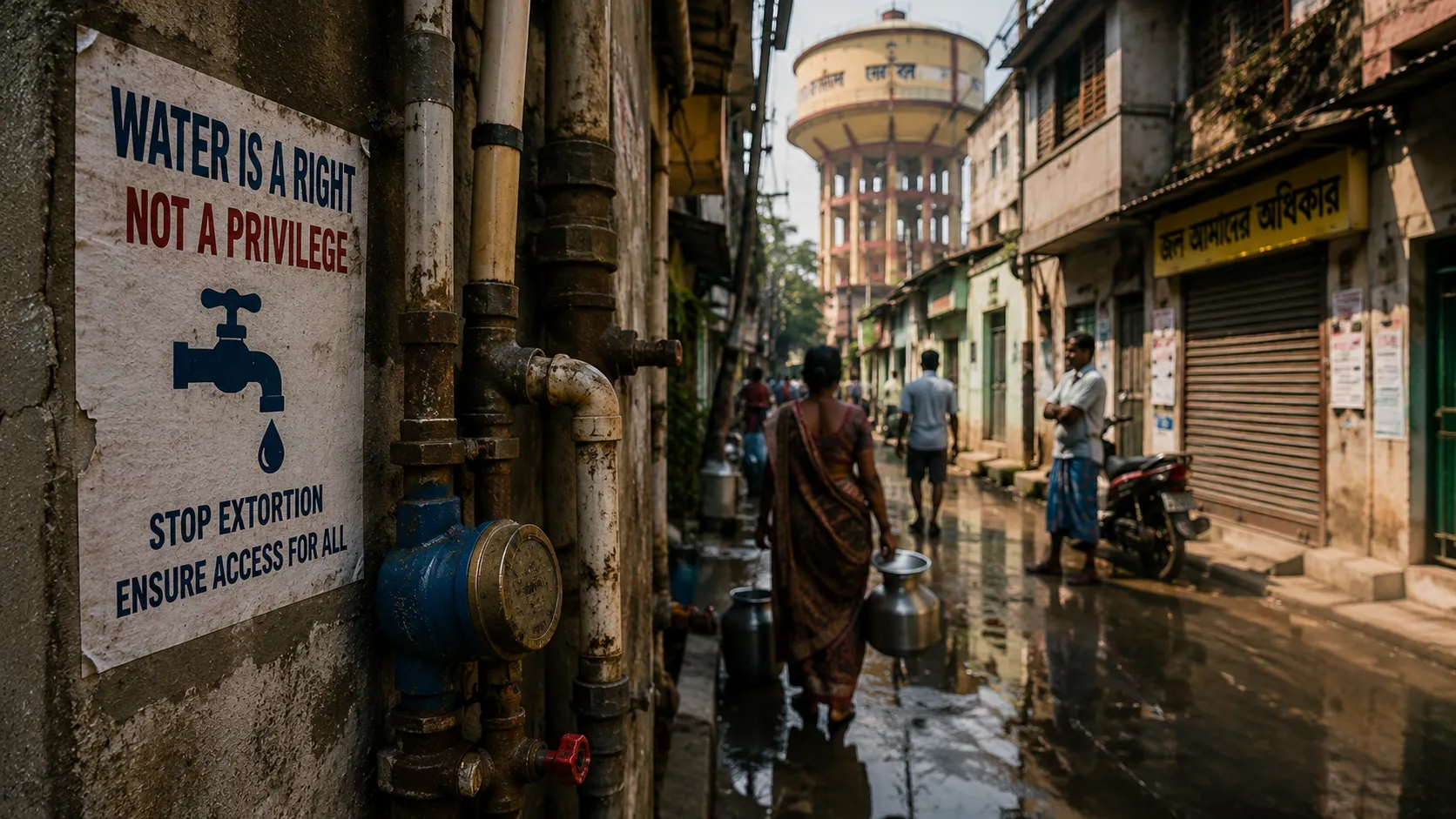
A Local Water Dispute Is Beginning To Reflect A Larger Story About Everyday Systems And Unequal Power
Across cities, infrastructure frequently operates quietly in the background of everyday life. Water flows through pipes, electricity reaches homes and public systems continue functioning with little attention from the people depending on them. Most citizens notice infrastructure only when something stops working. Yet occasionally, individual incidents reveal a broader reality: infrastructure is rarely only about engineering. Sometimes it also becomes a story about power, access and who controls systems people cannot easily live without.
Recent reports and public discussions emerging around a Kolkata water-access dispute and alleged extortion concerns have increasingly attracted attention because the issue appeared to move beyond a routine civic complaint. While details surrounding specific allegations continue remaining tied to local investigation and reporting, the larger public reaction increasingly focused on a broader concern involving everyday dependence on essential services. Water is not simply another utility. It is one of the few systems where interruption immediately alters daily life. When access becomes uncertain, pressure often extends far beyond inconvenience and enters questions involving dignity, dependence and vulnerability.
Viewed independently, the situation may initially appear like a localized civic issue. Viewed through a broader social lens, however, it increasingly raises larger questions involving what happens when systems intended to function as public infrastructure become influenced by informal control, local pressure networks or unequal access dynamics.
Infrastructure Frequently Appears Neutral Until Access Itself Becomes Unequal
Historically, conversations surrounding infrastructure often centered around scale. Public discussions frequently focused on pipelines built, roads constructed, electricity expanded and households connected. Infrastructure frequently entered policy narratives through numbers because expansion itself represented a visible measure of development progress.
Over time, however, another reality increasingly emerged beneath those measurements.
Infrastructure does not influence lives only through existence. It also influences lives through reliability, accessibility and fairness. Two communities may technically possess access to the same service while experiencing very different realities regarding quality and control. In many cities globally, residents frequently discover that formal systems and informal structures occasionally operate simultaneously. Official infrastructure exists, yet access sometimes becomes shaped by local arrangements, intermediaries or power dynamics developing around everyday necessities.
This distinction increasingly matters because essential services frequently operate differently from ordinary commodities.
Everyday Extortion Frequently Operates Through Dependence Rather Than Visibility
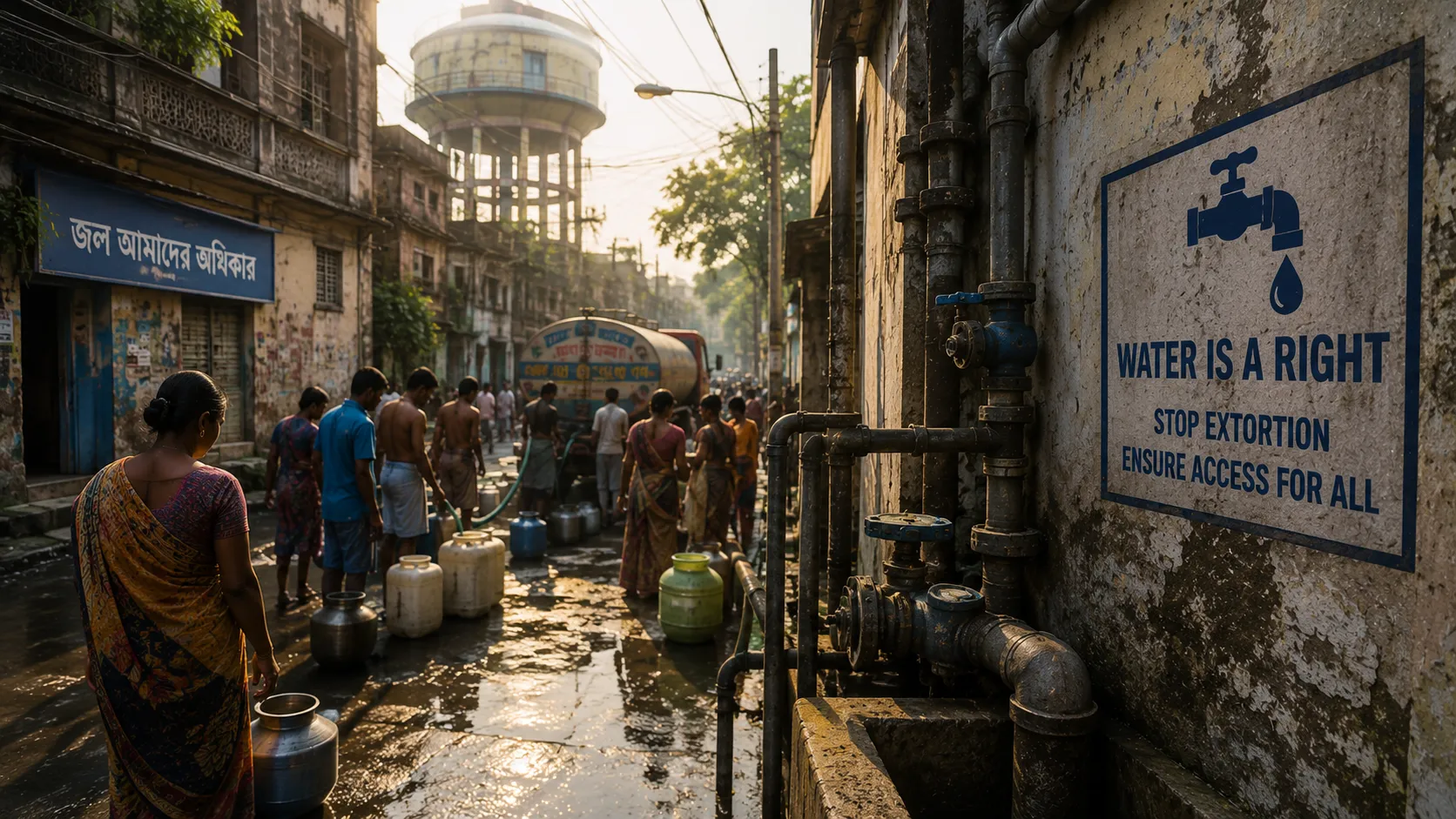
Part of the significance surrounding discussions such as the Kolkata case increasingly involves understanding how everyday forms of coercion frequently function.
Large corruption stories often attract public attention because they involve institutions, substantial money or visible political consequences. Everyday extortion frequently appears differently. In many environments globally, informal pressures occasionally emerge around services people rely upon daily. Access to parking, housing, local services or public utilities can sometimes become environments where dependence itself creates vulnerability.
Importantly, these situations frequently remain difficult to recognize immediately because they often operate quietly.
The pressure may not always involve dramatic events.The amounts involved may not appear large individually.The structures frequently become normalized because people adapt gradually over time.
Yet for individuals navigating these systems daily, the impact often extends beyond financial cost itself. Dependence can gradually influence behavior, create anxiety and reshape relationships between communities and institutions.
The broader conversation increasingly suggests that public trust frequently weakens not only through large institutional failures but also through repeated everyday experiences where systems appear unpredictable.
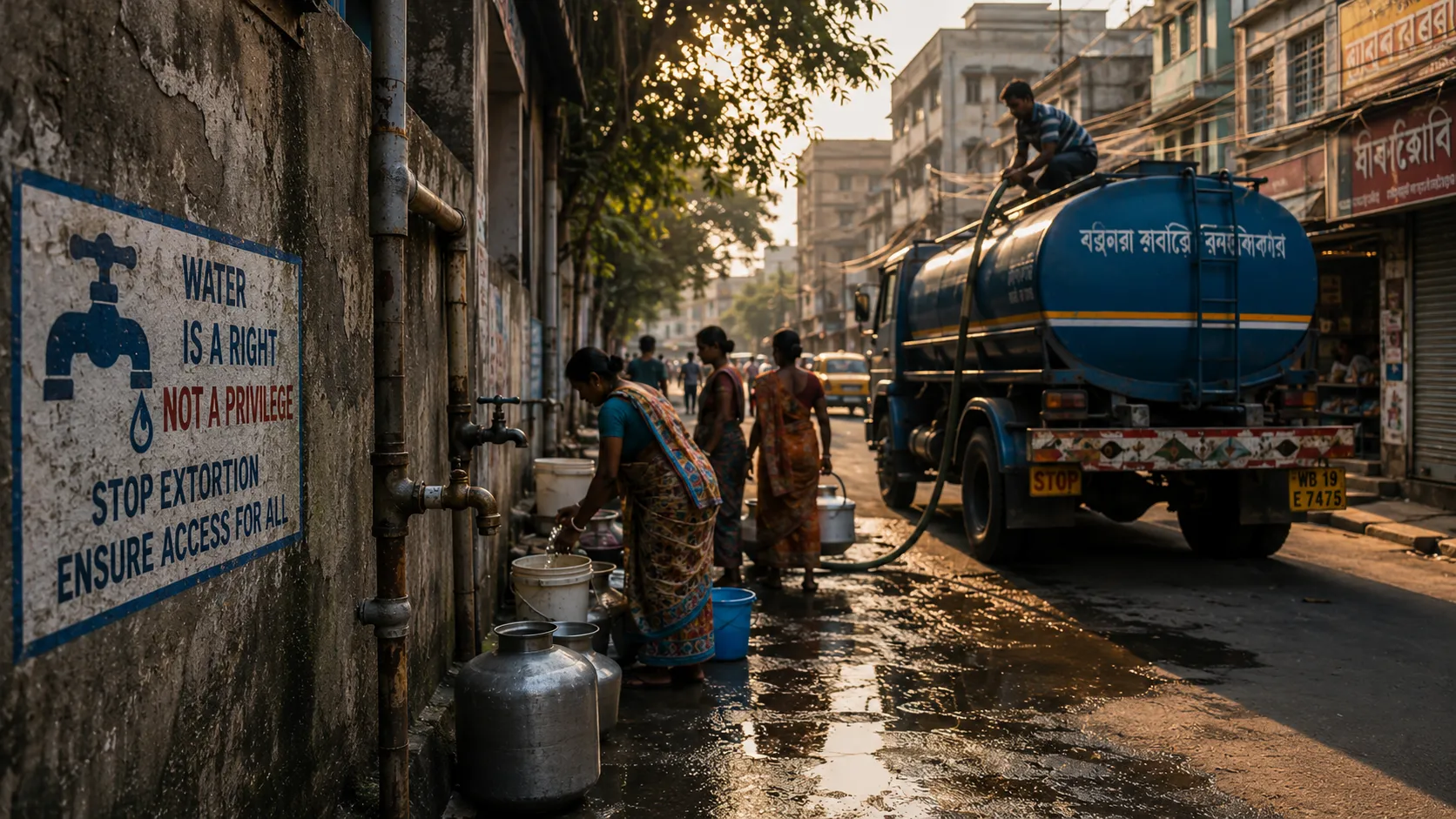
Urban Infrastructure Increasingly Appears Connected To Questions Of Trust And Accountability
Another important dimension emerging beneath discussions surrounding water access involves broader questions regarding governance itself.
Historically, infrastructure conversations frequently centered heavily around physical assets involving pipelines, treatment facilities and supply systems. Increasingly, however, urban researchers and policy discussions suggest infrastructure also depends heavily upon trust.
Citizens frequently rely upon public systems through assumptions.
The assumption that water arrives consistently.The assumption that systems operate fairly.The assumption that access does not depend upon informal negotiation.When these expectations weaken, public systems frequently encounter pressures extending beyond operational challenges alone.Across rapidly growing urban environments, maintaining infrastructure increasingly appears connected not simply to expansion but also to accountability and confidence. Cities frequently function effectively when residents believe systems operate according to transparent rules rather than invisible structures of influence.
The significance increasingly extends beyond one civic complaint because questions involving infrastructure increasingly intersect with questions involving institutional trust itself.
The Larger Story Increasingly Extends Beyond Water Alone
The broader significance surrounding discussions emerging from Kolkata may ultimately involve what they reveal regarding how people experience public systems in everyday life.
Historically, development discussions frequently emphasized building infrastructure because access itself represented a central challenge. Increasingly, however, public conversations appear expanding beyond access alone and moving toward broader questions involving quality, transparency and fairness.
Viewed through that broader lens, this conversation increasingly resembles more than a localized dispute involving water access.It increasingly appears connected to larger realities involving how power occasionally develops around everyday systems people depend upon without noticing them until something changes.
The larger impact story therefore may not simply involve one case or one city. Increasingly, it may involve recognizing that infrastructure frequently becomes meaningful not only because it exists but because people trust it enough to believe access will remain fair, predictable and independent of informal power itself.