
Like many people, Chris found himself balancing a phone awkwardly, searching for a stable angle, and struggling to fit everyone into the frame before the timer ran out. As the group laughed through repeated attempts, a friend casually asked a question that would unexpectedly stick with him:
"Why can't the water bottle just hold the phone?"
It sounded almost too simple.
But for Chris, the question refused to go away.
The Power of Everyday Frustration
Great innovations often begin with everyday inconveniences — the kind people experience so often that they stop questioning them. Chris realized that nearly everyone carries a reusable water bottle and a smartphone almost everywhere they go. Yet the two objects, despite constantly sharing space in daily life, had never really been designed to work together.
That single observation opened the door to a bigger idea:
What if one of the most commonly carried items in the world could also solve one of the most common modern problems?
Instead of relying on bulky tripods, unstable surfaces, or asking strangers to take photos, a water bottle could become a practical, portable phone stand — ready whenever needed.

Simplicity That Makes Sense
What fascinated Chris wasn't just the functionality. It was simple.
The best product ideas often create an immediate reaction:
"How has nobody done this already?"
By transforming an ordinary bottle into a stable support for smartphones, the concept blended convenience, portability, and modern lifestyle needs into one intuitive solution.
Whether for group photos, video calls, content creation, workouts, travel, or hands-free viewing, the idea naturally fit into how people already live.
No extra gadget.
No complicated setup.
Just a smarter use of something people already carry every day.
Innovation Hidden in Plain Sight
Chris Place's story is a reminder that innovation doesn't always require reinventing the wheel. Sometimes, it simply means looking at familiar objects differently.
A casual comment from a friend became the spark for reimagining a product millions use daily — proving that inspiration can come from the smallest moments.
And in a world overflowing with complex technology, there's something powerful about an idea rooted in simplicity:
a water bottle that does just a little bit more.
The First Moment: A Photo on a Windswept Bluff
The first time Chris Place noticed the problem, he thought it was only his poor timing. It was a bright Saturday afternoon and a group of friends had gathered on a windswept bluff overlooking the bay. Someone produced sandwiches; someone else had a portable speaker; another friend, inevitably, produced a reusable water bottle. Phones came out. Laughter swelled. Someone suggested a group photo, and the familiar fumbling began — arms outstretched, the hunt for the right distance, awkward angles, hurried presses of the timer, and the collective groan when halfway through the countdown the frame still wasn't right.
Chris remembers the moment clearly because it lodged in his head like a pebble in a shoe. "Why can't the water bottle just hold the phone?" a friend asked, half-joking, as they reset for yet another attempt. The question seemed absurdly simple. But it kept nudging at him. Later that evening, alone with a cup of tea and a string of half-successful photos on his phone, Chris rotated the bottle on the table and watched how it sat solidly where it belonged. It struck him: people carry bottles and phones everywhere. They share the same trips, cafés, gyms and hikes. What if one common object could solve the other's most common problem?

The Spark of a Small Idea
Innovation textbooks often dramatize eureka moments as sudden epiphanies that arrive fully formed. The reality, more often, is less cinematic. Ideas tend to begin as questions, small irritants given curious attention. Chris's insight was exactly that kind of question — an ordinary observation that, when followed, revealed a gap between need and design.
There is a profound potency to such small reframings. A water bottle that doubles as a phone holder is not an earth-shattering reinvention. It is a product that rethinks the relationship between two ubiquitous items and builds usefulness into an everyday object. That kind of design thinking — starting from lived experience, not from technology hunts or market trends — often produces solutions with staying power because they fold neatly into habits rather than forcing new ones.
Everyday Frustration as Fuel
To understand why a seemingly trivial nuisance can lead to a viable product, it helps to look at the psychology beneath everyday frustration. People develop routines, and when a routine consistently includes a minor obstacle, tolerance decreases. That cumulative irritation becomes fertile ground for entrepreneurs. The tasks people embrace day after day — sharing photos with friends, following a recipe while cooking, or watching a workout video at the gym — create recurring pain points. That regularity makes even small improvements valuable.
Chris's observation tapped into precisely this pattern. Smartphones have become extensions of ourselves; we carry them everywhere. So too have reusable water bottles, in part due to ecological awareness and in part for convenience. Yet despite both items being near-permanent companions, they had evolved in design isolation. The result: too many selfies held at awkward angles, too many phones balanced precariously, and too many missed moments.
From Thought to Prototype
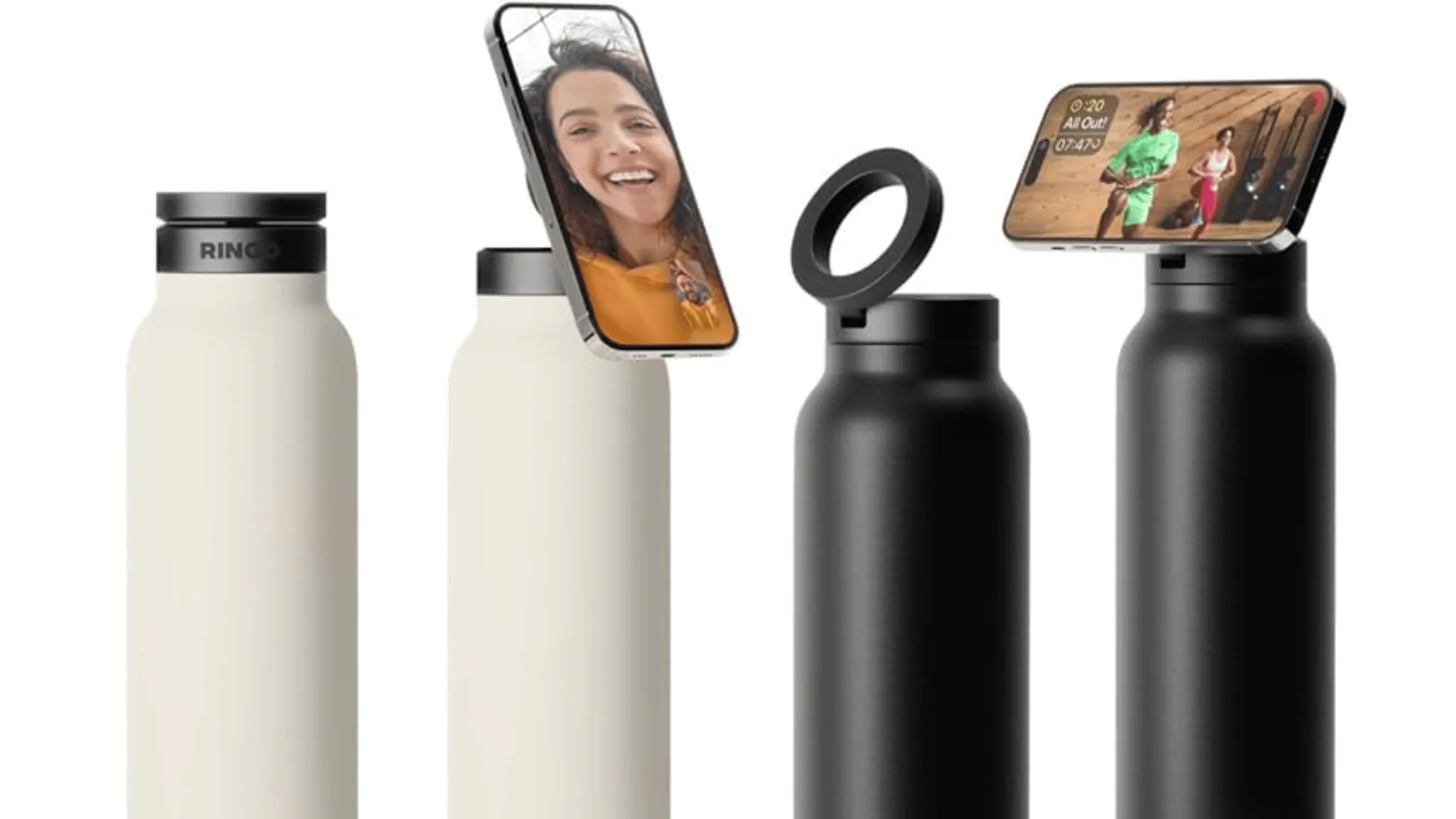
Ideas require translation into the physical world to be tested. Chris began simply. He sketched basic shapes on napkins and tried makeshift experiments by cutting foam, adding strips of silicone, and even shaping a band of recycled plastic around a bottle. The goal: create a stable cradle that could support a smartphone at multiple angles while being easy to attach and remove, durable, and inexpensive to produce.
Early prototypes highlighted constraints he hadn't fully appreciated. Bottles come in different diameters, shapes, and materials. Phones vary wildly in weight and size. Any add-on needed to be flexible enough to accommodate variation without slipping or adding bulk. Food-grade safety mattered, as the device would be in close proximity to drinking surfaces. And because portability was a core appeal, the solution had to preserve the bottle's primary function: holding water.
The prototyping phase taught Chris three lessons common to many product developers. First, simplicity matters. The more complex a design becomes, the less likely people are to adopt it. Second, user testing is essential. Watching friends try prototypes revealed friction points that sketches could not. And third, iteration beats perfection. The first functional model need not be flawless; it only needed to be good enough to test assumptions.
Design Choices and Trade-offs
Turning a workable prototype into a product involves trade-offs.
Universal fit vs. custom models: Making a system that fits every bottle guarantees broad compatibility but complicates design. Alternatively, making tailored models for popular bottle brands simplifies engineering but narrows the market.
Built-in vs. add-on: Integrating a phone cradle directly into a bottle offers seamless experience but requires producing the bottle itself. An attachable accessory, by contrast, can retrofit existing bottles but must manage secure attachment.
Material selection: Soft silicone offers grip and shock absorption, but can wear down; reinforced plastics are durable but may add weight or cold conductivity.
Chris and his small team experimented with two parallel approaches. One was an attachable silicone band with a flexible lip to hold phones horizontally or vertically. The other was a redesigned bottle with a molded indentation and locking groove that cradled a phone securely while allowing quick release. Each had merits. The attachable had immediate appeal as a retrofit; the molded bottle offered superior stability and a sleeker look.
Testing With Real People
A critical moment arrived when Chris organized informal field tests. He took prototypes to parks, cafés, university campuses, and co-working spaces. Rather than ask participants to fill out dry surveys, he gave them simple tasks: take a timed group photo, record a short video, follow a ten-minute online workout while watching from a phone propped on the bottle. Observing how people used — or avoided — the prototypes revealed deeper insights than any specs sheet.
Some surprises included:
Muscle memory matters. People initially tried to use the bottle-holder like a tripod; they set up, stepped back, and then instinctively bent back to check composition, forgetting the device. The design needed visual cues.
Aesthetics influence adoption. Younger testers loved bold colors and textured finishes; older testers prioritized simplicity and unobtrusive design.
Secondary uses emerged. Parents discovered the bottle stand was useful for propping a phone for recipe videos; commuters appreciated hands-free video calls during long waits.
Markets and Timing
Every product exists within a market ecology. For small-device add-ons, the challenge is convincing users to carry one more thing or to buy a redesigned bottle. But timing can shift dynamics. In recent years, habits solidified that made Chris's idea more attractive: remote work increased video calls; short-form video creation exploded; and people became more accustomed to multifunctional gear.
Three market segments appeared promising.
Content creators and social media users: People who regularly make videos need portable stands for vlogging and live streaming.
Travelers and outdoor enthusiasts: Lightweight, multipurpose gear appeals to those who value space and functionality.
Everyday consumers: Commuters, students, and parents who want hands-free phone use in daily tasks.
Chris also recognized the retail advantage of environmentally conscious shoppers. Many consumers buying reusable bottles were already invested in sustainable products and might respond to clever additional functionality rather than single-use accessories.
Manufacturing and Scaling
Moving from small runs to mass production exposed new complexities. Sourcing materials with consistent tolerances matters when parts must snap together securely. Injection molding offered economies of scale for the molded bottle, but required high upfront tooling costs. The attachable silicone solution demanded precise molding and durable adhesives or mechanical grips to avoid slippage.
Chris faced decisions about manufacturing location, ethical sourcing, and cost structure. He sought partners who could ensure food-safe materials and consistent finish quality. He also explored modular production strategies: start with small-batch local manufacturing to validate demand, then scale to larger factories once orders justified tooling investment.
Funding became a practical constraint. Crowdfunding provided a path that matched the product's consumer-focused appeal. Platforms like Kickstarter allowed Chris to pre-sell models, gauge demand, and build a community of early adopters. A successful campaign could also attract interest from venture investors or strategic partners in the consumer goods space.
Branding and Storytelling
A successful product launch is often as much about storytelling as engineering. Chris's narrative – the casual question on a cliff that turned into a practical solution – provided authentic material. People respond to stories that feel relatable: here is a person like you, noticing a daily problem and fixing it without fanfare.
Branding choices reinforced the product's personality: clean typography, images of real people using the bottle in everyday settings, and copy that emphasized practicality without pretense. Packaging leaned into sustainability messages and minimalism, reflecting the product's lifestyle fit.
Distribution strategies included a direct-to-consumer online store supplemented by partnerships with lifestyle retailers, outdoor gear shops, and bookstores that sold related accessories. A key early decision was to keep price accessible; the logic was simple: marginally lowering price improves uptake and long-term market penetration.
Navigating Critics and Limitations
Not every response was positive. Critics asked if retrofitting phones into bottles was a gimmick. Some technology purists argued that innovations should be transformative, not incremental. Market skeptics worried that the product would be a fad.
Chris welcomed criticism as a test of resilience. He and his team refined messaging to emphasize problem-solving over novelty. Demonstrations focused on sustained, practical uses — long video calls, cooking tutorials, and hands-free navigation — to counter the "gimmick" label. Moreover, the team widened testing scenarios to show real-world durability: repeated use, exposure to sun and sweat, and the rough handling of backpacks.
Cultural and Social Impacts
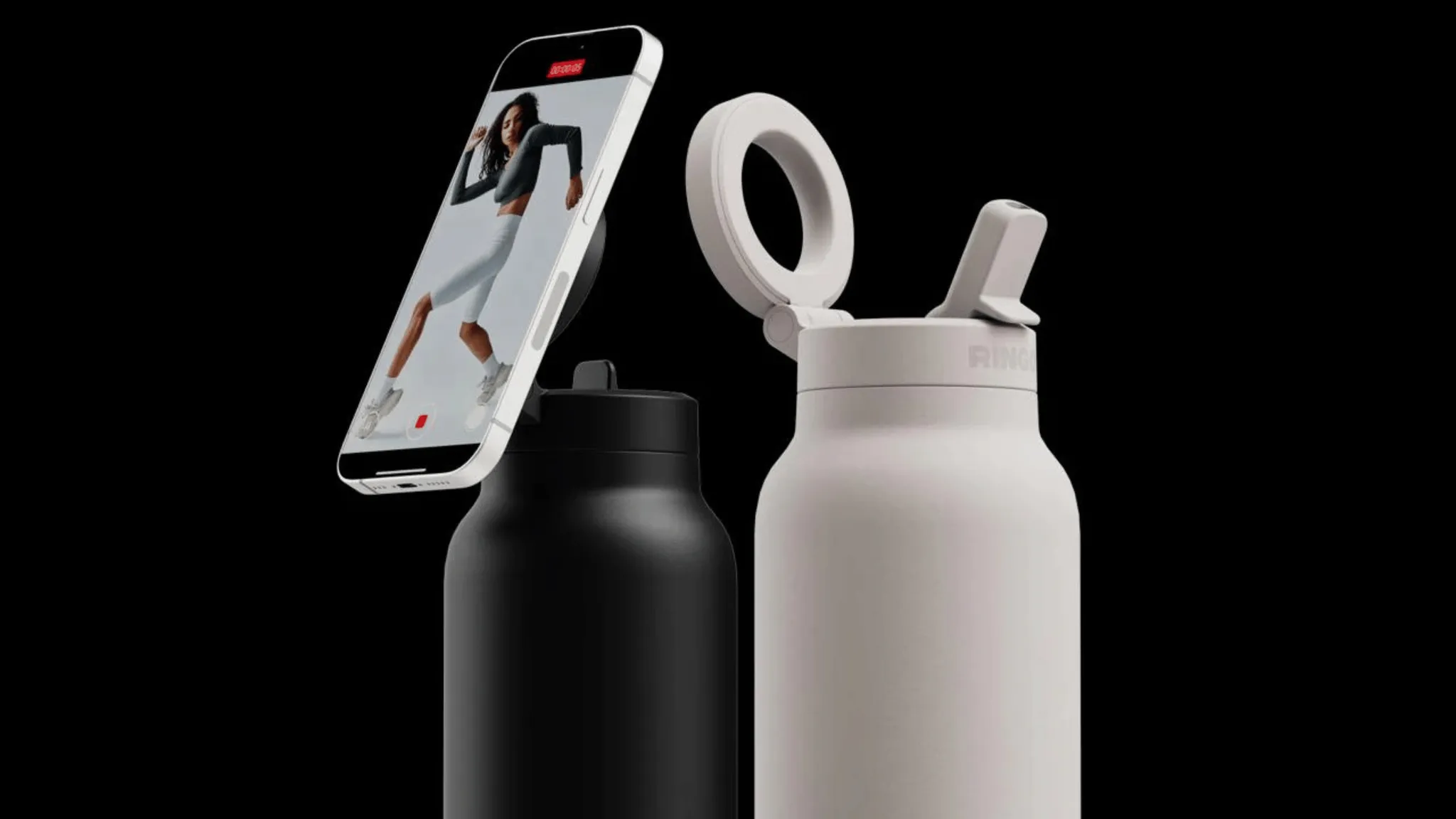
Beyond sales and design, the product nudged deeper reflections about how we adapt objects to changing habits. The water bottle-phone stand sits at the intersection of physical and digital life. It speaks to a broader pattern: as our lives become digitally mediated, physical objects evolve to support that mediation.
There are also modest environmental implications. If a single, multifunctional reusable bottle reduces the impulse to buy separate gadget stands or disposable holders, that reduction in material consumption is beneficial. Moreover, the product leveraged existing sustainability preferences among reusable bottle buyers, marrying convenience with environmental values.
The broader cultural resonance harkens to what designers call "affordances" — the possibilities for action built into an object. A door handle invites pulling; a bottle that holds a phone invites filming, watching, and connecting. Small shifts in affordance ripple into behavior.
The Role of Serendipity and Curiosity
Chris's story is a case study in how curiosity and attentiveness change trajectories. It wasn't raw talent or a flash of genius so much as the willingness to follow a silly question and take it seriously. Serendipity — the friend's passing comment — mattered. But luck alone doesn't create products; curiosity and follow-through do.
This pattern repeats across entrepreneurial history. Many innovations start as modest solutions to everyday problems: Post-it Notes came from a failed adhesive; band-aids from an engineer watching his wife struggle with bandages. The common thread is that inventors noticed something everyday and imagined a fix.
Lessons for Aspiring Innovators
There are practical takeaways in Chris's journey:
Look for recurring pain points in your life. Frequency often signals value.
Prototype quickly and cheaply. Early iterations reveal constraints faster than long design cycles.
Test with real users in real contexts. Controlled lab feedback can miss usage nuances.
Embrace iteration. Each round of improvement should target a specific failure mode.
Craft a story. Consumers connect with human narratives more than specs sheets.
Start small before scaling. Validate demand through pilot production or crowdfunding.
These lessons apply across domains, whether developing household goods or digital services.
User Stories: The Ways People Used It
After launch, the product found unexpected fans who used it far beyond photo-taking.
A yoga instructor used the bottle-stand to record flowing sequences in small studios.
A commuter turned it into a hands-free GPS holder during rideshare trips.
A busy parent used it for recipe videos in the kitchen, stacking one-handed tasks while the phone displayed steps.
A student used it to join long online lectures while taking notes, tucking the bottle into a backpack without adding much bulk.
These stories helped broaden the product's appeal from a novelty to a multifunctional tool.
Competition and Imitation
By the time orders began climbing, similar products started to appear. Some were cheap silicone rings sold on mass-market e-commerce platforms; others were stylish branded bottles with integrated phone grooves. That imitation validated the underlying idea's market potential but also pressured Chris to maintain quality and brand differentiation.
He responded by emphasizing material quality, warranty, and continued design improvements. Customer service became a differentiator; the company handled wear-and-tear issues with generous replacement policies, while community-driven design updates kept early adopters engaged.
Regulatory and Safety Considerations
Though the idea seems benign, there were regulatory checkboxes. Materials in contact with drinkable water needed certification for food safety. Packaging claims required accuracy. Consumer goods laws around durability, labeling, and returns influenced warranty policies. Chris's team engaged consultants to navigate these requirements, ensuring compliance in markets they planned to enter.
Financials and Business Model
The revenue model blended product sales with optional add-ons and limited-edition designs. Margins on attachable accessories were higher, while molded bottles required higher upfront capital but offered better brand control. Bulk sales to retailers provided lower per-unit margins but broadened distribution.
Financial prudence framed decisions: maintain lean operations, manage inventory risk through pre-orders, and reinvest early profits into R&D and marketing. Profitability depended not on explosive unit sales but on steady adoption across multiple channels.
Design Evolution: From Version 1 to Version 3
Product development carried the design from clunky prototypes to refined models. Version 1 focused on functionality; it worked but looked utilitarian. Version 2 improved materials and fit, added texture for better grip, and introduced quick-release mechanics. Version 3 prioritized aesthetics, reduced weight, and introduced modular attachments (a tripod adapter, a car-mount clip) that extended the product's versatility.
Each iteration responded to user feedback and manufacturing learnings, showing how incremental improvements compound into a reliable product.
Marketing: Making Ordinary Feel Essential
The marketing strategy avoided grandiose claims. Instead, it leaned into the power of relatable moments: family get-togethers, solo travel, kitchen experiments, gym classes. Short videos showing before-and-after scenarios — fumbling photos versus easy, stable shots — communicated value quickly.
Influencers and micro-creators played a role; early adopters who loved the product shared authentic content that resonated with niche audiences. PR stories emphasized the human angle: "From a friend's joke to a product used by thousands." That narrative framed the bottle-stand as sensible rather than trendy.
Sustainability and Lifecycle
In product conversations today, sustainability is not optional. Chris's company took incremental steps: using BPA-free materials, minimizing packaging, and offering a recycling take-back program for worn-out parts. While not perfect, these measures aligned with the values of many customers and reduced potential criticisms.
Moreover, a design that extended the functional life of a bottle — by adding utility rather than encouraging new purchases — could be positioned as environmentally positive when communicated honestly.
The Global Angle: Local Roots, Global Reach
Though the product began as a small project among friends, its appeal crossed cultural lines. People everywhere share phones and portable bottles. Launch strategies considered regional adaptations: color palettes suited to local tastes, measuring compatibility with locally popular bottle brands, and language in marketing messages tailored to regional idioms.
Distribution required logistical planning — warehousing, shipping, and customer support in multiple time zones. Partnerships with regional distributors smoothed entry into new markets where local retailers added credibility.
The Emotional Payoff: Small Things, Big Smiles
Perhaps the most telling metric was anecdotal: messages from customers describing moments the bottle saved. A newlywed couple who captured a candid family portrait without asking a stranger; a medical student who recorded hands-free lectures during night shifts; an elderly man who joined video calls with grandchildren by propping his phone easily. These tiny human stories underscored the product's emotional resonance.
Making Space for Small Innovations
Chris's story stands as a reminder that not all impactful innovations require vast budgets or cutting-edge labs. Some of the most useful products arise from attention — noticing, asking, trying. In that sense, the water bottle that holds a phone is less about technology and more about the ethos of design: solve problems where they live.
The narrative also shifts how we value ideas. Society tends to glorify radical disruption, but there is equal merit in modest improvements that quietly change everyday life. A small change that removes friction is, in its own way, transformative.
What Comes Next
The company's roadmap included several directions: expanding accessory lines, licensing the design to larger bottle makers, and exploring partnerships with smartphone companies for co-branded releases. The team also planned to invest in product research to explore other everyday pairings — items that share space in daily life but not design.
But even with plans to expand, there was a humility in Chris's approach. He understood that success could be measured lightly: by steady user satisfaction, incremental improvements, and the occasional message from someone whose day had been made easier.
A Case Study in Design Thinking
For students of design and entrepreneurship, the project offers a compact case study.
Start with empathy. Chris's problem framing began with people's lived experience.
Define the right problem. Instead of "How do we make better phone stands?" he asked, "How could things people already carry solve phone-holding needs?"
Ideate and prototype rapidly. Early cheap tests revealed the true constraints.
Iterate based on usage. Observing actual users was more instructive than internal assumptions.
Scale responsibly. Crowdfunding and small-batch manufacturing let the team validate demand before committing to expensive tooling.
The Quiet Power of Small Ideas
In the end, the water bottle-phone holder is a humble product. It does not promise to change the world. But it does something harder to measure and often more valuable: it reduces small frictions in daily life, enabling moments that otherwise would have been lost to awkward angles and blurred memories.
Chris Place's journey — from a rooftop joke to a consumer product in hands across cities and countryside — reminds us of the potency of paying attention. Great design often begins not with a grand ambition but with curiosity about the small, familiar things we ignore. That is the quiet heart of many innovations: an insight that is simple enough to seem obvious after the fact, yet powerful enough to change how we live.