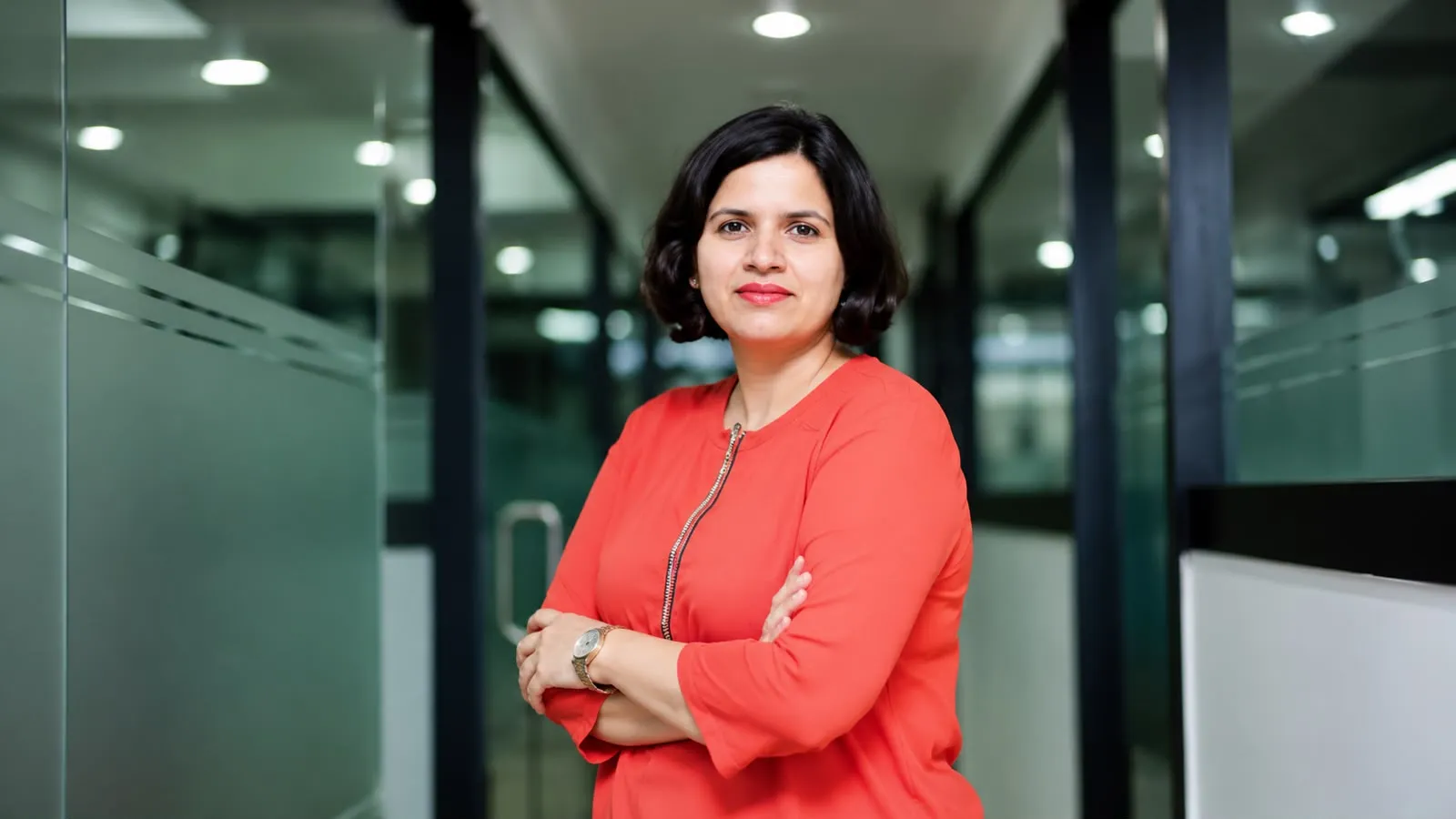
She Was at PayPal. She Was Comfortable. She Came Home Anyway.
In 2008, Upasana Taku was working at PayPal in the United States. She had an engineering degree from NIT Jalandhar, a Master's in Management Science and Engineering from Stanford, and a career in payments and risk management at HSBC and then PayPal that had given her a view of global financial infrastructure that very few people in India had at the time.
By every conventional measure, she had made it. International career, US salary, the kind of professional position that families from Gandhinagar, where she grew up in a middle-class family of academicians, dreamed of for their children.
She walked away from it.
"In 2008, although she had a comfortable life with her corporate job, she realised that she no longer wanted to be a corporate drone. Work was becoming too easy. She wanted to come back to India and contribute to the Indian startup ecosystem," as Startup Talky documented in its account of her journey. Her family did not support the decision. They saw it as a big risk. She came back anyway.
In 2009, she and her husband Bipin Preet Singh co-founded MobiKwik from their apartment in Delhi. No office. No external capital at the start. A small team, personal savings, and a product idea that the market they were building for had not yet asked for — because most of India did not know it needed a mobile digital wallet yet.
That gap between what the market had not yet asked for and what the founders believed it would eventually need is the gap that fifteen years of building has now proven correct. In December 2024, One MobiKwik Systems listed on Indian stock exchanges in a debut that saw shares surge dramatically. MobiKwik became a public company. And Upasana Taku — co-founder, Executive Director, and CFO — became one of the few women in India's history to take a major fintech company through an IPO.
What MobiKwik Actually Built — Across Fifteen Years
MobiKwik launched as a prepaid mobile wallet for phone recharges and utility bill payments. In 2009, that was a specific and bounded product for a specific and bounded problem: people needed to pay bills online, credit card penetration was low, and online banking was slow and cumbersome. MobiKwik made it frictionless.
What happened next was the accidental genius of surviving long enough for the market to catch up to the product.
Demonetisation in November 2016 was the first inflection point the company did not plan for but benefited enormously from. When the Indian government withdrew 86 per cent of all currency in circulation overnight, cash-dependent India turned to digital payments in a matter of days. MobiKwik's user base grew rapidly through that period — not because the product suddenly got better, but because the use case became urgently obvious to 1.3 billion people simultaneously.
The second inflection point was UPI — the Unified Payments Interface built by NPCI, which began scaling from 2017 onward and became the most widely used real-time payments system in the world by volume. MobiKwik integrated UPI into its platform, and eventually launched Pocket UPI — a wallet-based UPI product that Taku has described as a core part of the company's current differentiation strategy.
The third inflection point was the recognition that payments alone, while essential, were not sufficient for the full financial services opportunity. From 2018 onward, MobiKwik began building financial services: digital lending, credit, insurance, mutual fund investments. The payments relationship — the trust a user builds with a platform through daily bill payments and transfers — became the on-ramp to financial products that users had not previously accessed.
By the time of its IPO in December 2024, MobiKwik was not a digital wallet company. It was a full-stack fintech platform serving 186 million users and 5 million merchants, with products spanning payments, credit, insurance, and investment — and with 75 per cent of its users coming from Tier 2 and Tier 3 cities where, as Taku has consistently emphasised, the need is not convenience but necessity.
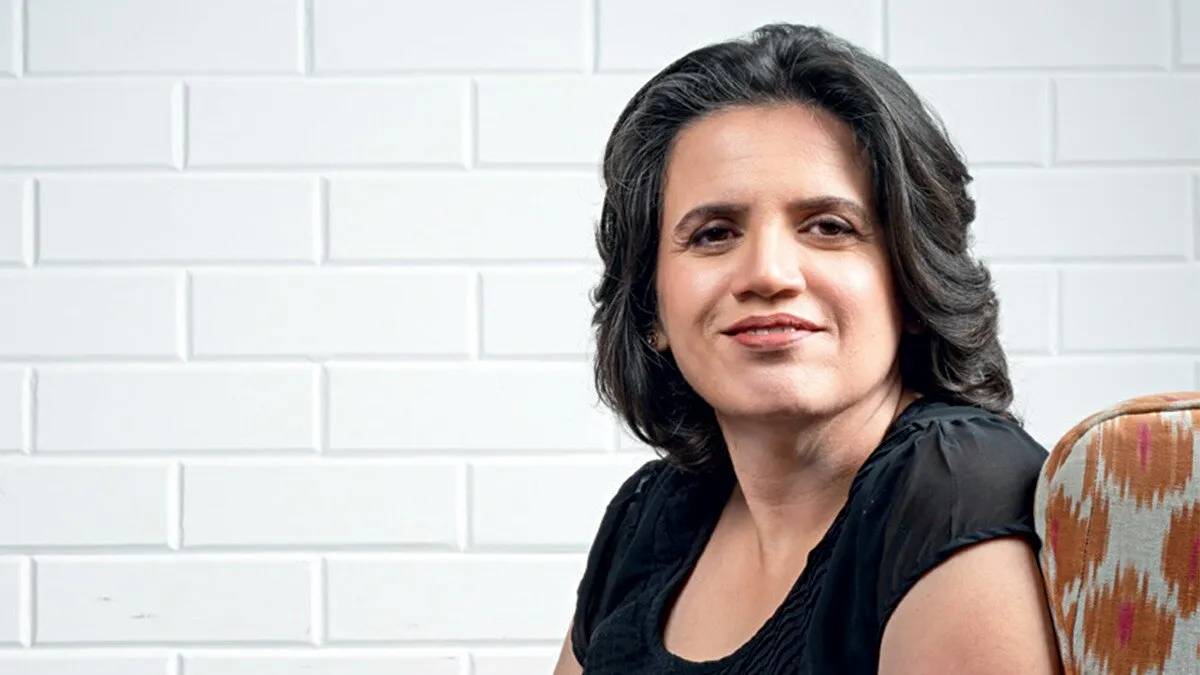
The IPO — the Stellar Debut and What Came After
MobiKwik's December 2024 IPO was one of the most anticipated fintech listings in India in years. The shares made a stellar debut on the exchanges — and then experienced a significant decline, scraping a 52-week low in March 2025 after the IPO lock-in period expired.
Taku has been candid about what happened and why. The third quarter of FY25 saw MobiKwik report a loss of ₹55.28 crore, after profitable first two quarters, driven by the regulatory tightening of unsecured lending that affected the entire Indian fintech and NBFC sector in late 2024. The RBI's scrutiny of unsecured credit pricing compressed margins and reduced disbursals across the industry simultaneously. MobiKwik was not uniquely affected — every fintech and bank with unsecured lending exposure saw the same headwinds.
The response to the post-IPO pressure tells you more about Taku's leadership than the IPO itself did. Rather than retreating or pivoting defensively, MobiKwik continued its strategy of building toward a complete fintech licence stack — a decision that paid off in April 2026.
The NBFC Licence — and What It Changes
On April 27, 2026, MobiKwik announced that the RBI had approved its application for a Non-Banking Financial Company licence, enabling the launch of its lending arm, MobiKwik Financial Services Private Limited — a wholly owned subsidiary. The company plans to commence NBFC operations by end of calendar year 2026, subject to receipt of the Certificate of Registration.
The NBFC licence is the missing piece in MobiKwik's financial stack — and Taku's explanation of why it matters is more precise than most NBFC announcements tend to be.
MobiKwik currently works with 12 lending partners. The NBFC structure allows it to originate credit on its own balance sheet — a materially different economic proposition from the current lending partnership model, where MobiKwik's margin is compressed by the cost of the intermediary. With direct co-lending relationships with public and private sector banks, the cost of capital falls. With the ability to use AI and ML models trained on 186 million users' transaction history to underwrite credit, the risk selection improves. And with Zaakpay — MobiKwik's payment aggregator subsidiary, which received its RBI PA licence — providing the payment infrastructure, the full lending-to-repayment loop becomes an internal operation rather than a multi-partner coordination.
PA licence. Broking licence. NBFC licence. The full fintech stack, assembled over 15 years, is now in place.
The Woman Who Built Through Everything India Threw At Her
The part of Upasana Taku's story that most leadership profiles underemphasise is not the IPO or the NBFC licence. It is the sustained, decade-and-a-half-long endurance of building a major financial technology company in India as one of very few women in the room at any point in the journey.
When MobiKwik was founded in 2009, India's fintech landscape was not just nascent — it was male-dominated to a degree that made Taku's presence in the co-founder's seat unusual in every room she walked into. Investor meetings, regulatory consultations, industry conferences, partnership negotiations — the default expectation, in almost every context, was that the founder of a payments company was a man.
She navigated it through execution rather than advocacy. MobiKwik built credibility by delivering: by surviving the years when digital wallets were a novelty, by adapting to UPI when UPI changed everything, by moving into financial services before the payments margin compressed, by maintaining user trust through data protection and regulatory compliance at a standard that larger, better-funded competitors did not always match.
In April 2025, Fortune India named her one of India's 100 Most Powerful Women in Business. She also serves as Vice-President of the Executive Committee at the Unified Fintech Forum — a policy role that places her in the room where India's digital finance regulation is being shaped.
Taku has been direct in interviews about what the fintech opportunity looks like from where she stands:
The 10x growth ambition she has articulated — from where MobiKwik stands today to where it could be in a decade — is not a projection without foundations. It is grounded in the specific observation that only 10 per cent of Indians currently use multiple financial products, and the remaining 90 per cent represent the market that MobiKwik is positioned to serve.186 million users. 5 million merchants. 75 per cent from Tier 2 and Tier 3 cities. PA licence. Broking licence. NBFC approved. And a co-founder who left PayPal, came back to a Delhi apartment, and built a listed company from personal savings because she believed the opportunity was real.The opportunity was real. The company is public. The next decade is what she is already thinking about.


