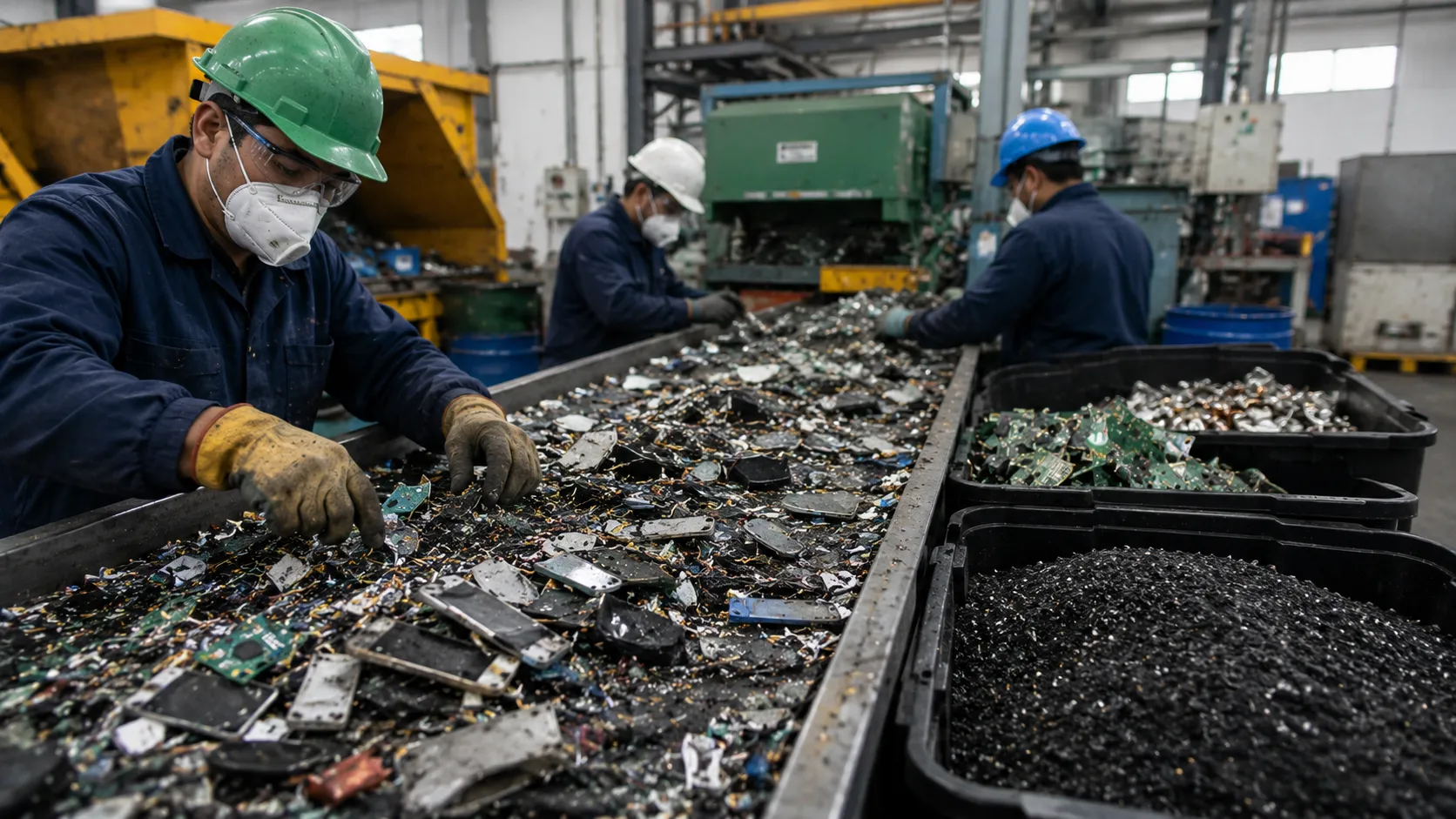
Open up your desk drawer, and you will likely find a graveyard of old smartphones, tangled charging cables, and defunct tablets. To most of us, this drawer is just a collection of domestic clutter we intend to deal with later. But to a rapidly growing network of deep-tech venture capitalists and material scientists, it represents something else entirely: a high-grade mineral deposit waiting to be tapped.
This is the frontier of "urban mining," a fast-accelerating sector where startups are skipping the immense environmental destruction of digging new open-pit mines and instead harvesting critical resources directly from our discarded electronic waste. The financial world is betting heavily on this transition. A highly competitive cohort of recycling and material science startups has collectively locked in over $400 million in venture capital funding, driven by an urgent global scramble to secure the rare-earth elements that power our modern world.
From electric vehicles and wind turbines to medical defense systems and smartphone screens, rare-earth metals like neodymium, dysprosium, and terbium are the invisible backbones of modern technology. Yet, the supply chain that provides them is increasingly fragile, choked by geopolitical friction, environmental regulations, and highly concentrated overseas processing monopolies. By treating e-waste as a premium resource rather than a toxic headache, urban mining startups are proving that the clean energy transition does not need to strip the earth to save it.
The Human and Environmental Cost of the Status Quo
To understand why investors are pouring millions into this space, it helps to look at the severe toll of traditional mining. Extracting rare-earth elements from the ground is notoriously destructive. It involves blasting open massive tracts of land, displacing local communities, and using harsh acids to separate microscopic amounts of metal from mountains of rock. This process leaves behind toxic tailing ponds and heavily polluted waterways, frequently compromising the health and safety of nearby towns.
Furthermore, traditional mineral strikes can take over a decade to navigate environmental permits and build heavy infrastructure. Urban mining completely upends this timeline and ecological burden. High-grade electronic waste contains precious metals and rare-earth elements in concentrations up to 50 times higher than natural virgin ores. By intercepting these devices before they hit landfills, startups can source critical elements without ever touching pristine ecosystems.
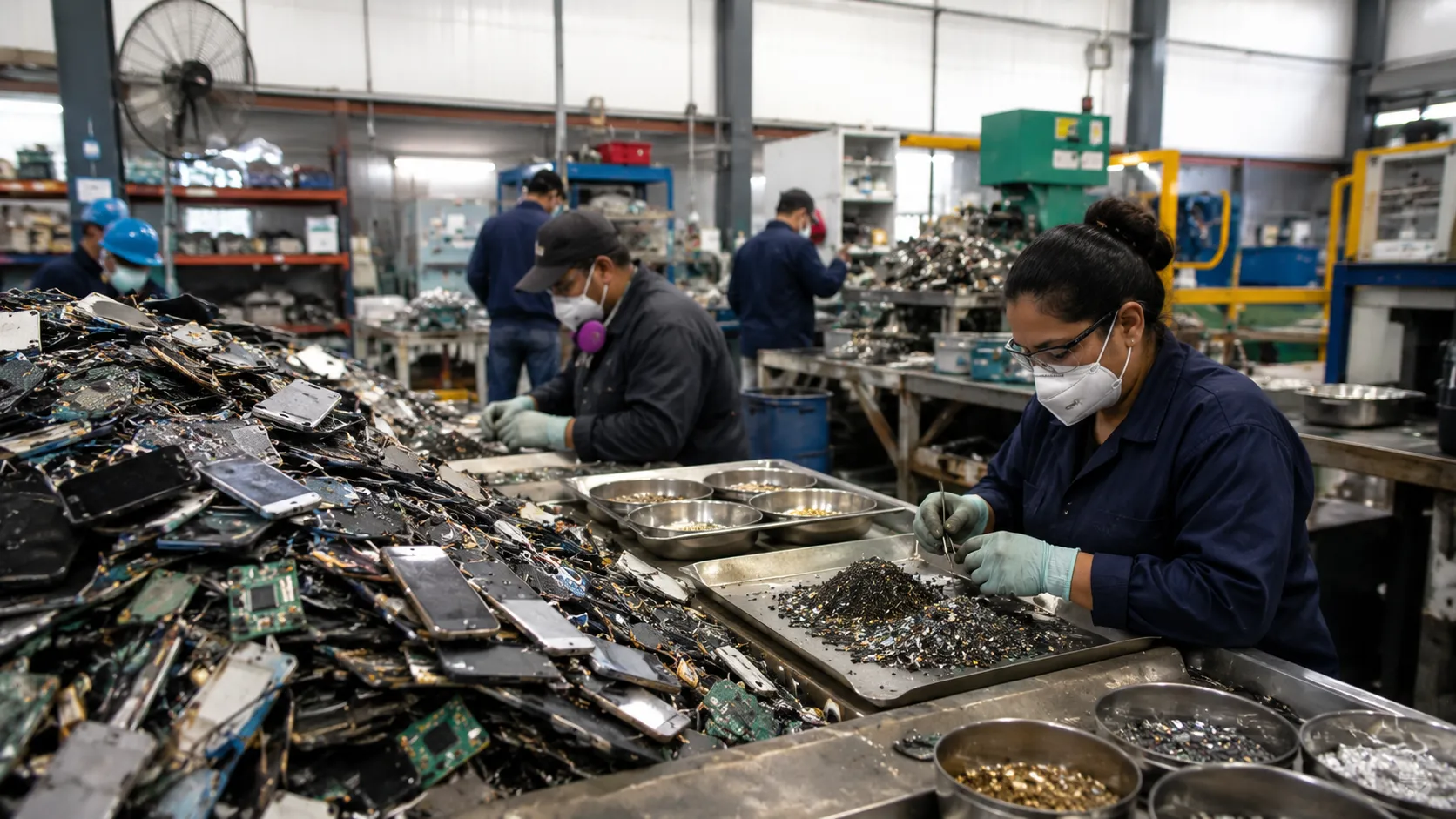
For venture capital allocators, this structural shift turns a slow, unpredictable commodities gamble into a predictable, automated manufacturing operation. The process takes a highly volatile, geographically concentrated asset and localizes it inside domestic borders, effectively insulating the supply chain from international trade tariffs and sudden export controls.
The Engineering Leap: Beyond Toxic Smelting
Historically, electronics recycling was a blunt, hazardous industry. Recovering metals typically meant burning circuit boards in high-heat smelters, a process that released dangerous emissions into the air and destroyed fragile rare-earth magnets in the process. The workers on the front lines were often exposed to toxic fumes, creating a severe human health crisis in processing hubs.
The new wave of heavily funded startups has completely reimagined this cycle through advanced chemical engineering and artificial intelligence. Computer vision systems now scan piles of diverse e-waste, instantly identifying specific device models and using robotic arms to separate rare-earth magnet components before the rest of the chassis is processed.
Instead of using extreme heat, modern facilities utilize closed-loop, low-temperature chemical solutions—and in some cases, bio-engineered microbes—to selectively dissolve and isolate rare-earth elements without generating toxic red mud or hazardous runoff. Companies like Cyclic Materials are building systems that take spent neodymium magnets from electric vehicle motors and hard drives, strip out impurities, and re-engineer them directly into high-purity oxides ready for immediate reuse in new clean-tech applications.
This technical evolution has driven down processing costs by nearly 50% over the last five years, lifting the operational efficiency of urban extraction to a point where it can comfortably compete with virgin mining on price alone, all while offering a vastly safer environment for workers.
Securing the Future of Clean Energy
The rapid scaling of these urban mining nerve centers arrives just as global supply chains face an unprecedented materials crisis. International energy agencies project that the demand for critical minerals will nearly double over the next few decades, driven entirely by the global transition to electrification.
By building resilient domestic recycling networks, these startups are turning an environmental liability—the millions of metric tons of e-waste generated globally every year—into a strategic buffer against international resource scarcity. Major industrial manufacturers are shifting from viewing e-waste recycling as a simple checkbox compliance measure to treating it as a vital pillar of their procurement and risk-mitigation strategies.
As the circular economy moves from a corporate buzzword into an absolute necessity, urban mining is demonstrating that our technological future does not have to depend on finite natural extractions. The very materials we need to build tomorrow’s clean energy infrastructure are already here, buried right inside our trash, waiting for us to reclaim them.