The Video Looks Real. The Performance Never Happened.
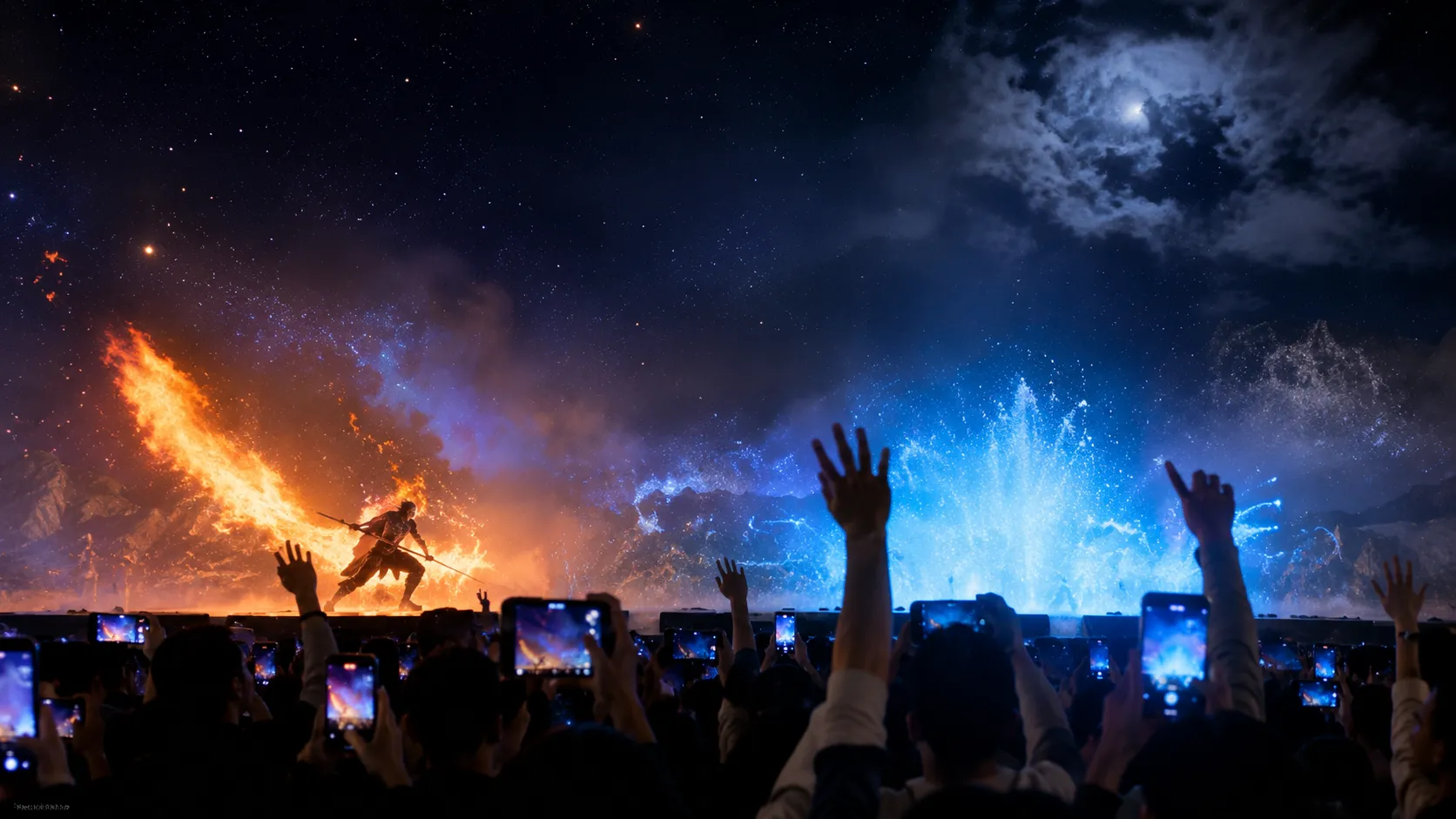
You have probably seen one. A stage that appears to be the size of an arena. A performer in Ichigo's shikai robes launching into a combat sequence as pyrotechnics explode around them. A crowd of thousands on their feet. Movie-quality visual effects bleeding into what looks like live action. The caption reads something like "Japanese theatre is UNREAL " and the comments are full of people tagging friends and asking where they can buy tickets.
The answer is: nowhere. Because the performance never took place.
The clips flooding Instagram Reels and other short-form platforms right now — the ones showcasing what appears to be physically impossible anime-scale stage productions inspired by Bleach, Naruto, One Piece, and other major franchises — are largely not recordings of real live events. They are AI-generated videos, produced in seconds or minutes using platforms like Seedance 2.0 and Syntx AI, specifically designed to look like authentic cinematic footage of live performances.
This matters for two reasons. The first is obvious: a lot of people are being misled about what currently exists. The second is more interesting: what actually does exist on Japanese stages right now is genuinely remarkable, and the fake clips are obscuring a real story about real artistry that deserves to be seen on its own terms.
What These Platforms Actually Are
Seedance 2.0 is a text-to-video AI model developed by ByteDance — the company behind TikTok — first released in June 2025 and significantly upgraded in February 2026. It generates high-quality cinematic video complete with synchronised dialogue and sound effects from simple text prompts. Unlike earlier AI video tools, Seedance integrates text, visuals, and audio generation within a single system, which analysts say allows it to produce content that feels closer to a professional production pipeline than an experimental AI demo.
Shortly after Seedance 2.0 was released, realistic clips based on real actors, TV shows, and films went viral across the internet. These included videos featuring characters resembling Spider-Man, Deadpool, and other major franchise figures — all generated without any real performers, real stages, or real cameras involved.
The same architecture that makes Seedance compelling for filmmakers and marketers also makes it trivially easy to fabricate something that looks exactly like a live performance video. You do not need a theatre. You do not need performers. You do not need a production budget. You need a prompt, a subscription, and a few minutes.
Syntx AI is a similar AI video generation platform also used to produce these kinds of cinematic fake clips, operating on the same basic principle: describe what you want to see, and the model generates footage that looks like it was shot on location.
The results are convincing enough that millions of social media users — including people who actively follow anime and Japanese culture — are sharing them without realising they were never filmed at all.
How to Tell the Difference
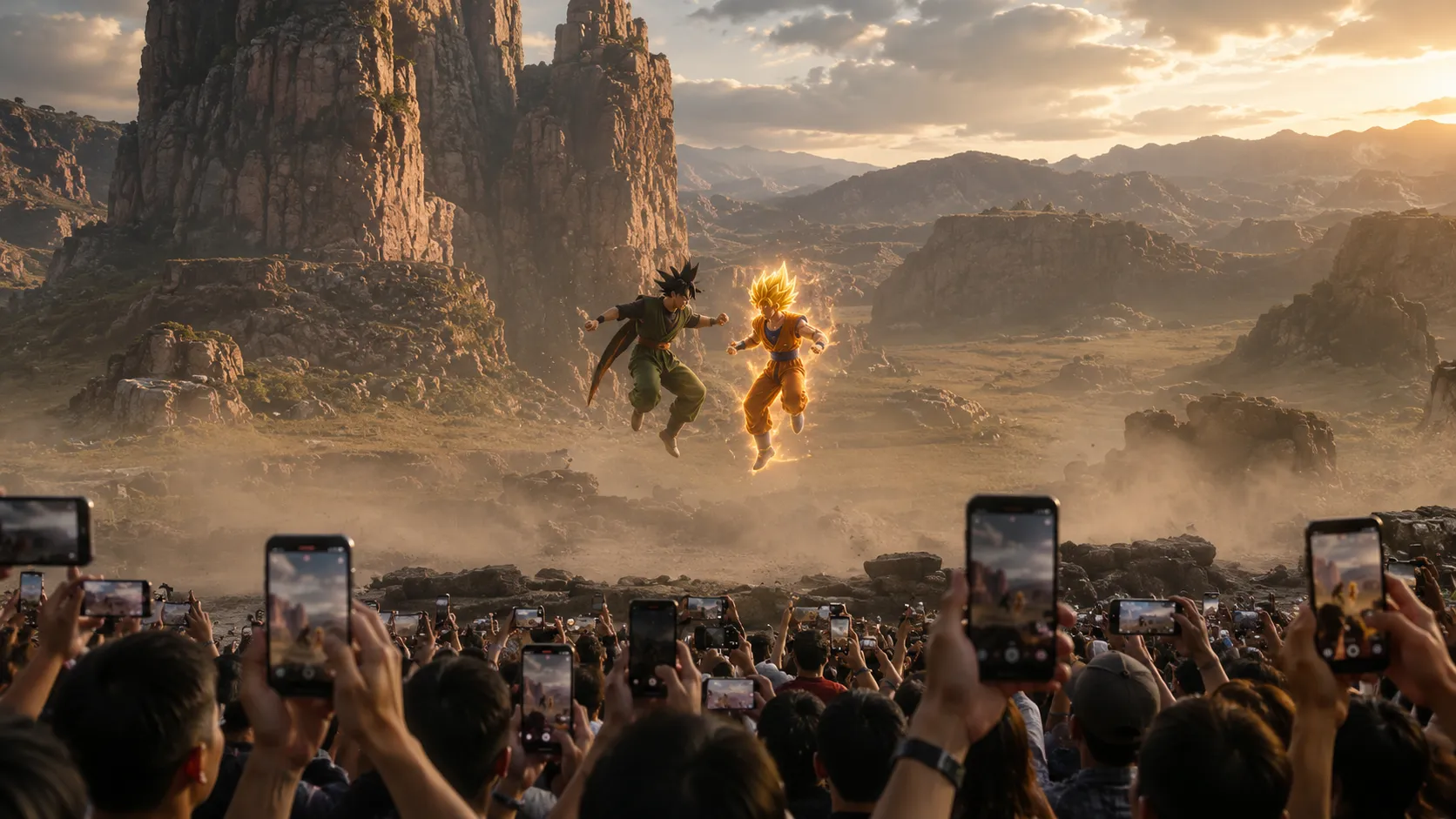
The clips have several tells, though they are becoming harder to spot as the models improve.
The physics are cinematic rather than physical. Real stage performances, including the most technically ambitious ones, are constrained by what human bodies and real equipment can do. The scale and simultaneity of effects in these clips — huge pyrotechnics firing in multiple directions simultaneously while performers fly through the air while a crowd of thousands erupts — exceeds what any current live venue could execute in a single moment.
The crowd behaviour is homogeneous. Real crowds are chaotic. People look in different directions, move at different rhythms, hold phones at different angles. AI-generated crowd scenes tend toward visual uniformity — everyone's energy and motion follows the same directional logic, because the model is generating a visual impression of a crowd rather than compositing thousands of individual human responses.
The sound design is movie audio, not venue audio. Real arena and theatre recordings have acoustic complexity — reverb patterns, crowd noise bleeding into microphones, the ambient chaos of a live space. AI-generated audio is clean in the way that a produced soundtrack is clean, because it has been generated to match the visual rather than captured alongside it.
The performers do not quite connect with the environment. In real performances, even highly choreographed ones, there are micro-moments of physical interaction with the space — a foot finding a mark, an eye-line adjusting, a costume reacting to air movement. AI video models generate these interactions at a statistical level, and they are often subtly wrong in ways that are hard to articulate but easy to feel.
Most critically: the clips never show a programme, a ticket, a venue name, a cast credit, or any production context. Real performances leave paper trails. Fake ones do not.
What Is Real — and Why It Is Worth Knowing About
Here is what makes the disinformation frustrating for anyone who knows this world: Japan does have a genre of live anime stage production that is legitimately extraordinary, and it gets completely overlooked whenever AI-generated fakes flood the conversation.
It is called 2.5D theatre — a genre name derived from the concept of taking 2D source material (manga, anime, games) and rendering it in three-dimensional live performance. The term captures the aesthetic intention perfectly: these productions exist in a creative space between the flat illustrated world of the manga and the full physical reality of a conventional stage play.
Live Spectacle Naruto — known to its fanbase as Narusute — is one of the most successful examples. It is a fully staged live production based on Masashi Kishimoto's manga, featuring real actors performing real fight sequences using choreographed martial arts, trampolines, wire work, LED suits, and projection mapping. Ninjutsu scenes use projection mapping, dances, and images where the cast wears suits with LED lights attached. The production has toured Japan, Singapore, Malaysia, Macau, and multiple Chinese cities since 2015, playing to real audiences in real theatres with real performers who trained extensively in the physical demands of the roles.
Hyper Projection Engeki Haikyu!!, the stage adaptation of the volleyball manga, is another landmark example. Real volleyballs were used on stage, and flying wire effects brought protagonist Hinata's leaps to life. The production earned critical and fan acclaim for combining the visual language of the anime with the kinetic energy of live performance.
These are not approximations of the AI-generated spectacles. They are something different and, in important ways, more interesting: live human beings making their bodies do things that serve as physical equivalents of animated sequences, in real time, in front of audiences who can feel the air displacement when someone lands from a wire. Productions use a combination of choreographed martial arts, acrobatics, wire work, projection technology, and creative staging to suggest the dynamic energy of the source material.
The best 2.5D productions do not try to replicate what animation can do. They translate it — finding theatrical equivalents for visual techniques that have no direct physical counterpart, and generating something that only live performance can create: presence, risk, and the collective breath of a room reacting to a human body doing something extraordinary.
Why the Fakes Are Spreading So Fast
The virality of AI-generated fake performance clips is not accidental. It follows the same mechanics that make AI misinformation effective in any context.
The videos are designed to trigger the strongest possible version of a specific emotional response: wonder. The feeling of "this cannot be real" is exactly the feeling that makes people share things. When something looks like it should be impossible and also looks real, the gap between those two perceptions is what gets forwarded. The AI platforms generating these clips are, whether intentionally or not, exploiting that mechanism directly.
The "Japanese theatre" framing adds cultural credibility. There is a genuine and growing international awareness that Japan's performing arts scene is doing extraordinary things — the Kokuho box office phenomenon, the international tours of 2.5D productions, the experimental late-night noh performances in Tokyo. That real awareness creates a receptive context for fake content: people want to believe these clips are real because they have already learned that Japan's stages produce genuinely remarkable work.
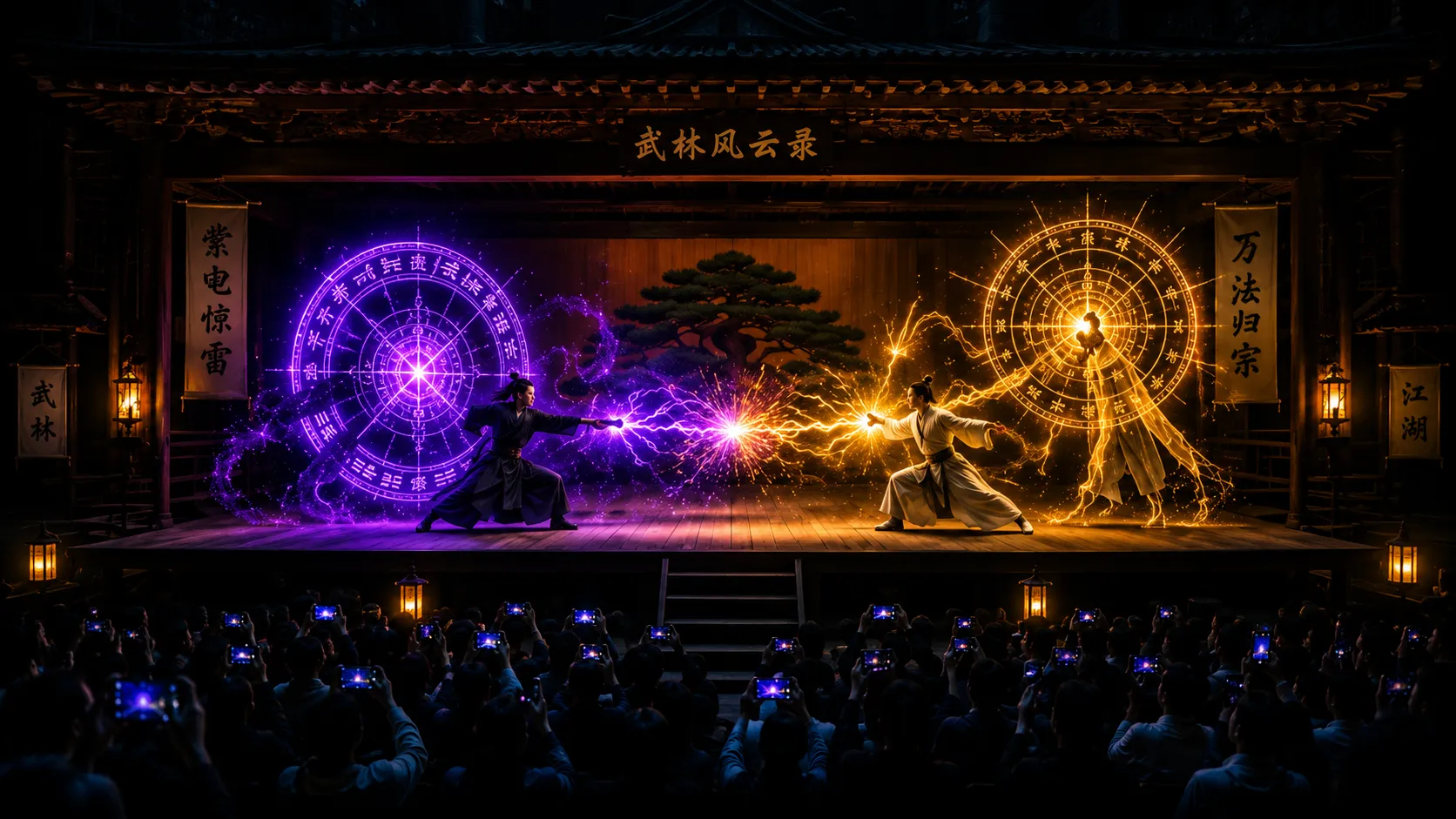
And the clips circulate primarily without context. No venue name. No production company. No cast list. No ticket link. Just the footage and a caption designed to maximise shock. By the time someone asks "wait, is this real?" the clip has already been shared thousands of times.
What You Are Actually Looking At
The next time one of these clips appears in your feed — the one where a performer in anime costume executes an attack that turns the entire arena into a wall of fire while a crowd of thousands loses their minds — here is what you are actually looking at.
You are looking at a text prompt, entered into an AI video generation platform, that asked for something like: "cinematic live stage performance, Bleach-inspired character, massive pyrotechnics, arena crowd, anime VFX, photo-realistic."
The model generated it. A real person made a creative decision about what to ask for, and the platform produced the visual response. That is a form of creativity, and the outputs are often technically impressive.
But nobody performed it. Nobody trained for months to execute that movement. No audience held its breath in a real room. No stage technician fired those pyrotechnics on cue. The experience of watching those twelve thousand people respond to a live human body doing something extraordinary in front of them — which is what 2.5D theatre actually gives you, and what real kabuki and noh and bunraku have given audiences for centuries — that experience does not exist in the clip.
Japan's real stages are doing genuinely remarkable things right now. The fakes, however impressive as AI outputs, are not showing you those things. They are showing you what a text prompt thinks those things might look like. The two are not the same — and knowing the difference is what lets you find the real performances that are actually worth watching.