The Entrepreneur Who Built a Global Brand From Something Most People Discard
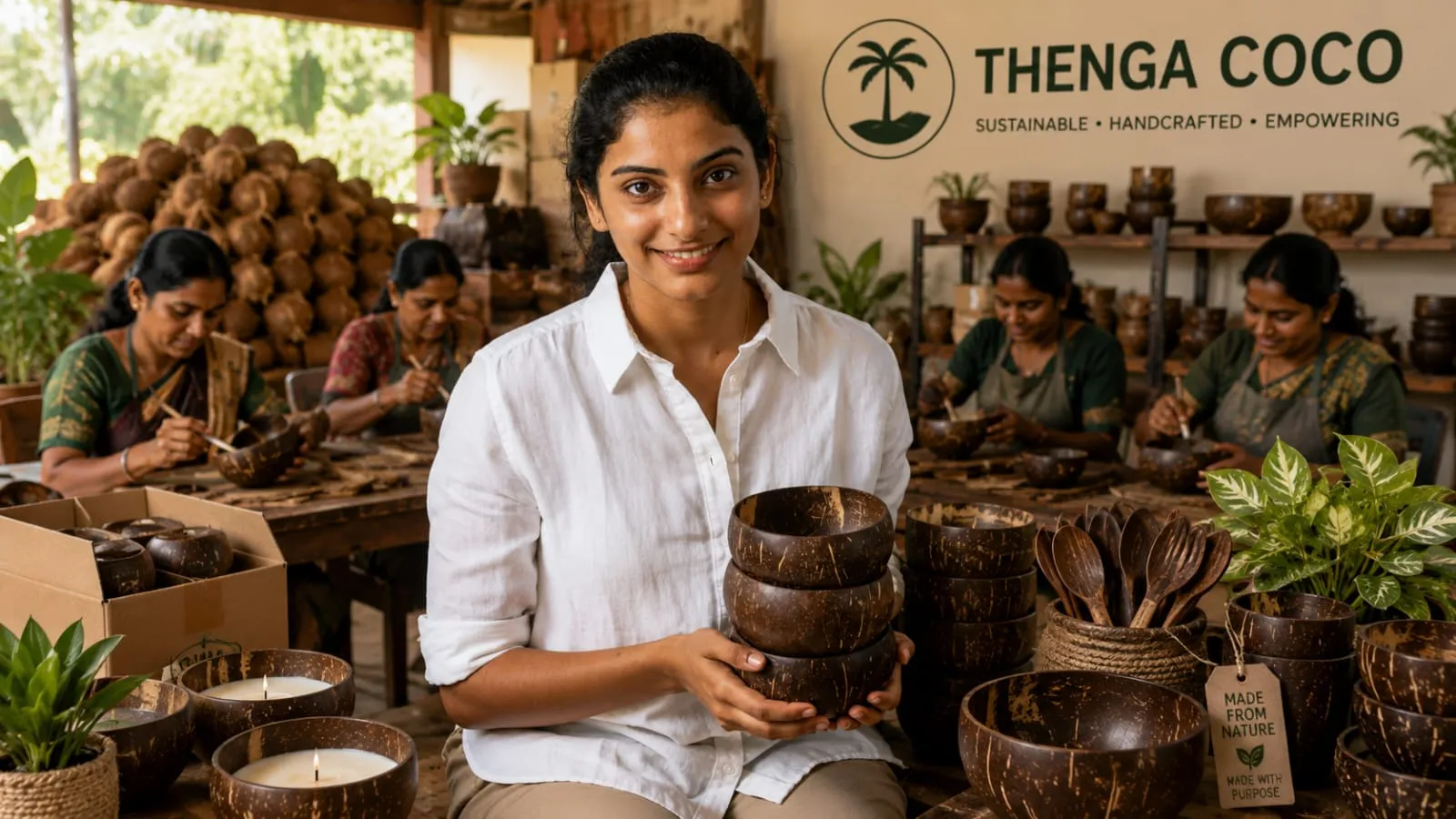
Every year, millions of coconut shells are discarded across India. They pile up outside homes, food processing units, and agricultural facilities, often ending up as waste despite being durable, natural, and remarkably versatile.For most people, they are simply leftovers.For Maria Kuriakose, they became the foundation of an entire business.
The founder of Thenga Coco looked at coconut shells not as agricultural waste but as raw material waiting to be transformed. What began as an experiment in sustainable craftsmanship has grown into one of India's most inspiring women-led sustainability ventures — a business that has crossed ₹3.5 crore in revenue while exporting eco-friendly products to customers around the world.In the process, Thenga Coco has done something even more meaningful: it has created employment opportunities for rural artisans and women while turning a waste stream into a globally marketable product.
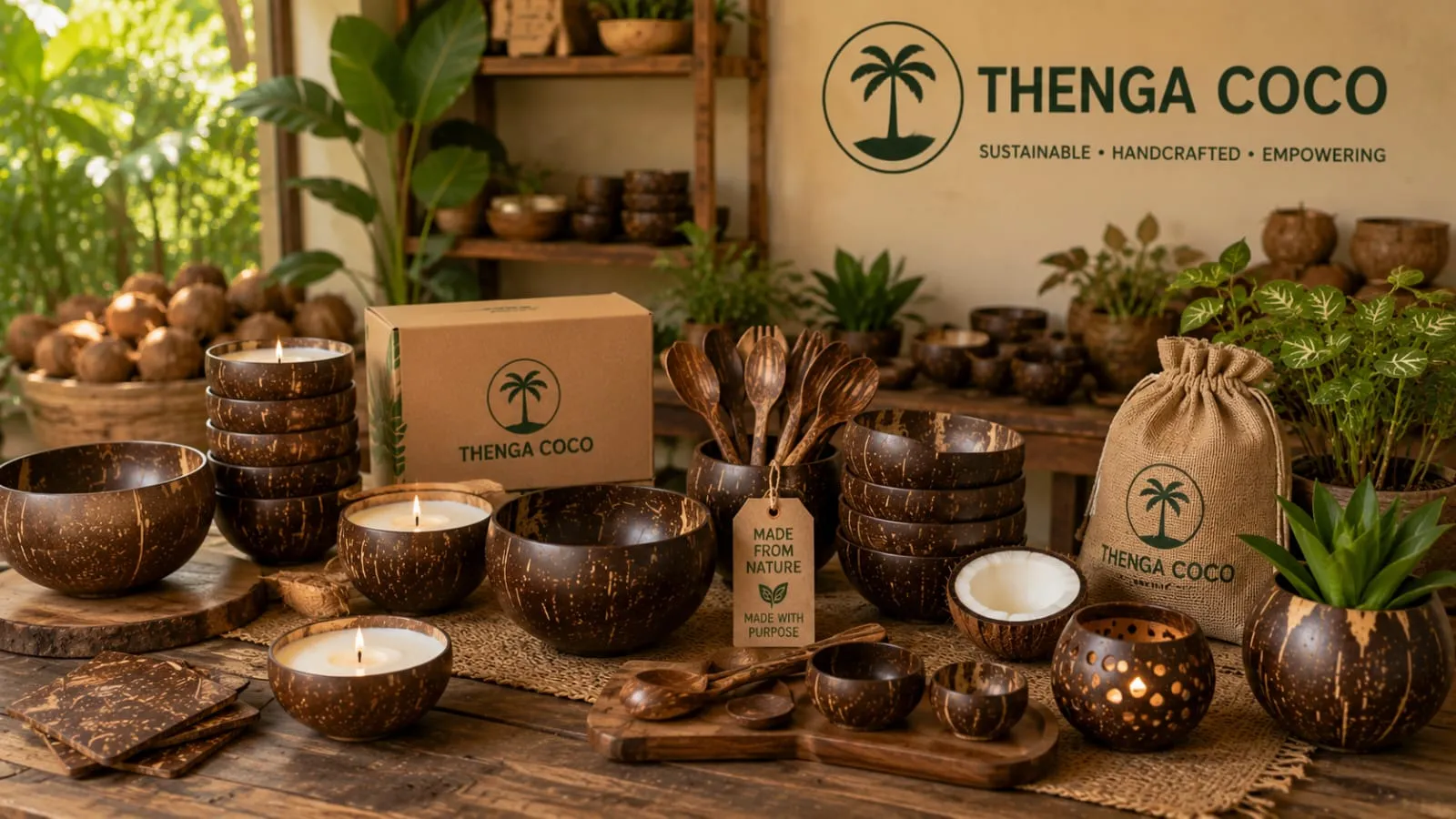
Finding Opportunity in SustainabilityLong before sustainability became a corporate buzzword, Maria was fascinated by the idea that everyday waste could have a second life.India is one of the world's largest producers of coconuts, generating enormous quantities of shells every year. While some are used as fuel or discarded, a significant portion remains underutilised.Maria saw an opportunity hidden inside that challenge.Instead of treating coconut shells as waste, she began exploring how they could be crafted into functional lifestyle products. Bowls, serving ware, home décor items, kitchen accessories, planters, candles, and gift products emerged from what was once considered worthless material.The concept was simple but powerful: create products that were beautiful enough for international consumers while remaining rooted in sustainability and traditional craftsmanship.
What started as a niche idea soon found a market.
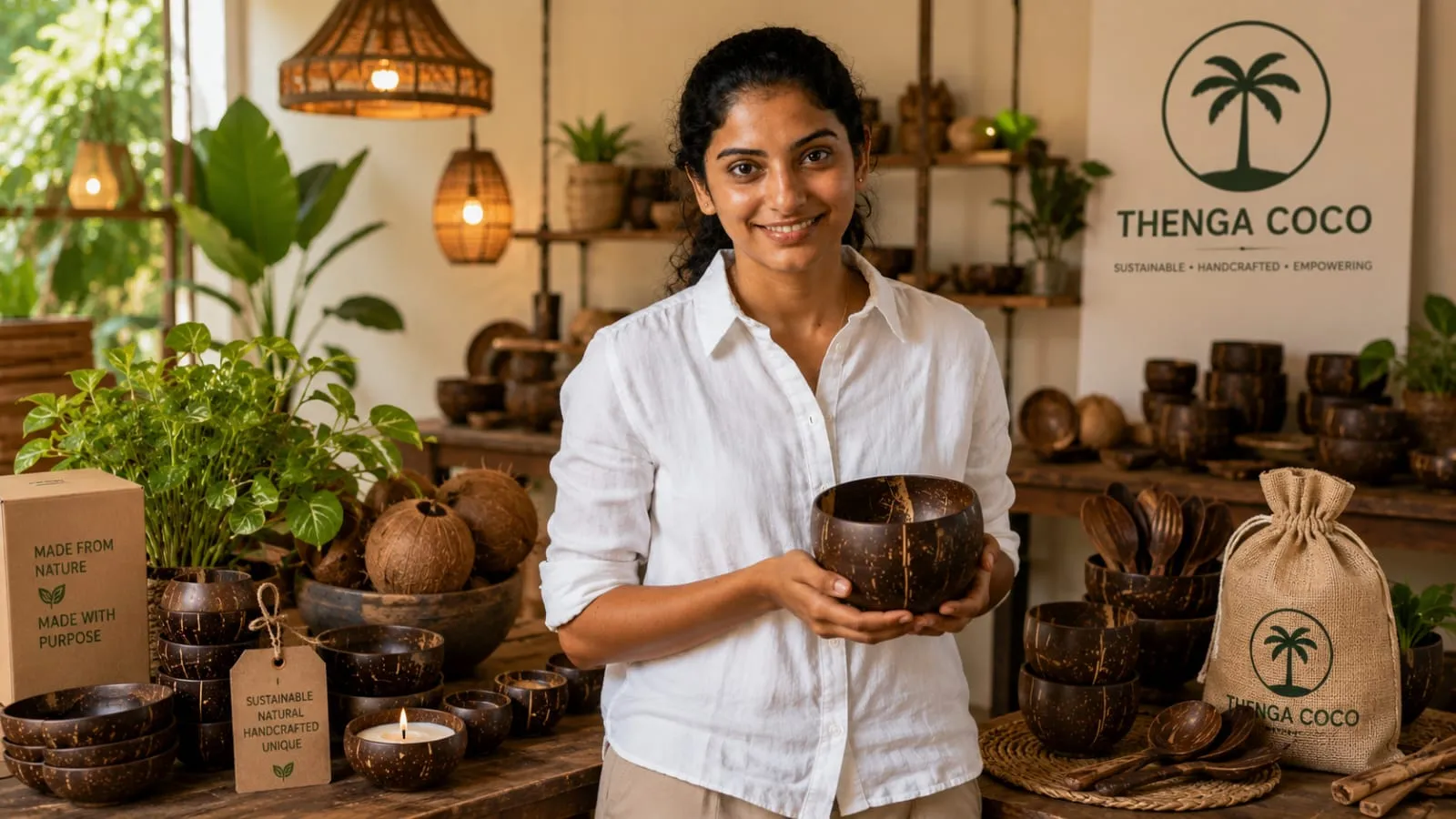
Building a Brand Around Conscious ConsumptionThe rise of environmentally conscious consumers globally created the perfect backdrop for Thenga Coco's growth.Across Europe, North America, Australia, and parts of Asia, buyers increasingly began looking for alternatives to plastic, synthetic materials, and mass-produced home products. Consumers wanted products that were natural, sustainable, and carried an authentic story.Thenga Coco delivered exactly that.Every product carried two powerful narratives. The first was environmental sustainability — transforming agricultural waste into useful goods. The second was social impact — creating income opportunities for artisan communities that often struggle to access premium markets.Rather than competing solely on price, Thenga Coco competed on values, craftsmanship, and design.That positioning helped the company establish itself in export markets where consumers were willing to pay a premium for products aligned with sustainability and ethical sourcing.
Creating Livelihoods Beyond the ProductThe most significant impact of Thenga Coco may not be the products themselves.
It is the ecosystem behind them.The company works closely with rural artisans and women who participate in various stages of production, processing, finishing, and packaging. By creating consistent demand for handcrafted products, the business generates income opportunities in communities where employment options are often limited.For many women, the work provides a flexible source of income that can be balanced alongside family responsibilities. For artisans, it creates access to markets they might never have reached independently.This model turns entrepreneurship into something larger than business growth.It becomes community development.Every exported bowl, candle holder, or décor piece represents not only a sustainable product but also a livelihood created somewhere along the value chain.Scaling a Circular Economy BusinessBuilding a sustainability venture is rarely straightforward.
Unlike traditional manufacturing businesses, circular economy companies must solve multiple challenges simultaneously. They need reliable access to raw materials, efficient production systems, consistent quality standards, and customers willing to embrace alternative materials.
Maria and her team had to navigate all of these complexities while building credibility in international markets.
Export customers expect consistency, reliability, and professional quality standards. Meeting those expectations while maintaining handcrafted authenticity requires careful balance.
Yet Thenga Coco managed to achieve that balance.The company's growth to approximately ₹3.5 crore in revenue demonstrates that sustainability-focused businesses can be commercially viable without compromising their mission.
In fact, the mission itself became one of the company's strongest competitive advantages.Why Thenga Coco MattersThe story of Thenga Coco reflects a larger shift taking place across India's startup ecosystem.
For years, startup success stories were dominated by technology platforms, apps, and digital services. Those businesses remain important, but a new generation of entrepreneurs is proving that innovation can also emerge from traditional sectors, rural communities, and sustainable manufacturing.Maria's venture sits at the intersection of three powerful trends shaping the future of business:
Environmental sustainability.
Women-led entrepreneurship.
Rural economic development.
Few companies manage to combine all three successfully.
Thenga Coco has done exactly that.The Bigger Lesson.The most valuable lesson from Thenga Coco is that entrepreneurship often begins with perspective.The raw material already existed.The artisans already existed.
The market demand was emerging.
What changed was the willingness to see possibility where others saw waste.That ability to reimagine value is what separates entrepreneurs from everyone else.Maria Kuriakose did not invent coconuts. She did not invent craftsmanship. She did not invent sustainability.She connected them in a way that created economic opportunity, environmental benefit, and social impact simultaneously.And in doing so, she transformed discarded coconut shells into a thriving global business.Sometimes the next great startup isn't hidden inside a laboratory or a software codebase.
Sometimes it's lying on the ground waiting for someone to see its potential.


