The Yoga Teacher Who Built a ₹500 Crore Snack Empire—and Sold It to ITC: How Suhasini Sampath Turned a Personal Health Crisis Into India's Largest Healthy Food Exit
BENGALURU — May 25, 2026 — In 2014, Suhasini Sampath was a yoga teacher in Bengaluru with a problem she could not solve. She was 34 years old, a mother of two, and after years of struggling with digestive issues and food intolerances, she had transformed her own health through a careful, deliberate diet—whole grains, natural ingredients, no artificial preservatives or refined sugar. The transformation was profound. The frustration that followed was equally so: she could not find a single packaged snack in India that met her standards. The granola bars, breakfast cereals, and protein bars that lined supermarket shelves were all imported, all expensive, and all formulated for Western tastes and Western nutritional profiles. The Indian market for healthy, natural, preservative-free packaged food was essentially empty.
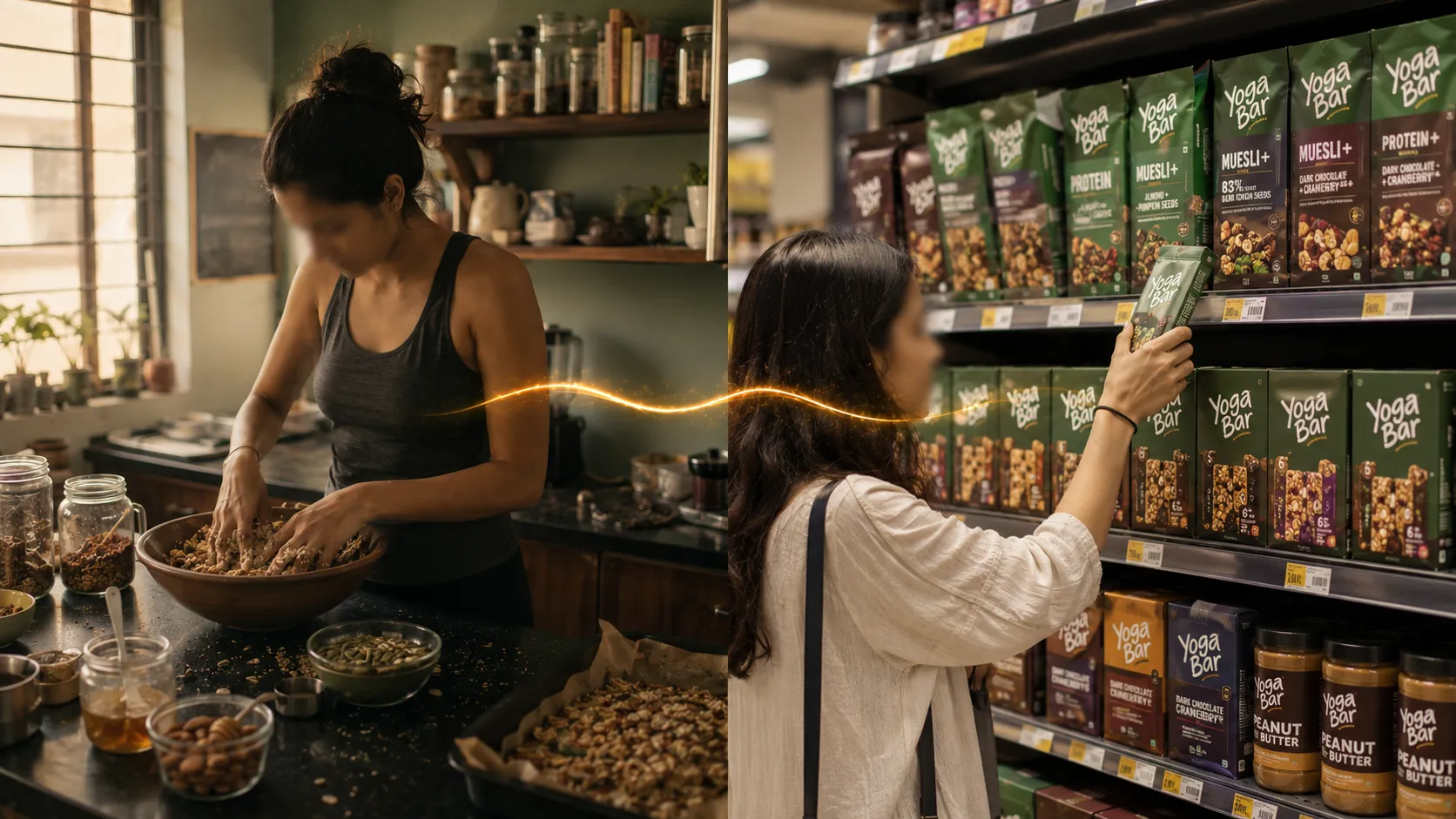
She began making her own granola bars in her home kitchen, packaging them by hand, and selling them to friends and yoga students. The response was immediate and enthusiastic—not just from her immediate circle, but from strangers who had heard about the yoga teacher in Indiranagar who made the best granola bars in the city. The bars were not just tasty. They filled a gap that millions of Indian consumers were beginning to notice: the absence of a credible, homegrown healthy food brand that understood Indian tastes, Indian nutritional needs, and Indian price sensitivity.
In 2015, Sampath and her sister-in-law, Anindita Sampath, formally launched Yoga Bar. The name reflected the brand's origins—a product born from a yoga teacher's quest for clean nutrition—and the philosophy that would guide its growth: food should be natural, nutritious, and unapologetically free of the artificial ingredients that defined most packaged foods. They started with three flavours of granola bars. They sold them online, through the Yoga Bar website, and through a handful of organic food stores in Bengaluru. They had no venture capital, no advertising budget, and no retail distribution beyond the city where they lived. What they had was a product that customers loved—and a market that was about to explode.
Eleven years later, Yoga Bar is one of India's largest healthy food brands, with a product range spanning granola bars, muesli, oats, peanut butter, and breakfast cereals, annual revenue of approximately ₹500 crore, and a distribution network that reaches every major city and quick-commerce platform in the country. In 2024, ITC—one of India's oldest and largest consumer goods conglomerates—acquired a 47.5 percent stake in the company for approximately ₹255 crore, with a clear path to full acquisition over the following years. The deal valued Yoga Bar at over ₹500 crore and represented one of the largest exits in Indian D2C food history. The yoga teacher who started making granola bars in her kitchen had built a brand that one of India's most valuable companies wanted to own. The healthy food revolution she had helped ignite was no longer a niche. It was the mainstream—and she had been right about it before almost anyone else.
The Yoga Teacher Who Saw What Big Food Missed
Suhasini Sampath was not a businesswoman. She was a yoga teacher—a profession she had chosen after a career in corporate communications, driven by a desire to live a healthier, more balanced life. The digestive issues that had plagued her for years had been, in a strange way, a gift: they forced her to think about food more carefully than most people ever do, to read ingredient labels with forensic attention, and to understand, at a visceral level, the connection between what she ate and how she felt.
The epiphany that launched Yoga Bar was not a flash of entrepreneurial genius. It was a slow, dawning realisation that the food industry had failed her—and was failing millions of others like her. The packaged foods that were marketed as "healthy" were, on closer inspection, anything but. Granola bars that were positioned as nutritious snacks were loaded with sugar, artificial sweeteners, and preservatives. Breakfast cereals that promised energy and vitality were little more than processed carbohydrates in colourful boxes. The Indian consumer who wanted clean, natural, preservative-free packaged food had almost no options—and the options that did exist were imported, expensive, and designed for foreign palates.
The gap was structural. India's packaged food industry was dominated by legacy conglomerates—Nestlé, Britannia, Parle—that had built their businesses on mass-market products formulated for taste, shelf stability, and low cost, not for nutrition. The health food segment was treated as a niche afterthought—a tiny sliver of the market that was not worth the attention of the giants. The assumption, shared by most of the industry, was that Indian consumers were not willing to pay a premium for healthy food. The assumption was wrong. Yoga Bar proved it.
The first three flavours of granola bars—Almond & Cranberry, Dark Chocolate & Almond, and Peanut Butter—were simple, honest products made from whole ingredients with no artificial additives. The bars sold out within days of launching online. The demand was not coming from a fringe of health-obsessed early adopters. It was coming from ordinary consumers—urban professionals, parents concerned about their children's snacks, fitness enthusiasts, and people like Sampath herself who had struggled with digestive issues and found that clean eating made a difference. The market for healthy packaged food in India was not small. It was vast, underserved, and growing—and Yoga Bar was the first credible Indian brand to claim it.
The branding was deliberate. The name "Yoga Bar" signalled health and wellness, but in a way that was accessible rather than intimidating. The packaging was clean, modern, and transparent about ingredients—a direct contrast to the opaque, sugar-laden products that dominated the market. The brand's voice was friendly, informative, and passionate about food without being preachy. The customer who bought a Yoga Bar was not being told to change her life. She was being offered a better snack—and the snack was good enough that she kept coming back. The repeat purchase rate, in the early years, was exceptionally high—a signal that the product was not just filling a gap, but creating a category.
The D2C Playbook, Before It Was a Playbook
Yoga Bar launched in 2015, at the very beginning of India's D2C revolution. The company was one of the first Indian food brands to build its business primarily online, using a direct-to-consumer website to reach customers, gather feedback, and iterate on products without the expensive, slow, and relationship-intensive process of traditional retail distribution.
The early years were lean. Sampath and her sister-in-law ran the company from their homes, handling everything from product development to packaging to customer service themselves. They did not raise venture capital for the first several years—a decision that was partly philosophical and partly a reflection of the fact that few investors at the time were interested in a healthy food brand founded by two women with no food-industry experience. The company was bootstrapped, which meant that every rupee spent had to be earned first. The discipline was not glamorous. It was effective. Yoga Bar grew at a pace that was slower than a venture-backed startup could have tolerated, but faster than the legacy food companies could match—and it grew profitably, without the burn rate that has since become a cautionary tale across the D2C landscape.
The product range expanded gradually, following the same philosophy that had guided the original granola bars: whole ingredients, no artificial additives, transparent labelling, and flavours that were designed for Indian palates. Muesli followed the granola bars. Then oats, in flavours like Masala Oats and Mango Oats that no Western brand would have conceived. Then peanut butter, which became one of the brand's most successful categories. Then breakfast cereals, protein bars, and a growing range of snack foods that blurred the line between indulgence and nutrition. Each new product was developed in response to customer feedback, tested in small batches, and scaled only when the demand was proven. The company did not launch products because a competitor had launched them. It launched products because customers asked for them.
The distribution expanded in parallel. What began as a purely online brand—sold through the Yoga Bar website and a handful of organic food stores—gradually moved into mainstream retail, quick-commerce, and institutional channels. The company's products are now available on Blinkit, Zepto, Swiggy Instamart, Amazon, Flipkart, and in thousands of physical stores across the country. The quick-commerce channel has been particularly important: a customer who runs out of granola at 8 a.m. can have a new box delivered within 15 minutes, and the platform that can provide that convenience earns a loyalty that traditional retail cannot match. Yoga Bar was one of the first Indian food brands to embrace quick commerce aggressively, and the channel now contributes a significant share of revenue.
The competition intensified as the market grew. ITC launched its own healthy snack brand, Farmland, in response to the consumer shift that Yoga Bar had helped create. A new generation of D2C food startups—including Slurrp Farm, The Whole Truth, and Kapiva—competed for overlapping segments of the health-conscious consumer market. International brands like Kellogg's and Nature Valley expanded their healthy product lines in India. The market that Yoga Bar had effectively created was becoming crowded, and the brand needed capital to compete. The ITC acquisition, when it arrived, was the logical conclusion of a journey that had begun in Sampath's kitchen eleven years earlier. The yoga teacher had built a brand that one of India's most valuable companies wanted to own. The deal was not an exit. It was an acceleration.
The ITC Acquisition
The most significant strategic moment in Yoga Bar's history arrived not from a venture capitalist, but from a 113-year-old conglomerate. In 2024, ITC—the tobacco-to-hotels giant that is one of India's largest consumer goods companies—acquired a 47.5 percent stake in Sproutlife Foods, the parent company of Yoga Bar, for approximately ₹255 crore. The deal valued the company at over ₹500 crore and gave ITC a significant foothold in the rapidly growing healthy food segment. Under the terms of the agreement, ITC has a clear path to full acquisition over the following years, with the Sampath family retaining operational control during the transition period.
The acquisition was significant for multiple reasons. For ITC, it was a recognition that the healthy food segment—which the company had initially dismissed as a niche—was large, growing, and strategically important. ITC's own healthy snack brand, Farmland, had been launched in response to the consumer shift that Yoga Bar had helped create, but the company had struggled to match Yoga Bar's brand equity and consumer trust. The acquisition was an admission that building a credible health-food brand from scratch was harder than it looked—and that the fastest way to enter the category was to buy the category leader.
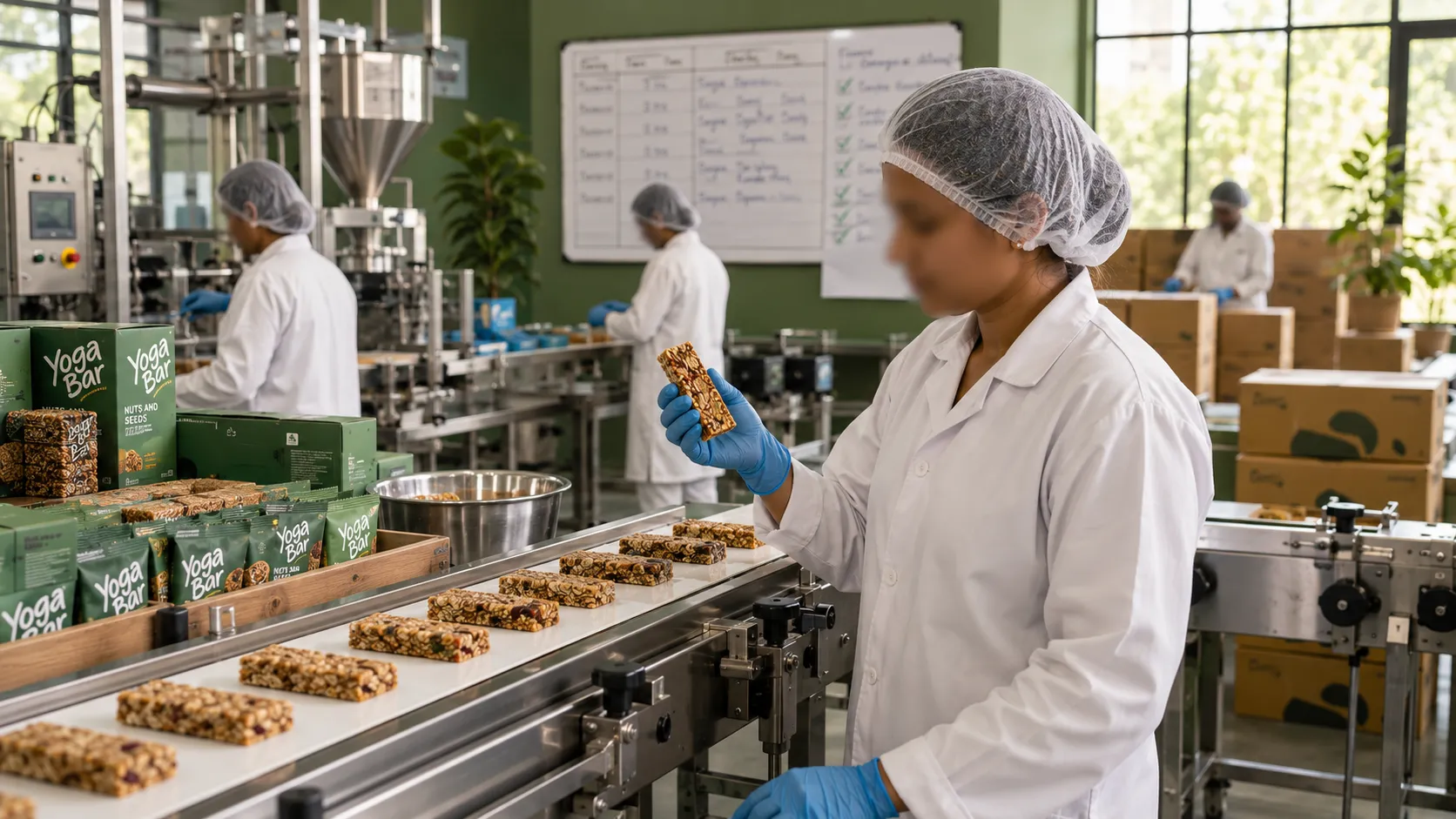
For Yoga Bar, the acquisition provided capital, distribution, and the institutional backing of one of India's most powerful consumer goods companies. ITC's distribution network—which reaches every corner of India, from urban supermarkets to rural kirana stores—was something that Yoga Bar could never have built on its own. ITC's manufacturing expertise, supply-chain relationships, and regulatory infrastructure gave Yoga Bar access to resources that no D2C startup could match. The deal was structured to preserve Yoga Bar's brand identity and entrepreneurial culture while providing the resources to scale—a balance that is difficult to achieve in any acquisition, and that the Sampath family negotiated with the same deliberate care they had brought to every other decision in the company's history.
For the broader Indian startup ecosystem, the Yoga Bar-ITC deal was a signal. It demonstrated that D2C food brands—which had been dismissed by many investors as small, unscalable, and vulnerable to competition from legacy players—could generate significant exits. It demonstrated that the consumer shift toward healthy, natural, preservative-free food was not a passing trend but a structural transformation, and that the companies that had established brand credibility early in that transformation would command premium valuations. And it demonstrated that women founders—who receive a shockingly small share of venture capital in India—could build companies that the largest conglomerates in the country wanted to own.
The Sampath family has not disclosed the exact terms of their earn-out or the timeline for the remaining stake to be acquired. Suhasini Sampath continues to be involved with the brand, guiding product development and maintaining the philosophy that has defined Yoga Bar since its inception. The yoga teacher who started making granola bars in her kitchen is now a significant shareholder in one of India's most successful D2C food exits—and the brand she built continues to grow under the ownership of one of the country's largest and most respected companies. The kitchen where it all began is still there, in the Indiranagar neighbourhood of Bengaluru. But the company it produced has outgrown it, and the market it helped create has outgrown them both.
What This Signals
The Suhasini Sampath story is not primarily about granola bars. It is about the structural transformation of the Indian packaged food industry—and about the founder who saw the transformation coming before the industry's giants did.
For decades, the Indian food market was defined by a single, crushing assumption: Indian consumers would not pay a premium for healthy food. The packaged food industry was built on the foundation of that assumption—products formulated for taste, shelf stability, and low cost, with nutrition as an afterthought if it was considered at all. The assumption was not malicious. It was a rational response to a market in which the vast majority of consumers were price-sensitive and the demand for natural, organic, preservative-free products was limited to a tiny, affluent elite. The industry's giants—Nestlé, Britannia, Parle—built their empires on the assumption that the market would remain this way forever. The assumption was wrong. Yoga Bar proved it.
The same consumers who had begun scrutinising food labels, rejecting artificial ingredients, and demanding transparency about what was in their food were not a fringe. They were the leading edge of a generational shift. The Indian consumer who grew up on Maggi and Parle-G was now a parent who read ingredient lists, worried about sugar content, and was willing to pay a premium for food that met her standards. The shift was driven by rising incomes, greater access to information, and a growing awareness of the connection between diet and health—the same forces that had transformed the food industries in the United States and Europe a generation earlier. The Indian shift was happening faster, driven by a younger population and the viral spread of health information on social media, and the companies that recognised it earliest—Yoga Bar, Slurrp Farm, The Whole Truth—captured a disproportionate share of the market it created.
Suhasini Sampath is no longer the yoga teacher mixing granola in her kitchen. She is the co-founder of one of India's largest healthy food brands, the architect of one of the largest D2C food exits in Indian history, and a quiet, persistent example of what happens when a founder builds a business around a genuine, personal insight rather than a market analysis. The digestive issues that plagued her for years are under control. The product she created to solve her own problem now serves millions of consumers. The company she built with her sister-in-law from a home kitchen is now owned, in part, by one of India's most valuable conglomerates. The yoga teacher who saw the future of food before anyone else has been proven right. The granola bars are still selling. The market is still growing. The work continues.


