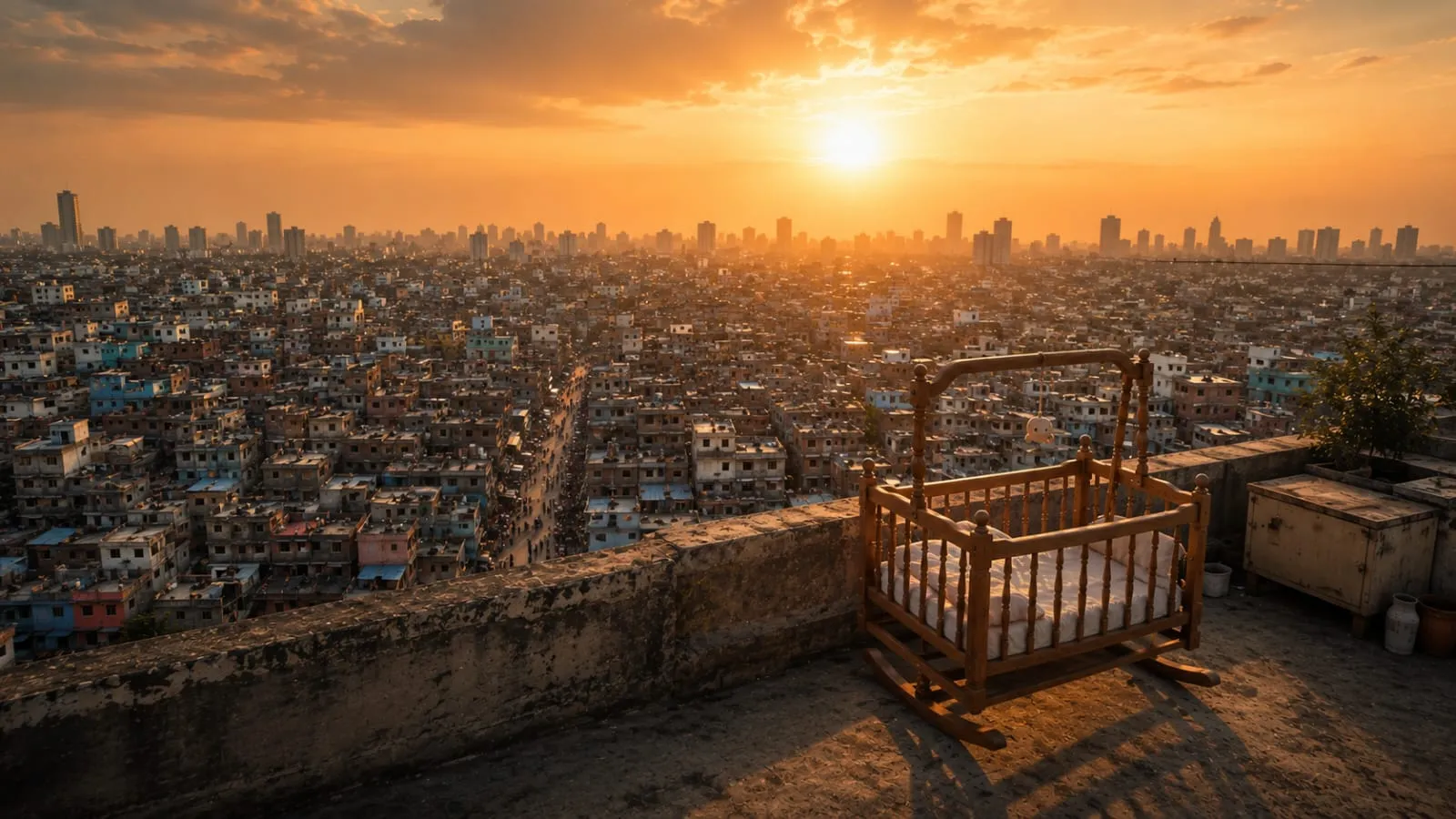
India Is the World's Most Populous Country — And It's Running Out of Babies
Just a few years ago, the conversation about India was all about population explosion. Overcrowded cities. Stretched resources. A nation bursting at its seams with people. The worry wasn't that India would run out of babies — it was that it couldn't possibly have enough space for all of them.
That conversation has completely flipped. And on June 6, one of the world's most recognizable voices on demographic decline made sure the whole world noticed.
SpaceX CEO Elon Musk took to X to post: "India's birth rate has fallen below replacement. Among those most educated, India's birth rate fell below replacement many years ago." He was responding to data confirming that India's total fertility rate has dropped to 1.9 births per woman — below the critical replacement level of 2.1 — for the very first time in the country's history.
That's not a footnote in a UN report. That's a turning point in the story of the world's most populous nation.
The Numbers That Changed Everything
Let's put this in plain terms. A fertility rate of 2.1 is the minimum threshold a population needs to replace itself from one generation to the next, without depending on immigration. At 2.1, roughly speaking, every two parents are replaced by two children. The population stays stable.
India is now at 1.9. And it got there fast. Just a decade ago, India's Total Fertility Rate — or TFR — was 2.3. In ten years, it dropped by 0.4 points, crossing a line that demographers once thought was still years away.
But zoom into the cities and the numbers get even more striking. Delhi's fertility rate now sits at just 1.2 — lower than Finland, lower than Sweden, lower than most of the developed world. The capital of a nation famous for its population is now having fewer babies per woman than some of the most demographically challenged countries in Europe.
The United Nations Population Fund has confirmed the broader picture: India's population, currently at over 1.46 billion and the highest on Earth, is projected to peak at 1.7 billion over the next four decades — and then begin to fall.
The country that just overtook China as the world's most populous nation is now on the same slow demographic trajectory that has haunted China — and much of the developed world — for decades.
How Did This Happen?
India's fertility decline didn't happen by accident. It's the direct result of decades of progress — and that's the complicated part of this story. Rising education levels, especially among women. Rapid urbanisation pulling millions from rural villages into city apartments where large families are impractical and expensive. Growing female workforce participation. Better access to healthcare and family planning. And a fundamental cultural shift in how younger Indians think about marriage, children, and career.
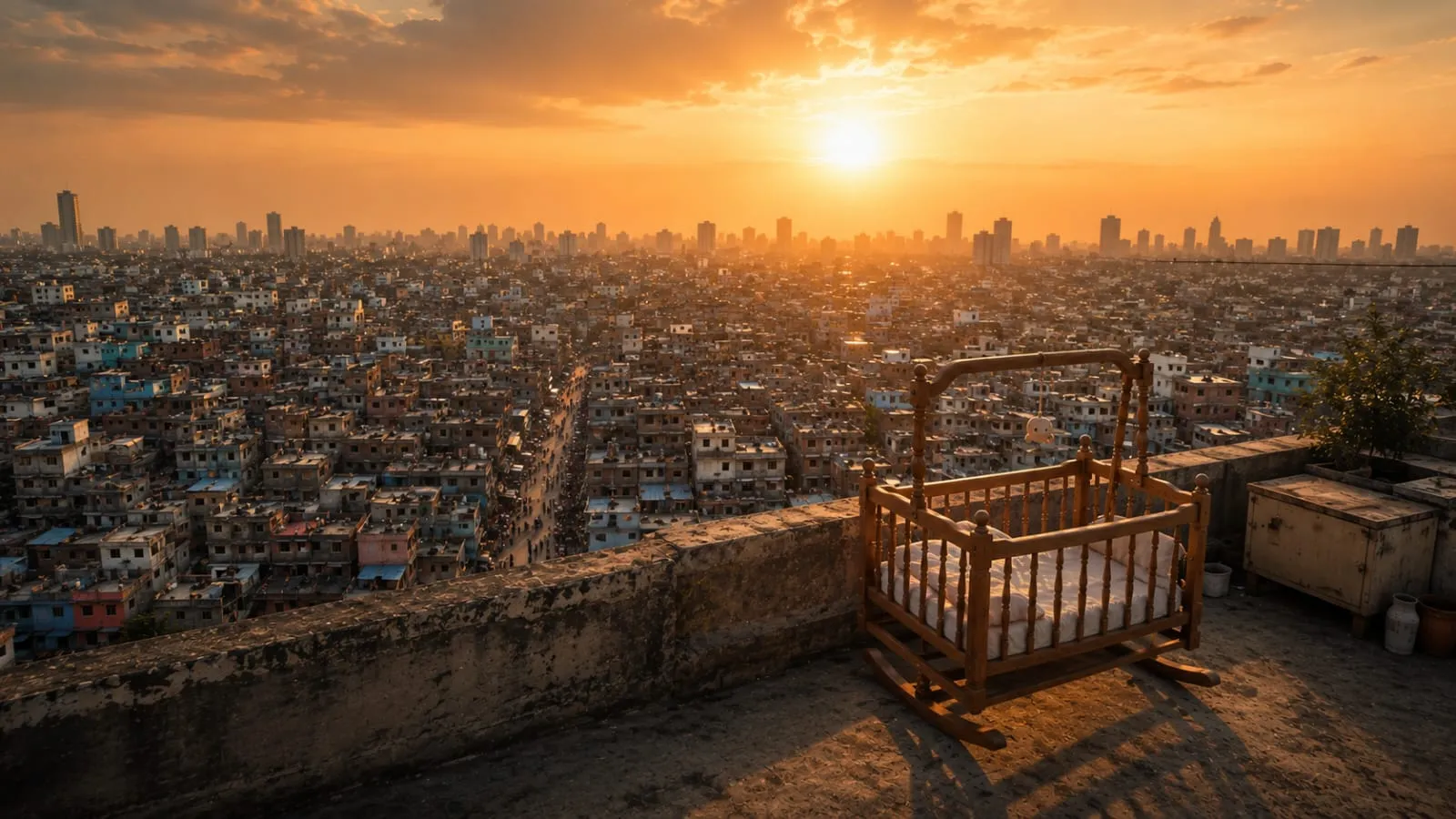
The pattern is well established globally: the more educated and economically empowered a population becomes, the fewer children they tend to have. India's educated urban class has been below replacement level for years — in many cities, for well over a decade. What's new and significant is that this trend has now spread broadly enough across the country to pull the national average below 2.1 for the first time ever.
In one sense, it's a measure of how far India has come. In another, it's the beginning of a set of challenges the country has never had to face before.
Why a Falling Birth Rate Is a Bigger Deal Than It Sounds
A declining fertility rate isn't just a demographic statistic. It's an economic time bomb with a very long fuse — and by the time the explosion is felt, it's almost impossible to reverse.
Here's how it works. When fewer children are born today, there are fewer young workers entering the economy tomorrow. A smaller workforce means lower productivity, slower economic growth, and reduced tax revenues. At the same time, as the population ages, the demand for pensions, healthcare, and elderly support increases dramatically. The working-age population shrinks while the dependent population grows. The math becomes brutal.
Countries like Japan, South Korea, Germany, and Italy are already deep in this cycle — spending billions on pro-natalist policies, immigration incentives, and childcare subsidies, with limited success. Once a society's birth rate falls sharply, reversing it is extraordinarily difficult. Cultural and economic forces that drive people toward smaller families tend to be self-reinforcing.
India has long been celebrated for its demographic dividend — a young, growing population that gives the economy a built-in engine of growth, innovation, and consumption. That dividend isn't gone yet. India still has a relatively young population, with over a quarter of its people between the ages of 10 and 24. The workforce will remain large and relatively young for the next two to three decades.
But the trajectory has changed. The clock is now ticking in a different direction. And the decisions India makes in the next ten to fifteen years — around education, employment, women's participation in the workforce, elderly care systems, and immigration policy — will determine whether the country manages this transition gracefully or stumbles into the same demographic trap that has slowed growth across East Asia and Europe.
Musk, the Data, and the Bigger Warning
Elon Musk has been vocal about falling birth rates for years, calling demographic collapse "the biggest danger civilization faces." His comments on India are consistent with a worldview he has held for a long time — one that prioritizes population growth as essential to the survival and expansion of human civilization.
Not everyone agrees with Musk's framing. Many demographers and economists argue that a stabilizing or even declining population can be a positive development — reducing pressure on natural resources, improving quality of life, and allowing economies to shift toward higher productivity rather than sheer headcount. The debate is genuine and ongoing.
But what isn't debatable is the data. India's fertility rate has crossed a historic threshold. The world's most populous country is now producing fewer children than it needs to sustain its population. For a nation that has spent decades managing the challenges of too many people, the challenge of too few is entirely new territory.
The babies aren't coming at the rate they used to. And for a country whose entire economic story has been built on the promise of a young, dynamic, growing population — that changes everything.